

An increasingly diversifying economy looks set to ensure long-term prosperity and a rising tide of opportunity for the North-East
It is ironic that recent headlines for ‘Aberdeen’ concerned an investment firm based in Edinburgh which as its turnaround plans were paying off were restoring the lost vowels to its previously truncated abrdn name. Read more about abrdn and Phoenix Group who came together on a number of projects to help capital flow into projects that enable a just transition.
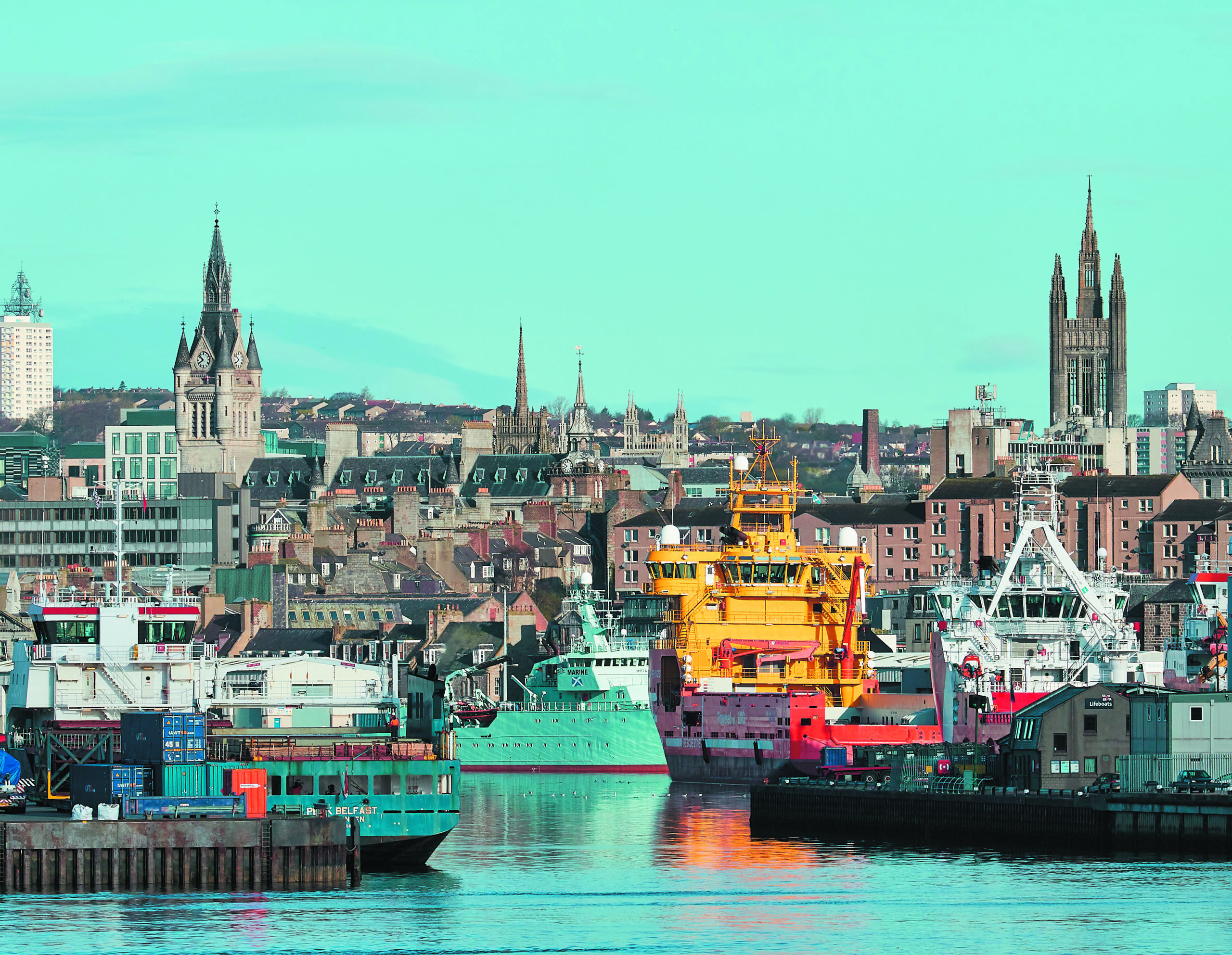
It did, though turn attention to the Granite City itself, which though inevitably linked with the oil and gas – and now renewables – sector has many other encouraging business developments in progress.
These include growth in its high-tech industries at the Aberdeen Business Park plus the James Hutton Institute and the Rowett Research Institute’s advances in food and nutrition research.
And with two universities, the city is a mainstay of various collaborations such as Robert Gordon’s knowledge transfer partnerships (KTPs) that have funding support from Innovate UK.
Established in 1136 by Scotland’s King David I, and the UK’s oldest existing business, Aberdeen’s port has supported industry in the North Sea for the past half century and is now increasingly diversifying its activities.
Bob Sanguinetti, CEO of the Port of Aberdeen, notes that since South Harbour officially opened in September 2023, the expanded port has unlocked significant opportunities across energy, trade and tourism while also fostering diversification in renewables, decommissioning and cargo handling.
Russell Borthwick, chief executive at Aberdeen and Grampian Chamber of Commerce (AGCC), is pleased to see that the energy transition is well underway but is concerned that the city is at risk of accelerating the decline of its oil and gas sector at a pace which jeopardises the skills and investment required to deliver the UK’s net zero plans.
The windfall tax has had a negative effect on confidence surrounding oil and gas operations but on a positive note, he says the North-east continues to punch above its weight in export performance and the region has, while not the highest incomes in the UK, its highest disposable incomes.
“The issue at the moment is that lack of confidence in North Sea operations and the dependency on one sector running from professional services through to retail, hospitality and other businesses,” Borthwick says.
Confidence though can change quickly and Borthwick believes the long-term prospects are good, built on the results of the City Region Deal over the past decade, which he says is regarded as “probably the most successful in the UK in terms of what it has achieved and how it’s levered in three quarters of a billion pounds on top of the government contribution”.
If we create a place with great amenities then we’re more likely to retain and attract the best people here
“A lot of that was predicated around how we were readying ourselves as a region to be less dependent on oil and gas in the future.”
He singles out life sciences, agri-innovation, digital agencies, tourism, the North-east’s massive food and drink heritage and its agriculture and fisheries strengths, as the key pillars of a diversifying economy.
The City of Aberdeen, he says, is making good progress in diversification into other sectors with its rising tide of opportunity for the North-East. It remains the commercial magnet for the wider Deeside and Donside communities.
“The other important aim is to be an attractive place in which to live,” says Borthwick. “If we create a place with great amenities and which is well connected in transport terms, then we’re more likely to retain and attract the best people here.”
The underlying element of such ‘place making’ is encouraging the development of a safe and clean city with new schools, enhanced health facilities and fresh cultural and tourism experiences.
“All of this makes Aberdeen an even better place to live in and to relocate to,” he says.
Central to this aspiration is Aberdeen Inspired, the city’s Business Improvement District, which represents approximately 700 businesses. Its CEO, Adrian Watson, says Aberdeen has a rising tide of opportunity for the economy in the next few months thanks to the booming cruise ship sector at the Port of Aberdeen and the return of the tall ships races for the first time in 28 years.
“We are about to see a record number of cruise ships berth in the city this season and Aberdeen Inspired is helping local businesses gear up to maximise the potential these thousands of visitors will bring with them in 2025 and the biggest opportunity will arrive with the Tall Ships Aberdeen, with more than 50 vessels arriving and bringing some 400,000 visits with them in July,” Watson says.
He says Aberdeen Inspired’s mission is to “attract people into the city centre, encourage them to linger here and, put bluntly, spend while they are here. We deliver that in several ways, from staging a street-art festival that has been named as one of top six in the world to a variety of projects to boost bricks and mortar businesses.”
Nuart Aberdeen, Watson says, brings some of the most-acclaimed street artists in the world to the city for the festival weekend and also leaves a legacy of murals – from epic pieces to more intimate works – that have transformed the cityscape.
Aberdeen Restaurant Weeks are staged twice a year and there was what he calls a successful ‘Foodie Fortnight’ in March. “That brought diners into the city to enjoy special menus at special prices and even before it started some of the almost 80 restaurants taking part were reporting increased bookings,” says Watson.
In the corporate world, Martin Ewan, corporate partner at Brodies LLP, describes a steady flow of M&A activity, especially in energy and technology. Read more about Brodies in our DealMaker’s Directory.
“Despite fiscal and regulatory challenges, some North Sea oil and gas companies continue to generate significant free cash flow.
“Our deals work in oilfield services, upstream operations and a diverse breadth of the supply chain is indicative of the North-east’s commercially astute, dedicated approach, which – with perseverance and resilience – will ensure the region continues to punch above its weight,” he adds.
More than £30bn of investment is set to flow into the city and region in the coming decade and Ewan is optimistic that as renewable energy infrastructure projects gather speed, and projects such as the city centre £150m Queen Street regeneration and the £250m Aberdeen Rapid Transit network come to fruition, job creation and opportunities for the region will follow.

Tracey Menzies, the legal firm’s real estate partner in the city, says that while Aberdeen’s retail sector continues to face challenges, the acquisition of Union Square by Lone Star has positively influenced its investment market.
Initiatives such as Our Union Street and the Belmont Community Cinema are encouraging to see
“Additionally, initiatives such as Our Union Street and the Belmont Community Cinema are encouraging to see,” she adds.
“There have been notable levels of activity in the industrials, investment and hotels sectors and there continues to be appetite from occupier clients for top quality office space with the most flexible terms.”
While conditions remain challenging in some sectors, there is a rising tide of opportunity for the North-East. Menzies concludes: “Market sentiment remains cautiously optimistic, and we would hope to see a rise in activity in the second half of 2025.”
As in the rest of Scotland, there are short-term concerns, says Russell Borthwick, over taxation in several formats, new employment legislation and lack of growth.
“But it will be our fault if as a region we don’t take advantage of what’s in front of us and while things are still a bit unsure, looking ahead three, five or ten years there’s a real sense that we have very significant opportunities.”
