
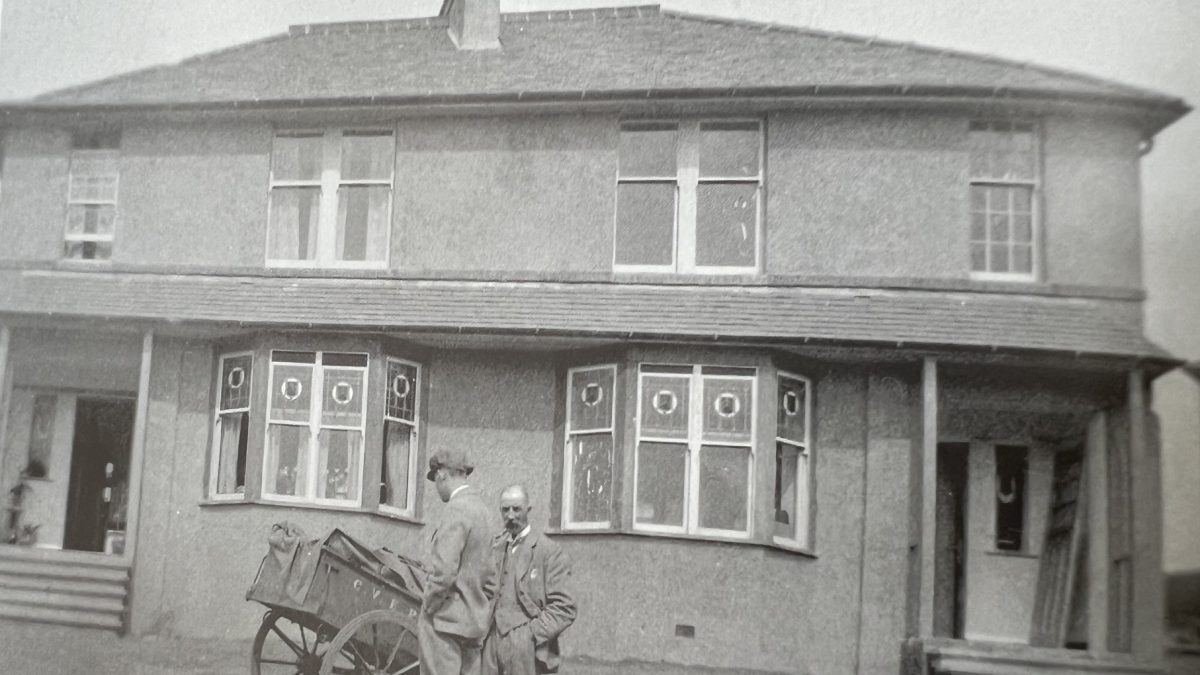

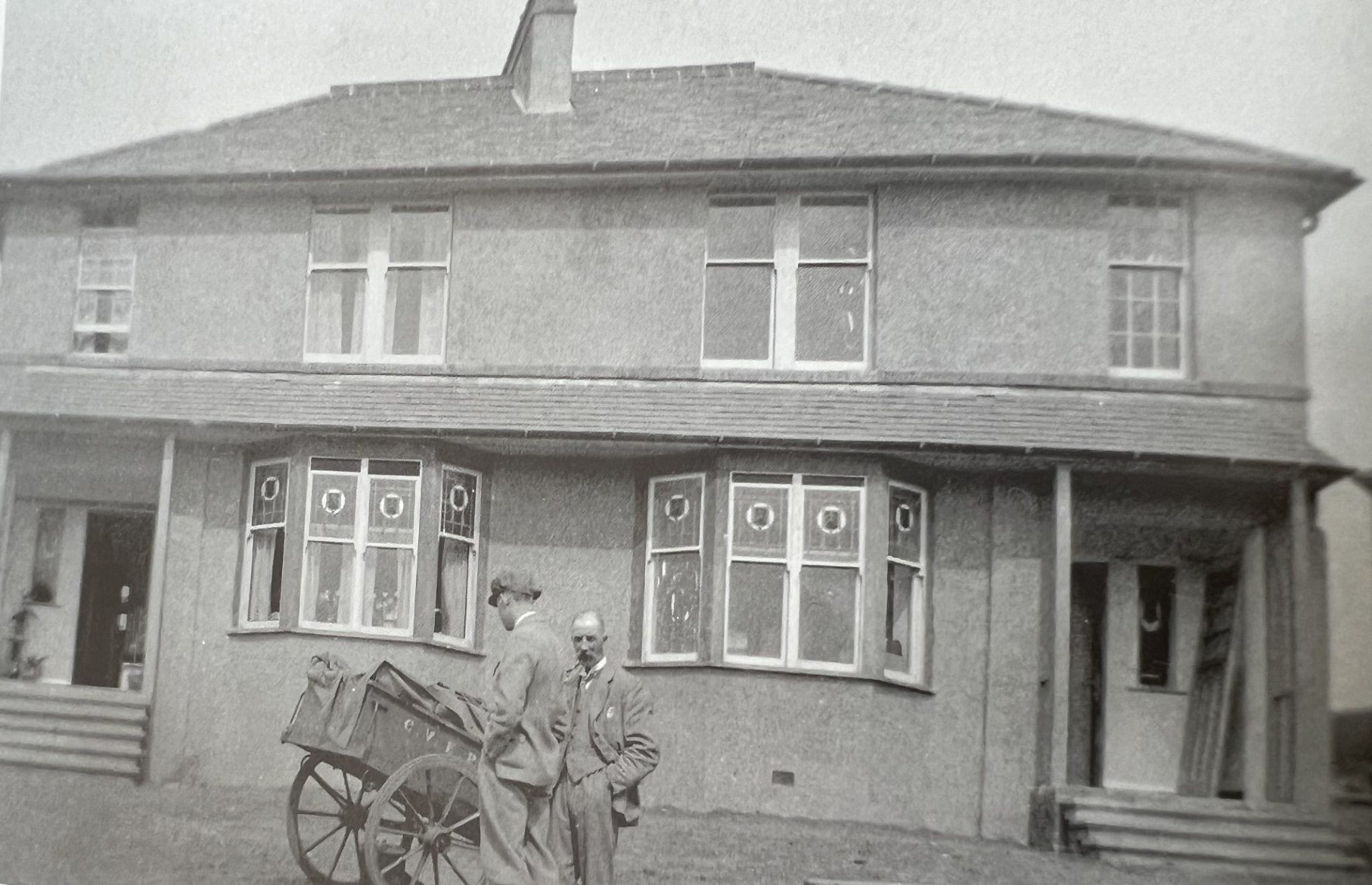
One hundred years ago, civic Glasgow had the foresight to build better homes – Scotland needs this kind of dynamic insight in 2026. Kenny Kemp tells the story of Kelvindale – dubbed English Town – and still a thriving community today
Ask a seasoned Glasgow cabbie to take you to ‘English Town’ and they will often look rather stumped. Then when you say it is the locals’ name for a part of Kelvindale, the driver blinks and shakes their head in recognition.
As the Labour Government talks of sweeping away planning restrictions and building tens of thousands of new homes in England and Wales, there also remains a desperate need for decent and affordable housing North of the Border. Scotland’s Housing Emergency will be discussed at a major conference run by The Business in February and senior housing and planning figures from Scotland’s local authorities will be expected to hear from the likes of Lord Haughey and the Cabinet Secretary Màiri McAllan.
As Glasgow commemorates its 850th anniversary, the city has been talking about the working people’s story in the great housing schemes which replaced the Victorian slums. However, alongside this there is also a modern middle-class history which also deserves to be acknowledged.
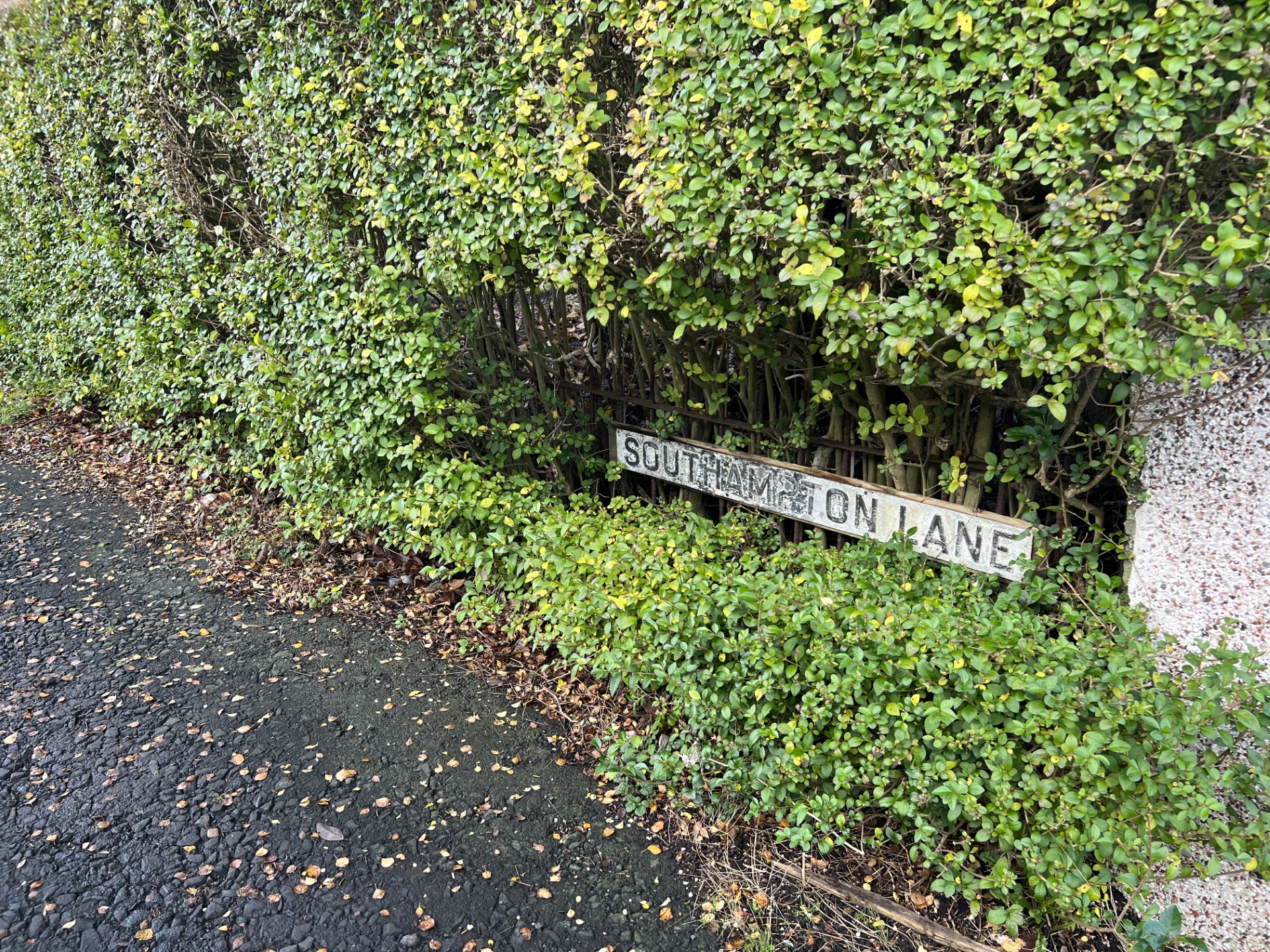
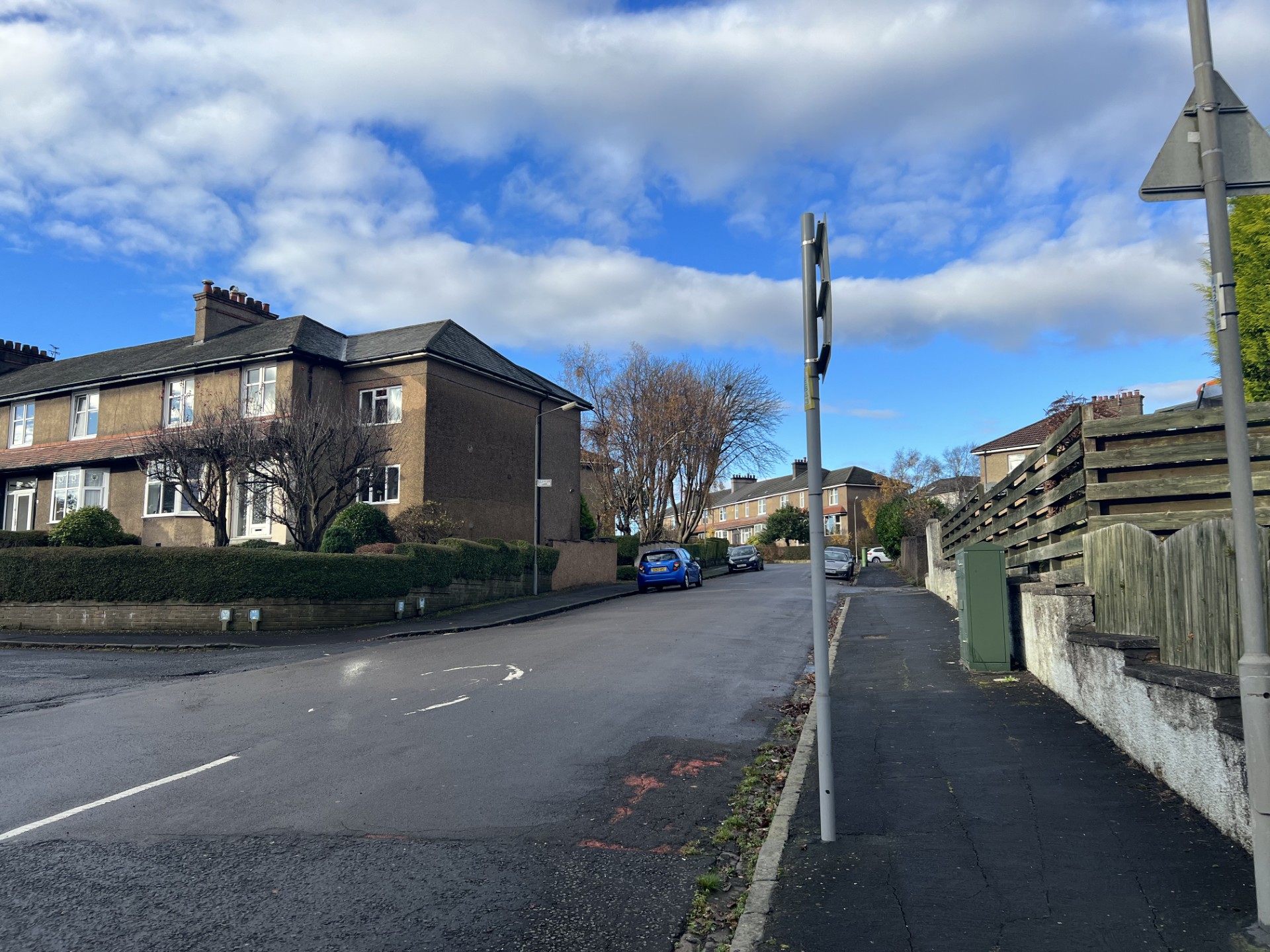
On the west bank of the Kelvin, at Maryhill, an ancient drumlin rises with the houses of the English Town perched around the top of the hill. From most parts, the homes in this hilltop settlement have spectacular views over Glasgow towards the Campsie Fells and the Firth of Clyde. The streets on the western side of English Town sweep around the drumlin hugging the same contours. The longest route is Weymouth Drive, which was an arterial road through this original scheme, then ascending in tighter arcs are Manchester Drive, Southampton Drive, Northampton Drive, although many of the houses have a steep flight of steps to their front doors.
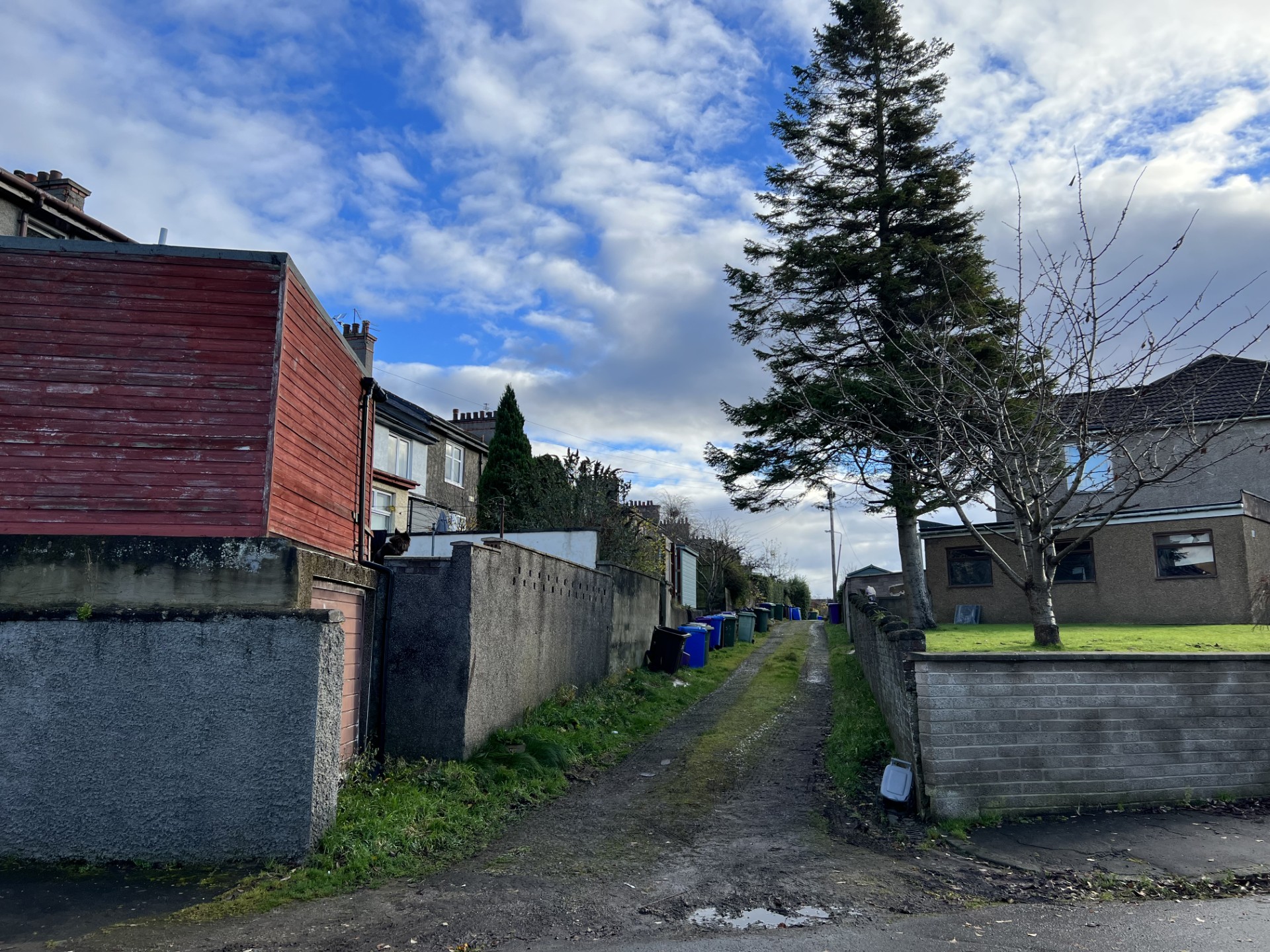
Behind the main roads there is a cinder lane, originally for the dustcart to collect the ashes and clinker from the coal fires, but home to rows of individual wooden garages often no larger than a garden shed. When it was first completed, there were few cars in the garages, so those relatively safe lanes became a fabulous playground for local children. The connecting streets to the Drives were English names too, such as Nottingham Avenue, Hertford Avenue, and Burlington Avenue.
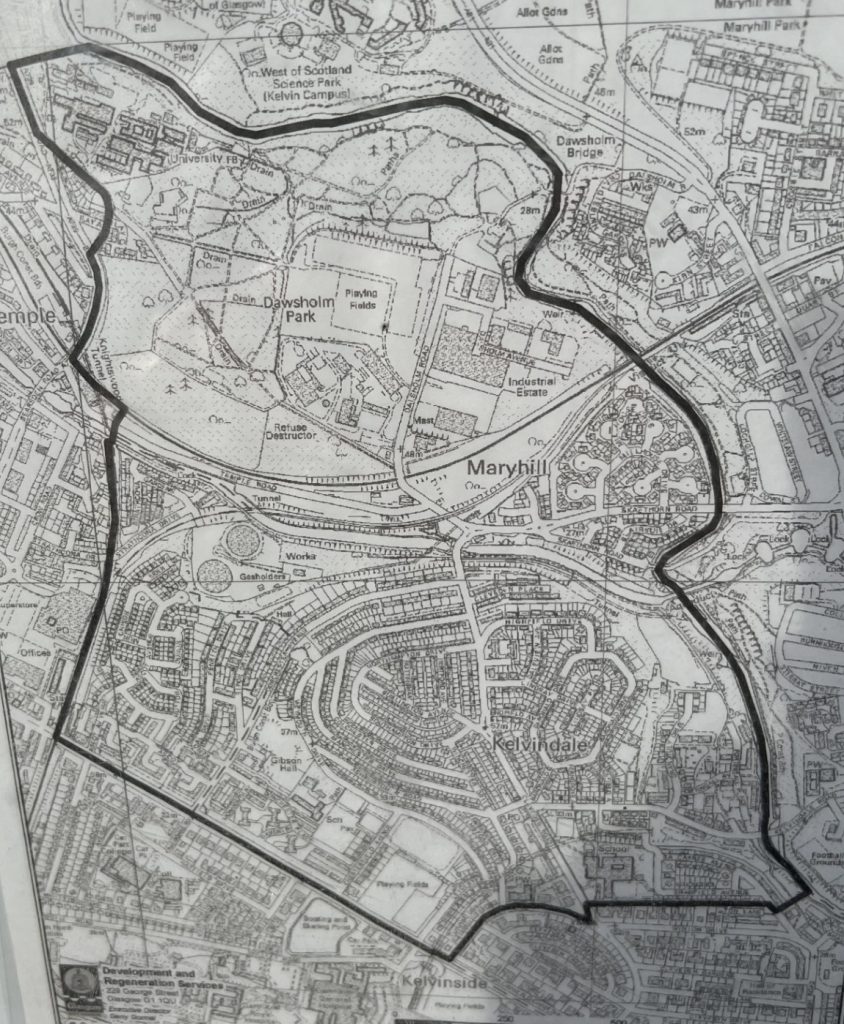
‘ENGLISH TOWN’ CREATED IN 1925
How this unique part of Glasgow came to have English street names is an interesting view of how Glasgow’s civic worthies viewed its relationship with the rest of Britain in the years after the First World War. The Glasgow Housing Department, then based in Govan Town Hall, approved the plans and specification for English Town in December 1925, giving permission for the street names, but the architect’s plans were prepared by the builders, Mactaggart & Mickel, in 1924.
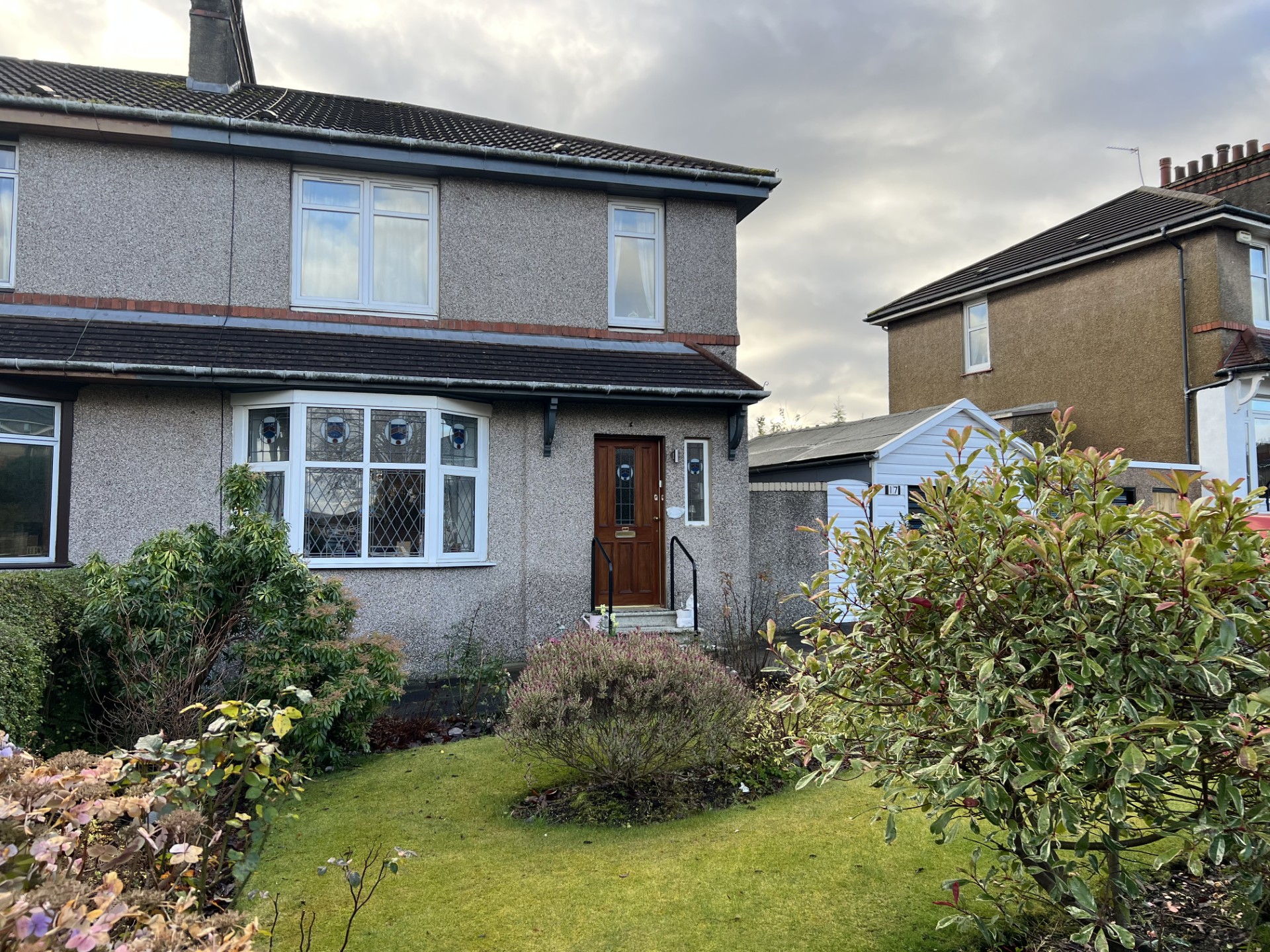
Andrew Mickel was the brilliant architect who had designed many of the solid sandstone tenements in Hyndland, which are still highly sought after. Mickel teamed up with John Mactaggart, an enterprising and uncompromising character with strong civic connection, to build homes with a distinctive style with a trademark stained glass feature.
This private house builder made use of a significant subsidy from Glasgow Corporation in the 1920s, introduced in the 1923 Housing Act, to build these homes, and similar houses in King’s Park, at Mount Florida, and in Clarkston. Glasgow Corporation gave loans at five per cent for houses under construction.
In late 1924, John Mactaggart had received Dean of Guild approval for roads and sewers in King’s Park. The houses were estimated to cost £450 each, with a loan of £336 per house. In modern terms, this is very lucrative investment assistance. The subsidy for the houses in Kelvindale was on average about £135 per house.
Mactaggart & Mickel’s first phase of English Town houses, built between 1926 and 1932, were 415 homes for owner-occupiers. They cost around £750 completed with wardrobes, electric lights and gas cooker. In Southampton Drive, the first mid-terraced five apartment home for £775 in April 1926.
Burlington Avenue, was in phase two, when a further 390 houses were built for letting by Western Heritable, a joint venture with M&M which undertook an extensive programme of rented house building across Glasgow, under the provisions of the 1924 Wheatley Act.
DIFFICULTIES FOR BUILDERS
The housebuilders were actively encouraged to get on with the job. The Corporation granted applications on the understanding that any incomplete houses at the time of the next government election, those subsidies would be redeemed by the council. But there were numerous difficulties and delays. The issue then, as now, was there were not enough skilled tradespeople, including plasterers to complete the friezes and ceilings in the homes. The war had taken a massive toll, and there were shortages of materials with timber for roof frames shipped in from Riga in Latvia.
By 1930, a M&M five-apartment show house at 45 Leicester Avenue was hailed as ‘The Most Modern House in Glasgow’ with rental at £50 per annum. In retrospect, this was a golden period for M&M in Glasgow. The Labour Government insisted that local councils limit the subsidy and loan interest to houses of a gross value of £750 or less, and by 1933 the building company’s monopoly and profits in the city were drying up. The Glasgow firm increasing claimed that the Corporation contracts were uneconomical and they were frustrated by the increasing control and interference. After building many homes at several stages at Knightswood, the only other scheme was at Carntyne in 1927. The 1929 (Revisions of Contributions) Act cut the subsidy for builders building homes for sale. Other builders stepped into the market including John McDonald, who was associated with the Corporation’s Assisted Purchase System.
But this fizzled out in the depressed times of the 1930s. Political imperatives changed, and funding for private house building was curtailed with the building subsidies withdrawn. The Glasgow company, M&M transferred their attention to selling private homes to the middle classes in the leafier part of Edinburgh.
HOMES FOR ASPIRATIONAL GLASWEGIANS
However, English Town flourished and became a popular place for aspiring working class Glaswegian, with many new doctors, young lawyers, ship-yard draughtsmen, booksellers and other professional types moving into the likes of Burlington Avenue. It remained a mixture of semi-detached private and rented home for the next 50 years. Kelvindale became a mature and settled housing enclave within the city.
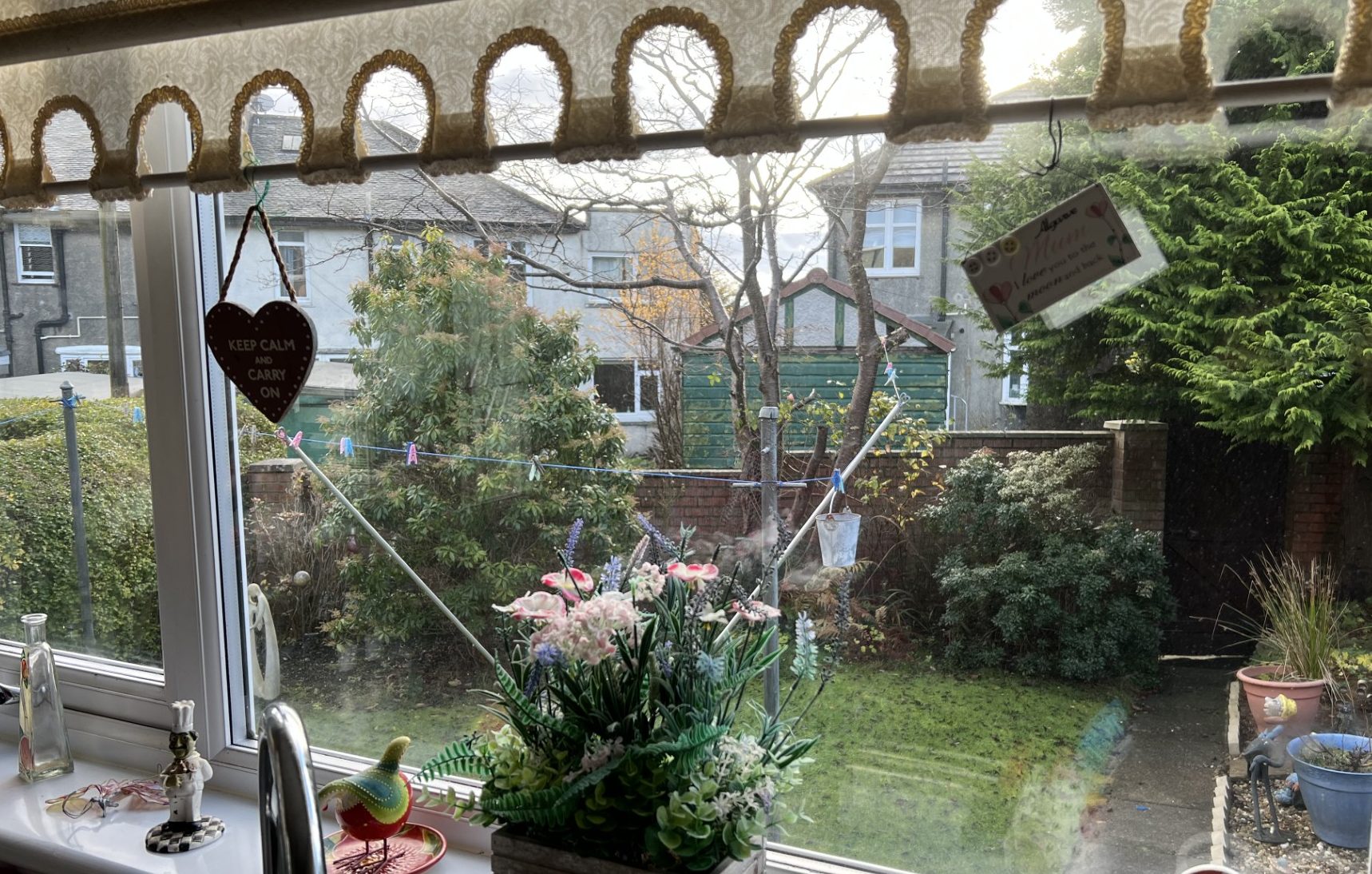
These Glaswegians were decent folks, proudly Scottish and generally shared a civic sense of pride in their properties, keeping their gardens and in the neighbouring environment tidy. Even nearly 100 years later, these houses, which have been adapted with new bathrooms, extended kitchens, and conservatories, remain decent family homes. A typical semi has a front door led into a hallway with stairs with wooden bannisters on the right hand side, and the living room or front room on the left. It was about 14ft by 12ft, and there was a fireplace with a coal fire, and leaded windows with a stained-glass motif on a slight bay-window frontage. Over the years, coal fires in the front room have been replaced by a gas and now electricity. Through the hall there was a cupboard under the stairs and a further door set in to the left the Dining Room, or ‘Parlour’ as it was originally called in the marketing promotion. This was heated by another coal fire. The door had glass panels which allowed more light into the hall. The Parlour was slightly smaller than the front room and had a large window looking out onto the back garden. The kitchen – or the scullery – was next door and it was small by comparison to modern homes. It was a very tight 8ft 6inches by 8ft 2inch, and there was a back door with steps leading down to the garden with grass. There was enough room for a small sink, with hot and cold taps, a draining area known as the bunker, and a gas cooker.
Upstairs, there were three bedrooms, the front room of about 12ft 5in by 11 feet, a second of 9ft 1in by 8ft 4in, while the back room was 12ft 5in by 12ft 2in. Ample room for a family of five or six people. The bathroom was compact, and initially had a bath, wash basin and water closet. However, there was no regular upstairs heating, so it was often cold at night and in the mornings.
LEGACY LIVES ON IN HOMES TODAY
The legacy of these Glasgow housing pioneers lives on. Mactaggart & Mickel Homes is now part of The Springfield Group, one of Scotland’s largest homebuilders. Western Heritable, founded in 1896, by John Mactaggart, later Lord Mactaggart of King’s Park, is still involved with the letting and management of residential homes in Glasgow to this day. It is now known as MF&P, Mactaggart Family and Partners, a fifth-generation family and private investment portfolio and real estate fund, with assets in London, including flats in Fulham, St John’s Wood and Mayfair, and in the United States, including New York’s Fifth Avenue, and hotels in London, Liverpool and Edinburgh. Sir John Mactaggart, a present director, established the charity Commonweal Housing after a review of housing needs in London, to look for social justice and innovative housing solution in the UK. In 2020, Jack Mactaggart, the great-great grandson, took over the chair of Commonweal.
Today Glasgow requires more affordable homes, and it also needs to recondition and convert city centre office space to homes for modern usage. But 100 years on, the lessons of the M&M era, especially the need for appropriate levels of subsidy, are worth hearing in how private builders can provide decent long-term housing in the city. The debate on how this should be funded is only just beginning.
The Business of Housing 2026: Creating solutions Scotland’s housing emergency. A major one-day policy conference for all housing sector professionals. The event is at the EICC on Thursday, 3 February 2026.
