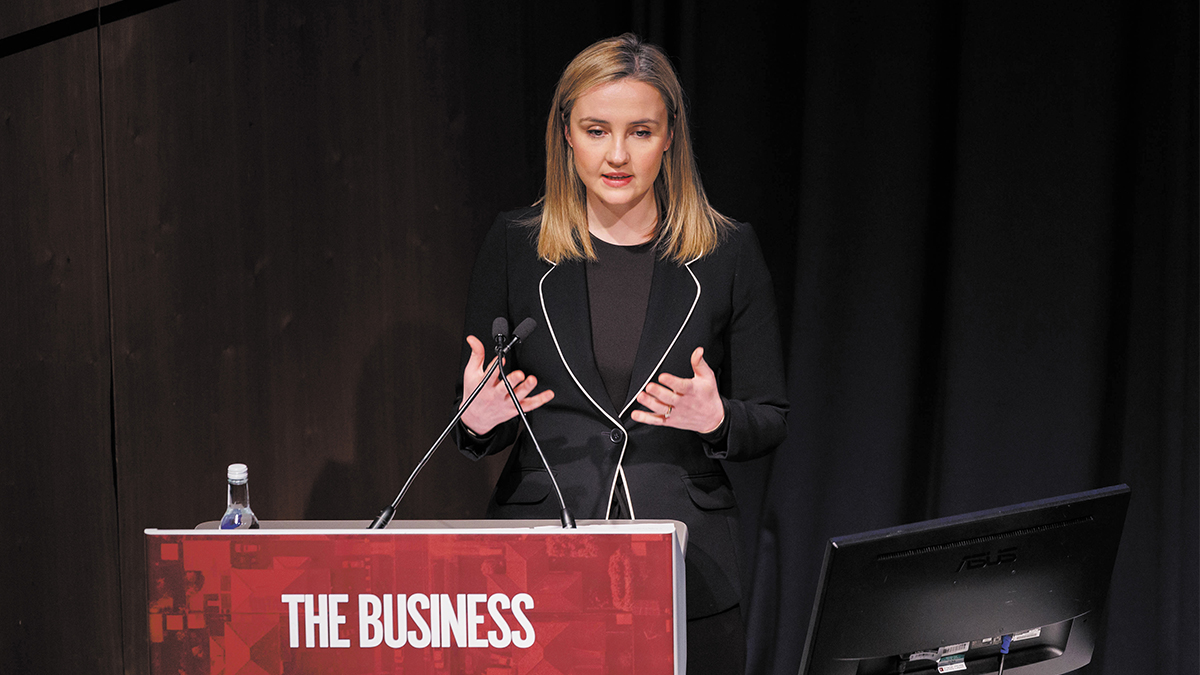
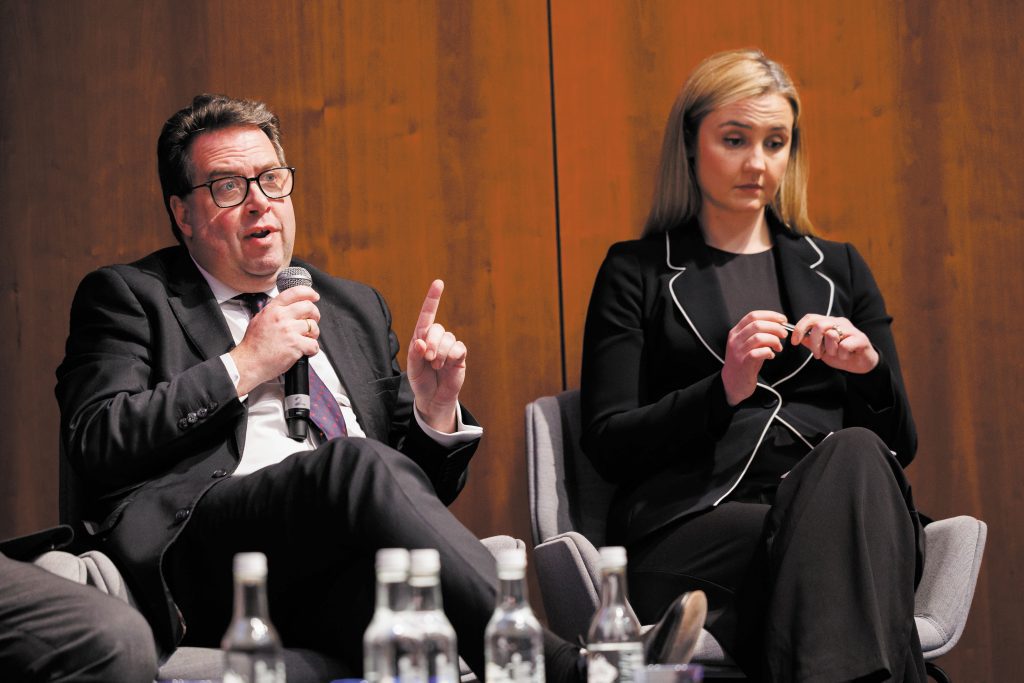
The Business of Housing 2026 concluded with the politicians who will decide what happens next.
Cabinet Secretary for Housing Màiri McAllan took the stage, before being joined by MSPs Willie Rennie, Mark Griffin and Craig Hoy who offered competing explanations for Scotland’s housing emergency and different ideas about how to respond.
McAllan began by explaining why the role matters to her. Before entering politics she worked as a property solicitor, seeing housing’s importance to the economy but also the damage insecurity causes for families. Housing policy, she argued, sits at the heart of her social democratic politics: building a strong economy while ensuring prosperity is shared fairly.
She framed the Scottish Government’s approach around three pillars: investment, policy leadership, and a stable regulatory and planning environment.
On funding, McAllan pointed to what she described as the largest affordable housing allocation since records began: around £926m for 2025-26, accompanied by a four-year funding trajectory to give the sector the much-needed certainty it has long called for.
But the crisis, she said, cannot be solved by housebuilding alone. The government is hoping to tackle homelessness by refurbishing empty social homes and acquiring existing properties to move families out of temporary accommodation more quickly.
Councils are being encouraged to convert suitable temporary tenancies into permanent homes, while new council tax powers aim to bring empty properties and second homes back into use.
McAllan stressed an “all-tenure approach,” arguing that boosting social housing must happen alongside supporting private supply — thinking that sits behind plans for a new national housing and land agency intended to bring “simplicity, scale and speed” to delivery.
On regulation, she rejected calls for a blanket pause. Fire safety and accessibility rules are “non-negotiable.” At the same time, net-zero regulations must be carefully sequenced.
If McAllan’s message was that Scottish Government is acting within difficult constraints, the opposition MSPs were more critical.
Willie Rennie said the government deserved credit for some recent steps, including a multi-year funding plan and targeted rent control exemptions. But earlier cuts to the social housing budget had caused long-term damage, he argued, and universal passive house standards would be counterproductive — he called instead for a more pragmatic approach to energy performance.
Labour’s Mark Griffin was sharper, accusing the government of “running to catch up for 10 years of policy failure.” Restoring housing investment was welcome, he said, but only after funding had previously “fallen off a cliff”.
Craig Hoy argued that after nearly two decades in power, “the rhetoric and the reality are very different.”
His strongest criticism was reserved for the proposed housing agency: if the answer to the crisis is “another government quango,” he argued, the wrong question has been asked.
The exchanges highlighted a clear divide: McAllan presented a government stabilising the system within tight fiscal limits, while her opponents argued the emergency is largely the result of long-term policy failure — and still lacks an emergency-paced response.