



Dr Russell Napier, the founder of the Library of Mistakes, gives a lesson in how global finance impacts us all.
Dr Russell Napier, founder of the Library of Mistakes and a veteran investor, argues that the financial world repeatedly forgets the lessons of history because of human behaviour, particularly greed and fear. Speaking at the University of Edinburgh Business School, he challenged the idea that finance is a purely mathematical science, stressing that psychology, politics and social factors have a profound influence on markets and investment outcomes.
The famed aphorism of George Santayana, the Spanish/American philosopher, that: ‘Those who cannot remember the past are condemned to repeat it,’ is an inflection point for those wanting to discover more about wealth and fund management.
Dr Russell Napier, a securities industry veteran, was a speaker at a University of Edinburgh event, entitled When (and what) Finance Forgets, introduced by Gavin Jack, the Dean of the Business School.
Napier, a leading institutional investor and founder of the Library of Mistakes, a business library based in Edinburgh, who is originally from Northern Ireland, offered a new perspective on the quote. He said, in reference to ‘The Troubles’, that those who do remember the past, can also be condemned to repeat it. He stated that ‘just knowing the past, is not enough’.
“The answer to the question ‘When (and what) does finance forget’ is ‘a lot’ and ‘often’, but never equally distributed. So, at certain times, we forget something, and certain times we forget other things.”
This is explained as ‘reflectivity’, a principle first propounded by George Soros, the global financier, which contradicts most academic textbooks. Securities investment prices, which was where Napier spent his career, reflect the fundamentals, according to the textbooks. “And yet, anyone who is in the securities industries knows that sometimes, the securities prices change the fundamentals because they change us, they change our behaviour.”
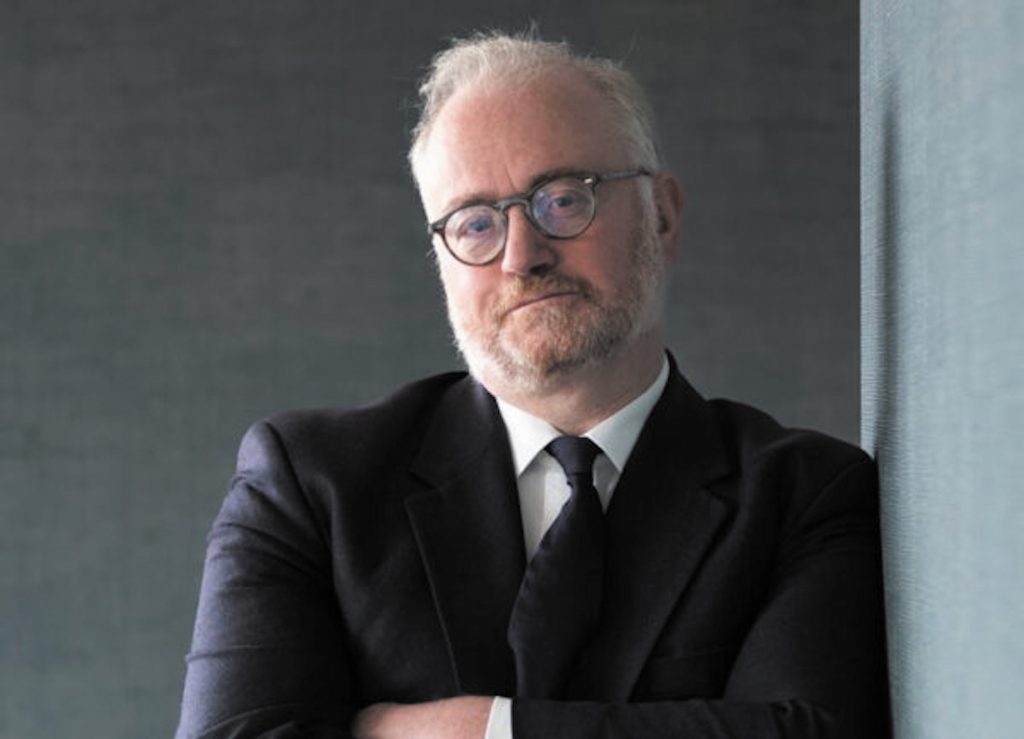
It is a matter of choosing to forget, he says, explaining that the not-for-profit Library of Mistakes is expanding to share its knowledge in Lausanne in Switzerland, Mumbai in India, and Singapore.
“It seems like mistakes are back in fashion: I wonder why this is?” he asked ironically. There has been, he said, a long-held received view that finance and investment are a form of science, which in essence is a mathematical pursuit.
“Donald Trump has convinced some people that this is not true. That there are other things going on in the world that affect investment, returns and securities prices which cannot be dreamt of in the philosophy of mathematics and the efficient markets hypothesis.”
This, he argued, is a shift that has been underway for 20 years, since Daniel Kahneman received his Noble Prize for Economics in 2002 for looking at the impact of behavioural change in finance.
The financial commentator James Grant stated that in science knowledge is cumulative, but in finance it is merely cyclical. This is because of two human attributes: greed and fear. These are the two factors that make us forget the lessons of history.
“Fear makes us forget, and we can’t get rid of it. But I do believe we can mitigate against it.” He singled out several ways to mitigate against mistakes. These are: knowledge, both among the investment professionals and with the investing public; and incentives and how they are designed.
“We seem to have completely misaligned incentives with what we know. You can make a lot of money by ignoring the past, if you have the wrong incentives.”
Less liquidity in the financial markets is a way to reduce greed and fear, he explained. Less liquidity means investors cannot change their minds as often and therefore need to be more committed.
This, he admitted, is a controversial opinion because so many fund managers make money on liquidity. “We need to reduce the role of mathematics in our business and that is true at this moment in history. This is not just about what we forget, but when we forget it.”
Napier stated we are not living through a typical business cycle but a period of “huge disruptional change”, which occurs every 30 to 40 years. There are historic parallels about what happens and what we should do. “But human beings tend to focus on the cyclical. But it’s worse than that, because the machines [the analysis of data] do the same thing.”
‘We are in a period of huge disruptional change’
- Russell Napier
He argued that investors must go back and look at the machines again, to see if they have enough data and the right data over longer periods. He also said that we are grossly underplaying the ‘softer bits’ of economics.
Referencing President Trump’s interventions, he said we need more political economy, sociology and psychology in the finance and investment world: and that is a lesson of history.
“It is a social science and political economy. What we have chosen to do is throw these things away because it brings us more certainty. Certainty that you can have an equation is a comfort blanket for many, but it is a dangerous comfort blanket. And at this moment in history, more dangerous than it has been for a very, very long time.”
He concluded by reminding the audience that markets do not exist in a vacuum. There is a history of governments which dislike market prices and try to do something to influence this. The models of supply, demand and price do not cope well with polemic intervention from national political decision makers.
He said there are plenty of examples of the unintended consequences of what governments do, notably from 1945 until 1979. He said we must learn how to adapt to the structural change in the global monetary system, including dealing with levels of debt to gross domestic product.
Such political intervention impacts on asset portfolios, exacerbated by the constant movement and churn of the professional investment class.
There are now 148,000 mutual funds, yet in the past, there were fewer active pension and securities firms holding passive assets for longer periods.
“The system has been set up today to believe that things haven’t changed. Most people, their portfolios are exactly the same as they were run six years ago: 60 per cent in equities, 40 per cent in bonds. The world may be changing but the financial system remains where it is,” he said.
Russell Napier, is director of the Didasko Education Company, and keeper of the Library of Mistakes, 33A Melville Street, Edinburgh.
