

Scotland’s fresh cohort of politicians – now settling into their parliamentary seats – face immediate stark choices. Sir Tom Hunter in his clarion call for ‘growth, growth, growth’ and genuine partnership has already spoken about the gaping £5bn black hole in the Scottish economy which is looming in 2030.
So choices are likely to pitch regions of Scotland against each other in a fierce competition for finites resources and infrastructure finance. This came sharply into focus in Inverness when pre-election political hopefuls responded to the comments of an expert financial panel.
Politicians fighting for the Inverness & Nairn seat were given the binary choice: finish the dualling of the A9 or extend the Edinburgh Tram line?
The upgrade of 83 miles of road from Perth to Inverness, due to be completed last year, is not expected to be finished before 2035. This follows the rejection of private finance initiatives resulting in the stop-start funding entirely by public monies.
The political panel, including SNP, Liberal Democrats and Labour, unanimously called for the £3.97bn dualling of the A9 to be completed before any further major infrastructure is started in Scotland. This will place both the Greens in Edinburgh and Glasgow in a delicate negotiating position, if they have the final say on what is required to help the North of Scotland. The Greens do not want any further motorways being built, and instead want investment in high-speed railway links to the North of Scotland.
With decisions revolve around structured finance from both UK and Scottish Governments, and from the existing City Region Deal funding, then the £12bn funding of the Glasgow Metro has also to be considered. This £12bn funding is being split evenly between the Scottish and UK Governments.
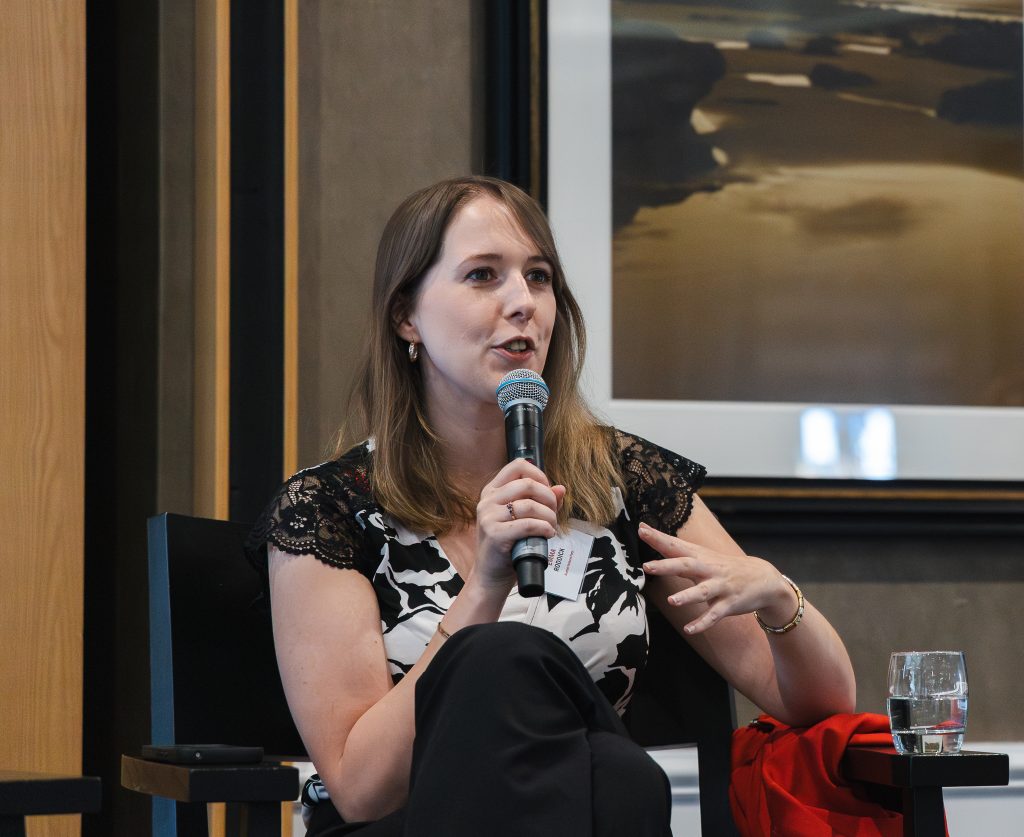
The Highland politicians, including Emma Roddick, the SNP victor in the seat, all stated that the A9 and A96 should be fully completed before any more money is spent in the Capital. Fergus Ewing, the former SNP cabinet minister, standing as an independent lost his seat, but managed over 7,800 votes fighting on the issue of dualling the A9.
The Scottish National Party, which did well in Scotland’s central belt, was definitely damaged by public complaint during the election over the nation’s infrastructure, such as the ferry delivery, with its delays and cancellations to the Hebrides and Clyde islands. The Skye, Lochaber & Badenoch seat was won by Andrew Baxter, the Caithness, Sutherland & Ross seat by David Green, both Liberal Democrats, in swings from the SNP, while Na H-Eileanan An Iar, [the Western Isles] was won by Labour’s Donald MacKinnon in a swing from the SNP.
The SNP held onto the Moray seat with Laura Mitchell, and Argyll & Bute, where Jenni Minto, of the SNP, saw off the Liberal Democrat challenge.
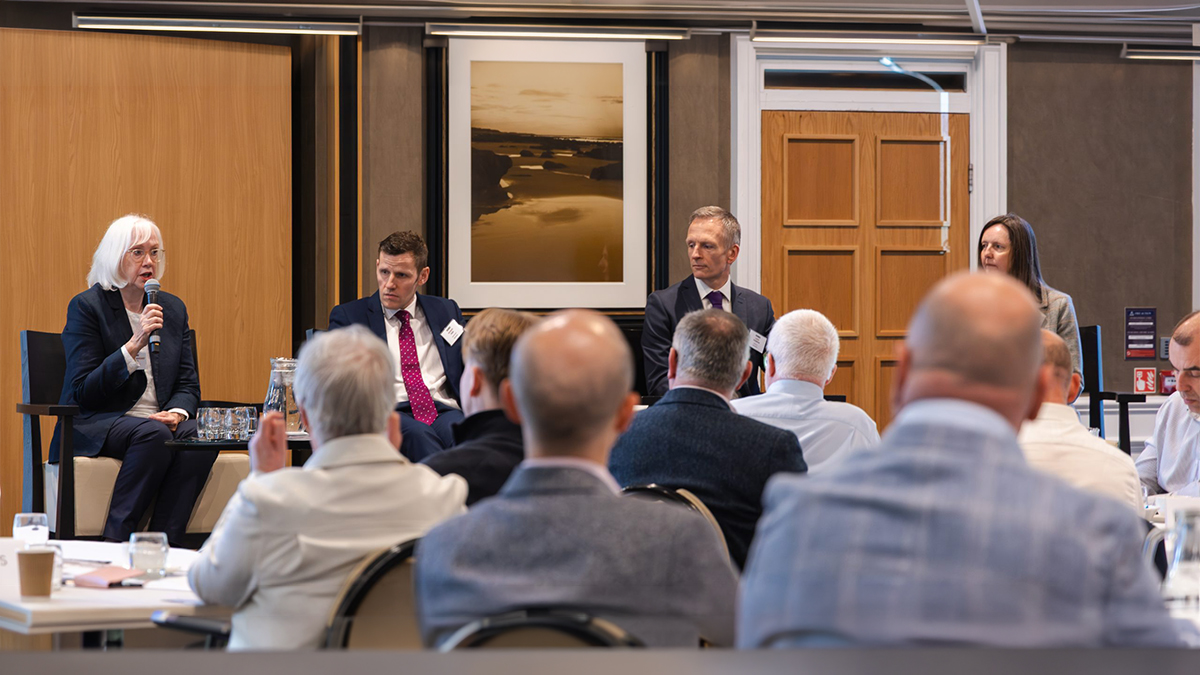
Earlier The Business’s expert panel in Inverness under the theme The Golden Age of Transformation brought together leading voices from finance, infrastructure, ports, engineering, and economic development to examine how Scotland, and the Highlands in particular, can attract the scale of private and public investment required to deliver a genuine low-carbon transition.
The session, chaired by editor Kenny Kemp, featured contributions from Baroness Margaret Ford, the former chair of the Scottish Government’s Investor Panel and chair of Gatwick Airport who lives on Skye; Richard Park, chief executive of Hub North Scotland; Chris Thomson, managing director of Infrastructure solutions at Brush Group; and Joanne Allday, head of strategy and business development at Port of Cromarty Firth.
Questions from the floor came from representatives of Highland Council, Inverness Chamber of Commerce, and the construction and communications sectors.
Under discussion was the Highland Investment Plan, a £2.1bn, 20-year capital investment programme led by the Council to deliver improvements to local infrastructure and services and will be financed through a combination of capital investment and a dedicated annual allocation of two per cent ring-fenced Council Tax revenue. This includes £750m of investment over the next five years. A key element of the HIP is the creation of community hubs, known as Points of Delivery (PoDs), to include schools, offices and depots creating more integrated community-based facilities. Such investment include the £100m investment in a new high school in Thurso.
There is a critical need for political consensus and coherent long-term investment strategy with the removal of the barriers which create regulatory uncertainty and slow decision-making, said the panel.
The legacy of all projects was paramount bringing lasting community benefits, while there was an urgent warning that opportunity in offshore wind and the green energy transition risks being lost unless action is taken decisively and soon. Furthermore, project finance could be lost to international competitors.
However, all panels felt that while there is a unique opportunity for the Highlands and the Islands if this is properly managed. The phrase a ‘Decade of Delivery’ for the Highlands was coined as the shared rallying call.
“Scotland is a small, agile country. We’ve got lots going for us. Because we’re small, we don’t have to take forever to do things. For the next decade, maybe it’s a decade of delivery. It’s about drive, and it’s about delivery,” said Margaret Ford.
Richard Park described the Highlands as standing on the ‘precipice’ of the golden age, and called for partnership as the mechanism to realise it. Thomson spoke for many businesses when he said the private sector was ready and willing, and simply needed the visibility and certainty to commit.
The panel discussed the chequered history of public-private finance in Scotland, with Ford acknowledging that PFI and PPP had attracted justified criticism, particularly due to poor execution on certain high-profile projects and instances of profiteering. She was careful, however, to distinguish between the financing model and its delivery.
“It’s not the nature of the model necessarily that’s a problem, but we have to be better clients in the public sector. We have to be much sharper in execution, and we have to build things that are buildable.”
She pointed to Canada, Ireland, and Western Australia as jurisdictions that use public-private models intelligently and successfully, and argued that Scotland should draw lessons from them rather than retreat from the model entirely.
Ford also noted that partnership-based procurement has never fully ceased in Scotland, and Richard Park confirmed that Hub North Scotland has £2.2bn of social infrastructure under operation through its DBFM programme.
Park acknowledged that the risk profile for major contractors and investors in Scotland had become mismatched, with appetite for investment existing below the £100m mark but major economic infrastructure proving more difficult to finance. He pointed to the need for conditions that would re-engage large-scale private capital.
“Private equity, under the right conditions, is going to be needed to achieve that aspiration in terms of the golden age of infrastructure.”
Park was also keen to reframe the conversation around outcomes rather than assets.
“Infrastructure is got to be the medium through which we actually achieve those outcomes; whether that’s economic outcomes, education outcomes, health outcomes, or societal outcomes. That’s often lost in the conversation around infrastructure.”
The panel addressed the long-delayed dualling of the A9 as a case study in infrastructure priority.
Margaret Ford framed it as a political choice, comparing the resources committed to the Edinburgh tram extension with what could instead have been invested in the A9; a project she described as an economic no-brainer that had been deferred across successive decades.
Allday, who moved to Scotland from north-west England 14 years ago, offered a more personal perspective.
“The journey home is longer now than it was when I first moved up here. And it makes home feel further away. The longer the A9 and the A96 take, the less attractive we are as a region.”
She noted that offshore wind developers working globally sometimes barely registered the Highlands on their map, and that connectivity infrastructure, alongside institutional advocacy, was essential to changing that perception.
Ford observed that toll roads, used successfully in Ireland to generate revenue for road investment, remained politically off the table in Scotland. As long as that was the case, road investment would continue to be crowded out by other demands on public capital.
Joanne Allday, having been centrally involved in securing the Highland and Islands Green Freeport, and currently leading a £100m plus port expansion with £55m in UK Government funding secured, described the Highlands as being at the centre of a global competition for offshore wind investment.
“We are literally the centre of the world at the moment with regards to the offshore wind industry; and we only have that opportunity for a period of time.”
Allday was frank about how close to failure the freeport bid had come. Few people at Westminster had known where Inverness was, let alone Invergordon, and much of the early work had involved simply showing politicians maps of the region. The bid was ultimately successful because it aligned with the UK Government’s levelling-up agenda and made the case for reversing working-age depopulation in the Highlands.
She was, however, deeply concerned about the current environment. The port expansion secured in 2024 could have completed by December 2026 but is not proceeding, because macroeconomic and political conditions had shifted dramatically.
“The freeport is treated as if it’s a done deal. It is very much not a done deal.”
Allday identified two specific regulatory obstacles as the most damaging: the Ming Yang Smart Energy decision, a national security ruling that consumed years of government and industry effort before being overturned in a day; and transmission network use of system (TNUoS) charges, which she described as a persistent and unresolved disadvantage for Scotland.
“TNUoS is stopping investment in Scotland. It directly impacts jobs. It’s highly likely that projects will not bid into the allocation round this year because they have no certainty. And that’s all that business looks for; give us certainty, tell us the rules of the game, and stick by them.”
Allday called for decisive action at every level of every organisation.
“Every single one of us needs to look at our own organisation and empower everybody within it to just make decisions. We need a can-do attitude. If there are blockers, let’s get them out of the way and focus on the next person who can make the decision. Things sitting on ministers’ desks for two years; back to the Green Freeport, it took eighteen months to get sign-off because two governments couldn’t agree. That has to stop. We just have to get back to can-do: make a decision, move forward.”
The final tally of seats in the 2026 Scottish Parliament, including the constituency and regional list seats, are:
Labour: 17
Reform UK: 17
Greens: 15
Conservatives: 12
