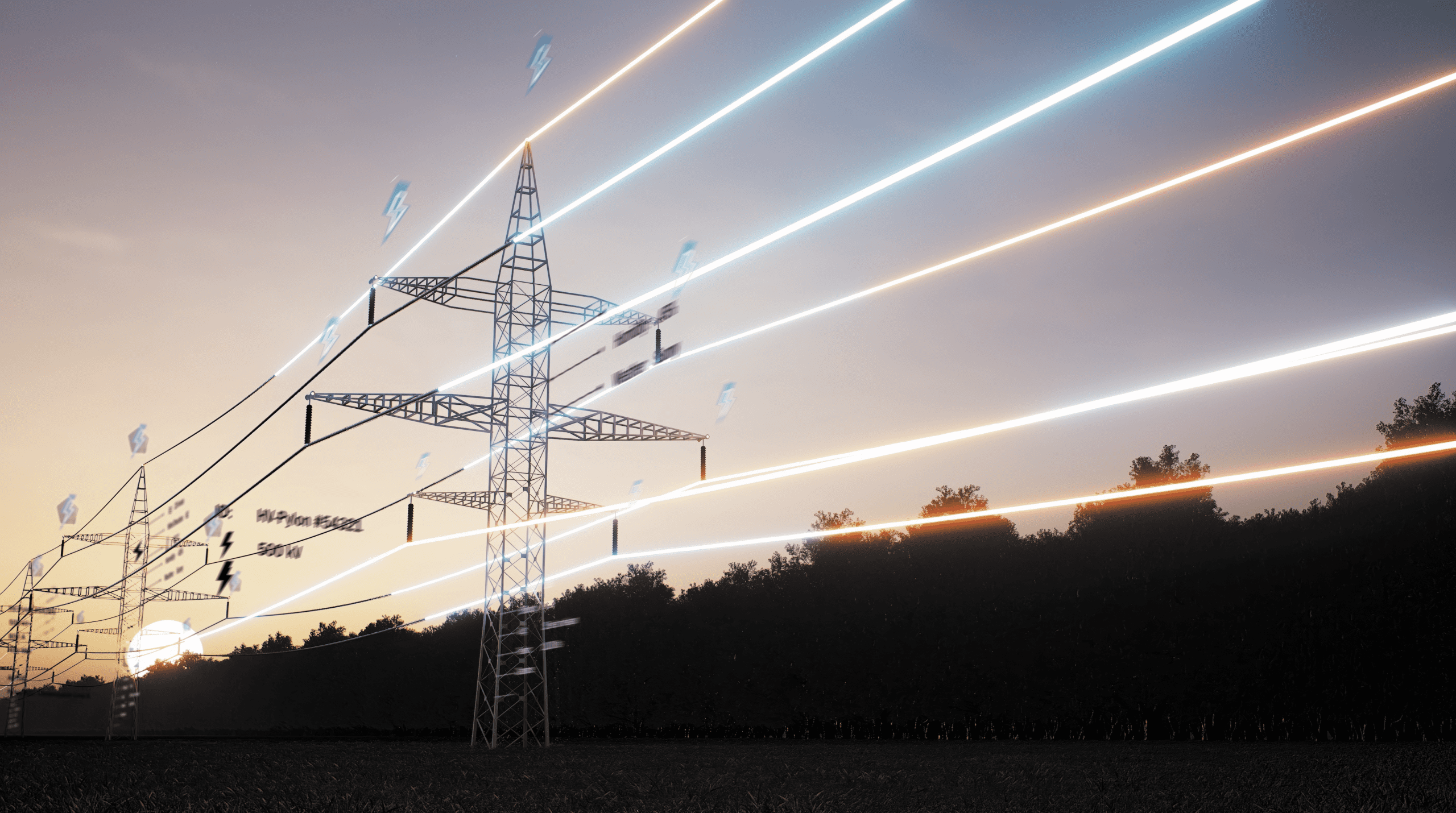

The talk in the renewable energy sector is now of electrification rather than decarbonisation
In the climactic scene of the movie Grease, John Travolta memorably serenades Olivia Newton-John by declaring that the power she’s supplying is ‘electrifying’. Today, in a different context, electrification of the power supply has taken on a new currency.
According to Clare Foster, partner and head of clean energy at Shepherd and Wedderburn, the mood music has changed in relation to the language used within the renewable energy sector, with many now talking of electrification rather than decarbonisation.
“It’s an inflexion point between the positive language of ‘electrification’ and the slightly more negative sounding ‘decarbonisation’,” she suggests.
“That may sound nuanced, but from an economic and investment perspective, it’s a really powerful point in terms of the fact that we have to get to a position where we reach net zero.”
That change is in tune with the times because, according to global energy think tank Ember, renewable energy overtook coal as the world’s leading source of electricity in the first half of this year – a historic first.
And ScottishPower is investing £10bn in Scotland on a major electricity grid rewiring after its Spanish parent company Iberdrola unveiled a €58bn strategic plan and named the UK as its number one destination for investment. The company has confirmed its investment will mean 300 new recruits in the final quarter of this year and create another 2,000 jobs through 2027 – 80 per cent of them in Scotland.
The opening of ScottishPower’s new Edinburgh office for its SP Energy Networks business will be home to its electricity transmission teams, including those building major subsea links off the east and west coasts of Scotland.
In October, the UK Government launched a national plan to ensure Britain has the workforce needed to power the green energy transition, setting a pathway to create 40,000 new clean energy jobs in Scotland by 2030, with the total number of people employed in the sector across the UK expected to double to 860,000.
Renewable energy overtook coal as the leading source of electricity in the first half of this year — a historic first
Carbon capture and storage is expected to create 15,000 jobs in Scotland, while investment in transmission infrastructure is projected to support 17,500 jobs. Offshore wind, including supply chain firms, is also expected to create a significant number of new roles with UK Energy Secretary Ed Miliband stating that the new plan places Scotland “at the very heart of the clean energy revolution”.

However, there remains deep concern from Offshore Energies UK (OEUK), a trade body representing the UK offshore industry, which argues that the UK cannot afford to accelerate the decline of North Sea oil and gas while clean energy jobs and projects are still not being delivered at scale. The body believes reform of the energy profits levy is required to protect jobs.
More than 100 UK energy supply chain companies, the British Chambers of Commerce, Prosper and others, have joined OEUK in calling for reform of the levy, saying it undermines the very capabilities needed to deliver the energy transition. They have asked for the levy to be replaced in 2026 with a profits-based mechanism that would unlock £40bn of new capital investment. At the heart of their request is a “pragmatic approach to North Sea licensing and regulatory certainty” including supporting oil and gas projects such as Rosebank and Jackdaw. This is vehemently opposed by many Scottish politicians and environmental campaigners such as Friends of the Earth.
Foster describes all recent developments in the renewable energy market as “fascinating”, while acknowledging some of the challenges.
“You will hear people beating the drum about the challenges of planning, around grid connection, around the supply chain, but that’s inevitable – you have to remember that we’re trying to electrify the entire country,” she says.
“We’re moving from a position where we had a legacy oil and gas system to a system which is entirely clean. And that takes time. It takes a lot of regulation. It takes a lot of investment.”
Foster says that the UK is regarded as a stable jurisdiction to invest in as we have the frameworks in place for stability, the rule of law, and a pipeline because projects such as ScotWind, the leasing of Scotland’s seabed to offshore windfarm developers, INTOG (Innovation and Targeted Oil and Gas leasing round for offshore wind projects) and the English Round 4 offshore projects (six new offshore windfarms that secured leasing agreements) provide momentum in terms of future projects coming down the line.
“When Labour came into power they talked about energy security, the economy, and the electrification of the country,” she says.
“The invasion of Ukraine and the hike in gas prices had an extraordinary effect on the economy and what people in their individual houses were seeing in terms of the squeeze on their wallets. If we can move to a fully electrified system, that’s going to be much cheaper long term than any system based on fossil fuels.”

Andy McFarlane, partner in renewable energy at Wright, Johnston Mackenzie, suggests that the two big concerns in relation to grid connection are when can developers get connected and what will it cost them, because grid connection is becoming a gigantic part of the capital spend on projects.
And he says that a driving factor behind the recent growth of the battery storage market in Scotland is that it makes what we put into the grid more efficient.
“There’s a massive amount of infrastructure cost going into upgrading the grid and we’re starting to see subsea interconnector cables which are designed to try to get all this electricity in Scotland down to England so we can get maximum efficiency out of it,” he says, noting that last year heralded the establishment of National Energy System Operator (NESO) to organise grid connections.
“One of the big things for onshore developers recently is Gate 2 submissions to find out where they’re going to be in the reshuffled grid queue,” says McFarlane.
The concerns with grid connection are when can developers get connected and what will it cost
Gate 2 submissions is the next stage in the new grid connection reform process for energy projects, where developers submit evidence to demonstrate their project is ready and meets strategic alignment criteria. Successfully passing Gate 2 results in a confirmed connection date, point, and queue position.
“NESO has a wider role, which is to develop a strategic spatial plan for grid connection across the UK and that’s going to be a massive issue in terms of what technologies and projects does it favour, because, wherever they decide to do it, there are going to be winners and losers, so the consultation process for that spatial plan is going to be huge,” he says.
“The rationale for the spatial plan is that while we’re all aiming towards a net zero target of 2030, we also know that demand for electricity is likely to double between 2030 and 2050, so there’s a huge market to play for there in terms of how we are going to generate that electricity.
“In the UK, where we no longer have coal and we don’t want to rely on gas, the two likely beneficiaries are going to be nuclear and renewables and the question is how much of that slice of the pie can renewables get.”
McFarlane suggests that there is more optimism about the planning process being fair post NPF4 (National Planning Framework F4 is the national spatial strategy for Scotland) and post Sector Deal (which aims to reduce the time it takes to determine Section 36 applications for onshore wind projects) being signed but notes that there are aspects of the Sector Deal that have yet to be fully implemented.
“It’s going to be developers who deliver the energy and the renewables sector is not unlike any other business in that there’s not a huge amount of money floating around at the moment, and grid connection costs have become a massive part of the cost of a project so developers are having to decide how much they are prepared to pay for grid access, when they are going to be able to pay that and when they are going to get a return,” he says.
Foster suggests that a bigger challenge than planning issues is the supply chain and welcomes recent international investment from companies such as Sumitomo and Mitsui. As for Ming Yang’s potential plans to build the UK’s largest wind turbine manufacturing facility in Scotland, she is cautiously optimistic. The Chinese company said the project will involve investment of up to £1.5bn, creating as many as 1,500 jobs.
“Continued international investment will be a real shot in the arm for the industry,” she says.
She notes that the renewables sector trade bodies are seeking to ensure that, regardless of who is in Holyrood or Downing Street, there is inbuilt ambition for moving the country to a position where we reach net zero.
“We have legislation in place which obliges us to achieve that and, frankly, that must be borne in mind with any decision that’s being taken because there isn’t an alternative,” she says.
“We’ve passed the point of no return, where there’s a global imperative to move in this direction, so the politics ought to be put to one side,” says Foster
It would seem that if we’re to succeed in that transition, then, in the words of Olivia Newton-John’s riposte to John Travolta’s flirtatious admiration, we’d ‘better shape up’.