
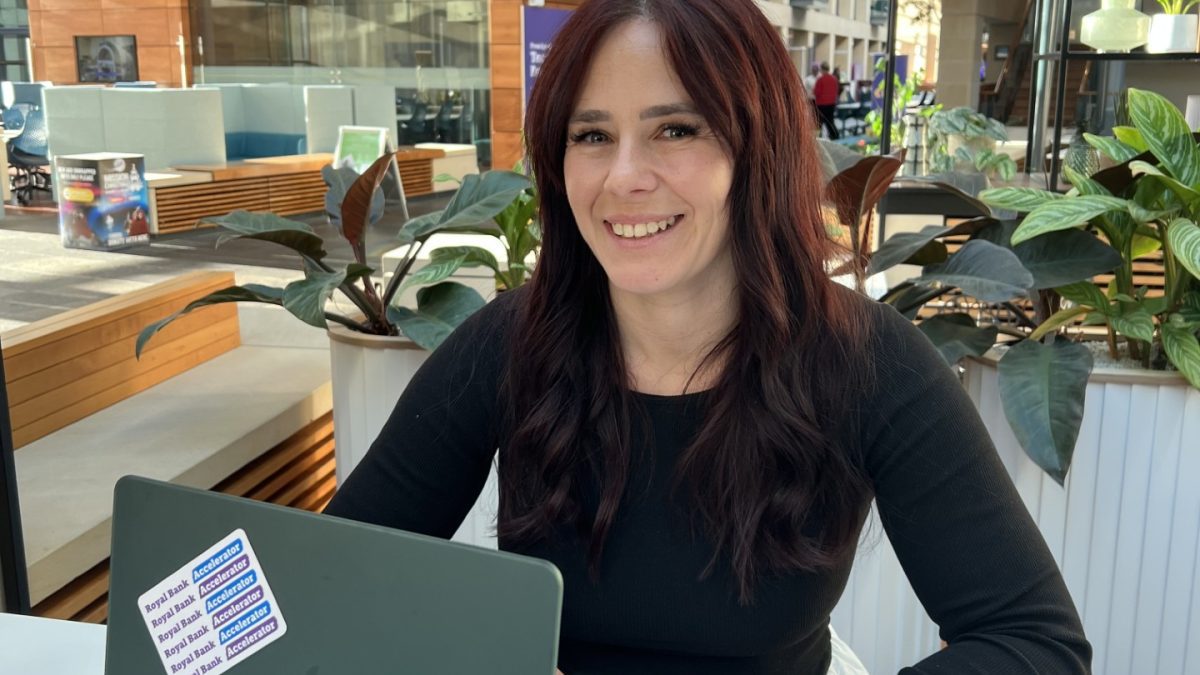

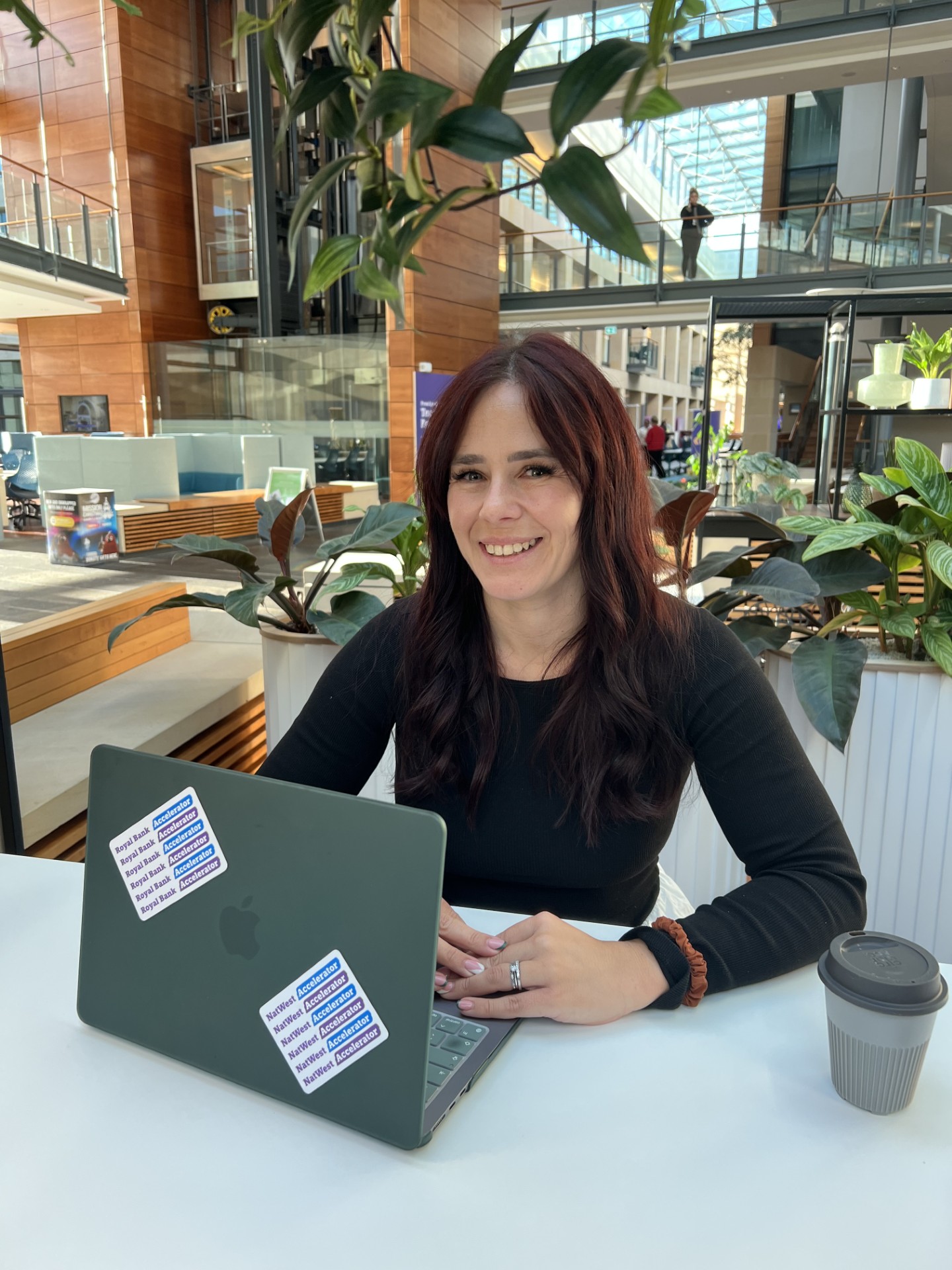
Scotland’s high-growth contenders need help to super-charge their sales in 2026. With sustainable growth a national priority, Royal Bank of Scotland is forging ahead with two high-profile Accelerator programmes: for ramping up sales and for funding readiness.
Heidi Simpson, who runs the Accelerator programmes in Scotland, explained how the bank is looking to the new year to offer broader ‘wrap-around’ support to firms across Scotland. More companies, inspired by the likes of Ooni, the innovative Edinburgh-based pizza oven company, and Staffscanner, a flexible employment organisation, are expected to join Scotland’s high-growth elite.
“We are proud that we can support businesses at all stages. We are now looking at how we continue to build and promote an entrepreneurial community in Scotland. How can we serve start-ups in their early stage with one-to-many support and digital resources, but then take those with ambition to be part of that journey of scaling, and that’s where our programmes come in for businesses that are ready to take that next steps.”
“We’ve already got an eclectic mix of businesses, from food and drink, to creatives, to med-tech, such as one in Glasgow at an early stage, which is doing well, and the likes of a maritime security agency, which has been involved with the Accelerator programme for ten years. It’s a wonderful blend of what we have in Scotland.”
Royal Bank of Scotland, now under the umbrella of the NatWest Group with 12 UK Accelerator hubs, have two specific programmes including: How to Grow Your Business Through Selling, and the Funding Readiness Accelerator for Founders.
“We are 100 per cent open for businesses to apply to join our sales programme in 2026 in Glasgow and Edinburgh, with six modules in our sales Accelerator journey. It’s about framing your pitch, getting the right strategy. We talk about CRM systems, and we go to town on market strategies, then loads of pitch practices, making company founders the masters of their own pitch.”
EVOLUTION OF THE ACCELERATOR
The first RBS Accelerator was in Kirkstane House in Glasgow’s St Vincent Street, set up ten years but has since moved to Queen Street in Glasgow. Over in Edinburgh, the Gogarburn campus, has been used as a hot-house for emerging firms. Over 1,000 companies have been supported in that decade, the aim now is to support 5,000 in 2026 alone. Darren Pirie heads up the whole UK group programme.
“We know there is demand for this kind of support. We recognise that businesses don’t always need finance. Of course, we’re a bank and you might well need that, however sometimes you’ve got to demonstrate sales before you obtain that first big ticket investment,” says Simpson.
She says getting businesses ready to communicate the benefits of their products, helping set up a sales strategy which can be scaled when products hit that market, is a key part of the bank’s offering. After this stage, the bank now has a Funding Readiness Accelerator, for investment in high growth firms involved with the likes of digital technology, med-tech and life sciences, where longer term investment is required to surmount regulatory hurdles. This involves assessing the right levels of debt/equity split with investing shareholders, and what alternative finance options may be required.
“It is about ensuring that the business is in the best position to get the right finance at the right time,” she says.
Simpson, who started as a banking intern in 2012, before joining RBS’s graduate training programme, discovered she was most interested in helping companies grow and made it her objective to work in business banking who were working with a range of entrepreneurial support organisations in Scotland to re-imagine how we support ambitious businesses.
“It was about trying to engage entrepreneurial thinking in the business bank, so that our team would think more like entrepreneurs,” says Simpson, who has taken time away from an entrepreneur’s gathering at Gogarburn to speak with The Business.
Simpson and her colleagues took the Accelerator across the country, which led to the creation of several regional hubs.
“We have expertise within the bank plus a customer-base and teams that can support the entrepreneurial ecosystem in Scotland. Our relationship managers are each work day-in, day-out with these businesses and they see in-depth, the challenges that entrepreneurs are facing.”
The bank, with its conference room facilities at the bank’s leafy Gogarburn campus, is able to run ‘meet the buyer’ sessions, and simulations for pitching for new business in a very safe space.
“We have businesses who have come through our Accelerator programme who are supplying our suppliers. That is something that we are able to unlock.”
RBS is offering support through the likes of FreeAgent, an award-winning accountancy tool, managing payroll and VAT-more easily, and owned by the bank.
Each Accelerator space has an accelerator community manager and it is their role to bring in the right expertise for the needs of the business community.
“This might be the right legal support, the best marketing advice, or a CRM support. Or it could be access to alternate funders. It is their job to bring the best possible support to the party.” RBS has five in the Accelerator team in Scotland.
DON’T SELL YOUR BUSINESS TOO QUICKLY
In a recent interview in The Business, Calum Paterson, the founder of Scottish Equity Partners, explained his investment organisation based in Glasgow had been an early investor in Skyscanner, the airline booking platform, which was sold in 2016 for more than £1.4bn.
“It was very small for us, but we could see the significant value-adds from us to Gareth [Williams] and the other founders was to discourage them from exiting too early,” explained Paterson.
This chimes with Simpson at the bank.
“I hear this all the time at events in Scotland. Don’t sell your stall on the first time you have an offer. Be more American: think about the bigger potential. If you sell too quickly, you might get a quick buck. But you really need to consider your relationship with your investor and what they are looking for.”
She wants Scottish businesses to be set up for scale at the outset, rather than an after-thought, so when the big ticket customer arrives, firms are ‘ready to go.’
Scottish companies, she explains, must be better informed about the types of investment partners that are available, be that business angels, venture capital, private equity investors or going for a listing on a market.
“What we do with the Accelerator is bring in the right advisers to give that specific advice. Our team will not give any advice, we will coach, we will challenge, we connect. We support the Investment Readiness Programme, which has Scottish Government funding, because these are the experts. We are tapping into the right expertise.”
Moreover, it is the voices of real-time entrepreneurs who can give a taste of their experiences which is also of value.
Simpson describes as the Accelerator’s role as the home in on the “power of convening”.
SWITCH TO ALWAYS-ON
In its first decade, the Accelerator programme has been based on a time-frame of support, which typically meant companies nurtured for around 18 months before being left to their own devices. The bank has changed this mode of operation.
“The fundamental change that we have brought, which is disruptive to market, and people are surprised about, is that we have this always-on offer of support. We’ve invested in our digital capability for the Accelerator community. We know that you still have to have cohort-led experience.”
“We’re not going to say ‘goodbye’ to you anymore, we are at a point of need, which is what business owners and potential owners need.”
For more information download the Accelerator app.
https://www.rbs.co.uk/business/business-services/entrepreneur-accelerator.html
