
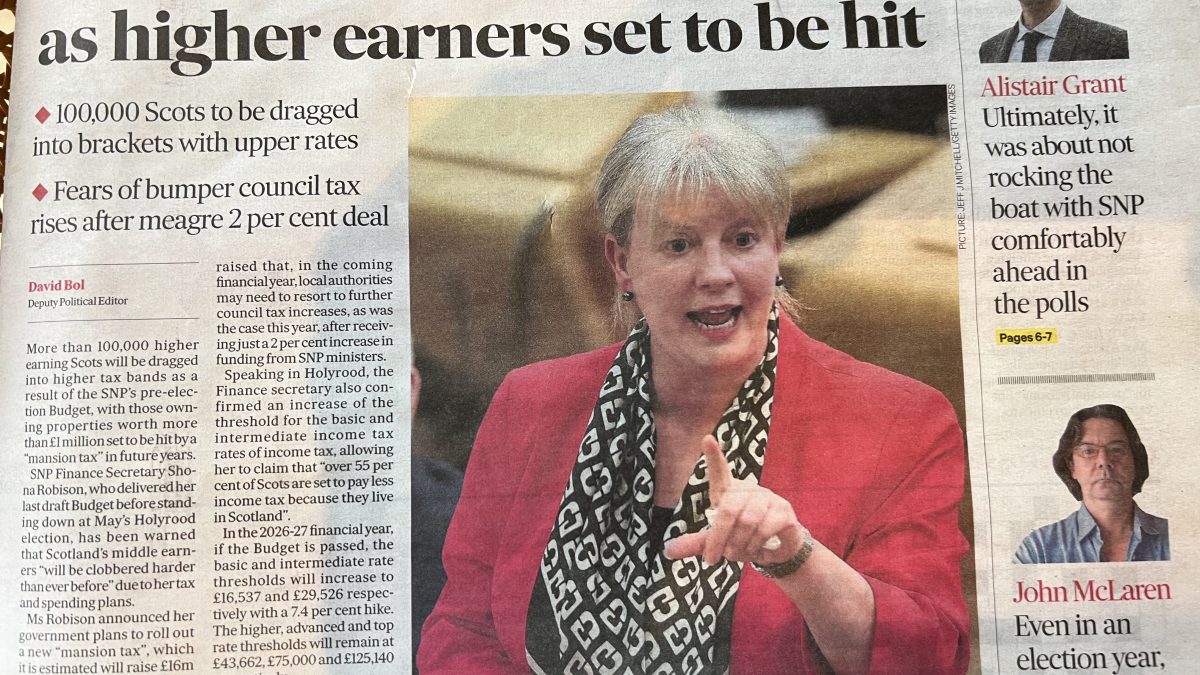

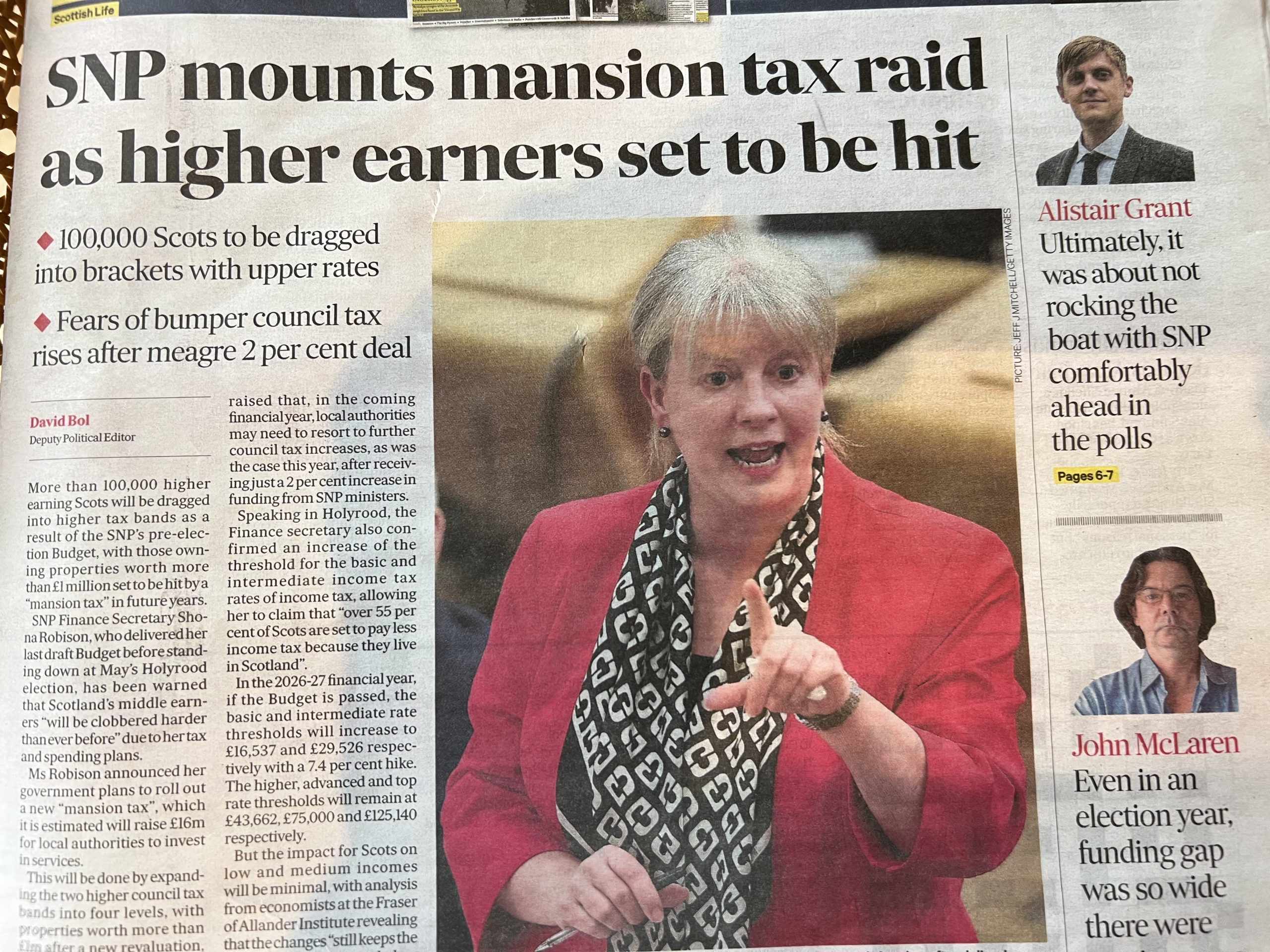
Shona Robison, the Scottish Finance Secretary, stood up earlier this week in the Scottish Parliament and delivered the SNP’s pre-election Scottish Budget.
Some commentators called her speech a ‘crowd pleaser’ while CBI Scotland director, Michelle Ferguson, welcomed certain aspects, such as rate relief for SME businesses, she warned that the continuing “tax divergence” north of the Border’ was a serious concern, and called for an independent review of the Scotland’s “uncompetitive tax strategy”.
But it is still taking time for organisations, including Scotland’s cash-strapped councils, to digest and assess the deeper impact of Ms Robison’s oratory. The devil is in the detail, and it does not bode well.
The abysmal state of many Scottish town centres and High Streets, the broken and shabby infrastructure, the logjam on all types of housing caused by a dearth of local planning officials, the issues of poor and costly social care for the elderly and infirm, all of this fall within the bailiwick of Scotland’s councils. If we are to resolve Scotland’s housing emergency, then the councils have a central role to play. Yet, once again, the councils have drawn the short straw.
THE HEADLINES LOOK FLATTERING
The immediate headlines were about the ‘McMansion tax’ on homes valued at more than £1m, a surcharge on private jets, while there were noises made about ending child poverty, including a payment of £40 a week for parents with a child up to one year old.
For the business community, there was a peace offering worth £322m in a package of rates relief which was a response to a combined campaign by business and hospitality groups. Transitional relief of £184m is being set aside for those impacted by revaluations. The small business bonus scheme, which has removed rates from small businesses, will continue for at least the next three years. All good news.
Domestic business rates will be reduced by 15 per cent for retail, hospitality and leisure premises, saving £138m for firms. However, UKHospitality warned the majority of Scottish businesses will still be paying higher business rates in April. Our wine and beer will not be any cheaper.
There is a definite feeling that the SNP has started to listen to the pleas of business organisations in a more constructive way.
Ms Robison made an undying commitment to support the NHS, and funding for lunch clubs for children, but once again Scotland’s councils were treated like the poor relations. She stated local government funding will be increased by a paltry 2 per cent, and it will be up to individual authorities to determine how to spend this less-than-inflation increase.
Rather than respond to Ms Robison, COSLA, the organisation speaking out for Scotland’s councils, has taken time to examine the numbers. It held its council leadership meeting in Edinburgh on Thursday to consider. It is now clear that Scotland’s councils are the hidden losers in Budget.
SCOTLAND’S COUNCIL ARE LOSERS – AGAIN
Outside of the National Health Service, Scotland’s 32 local councils are the biggest sector in Scotland and remain legally responsible for delivering essential services to Scotland communities.
COSLA has deep concerns about the Scottish Budget settlement for local government. Its political leaders choose their words very carefully, after all the Scottish Government hands them the majority of their block funding. However, it warns that while there is a modest increase in ‘uncommitted revenue’, the funding remains insufficient to meet rising demand for essential local services.
Council leaders stressed that the increase of £234m in uncommitted revenue funding for 2026/27 does not address the scale of pressures facing councils, particularly in social care where demand and complexity continue to rise sharply.
Of course, Scotland’s councils are made up of political leaders from various political parties, and it does not do them any favours moaning to the Scottish Government. However, it is the hard-pressed local councils, previously ordered to halt council tax charge increases under the SNP’s leadership, that will feel the brunt of local frustrations about the increasing diminution of services that were once taken for granted.
COSLA’s leaders also “expressed significant concern” about the medium-term outlook set out in the Spending Review, which suggests continued de-prioritisation of local government and further real-terms cuts over the coming years.
Councillor Ricky Bell, COSLA spokesperson for resources, said: “While we acknowledge the increase in uncommitted revenue funding for 2026/27, this settlement falls far short of what is needed to sustain essential local services. Councils are facing acute and growing pressures, particularly in social care, and the current level of funding simply does not reflect the scale or complexity of demand.”
COSLA also highlighted urgent concerns about the continued underfunding of the Real Living Wage policy.
While welcoming the increase in funding for the Affordable Housing Supply Programme, COSLA warned that the capital funding position for local government is becoming increasingly unsustainable, threatening councils’ ability to invest in vital infrastructure and community assets.
“We are especially concerned by the continued underfunding of the Real Living Wage across portfolios including social care. COSLA made a clear and urgent ask for significant additional investment of £750m to protect and strengthen social care, which the Budget as announced fails to deliver.
He said the medium-term outlook paints a worrying picture for local government, with continued de-prioritisation and the prospect of significant real-terms cuts.
“If councils are to continue delivering for communities, we are calling for urgent and meaningful engagement with the Scottish Government to ensure local government is properly funded to continue delivering the essential services communities rely on every day.”
COSLA ASKED FOR £16bn – THEY ARE £1bn SHORT
Ms Robison made an announcement of new council tax bands. But it is vital that councils — as the rate setters and collectors of council tax — are involved in shaping policy relating to council tax.
It will be the councils, under-resourced in terms of planning officers, who will be expected to assess those living in homes valued at over £1 million.
COSLA’s budget asked for £16bn in revenue including an additional £750m for social care. The Scottish Budget provides £15bn.
Capital funding to councils in the budget is £681.4m. COSLA’s ask was £844m.
This shortfall will impact on the Scottish public who will continue to see a deterioration in local services. This will have a detrimental impact on the economy, the ability of businesses to survive, and the general wellbeing of Scottish people.
While COSLA has reiterated its support for the introduction of additional council tax bands as an interim step towards fundamental reform, it wants better cooperation between the Scottish Government, COSLA and local government. Councils need greater local flexibility to solve problems that are specific to their areas.
‘Councils are facing acute and growing pressures, particularly in social care, and the current level of funding simply does not reflect the scale or complexity of demand,’ COSLA spokesperson
Read the previous ECONOMIC PRIMER from The Business here.
