Buyers and investors are ‘very cautious’ in face of global uncertainty
After a resilient year for deal-makers in Scotland, advisers returned to work in 2026 optimistic that easing inflation and falling interest rates would underpin continued momentum. A series of significant transactions in the energy sector in particular towards the end of the year raised hopes of a sustained improvement in activity, but the conflict in the Middle East has inevitably shaken confidence.
According to Neil Forbes, corporate partner at Stronachs in Aberdeen, significant uncertainty over the implications – particularly for domestic energy policy – mean buyers and investors are being “very cautious”.
“The renewed focus on energy security has seen calls for the energy profits levy to be relaxed and for the moratorium on new drilling in the North Sea to be lifted, but then the spike seen in gas prices might instead see a doubling down on clean power policies,” he explains.
Renewable energy sector
For the renewable energy sector, Forbes says the heated debate over the push for net zero is particularly challenging for investors.
Although the record offshore capacity secured under the latest AR7 CfD auctions was undoubtedly positive, the Reform UK party has vowed to abolish subsidies for offshore wind and other renewable projects.
For investors looking at major investments several years ahead that risk is a significant issue
- Neil Forbes
“For investors looking at major investments several years ahead that risk is a significant issue,” says Forbes.
However, investment in energy infrastructure – such as SSEN’s £20bn transmission network upgrade in Scotland – offers more certainty.
Forbes, whose team acted as lead adviser for Global Energy Group in the landmark sale of the Port of Nigg to Mitsui, says clients involved in areas such as fabrication are now actively looking at M&A opportunities on the back of major infrastructure projects.
Graeme Gunn: ‘No shortage of great technology and innovation’
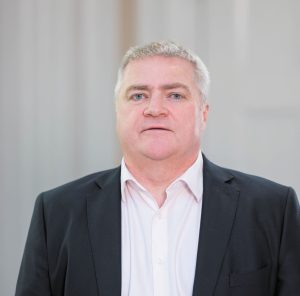
Neil Forbes: ‘Clients actively looking at M&A opportunities’
A modest increase in transactions was seen in Scotland in 2025, although the total value fell due to a decrease in the number of mega-deals. The 557 deals recorded by Experian MarketIQ was a rise of around four per cent on 2024, but the total value fell by more than a quarter due to fewer mega-deals being reported.
David Anderson, head of corporate in Scotland at Addleshaw Goddard, says the engine room of current deal activity remains the mid-market sector.
“Founder and family owned businesses continue to drive activity and trusted local adviser relationships matter. The bidder universe has broadened, with non Scottish investors and trade buyers active across core sectors,” he says.
Professional services sector and private equity firms
Among the most active sectors so far this year has been professional services, with private equity firms in particular aggressively deploying capital with a focus on buy-and-build strategies.
High-profile Scottish deals included Aberdeen-headquartered AAB adding London and south-east England-focused Kreston Reeves in its latest acquisition after a major investment deal with Goldman Sachs Alternatives.
Among smaller deals in the accountancy sector, UK-wide TC Group acquired Dundee’s MMG Chartered Accountants, and Clifton Wealth expanded its footprint north of the border with the acquisition of Fife-based Cairn Independent and Glasgow-based JRW, adding £150m of client assets.
In the legal sector West Midland law firm Higgs acquired Edinburgh-based Vialex, along with its employment law arm Navigator.
Although equity investment deals in Scotland rose by almost a third to more than £1bn last year, there are concerns that recent tax changes could see early-stage growth companies in particular finding it harder to access funding.
Figures compiled for Mercia Ventures show there were 352 equity investment deals in Scotland in 2025 – a slight rise on the previous year and bucking the trend seen in the wider UK market.
Income tax relief for VCTs introduced this month
However, private equity veteran Graeme Gunn, an adviser at 3 Bridges Capital and chairman of Edinburgh-based ski technology firm Maison Sport, warns reductions to venture capital tax breaks introduced in April could have a significant impact.
The UK Government has reduced upfront income tax relief for investors from 30 per cent to 20 per cent, although it has also doubled the amount a company can raise annually to £20m.
For smaller technology firms in particular […] the domestic environment has to be welcoming
- Graeme Gunn
Gunn likened the move to “filling a bucket while simultaneously poking holes in the bottom” and warns the reduction in tax relief will impact Scottish firms trying to attract global investors.
“For smaller technology firms in particular, building an international investor base with specialist knowledge of particular technologies is critical but to achieve that the domestic environment has to be welcoming,” says Gunn.
Targeted funding support for SMEs
He believes a UK-wide focus on areas such as targeted funding support for SMEs is now crucial to help deliver on growth ambitions.
“Across Scotland and the UK there is no shortage of great technology and innovation being developed but there is a growing disconnect between this potential and the government policy required to sustain it.”
While more support is needed, Gunn also believes early-stage businesses should not overlook what he sees as a particularly important funding route.
“Focusing on generating revenue and profits is the best way for businesses to be able to have the means to invest in growth while staying in control,” he points out.