Home > Magazine > The Fine Art of the Deal: Ten pointers from our Business experts
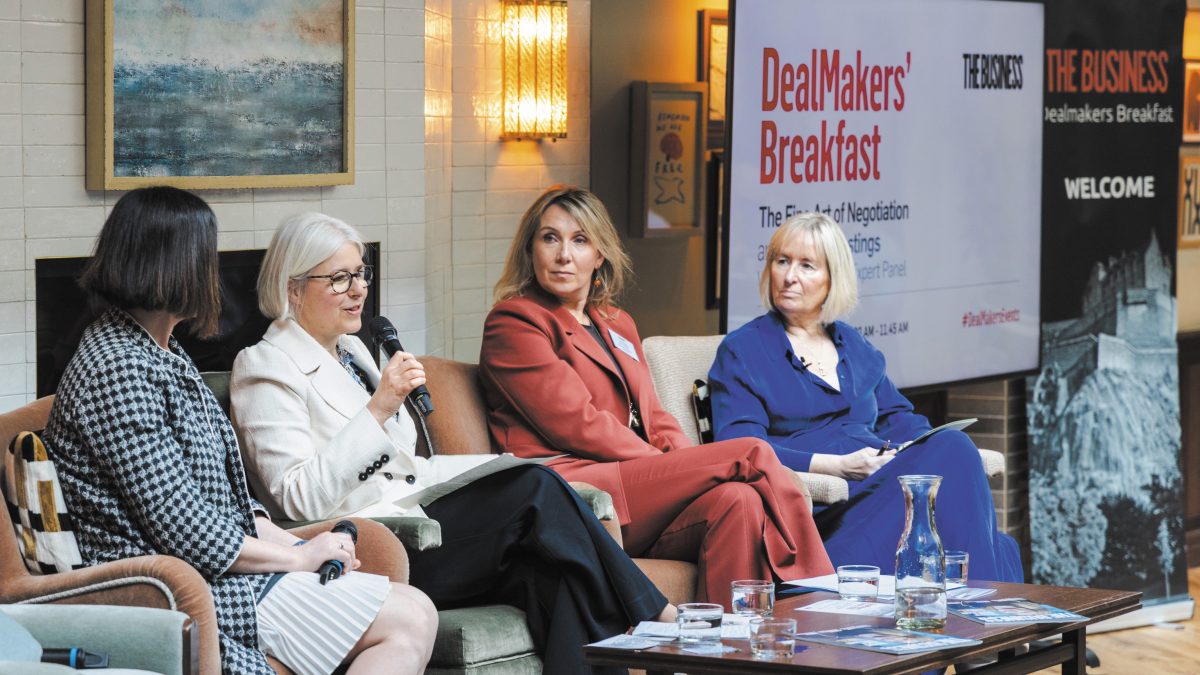
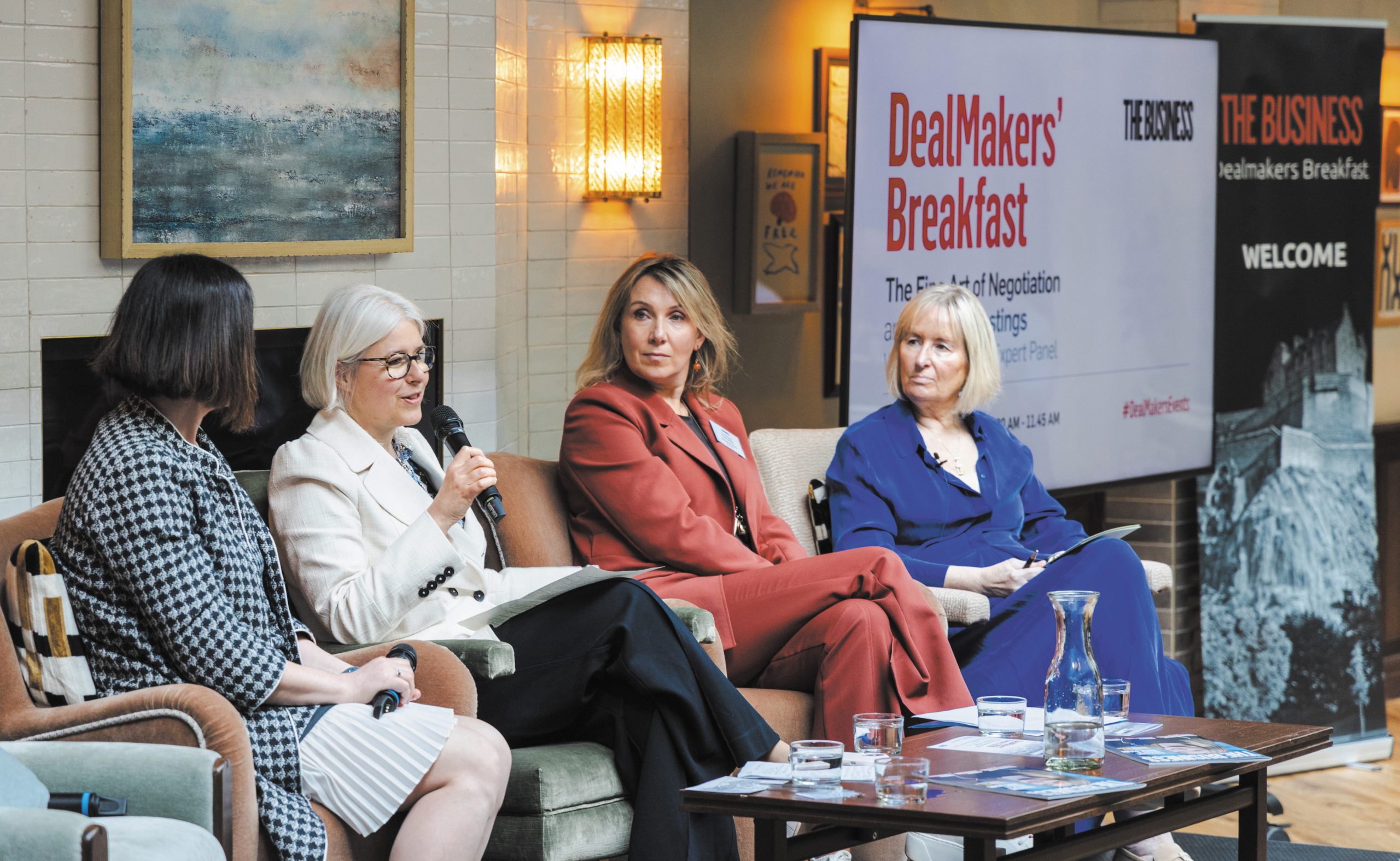
Lucinda Bruce-Gardyne makes a point while Colette Grant, Lindsay
Campbell, and
Claudia Cavalluzzo,
prepare to respond at the Edinburgh event. |
Pic: Ruaridh Hanna
The Business Dealmakers’ Breakfast all-women panel, entitled The Fine Art of Negotiation, at the Hoxton in Edinburgh in April, chaired by Colette Grant, included Lindsay Campbell, Lucinda Bruce-Gardyne and Claudia Cavalluzzo. Here are their pearls of wisdom.
1. Know your non-negotiables before you begin
Lindsay Campbell’s foundational principle: enter every negotiation with absolute clarity on the things you will not give ground on. Without that clarity, the excitement of the deal can sweep you past your own red lines. When her core concerns kept being sidestepped, her team had the discipline to walk away — and returned with far more flexibility on everything else.
2. Listening is a strategic weapon, not just a courtesy
Campbell was emphatic that active listening is one of the most underrated tools in any negotiation. The most valuable intelligence rarely comes from the loudest voice in the room. Watch the quieter participants – they often reveal far more about where flexibility actually lies, and which issues the other side will genuinely concede.
3. Trust your gut – then do your homework
Lucinda Bruce-Gardyne’s defining principle: gut feel is real, and 99 per cent of the time, the bad feeling you talk yourself out of comes back to bite you. But instinct must be backed by rigorous due diligence – speaking to people who have worked with the other party, examining their track record, and probing their reactions when the term sheet gets stress-tested.
4. Get neutral — excitement is as dangerous as fear
Colette Grant’s personal contribution: over-excitement in a negotiation is just as destabilising as anxiety. The best advice she received was to get more neutral. Grounded confidence, rather than emotional investment in the outcome, is what enables clear thinking when the stakes are highest.
5. Authenticity Is non-negotiable
Claudia Cavalluzzo drew a sharp line between performing competence and actually embodying it. Investors are not just buying an idea or a technology: they are buying the person across the table. She used the the case of Theranos [the US health tech company which was built on false claims for its product] as a cautionary tale: you can manufacture trust temporarily, but it will unravel. Showing up as yourself, including admitting what you don’t know, is ultimately more compelling than any polished pitch.
6. Cultural intelligence is a competitive advantage
Campbell’s cross-border experience – Japan, China, the US, Europe – taught her that hierarchy, directness and decision-making norms vary enormously. In Asian business cultures, agreements made in the room may need to travel up a hierarchy before they stick. In US cultures, what feels blunt or abrasive may simply be efficient. Patience, humility and a refusal to show frustration are the non-negotiables of international dealmaking.
6. Cultural intelligence is a competitive advantage
Cavalluzzo’s most striking statistic: one investor receives roughly 1,000 pitch decks a year and spends an average of 35 seconds on each. No AI-designed deck, however polished, cuts through that noise. A warm introduction buys the conversation that the pitch alone cannot. Network-building, she argued, is not optional for entrepreneurs: it is foundational.
6. Cultural intelligence is a competitive advantage
Bruce-Gardyne’s approach to manufacturing partnerships was revealing: before committing, apply pressure. Are they willing to invest in new equipment? Will they give you innovation time? What do conditions look like on the shop floor? How they respond to stress tests before the deal closes tells you far more than how they behave during the honeymoon. Plan explicitly for when things get hard.
9. Build the right team around the table
Both the internal team and the board matter enormously. Bruce-Gardyne urged founders to resist filling boards with one kind of expertise. Campbell reinforced it: you need people willing to be the “Rottweiler” when commercial conversations get hard, not just relationship-builders. No significant deal should be navigated alone, and dissenting voices within your own team deserve to be heard.
10. The best deals are built to last
The panel’s closing consensus was that negotiation is not a zero-sum contest:it is the beginning of a relationship. Campbell’s final word was about collaborative trade-offs and joint wins. Bruce-Gardyne’s was about holding your values and red lines with courage. And Grant’s was the simplest of all: be yourself, don’t take it too seriously, and find the fun in the journey – even the difficult parts.
Kenny Kemp reports on The Business’ expert insights from the session here.