

How Michele Zagnoni and Alex Sim are taking Screenin3D to the next level
Dr Michele Zagnoni, born and educated in Bologna, is a new-generation Glaswegian making a difference in his adopted homeland.
In his seventh-floor laboratory in Glasgow’s Technology and Innovation Centre (TIC), the professor of electronic and electrical engineering at the University of Strathclyde has invented a miniaturisation system that will dramatically increase the speed of drug testing for many types of cancers, with the added bonus that it will drastically reduce the need for animal testing.
The professor and his veteran business partner Alex Sim, a molecular biologist and Strathclyde graduate, have devised Screenin3D, raising seed funds for its development, and are on the cusp of ramping up commercialisation.
The pair have switched homelands: Sim, 68, the Scotsman, splits his time between Tuscany and the UK, while Zagnoni, 49, lives on the outskirts of Glasgow.
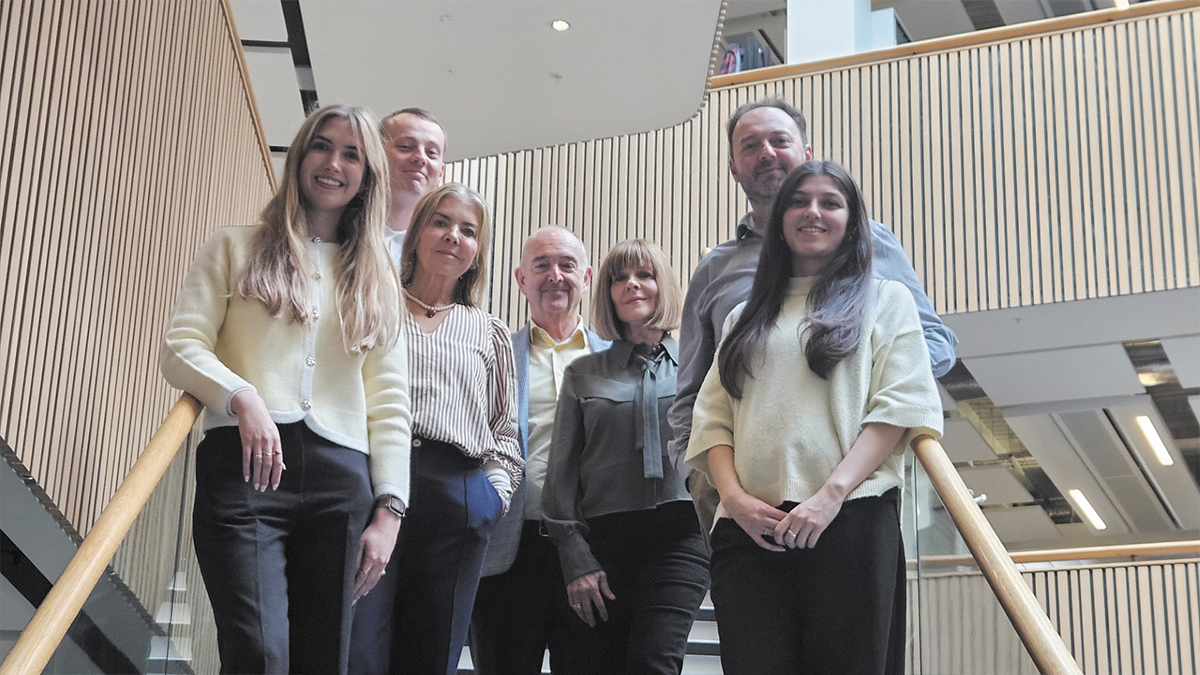
The company’s team of ten, including technology specialist Karla Paterson and ex venture capitalist Nicola Broughton, have been joined by Fiona Nicolson as a non-executive director.
Nicolson is one of Scotland’s foremost intellectual property lawyers, who works with Keystone Law, but was the former international president of LESI (Licensing Executives Society International).
Zagnoni, who maintains a professorial role teaching and researching within the university, met Sim 14 years ago. They began a collaboration which has led to Screenin3D, and the creation of microfluidic devices enabling the screening of hundreds of complex 3D tumour samples on a miniaturised platform.
“We started with an academic project and we created intellectual property which the university protected. And around this piece of IP with Alex we built Screenin3D.”
The era of the blockbuster drug is over
The confluence of two disparate disciplines, electronic engineering and in-vitro biological science, have been amalgamated to produce Screenin3D’s microfluidic technology.
“The idea of testing drugs on human tissue is not new, and many research groups have been doing this globally before we started. What we have solved is an industry or a pharma problem to undertake the testing of tumour tissue at scale,” Zagnoni says.
One of the key strands in this story is the changing regulation over the use of animals for laboratory testing. For hundreds of years, animal testing has been fundamental to the advance of medical and biological research.
Sim and Zagnoni’s combined innovation is now beginning to be adopted by cancer treatment centres
The ethical landscape is changing and the Modernisation Act, enacted in the United States, removes the mandate requiring animal testing for new drug development, allowing the Food and Drug Administration to accept data obtained from human tissue and microfluidic technologies.
Sim and Zagnoni’s combined innovation is now beginning to be adopted by cancer treatment centres and drug developers.
When a patient is being treated for the cancer or when a cancerous tumour has been removed, a biopsy involving a cluster of live human cells is taken for laboratory examination. In Screenin3D’s case, these small cell samples are kept alive and, via the invention of Zagnoni’s microfluidic dimpled ‘Petri dish’ devices, 3D mini-tumours are blas ted with therapeutic (or developmental) drugs in an effort to kill the cancer.
“We’ve developed what the industry calls ‘laboratory on a chip’ technologies,” says Zagnoni. “Our aim is to create technologies that help improve the drug discovery process. Historically, there has been a heavy reliance on animals to test drugs. Now there is a strong movement coming from the United States, as well as Europe and the UK, where the governments have committed to reducing dramatically the levels of animal testing.
“What is emerging is that testing those drugs on human tissue is more predictive of clinical outcomes. We can now facilitate testing on a variety of human-derived models when developing new drugs, we will be able to find out which drug is the most efficacious.”
With agreements with hospitals in Edinburgh and Glasgow, Screenin3D takes a tumour biopsy, with the patients’ consent, after surgery.
Zagnoni says: “We obtain a very small piece of the tumour. It must be living, because if the tissue dies we can’t do a test. Typically, it is a few cubic millimetres, and this piece will contain hundreds of thousands of living cells.
“With this we can do many things, we can prepare the tissue so that it can be applied to our lab-on-a-chip technology and tested in real time. Or we can expand and store the tissue, so we can test many more drugs or conditions.”
The start of the genetic revolution
This is the sharp end of much-vaunted ‘precision’ medicine with the ability to test multiple drug combinations with the same sample of tissue.
The era of the blockbuster drug is over; the most effective treatments are combinations of therapies
- Dr Michele Zagnoni
“The era of the blockbuster drug is over; the most effective treatments are combinations of therapies,” says Zagnoni. “For example, you try drug one, and then drug two, and then after a few days a cell therapy. Our technology allows for the miniaturisation of all of these tests by using very small amounts of human tissue. We need to see that the drug is killing the cancer, and that is what we are able to determine on our device and at scale.”
Sim worked for Amersham International, the first UK company using radioactive nucleotides and compounds to advance science.
“I was very fortunate that I landed at the start of the genetic revolution, when DNA sequencing was beginning to use radioactivity.”
A green field of science opening up
Sim felt that the single cell was an overlooked area of scientific exploration. “The cell is much more complex than just DNA. The DNA makes RNA which makes protein and they can be modified. I wondered why researchers were not doing more with cells.
“There was movement away from the genotype to the phenotype, and then I happened to meet Michele who is an engineer. All of sudden, there was a green field of science opening up to us using engineered microfluidics to try and grow stem cells or how we treat tumours.”
The pair started looking at cancer but followed this by investigating endometriosis and other women’s health conditions.
“When I saw the wealth of possibilities offered by different cell types, it was clear the approach could be applied across a broad spectrum of diseases.”
It was then that Sim started to invest personally in PhD students and with the blessing of Sir Jim McDonald, Strathclyde’s Principal, the start-up received elementary funding.
“I take my hat off to my alma mater Strathclyde for helping in these early stages,” says Sim.
The company, founded in 2018, landed its first commercial biotech contract before the Covid pandemic, and moved into Strathclyde’s spin-out space.
This is applied science with a market ready for sales, rather than work focused on academic papers
While Scotland’s life science research is world class, commercialisation remains near the bottom of the league.
“I lived in the Cambridge, Boston, area for six years and, had we been based there, we likely would have raised more funding. The scale of the funding ecosystem there is quite different” he says.
The journey of Scottish BioTech
The journey of this Scottish biotech exemplifies the genuine struggles that Scottish life sciences companies face in developing and scaling at pace. Last year, the company, now with an expanding customer base, did received £750,000 investment through its relationship with Tricapital Angels, based in Melrose, and Scottish Enterprise, via the Scottish Co-Investment Fund which backs angel capital.
The company’s existing investors are Gabriel Investment Syndicate, Scottish Enterprise, Strathclyde University, plus German investor Nidobirds Ventures, and several private individuals.
However, there remains lacklustre interest from the National Health Service, which sees itself as at the forefront of cancer care, yet is mired in regulatory boundaries preventing it from embracing and buying into homebred innovation such as Screenin3D.
Sim says this is applied science with a market ready for sales now, rather than work focused purely on academic papers. The ramp-up will allow the company to manufacture its Screenin3D kits at a location in Germany.
“The idea is that you take two compounds and run many tests on patient derived material in a device about the size of a 50p coin. This automatically generates a ‘dilution curve’ which tests drug combinations. Previously, this required expensive instrumentation. Yet it was one of Michele’s first inventions and it makes testing large numbers of drug combinations far simpler,” says Sim.
As cancer treatment increasingly relies on combinations of drugs rather than a single ‘blockbuster’ therapy, the ability to test those combinations quickly and at small scale could significantly accelerate the search for more effective treatments and longer lives.
