
Scotland is now in the third year of a national housing emergency. The danger is that, unless we act with greater urgency, this becomes normality. This cannot be allowed to happen.
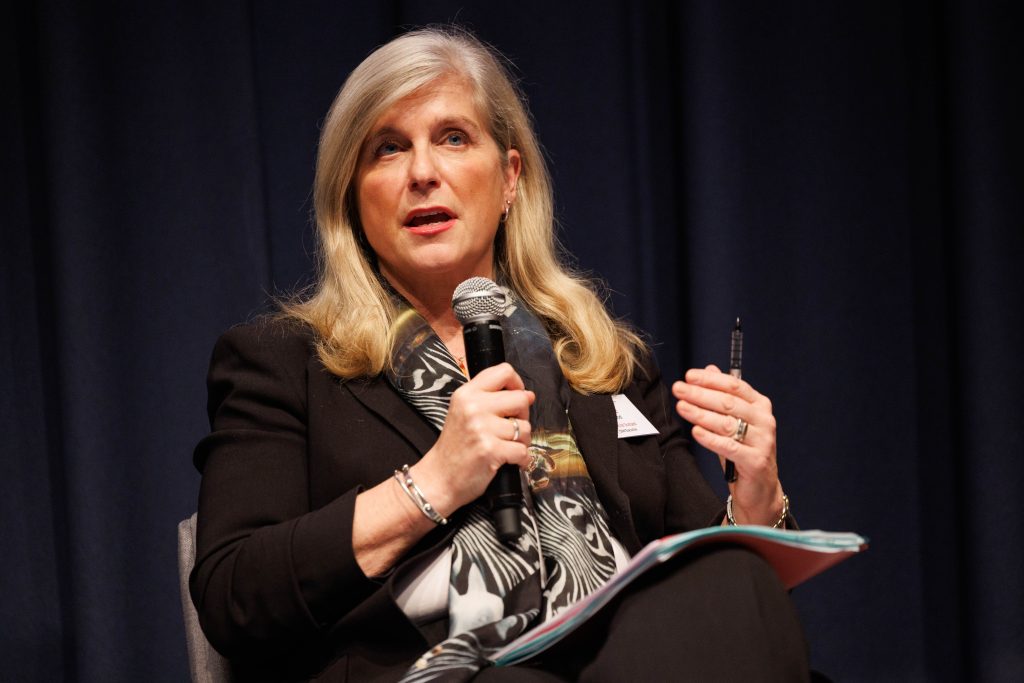
It was in this context that Homes for Scotland’s annual conference which took place on 16 September, with perspectives from England, Wales and the Republic of Ireland provided an excellent opportunity to consider how national housing agencies can help accelerate delivery, unlock investment and overcome barriers as we here eagerly await More Homes Scotland becoming fully operational (although frustratingly this isn’t due to happen until 2028).
Together with contributions from Shirley-Anne Somerville, Cabinet Secretary for Social Justice and Housing, and representatives from across Scotland’s political spectrum, the discussion reinforced a fundamental point: establishing an agency is not, in itself, the answer.
What matters is what it is empowered to do, how quickly it can act and whether it makes it easier to build the homes Scotland needs.
So detail on the development of More Homes Scotland is critical – especially in relation to investment decisions that are being taken now.
‘More Homes Scotland has the potential to become an important catalyst for change, but only if its creation is accompanied by wider reform.’
— Jane Wood
What must More Homes Scotland do to accelerate housing delivery?
What precisely will More Homes Scotland do? What powers will it have? How will it interact with local authorities, planning bodies, infrastructure providers and the home building sector? How will it unlock land and investment rather than add another layer to an already complex system? And, crucially, what can be accelerated before 2028?
Looking elsewhere offers valuable lessons. Different jurisdictions have adopted different structures, reflecting their own housing markets and political contexts.
Scotland shouldn’t simply import someone else’s model but we should be prepared to learn from what has worked, what has not and how agencies can bring land, infrastructure, finance and delivery together around a shared objective.
Why Scotland needs more homes across all tenures
For Homes for Scotland, that objective must be clear: increasing the number of homes delivered across all tenures and establishing a system capable of sustaining that growth year after year.
The scale of the challenge makes urgency essential. Fewer than 17,500 homes were delivered in Scotland in 2025, against the minimum 25,000 a year we believe is required. It also means that, since the global financial crisis, the cumulative shortfall exceeds 100,000 homes.
Meanwhile, the number of SME home builders has fallen to a 20-year low. That represents a serious erosion of Scotland’s capacity to provide the range and choice of homes communities need.
The Government therefore cannot wait for the new agency before tackling the obstacles confronting delivery today.
The direction set out in the Programme for Government was encouraging, particularly the First Minister’s commitment to reform Scotland’s planning and regulatory landscape and to approach decisions from the perspective of “yes, if” rather than “no, because”.
That change in mindset and culture is hugely significant. But it now has to translate into practical action.
The opportunity now is to turn encouraging words into homes
— Jane Wood
How planning, infrastructure and regulation affect housing delivery
Land must be capable of coming forward for development. Planning and consenting services need sufficient capacity and greater consistency. Infrastructure constraints must be addressed. Investment must be attracted and development viability recognised as a fundamental part of housing policy.
There is also a pressing need to consider the cumulative impact of regulation. This is not an argument against high standards. Scotland should aspire to build better homes and better places. But ambition has to be deliverable.
Every additional requirement has consequences for viability. If a development does not stack up financially, it will not proceed, regardless of how great the need for those homes may be.
This is particularly acute for smaller builders and in rural communities, with businesses operating on tighter margins and with fewer opportunities to absorb additional costs.
Why housing reform cannot wait for More Homes Scotland
More Homes Scotland therefore has the potential to become an important catalyst for change, but only if its creation is accompanied by wider reform.
We want to see its design moved rapidly towards delivery, drawing on commercial expertise and beginning early work on strategic sites, infrastructure and investment. In parallel, government must take immediate steps to increase housing delivery over the next 12 months.
The housing emergency will not be solved by one institution, one policy announcement or one parliamentary term.
It requires government, industry and the wider public sector to work together with a common purpose: making Scotland a place where homes can be built, investment can be made and businesses have the confidence to grow.
The opportunity now is to turn encouraging words into homes. We cannot afford to lose it.
Jane Wood is chief executive, Homes for Scotland The Business attended the Homes for Scotland’s Annual Conference at Dynamic Earth on 16th September — Scottish Housing Day — to discuss the investment, partnerships and ideas needed to address Scotland’s housing emergency.
Visit our housing conference page to book now for The Business of Housing 27, taking place next year on Tuesday 9th February 2027.