

Eye-opening research has confirmed what those of us working in and around corporate finance have long recognised: Scotland is a world leader in angel investment, and its power to drive innovation, ambition and economic growth is significant.
Recently-published analysis by the University of Strathclyde’s Business School found that angel-led investment in Scotland has supported more than 41,000 jobs.
Drawing on data from Angel Capital Scotland covering 1,753 investment deals into 509 companies, researchers discovered that £1.7bn was invested into early-stage Scottish companies between 1996 and 2023.
Investment of £633m by angel investors leveraged a further £637m from other private investors, alongside £422m of public investment.
Furthermore, the university highlighted the ‘Scottish model’ of angel investment, in which private investors lead on investment decisions while being supported by public policy through a combination of co‑investment and tax relief.
This, the research found, has “contributed to Scotland developing one of the most mature and established angel investment markets in the world”.
The types of investment to which any business is best suited depends on its circumstances.
But this first-of-its-kind research underpins the growing impact of angel investors helping to drive growth.
How to prepare for angel investment with IP, governance and legal structure
An angel investor is an individual investor or syndicate who puts money into a small business, most often one that is young and exciting, in exchange for a stake in it.
Those I work with generally invest in the range of hundreds of thousands of pounds through to low millions. They have included many tech businesses which can be spin-outs from university research or simply an entrepreneur developing a compelling commercial offering.
They provide investment at a critical stage in a company’s journey: when it is ready for growth, but not yet at the level that would attract venture capital or private equity support. Indeed, angels can be pivotal in helping businesses to reach that phase.
There is sway to be had by the angel investor with experience of the chosen industry who can bring something extra to the table
How to prepare for angel investment with IP, governance and legal structure
Readiness is a key point when it comes to angel investment. Not just in ambition or finance, but in a company’s structure – a factor which can all-too-often be overlooked.

Significant commercial success can be defined by the legal structure which underpins a business’s operations, a point I discussed with colleagues and investors during Glasgow Tech Week.
Before seeking angel – or any other – investment, it is important to sense-check fundamental factors, including:
- Are employment and consultant contracts in place and are they fit-for-purpose?
- Do you own the intellectual property rights - or all of the elements of intellectual property on which your company is built? Have you safeguarded them?
- Can you demonstrate how the company is structured and governed?
Founders and owners are also wise to consider not only the level of investment they need but how much of their company they are willing to give away in order to achieve that.
Angel investors can offer more than funding
There is also considerable sway to be had by the angel investor that may have experience of the chosen industry and can bring something extra to the table in addition to valuable funding.
Anyone who has watched the BBC’s Dragons’ Den will see the risks that can come with giving too much away to the first angel who comes along.
If investors sense success, they will seek a strong stake but equally investees need to guard against giving too much away too soon.
For entrepreneurs, angel investment can be transformational.
The rewards for the angels can be significant too. Just look across to Silicon Valley and some of those who recognised the potential of companies there in their infancy.
Without these partnerships, many businesses simply would not earn their wings.
So, let’s sing the praises of our angel investors. I am sure that their impact on the Scottish economy is only going to continue to reach new highs.
Source: Where Angels Tread: Understanding the Economic Impact of Early-stage Risk Capital in Scotland, 1996–2023, Professor Niall G. MacKenzie, University of Strathclyde Business School, and active angel investor Dr Margaret Coughtrie, using data from Angel Capital Scotland.
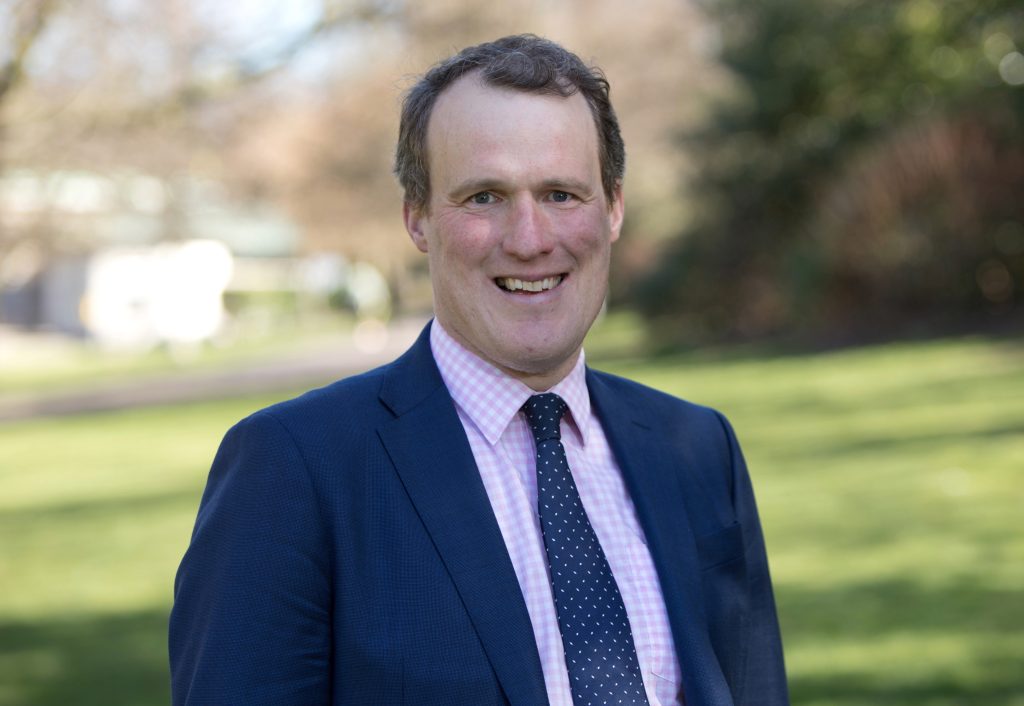
Corporate and technology lawyer Alastair Smith is a Partner at Lindsays
Partner Content in association with Lindsays