Ruaridh Hanna, director of policy at The Business, reflects on the inaugural Business of Housing 2026 summit in Edinburgh which laid out the vexing issues – and heard how practical solutions are required to resolve a nationwide crisis
Scotland does not just have a shortage of homes: it has a housing system that is no longer doing the job the rest of the economy needs it to do. This was a hard-to-avoid conclusion after The Business of Housing inaugural policy conference at the EICC in Edinburgh in early 2026.
The conference was designed as a one-day open forum that would bring senior professionals from across our housing sector together.
It allowed the panellists to air conflicting points of view in public and it exposed a national system straining at every joint.
More positively, what emerged was a set of shared priorities which not only loom over the Scottish Parliamentary elections but will be at the forefront of policymaking and business decision-making for many years to come.
No one in the conference hall needed convincing that there is a housing emergency in Scotland. The real question was: how do we get out of it?
We have a poly-crisis, not a blip
Duncan Maclennan, emeritus professor at University of Glasgow, opened the conference by arguing that Scotland has to stop treating the current situation as if it were a bad winter storm that will pass if everyone simply hangs on.
He set out the landscape of Scotland’s problems which have been building for decades: rising homelessness, rising rent burdens, declining social housing starts, fewer routes into home ownership for those under the age of 45. Put together this is a ‘poly crisis’ – a convergence of failures in markets, welfare policy, planning and public finance, not a single malfunction that can be fixed with a budget uplift.
Maclennan’s core complaint was that Scotland has never deliberately designed an efficient housing system
Maclennan’s core complaint was that Scotland has never deliberately designed an efficient housing system. Policy remains rooted in analytical tools developed for a municipal model 40 years ago, lightly updated, but never fundamentally rethought. When something goes wrong, the responses have been familiar: regulate, lobby for more money, wait for economic growth.
None of those levers are currently available at the scale needed. Growth is weak, capital budgets are under sustained pressure, and lower income households’ earnings have failed to keep up with rents and prices. If we carry on as we are, he argued, Scotland will, at best, manage the emergency. It will not resolve it.
That is the context in which the Scottish Government’s proposed national housing and land agency, More Homes Scotland – reference by panellists throughout the conference – is operating.
Maclennan welcomed the idea in principle. He spent a decade on the board of Scottish Homes – a national housing executive that became Communities Scotland in 2001 before being abolished in 2007 by then cabinet secretary for health and wellbeing, Nicola Sturgeon – and is currently advising the Canadian government on its national housing body.
His warning was blunt. If More Homes Scotland becomes a two-year exercise in moving boxes on an organogram before its launch, it will not be worth the wait. If, instead, it can be set up at pace, with a remit to align land, infrastructure, housing and economic strategy at regional level, it could be the institutional lever our nation has lacked.
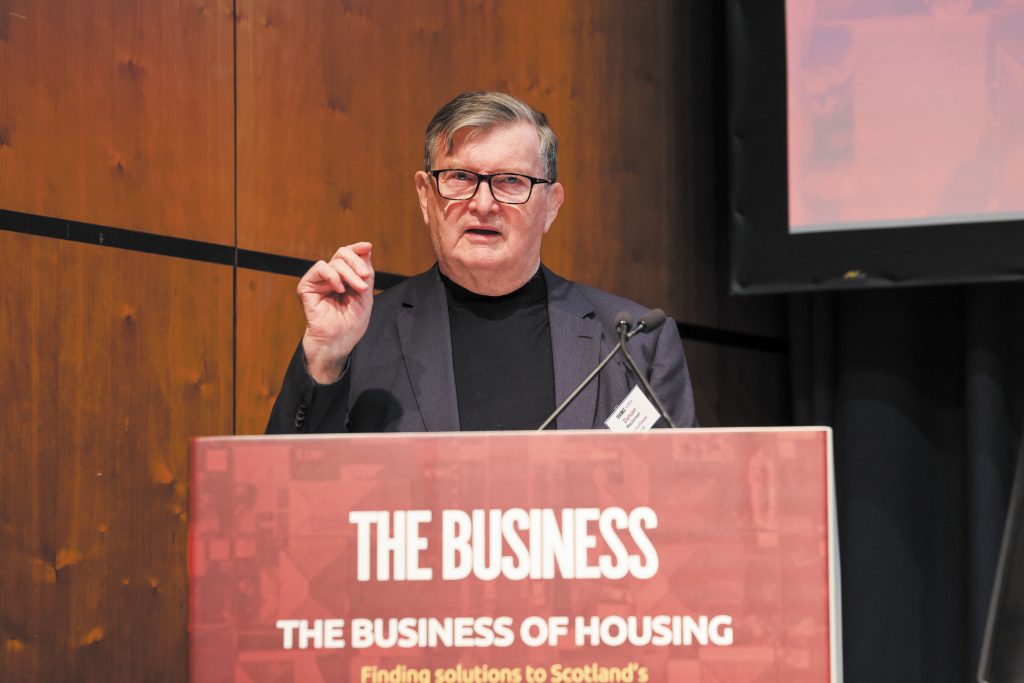
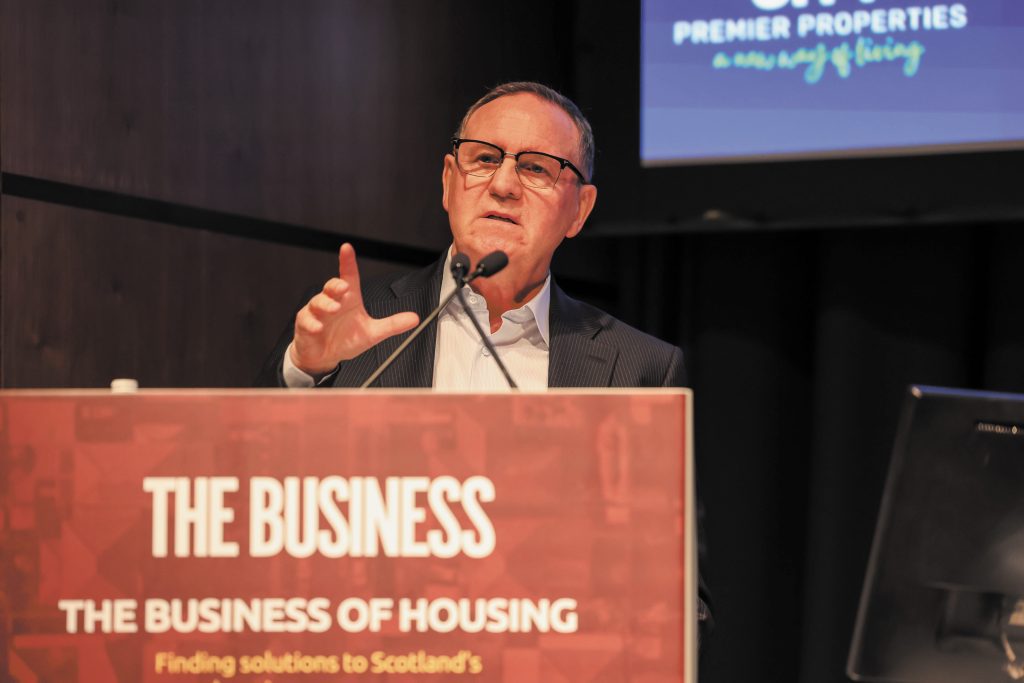
Duncan Maclennan, emeritus professor at University of Glasgow, set the scene in his opening speech | Pic: Robert Perry
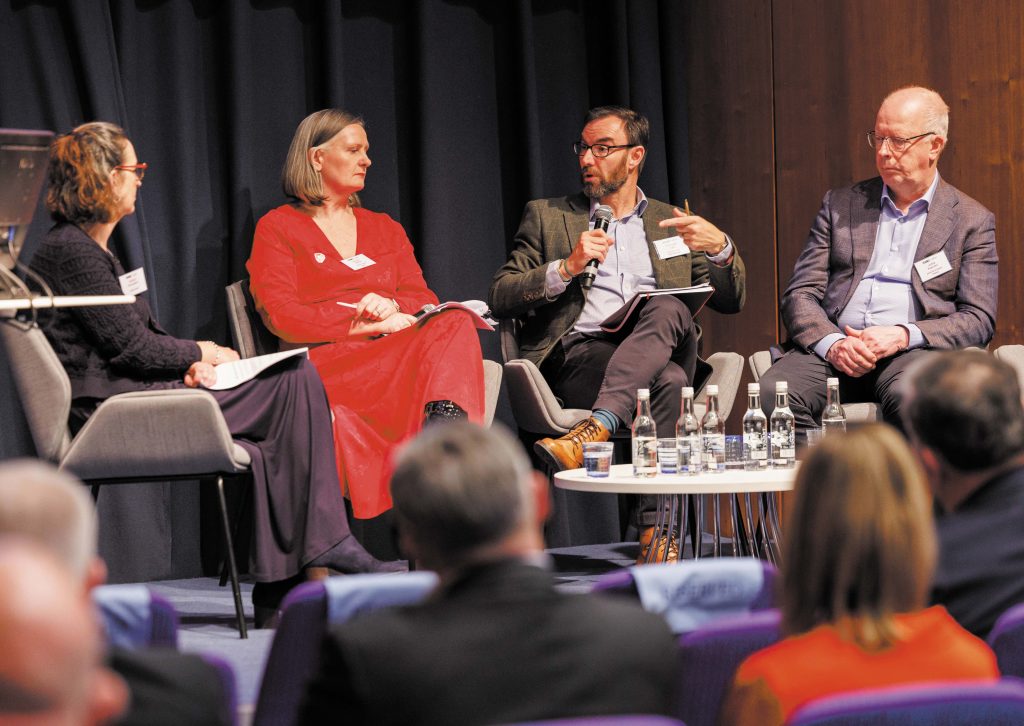
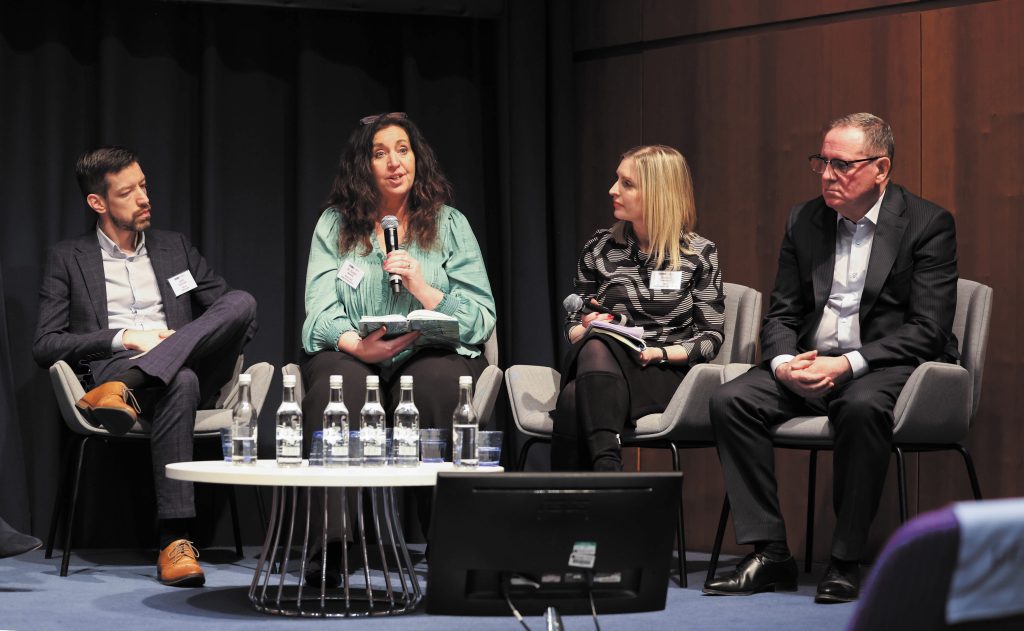
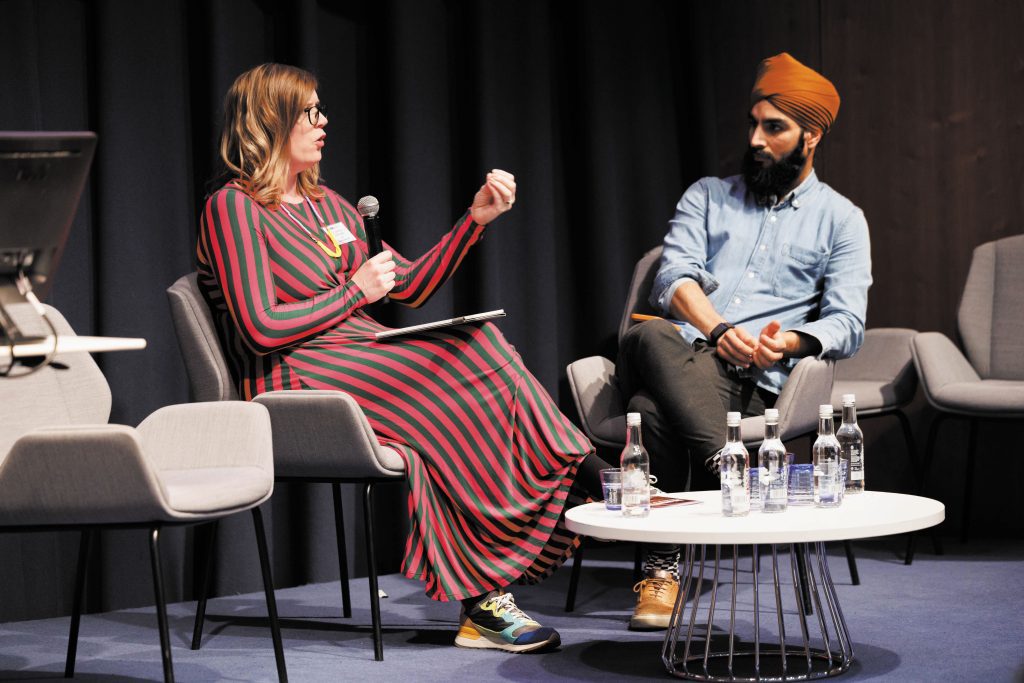
Conference chair Alison McLaughlin in panel with Alison Watson, director of Shelter Scotland; William Kyle, managing director, Urban Union; and Professor Juha Kaakinen, professor of practice, Tampere University, Finland | Pic: Robert Perry
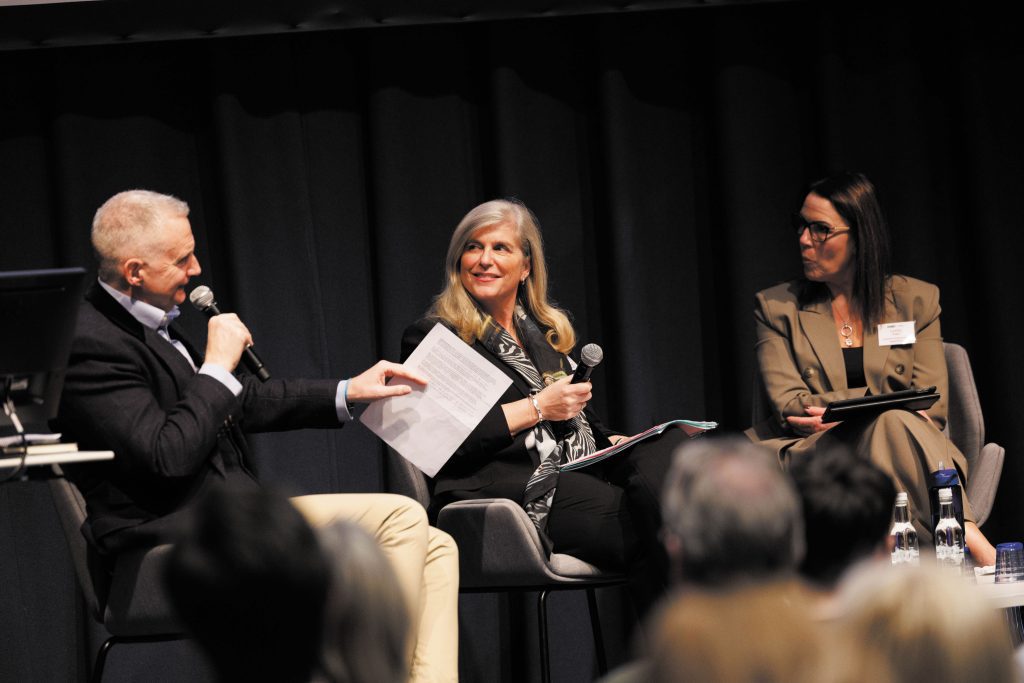
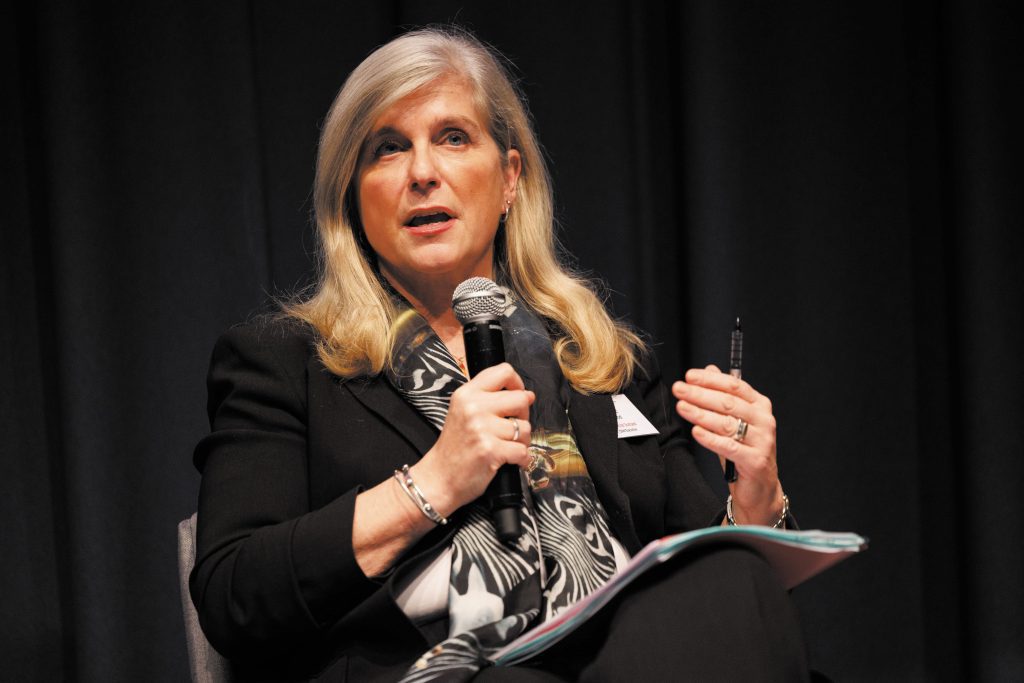
Consultant Chris Dougray, Jane Wood, CEO of Homes for Scotland, and Lesley Peaty, director of SPA, discuss the issues during their session | Pic: Robert Perry
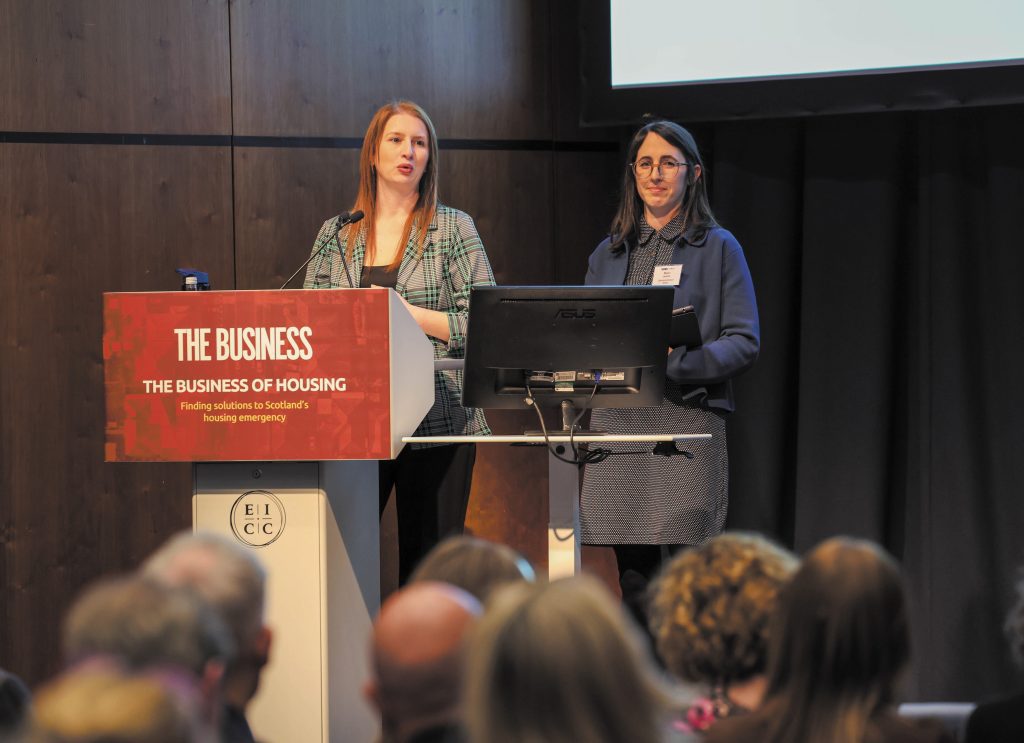
Heather O’Donnell, senior technical support manager (right) with Scottish Procurement Alliance; and Mairi Laverty, director of Collective Architecture, make their joint presentation | Pic: Robert Perry
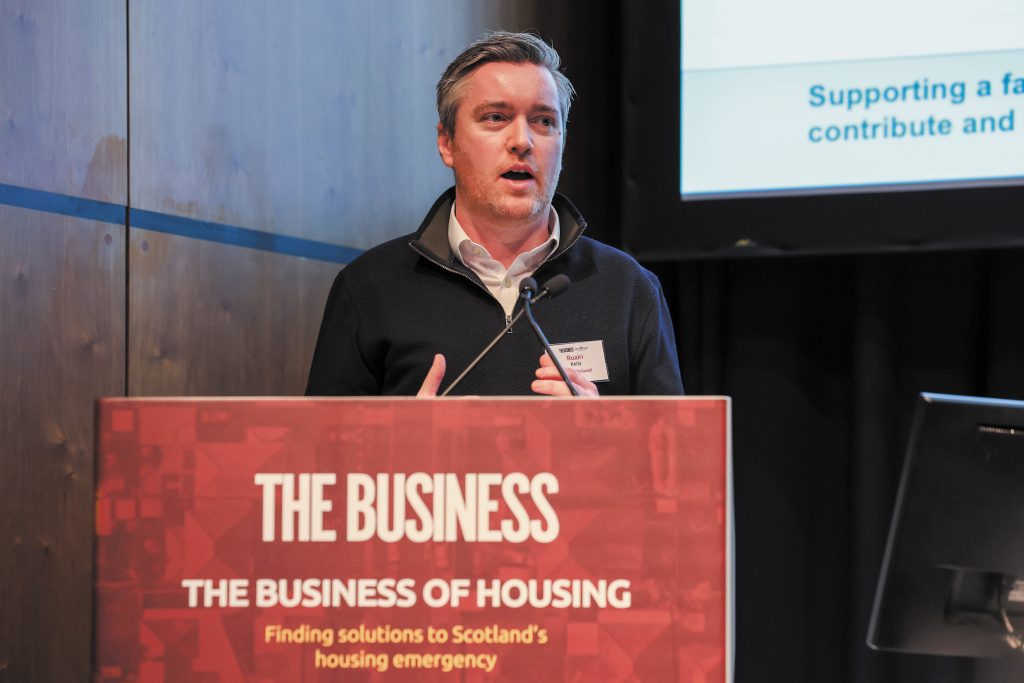
Councillor Ruairi Kelly, Glasgow City Council’s housing convener, wants more homes to be built more rapidly | Pic: Robert Perry
A Nordic tale with a stern warning
If Maclennan provided the diagnosis, Professor Juha Kaakinen offered a mirror. As the architect of Finland’s Housing First reforms, he has been a reference point for Scottish policy for years.
The comparison remains stark. Finland has 122 children in temporary accommodation. Scotland has more than 10,000.
That is not because Finland has avoided budget pressures, Kaakinen explained.
It is because it chose, in 2008, to treat homelessness as a structural issue that could be solved and then proceeded to back this solution with practical measures.
If you expand temporary accommodation without changing what happens next you do not solve homelessness, you entrench it
The Finnish approach was simple. Temporary beds were deliberately reduced. Resources were moved into permanent homes, with support available but not conditional.
Housing supply, specifically social and affordable housing, was expanded on a scale that made a visible dent in the problem.
The intent was clear: end the reliance on shelters, not just manage them more efficiently.
The lesson for Scotland sounds obvious but cuts against a lot of practical behaviour. If you expand temporary accommodation without changing what happens next, Kaakinen said, you do not solve homelessness, you entrench it.
Yet his second message may be the more relevant for Scotland in 2026. Finland’s progress is no longer guaranteed.
Recent shifts to a more austerity driven, market led policy mix have produced, in his words, “the biggest increase in homelessness in Finland in recorded history”. Institutions that took years to build can be unpicked quickly.
Good housing systems are political artefacts. They can be made, and they can be unmade.
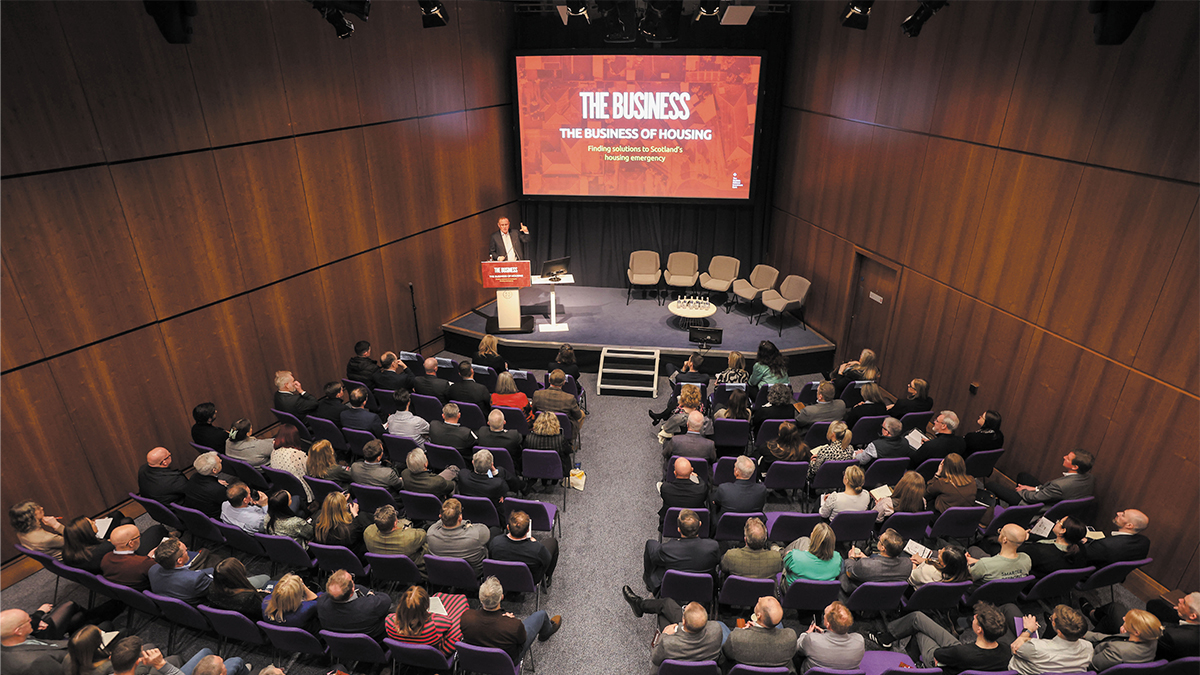
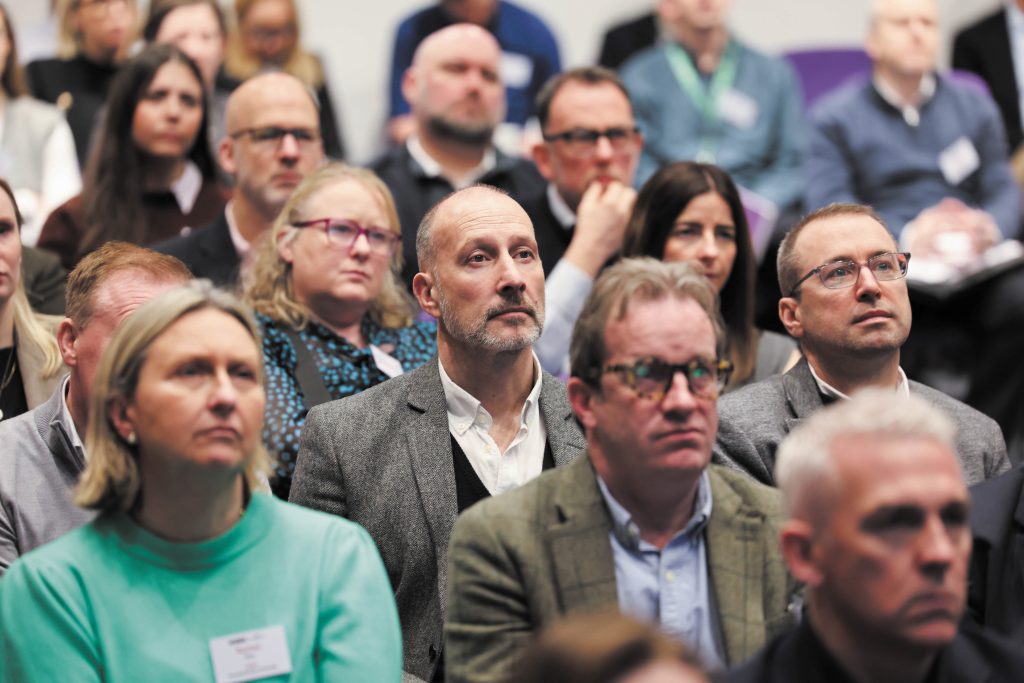
An attentive audience at the EICC; panellists | Pic: Robert Perry
John Alexander, chief executive, Hillcrest; Dr Susan Aktemel, founder and chief executive, Homes for Good; Susan Campbell, director of Scottish National Investment Bank; and Lord Haughey, chair, City Facilities Management | Pic: Robert Perry
Dr Gemma Bone-Dodds, director of insight & policy, BE-ST with Amandeep Kalra, founder and CEO, Greenflip | Pic: Robert Perry
Glasgow’s voices: pressure, capacity and a missing pipeline
The experience in the City of Glasgow supplied concrete detail of the political issues.
The city declared its own housing emergency in late 2023. Paul Wood, group manager for housing strategy at Glasgow City Council, described what that looks like on a daily basis.
As of February 2026, there are more than 7,000 live homeless applications on the books in Glasgow. Almost 4,900 households are in temporary accommodation.
For the first time, more are in hotels and B&Bs than in temporary furnished flats. Seven hundred of those households contain three or more children.
Glasgow’s position is unusual. The council no longer owns housing stock. Instead, it works with 59 registered social landlords that collectively provide the city’s social homes. Private rents have more than doubled over the last decade.
The city has taken a large share of refugee and asylum resettlement. Its student population has grown rapidly. All of this feeds directly into pressure on lettings.
Glasgow wants More Homes Scotland to exist. But it wants to work with it as a genuine partner, not as a distant, allocator of funds
Yet this is not a story of a city that cannot deliver. Glasgow has a history of housing-led regeneration – from neighbourhoods such as the Gorbals and Dennistoun to its current Transformational Regeneration Areas programme – where sustained programmes have turned vacant or under used land into thriving neighbourhoods.
The raw material is there. An internal land audit has identified more than 11,000 potential affordable units across 211 sites.
The City Region has the scale to attract institutional capital. Work is already underway on new public private models, including a partnership between the council, the Scottish National Investment Bank and Aviva Capital on the Cowlairs site north of the city centre.
What is missing, in Wood’s account, is a consistent pipeline. Local development plans are in flux, planning decisions are slow, and infrastructure funding is “lumpy”.
The risk is normalising a stop-start pattern that makes it harder for councils, housing associations and developers to plan, hire and invest.
Glasgow City Council’s convener for housing councillor Ruairi Kelly’s message to the conference was straightforward. Glasgow wants More Homes Scotland to exist. But it wants to work with it as a genuine partner, not as a distant, faceless allocator of funds.
His requests of the new agency were simple: support to remediate complex brownfield sites, flexibility to assemble land quickly, and a settlement that recognises that City Regions are where housing, labour markets and transport actually intersect.
Jane Wood, chief executive of Homes for Scotland | Pic: Robert Perry
A focus on delivery: land, planning and viability
Turn the focus from Glasgow to the national picture and the same themes recur.
Jane Wood, chief executive of Homes for Scotland, a member organisation representing a cross-section of housing developers and construction firms, set out the basic arithmetic.
Completions over the 12 months to September 2025 were down 8 per cent on the previous year, while affordable housing completions fell by 23 per cent.
Behind that sits a pipeline problem. Planning consents for new homes are down almost 30 per cent year on year.
New local development plans will not be in place until 2028 at the earliest, and later in some areas. Given the lag from allocation to spades in the ground, that pushes any serious upturn in completions well into the next decade.
Developers are nervous about more than volumes. Planning timescales have drifted far beyond statutory targets. Major residential applications now take close to a year to determine. Appeals, when pursued, can add six months or more.
Scotland’s rent freeze remains politically popular with the public but divisive in the industry
At the same time, the cost of building is being driven up by regulation layered on top of already tight margins. Over the past five years, building safety, energy efficiency and net zero requirements have all tightened, often for good reason but without a coherent view of how much cost can be carried by different tenures.
While no one in the room was arguing for building unsafe, and draughty homes, they all desperately needed clarity. When the sector is not yet sure what future standards it is building or retrofitting to, it hesitates. Hesitation and uncertainty lead to investment significantly slowing.
The viability challenge is particularly acute in emerging sectors such as build to rent. Several speakers referred to the same ballpark figure. On current rents and costs, build-to-rent schemes in Scotland would need a 20 to 25 per cent uplift in values to be attractive at scale. In a world where capital can move easily between regions and countries, that is a formidable gap.
Lord Willie Haughey set out a rent model in which tenant affordability is treated as the starting point | Pic: Robert Perry
On rent and tenure – who carries the risk?
It was inevitable that the issue of rent controls would surface. Scotland’s emergency rent freeze, introduced during the cost of living spike, remains politically popular with the public but divisive in the industry.
The most compelling challenge to lazy assumptions came from within the private rented sector itself. Lord Willie Haughey set out a model in which tenant affordability is treated as the starting point, not a constraint.
His company is developing homes of around 1,300sq ft for rent at £695 per month, including maintenance. The financial trick is not magic. It combines offsite manufacture, standardised design, bulk purchased furniture and broadband, and a sophisticated energy management system adapted from commercial clients. The gains come in reduced running costs as much as in lower headline rents.
Haughey’s argument was not that every private landlord should behave like this. It was that the system ought to make it easier for those who do. In his view, the cumulative impact of planning obligations, levies and specification changes has added close to £100,000 to the cost of a typical affordable home over seven years. The bulk of that, he suggested, is policy driven.
Others struck a more measured note. Susan Campbell, of the Scottish National Investment Bank, accepted that rent regulation of some sort is politically here to stay.
The key issue is not whether there is a framework, but whether it is stable and proportionate enough to allow long term investors to price it in. Plenty of European cities manage that balance. The risk for Scotland is not that it is out of step on principle, but that frequent, poorly signalled shifts tip marginal schemes into the red.
Alison Watson, director of Shelter Scotland, spoke passionately about the number of Scots in temporary accommodation | Pic: Robert Perry
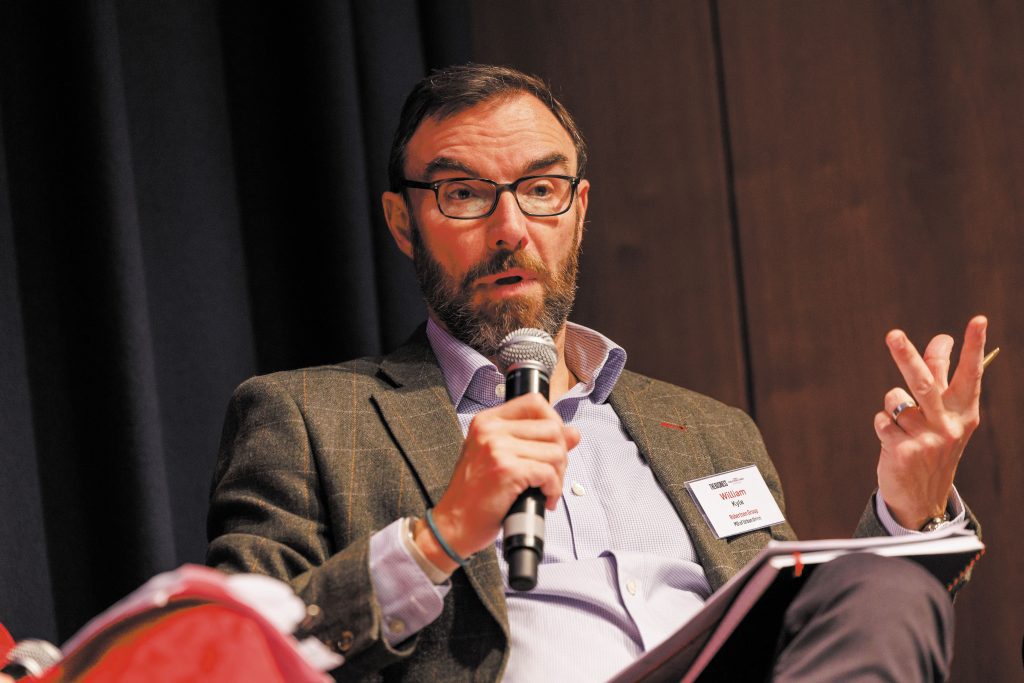
William Kyle, managing director of Urban Union, responded to questions from the floor | Pic: Robert Perry
Homelessness: from management to prevention
The most sobering session of the day dealt directly with homelessness. Figures released that morning showed 39 children becoming homeless every day in Scotland. The number in temporary accommodation has reached its highest level on record.
Rough sleeping has doubled during the Scottish parliamentary term. Repeat homelessness is rising, suggesting that even when people move through the system, they are too often circling back to the start.
Shelter Scotland’s director Alison Watson did not mince words. Scotland, she argued, runs a housing system that “puts profit over people” and then expresses surprise at the results.
Local authorities are unable to meet their statutory duties not because the law is badly drafted, but because they lack the homes and support to comply. Families are left for months or years in poor quality temporary accommodation far from schools and support networks. The long term costs – in health, education and employment – are predictable and large.
Her prescription was unambiguous. On current evidence, Scotland needs roughly 15,700 new social homes a year for five years just to stop homelessness getting worse.
That is a big number, but not, she argued, an unimaginable one. It would require a willingness to “double fund” for a period – maintaining crisis services while investing in prevention and permanent supply – rather than pretending the latter can be financed out of savings on the former.
Kaakinen’s Finnish experience shows that such shifts are possible. It also shows that they are reversible. That is where politics comes back in.
More Homes Scotland: a mandate, not miracle
By the close, a pattern had emerged. No one believed a new agency would on its own fix Scotland’s housing problems. The hopes invested in More Homes Scotland were more modest – and more demanding.
The conference’s collective wish list was surprisingly consistent. A body that can move quickly, not over years. A clear, all tenure remit. A focus on land, infrastructure and delivery, not just on grant allocation. A willingness to work with City Regions and rural partnerships that actually understand their own markets. And a housing portfolio that remains at Scottish Cabinet level after the election.
Housing programmes that only last until the next reshuffle do not change systems. They do not solve a crisis, merely manage it
Beneath that, one more basic expectation surfaced again and again. Whatever structure emerges, it must be able to look beyond the parliamentary cycle. Housing programmes that only last until the next reshuffle do not change systems. They do not solve a crisis, merely manage it.
In that sense, The Business of Housing 2026 was less about unveiling brand-new ideas than about testing how serious Scotland is about the solutions already on the table.
It showed that there is no shortage of practical options – and a genuine willingness from industry, investors and public bodies to move together.
The challenge now is to turn that shared intent into delivery at the scale and pace the housing emergency demands.
For information on the past housing conference click here and register your interest for The Business of Housing 2027 .