
With money pouring into index funds and global fund managers trailing the market, how is Baillie Gifford, once Scotland’s gold-plated investment house, faring?
From the top of Baillie Gifford’s new headquarters at Edinburgh’s Haymarket district, the view stretches far across the rooftops of the city the firm has called home since 1908.
It is a fitting vista for a firm famed for taking the long view. In an industry often enslaved to the next quarter’s results, Baillie Gifford has built its reputation on investing years, sometimes decades, ahead.
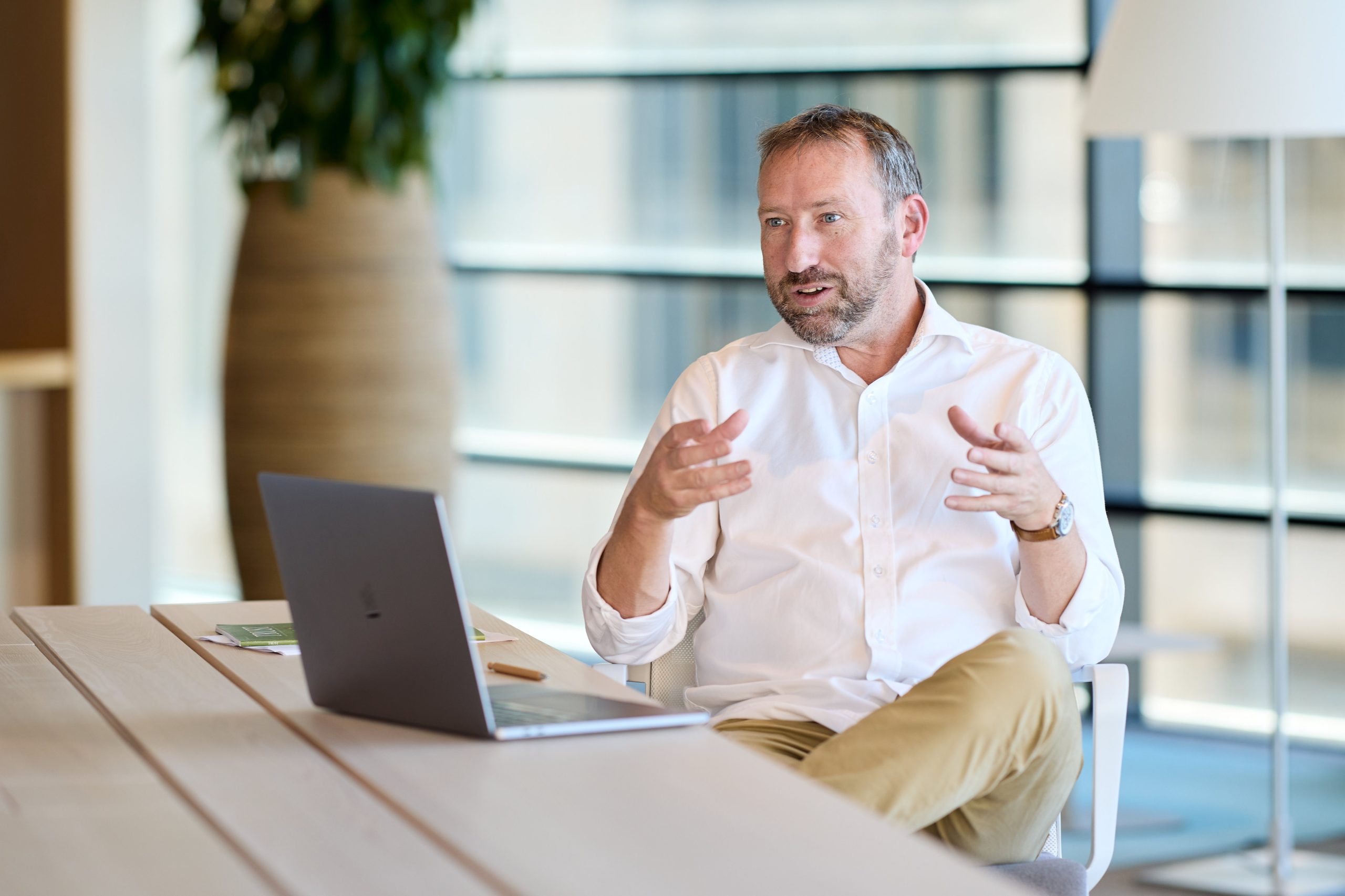
“I think we do what ordinary people think all fund managers do,” says Stuart Dunbar, in a meeting room he admits he has never been in before, such is the building’s novelty. “We seek out really interesting companies, we get to know them and their management, and we provide capital to them.”
It sounds convincing. But these have been bittersweet times for the investment giant. The move to its handsome offices has co-incided with a round of job cuts, with about 160 UK staff leaving through a voluntary exit programme this year.
“These are sad times,” says Dunbar, who has worked at the firm for more than 20 years. “We grew a bit too quickly in 2020 and 2021, when we were incredibly busy. Things have slowed down a bit now.”
Like many growth investors, Baillie Gifford was hit hard in 2022, and Dunbar concedes it has not fully recovered. “What happened in 2022, to be quite honest with you, has not gone away yet,” he says. “Our performance lately has been pretty difficult in most of our strategies.”

The firm now manages around £190bn, down from £336bn at the end of 2021.
The slowdown comes at a time when active fund managers have rarely been under more pressure. According to S&P Dow Jones Indices, 97 per cent of active equity funds based in Europe trailed their benchmark over the 10 years to the end of 2025.
Investors have noticed. Industry figures show that in the second quarter of this year, index funds took around 70 per cent of net new money on UK investment platforms.
Making the case for Baillie Gifford’s method of active management, Dunbar concedes, “sometimes feels like a bit of a losing battle”. But he is confident the tide will turn.
Convincing clients, from pension funds to wealth managers, that Baillie Gifford is one of the few active managers able to beat the market over the long term is Dunbar’s daily work.
As well as being one of the firm’s 54 partners, he chairs its UK business group and co-ordinates global marketing and product development, a role that takes him regularly to the US, Australia and Japan.
Increasingly, those clients look different. “Our business is still mainly institutional,” he says, but the firm is “pivoting towards” wealth managers, global banks and wholesalers. “That’s where it’s going to go over the next 20 years.”
Dunbar is keen to separate Baillie Gifford from managers who charge high fees in return for merely hugging a market index, known in the industry as closet trackers, and from those who react to short-term trends.
What sets Baillie Gifford apart is “this ruthless focus on the fundamental prospects of companies, on a five-year-plus horizon”.
He adds: “It’s not: what’s this company’s next quarterly result going to be, and how will the market react? I think that’s a mug’s game. You can never predict what the market’s going to do, not in the short run.”
Yet even Baillie Gifford, by Dunbar’s own admission, has struggled in most of its strategies lately. Why have so few active managers succeeded?
Dunbar blames a stock market dominated by a handful of giants. “If it’s a zero-sum game and 90 per cent of managers are underperforming, that doesn’t make sense arithmetically.
“So what’s going on? There’s some kind of market dislocation: extreme concentration in a small number of very highly valued companies,” he says.
“I think that will reverse. As soon as active management starts to significantly outperform indices, and it will, people will change their views again.”
But until then, why should a pension fund or a saver pay more for an active manager?
Dunbar’s case rests on what he calls “quality shareholders”. He uses the phrase for “true investors, not speculators”: people who pick a small number of companies, invest meaningfully, hold for long periods and are available to engage with management and boards when needed.
Such owners, he argues, give management the confidence to invest for the long term, and their backing carries weight with other investors.
“I think the biggest example for us would be Tesla,” he says. “Tesla almost went bust about four times.” When Baillie Gifford put in more money, “other investors thought: well, it must be all right then, and gave them more money too. I don’t think that’s an exaggeration. I think that’s what actually happened.”
In contrast, an index fund owns a slice of everything but knows little about any of it, leaving the hard work to others. Dunbar accepts that tracker funds have their place, but he believes passive investors are riding on the coat-tails of true active managers.
The danger, in his view, comes when nobody is doing that work. A company owned mainly by index funds and hundreds of thousands of small investors effectively has no engaged owner at all.
None of them knows the business well enough to hold its managers to account, or to back them when they need to invest for the long term. Passive funds, he argues, share in the growth of strong companies without doing anything to foster it. “Everybody wants the advantage of a functioning system, but nobody wants to pay for it.”
The obvious thing it proves is that we’re good at finding companies that are still at an early stage and have the potential to be absolutely game-changing
Active managers have another advantage that index funds cannot copy: they can buy into companies before they list. Since Dunbar joined Baillie Gifford in 2003, companies have been waiting far longer before going public.
“Twenty years ago, SpaceX would have been a public company when we first invested in it. Now it’s not,” he says.
That gives investors who can reach private markets the chance to get in early, before ordinary shareholders can.
Scottish Mortgage, Baillie Gifford’s flagship trust, first bought into Elon Musk’s rocket company in December 2018 and invested £151m in total. When SpaceX floated in June, that stake was worth £3.78bn.
“The obvious thing it proves is that we’re good at finding companies that are still at an early stage and have the potential to be absolutely game-changing,” Dunbar says.
“To be very clear, we’ve had many attempts: for every SpaceX there’s a failure. But it doesn’t matter. If you make 100 times your money on one, that pays for a lot of mistakes.”
Patience has its costs. The 2022 sell-off opened the door to activist investors. As growth stocks slumped, shares in the Baillie Gifford-managed Edinburgh Worldwide Trust fell well below the value of its assets.
Saba Capital, the New York hedge fund founded by Boaz Weinstein, built a stake of more than 30 per cent. After two failed attempts, it won control of the board in April, and the new directors are now deciding whether to keep Baillie Gifford as manager.
Dunbar is unimpressed. “Maybe we shouldn’t be surprised that Saba has not got the interests of the average trust holder at heart,” he says. “Let’s just call it ungentlemanly behaviour.”
His bigger complaint is about the rules. People who buy an investment trust, he argues, think they are buying a fund. “You don’t know you’re investing in a company that is subject to company law, with no consumer protections. That is a serious gap in the legislation.”
Baillie Gifford has been lobbying the Treasury and the Financial Conduct Authority to act.
Saba’s raid is a reminder that the long view has to be defended. As the sun sets over Edinburgh, it is a moment to reflect on an ethos that runs through the firm’s people and its processes.
“The people who tend to work in investment in Edinburgh take a long view of their careers and a long view of their investments,” says Dunbar.
“They want to work in a company where they’ll be around to deal with the consequences in 10 years’ time. I think that feeds on itself a little in the Edinburgh environment, and that’s something precious and worth saving.”