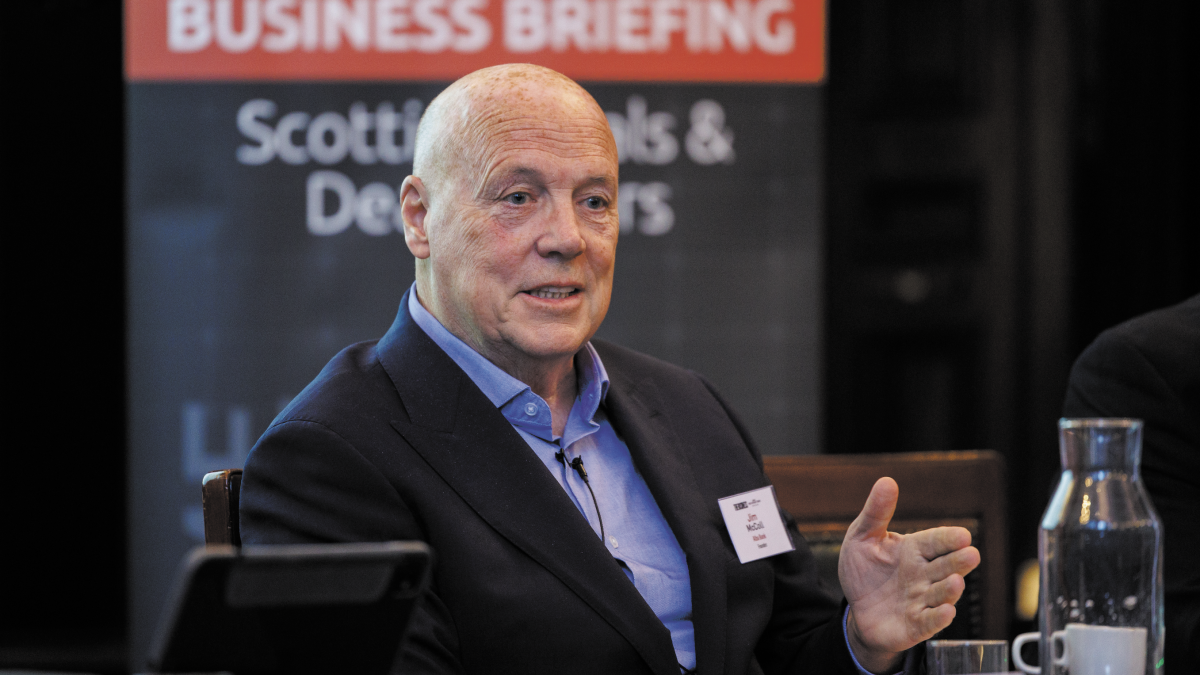
In spring 2018, McColl spoke to the FCA and PRA about using the Airdrie Savings Bank licence and converting it to a new bank.
“This was to start a new Scottish-based bank focused on supporting SMEs,” he explained.
However, the savings bank licence was set up via a Victorian Act of Parliament in 1867, and McColl was warned the only way to change this was through a convoluted private members’ bill in parliament. Instead, UK regulators, in the years of ‘unnaturally’ low interest rates, told McColl new ‘challenger’ banks were being encouraged. He assembled a small team of experienced bank professionals and began preparing a banking application, but the project was hit first by Brexit and then by Covid.
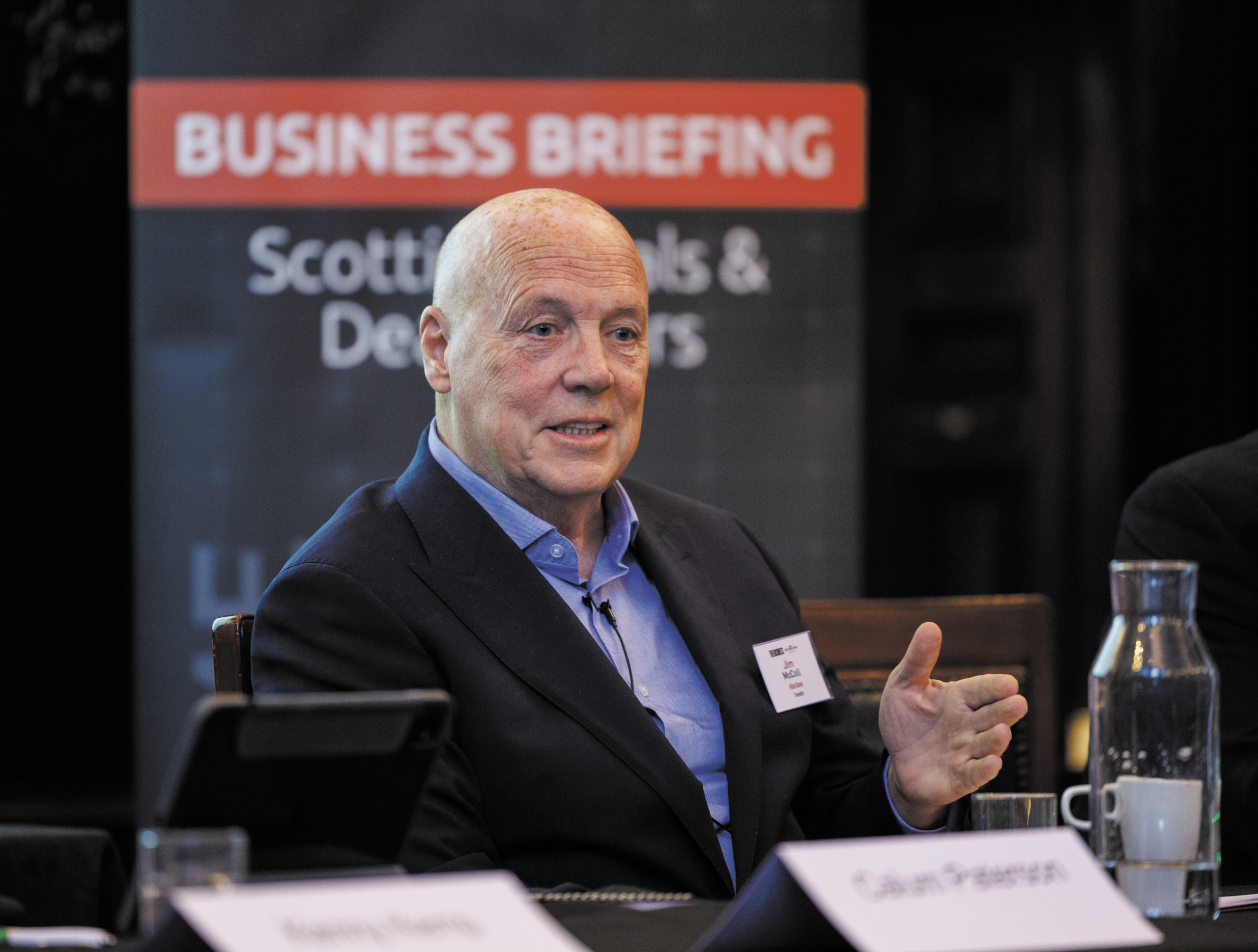
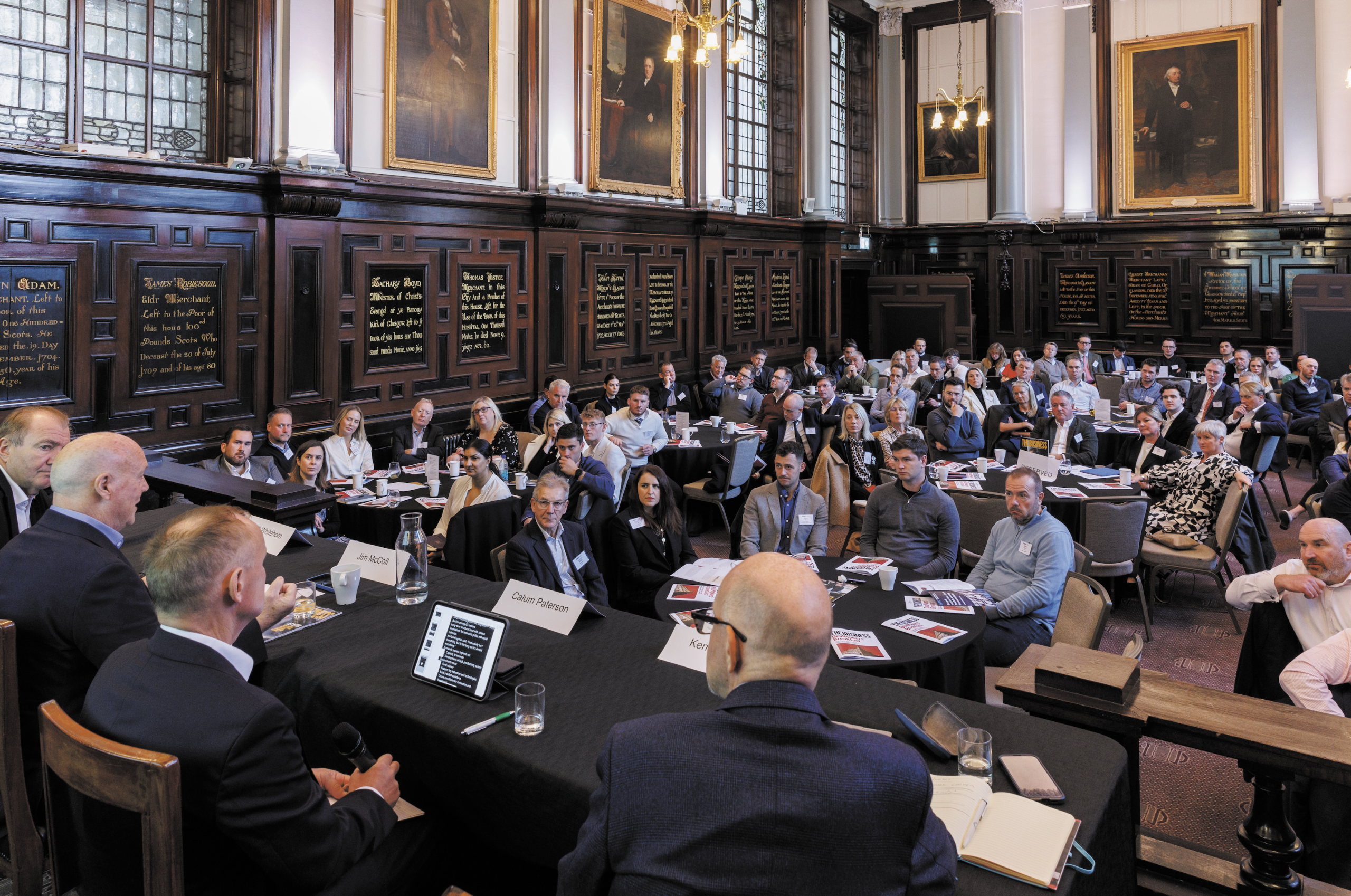
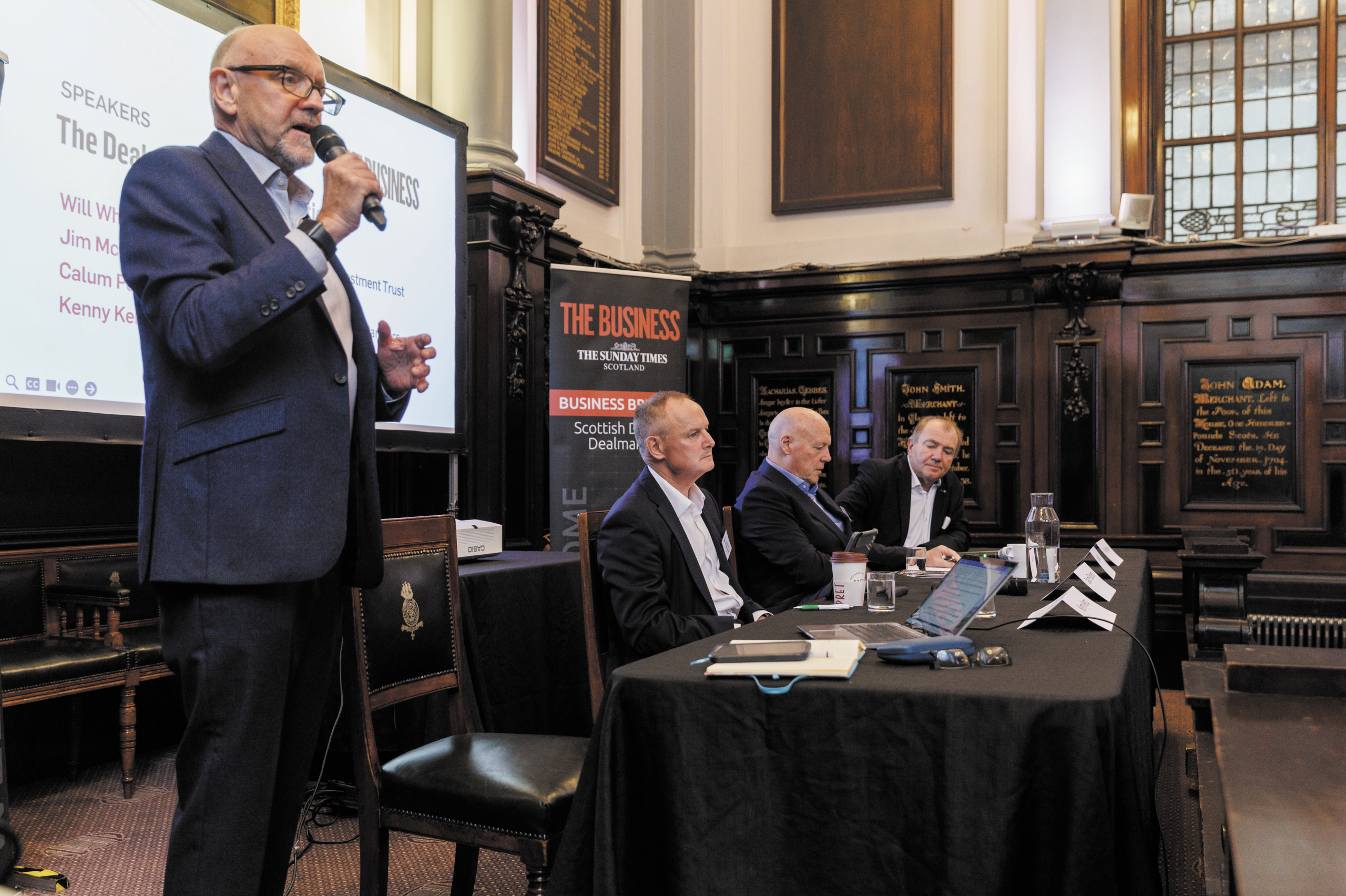
He explained his rationale to the dealmakers’ audience.
“We had a golden era for entrepreneurial activities in Scotland in the second half of the 1990s up to 2007. This was with the likes of the Entrepreneurial Exchange, which was fantastic. When Tom Hunter became the exchange’s chairman, he took it to a new level with 450 members.”
Sir Tom’s energy and commitment got everyone working together and helping each other. “It was for entrepreneurs, by entrepreneurs. At the same time, you had the big banks in Scotland, such as the Royal and Bank of Scotland, and Clydesdale, and these were very supportive of entrepreneurs in Scotland.”
McColl spoke about how he managed to buy Weir Pumps in Glasgow, where he trained as an apprentice, and how the banks benefited from its eventual sale in 2011 with a rate of return of 21 per cent. Since then, it has become more difficult for small businesses to have a relationship with mainstream banks.
“People are being de-banked because they are too small. You can’t open a bank account; you can’t speak to a human being. It is just appalling for SMEs,” he said.
McColl had become a member of the Council of Economic Advisers for the Scottish Government.
“I commissioned a report from University College London on national investment banks because I became aware that it wasn’t a level planning field in the UK for industrial businesses. Companies that were exporting or applying to do big domestic jobs were having trouble.
“Yet other European countries have national investment banks. Germany at the top end have a national investment bank called KFW. It is funded 10 per cent by the government, 90 per cent on international bonds. It is treated like a government bond, so it is cheap and they raise their long-term money this way.”
KFW has over a trillion euros invested in supporting German “mittelstand” (SME) firms and infrastructure. “This is why Germany has historically been so strong economically.”
“Finland, with a similar population to that of Scotland, has a national investment bank called FinnVerra.
“These national investment banks will do guarantees, export finance and the equivalent for domestic jobs. If there is a big infrastructure or construction job in Finland and there is overseas competition, they will get the same support domestically that they would for exporting. They do bridging finance, short-term funding, all support for businesses. In Finland, in 2019, there was €10bn deployed that year.”
He compared this with the Scottish National Investment Bank (SNIB), which has been given £2bn over ten years. McColl’s paper was successfully taken forward, and Benny Higgins, the former banker, was taken on to build up the narrative for the SNIB.
“Benny did the best job he could do: but it’s not a real national investment bank; it doesn’t give guarantees; and it doesn’t raise outside finance. The beauty about outside finance in Germany and Finland is that it is not state aid because there is third-party private sector funding involved.”