It’s a huge draw for visitors, but above all the RHS offers a showcase for exceptional produce and talented producers from across the country

Despite 98 per cent of Scotland’s landmass being classified as ‘rural’, around 82 per cent of its population resides in urban areas. And for many of the ‘townies’ living in suburbs and cities the countryside may as well be a foreign country.  

Which is why the Royal Highland Show (RHS) is an unmissable annual event, one that sees tens of thousands converging on the Royal Highland Centre at Ingliston for a four-day extravaganza that celebrates rural life, farming, food, drink and – in general – life in the countryside.  

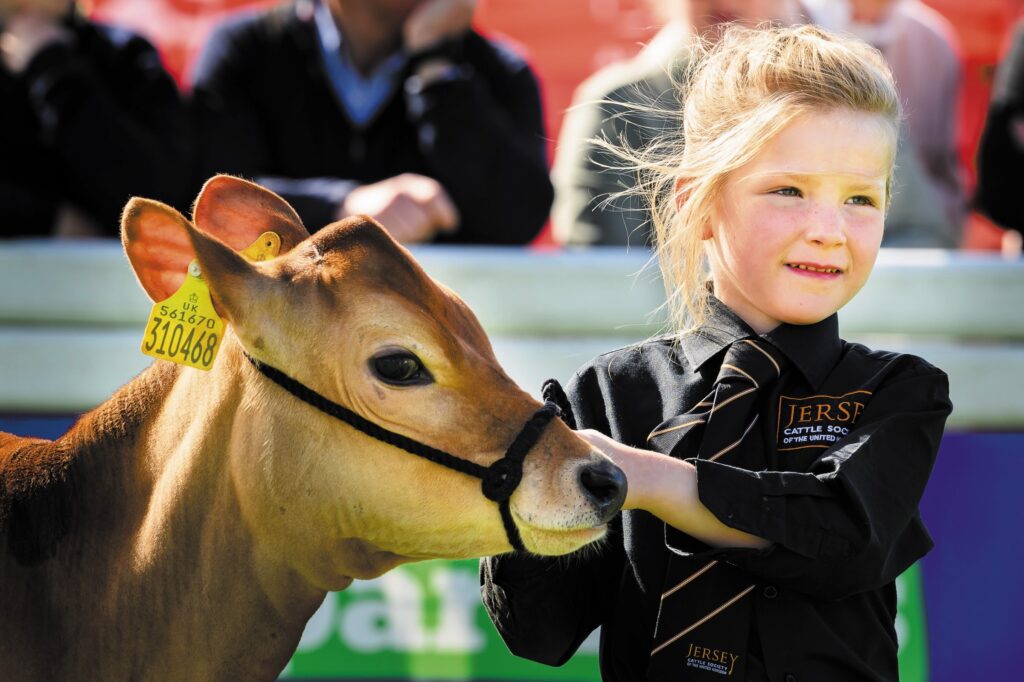
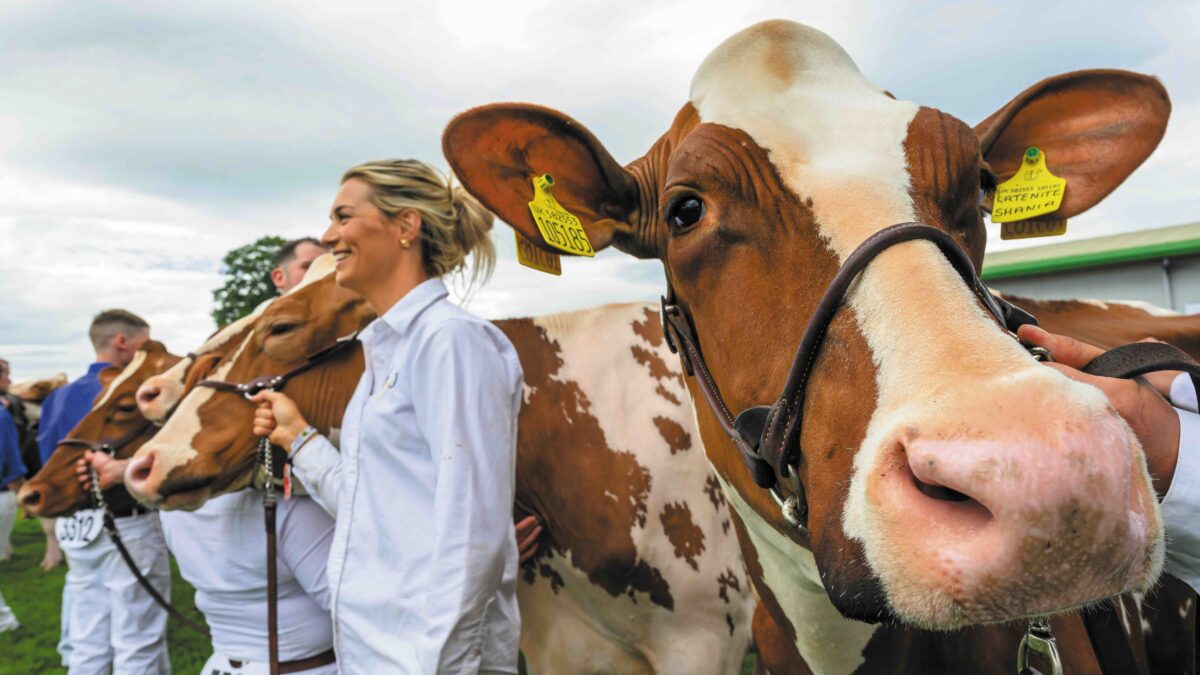
Competitions awarding coveted rosettes to pedigree cattle, sheep and pigs (all meticulously groomed for the occasion) jostle for visitors’ attention with heavy horses, sheep shearing and displays of gleaming agricultural machinery. 

There’s also an impressive range of local produce that distinguishes Scotland in the global food and drink market: cheese, meat, seafood, gin and whisky. Scotch whisky alone accounts for 43 bottles being exported to markets across the world every second. 

 The Royal Highland Centre now claims to be Scotland’s largest indoor and outdoor venue, delivering some of the biggest events in the country and welcoming more than a million people every year – a massive increase from when the show began in 1822 in Edinburgh’s Canongate, on the site now occupied by the Scottish Parliament. 

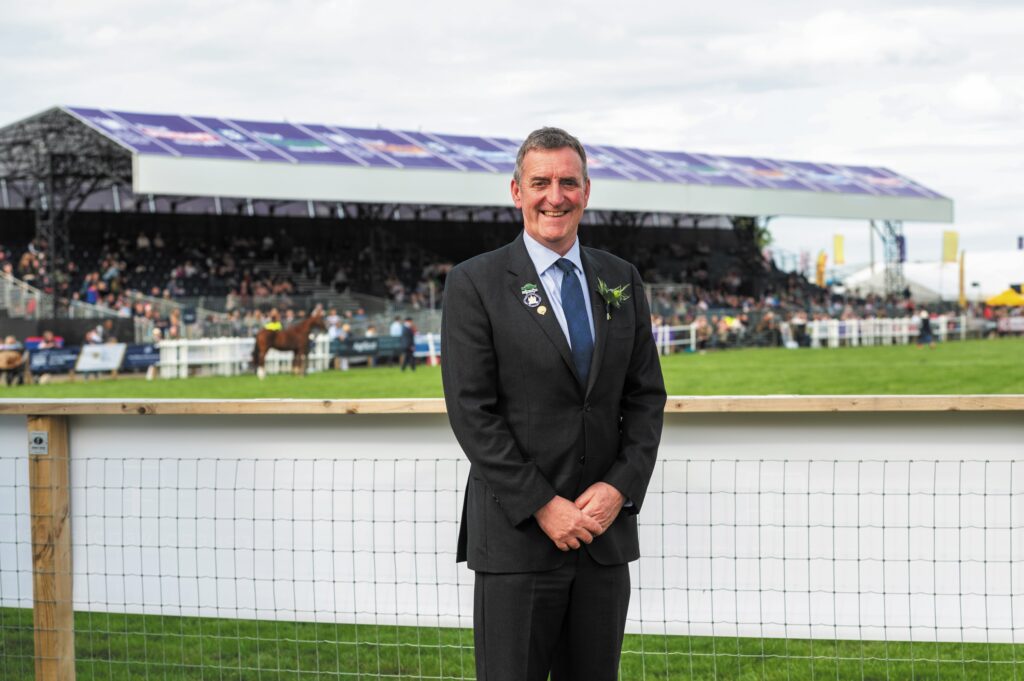
James Logan, Director & Chairman of the RHASS, describes the scale of the 203rd event as ‘incredible’

It’s a major marketing platform for producers, exhibitors and businesses from across Scotland and the wider UK. James Logan, who was appointed last year as chair of the Royal Highland and Agricultural Society (RHASS) – the organising body behind the show – describes the scale of the 203rd event as “incredible”. 

RHASS itself was founded in 1784 and is a charitable organisation that supports Scottish agriculture, rural development, education and land-based industries. The show remains the most visible expression of its mission to promote farming, food and the countryside. 


For those whose livelihood depends on farming the show has appreciable benefits

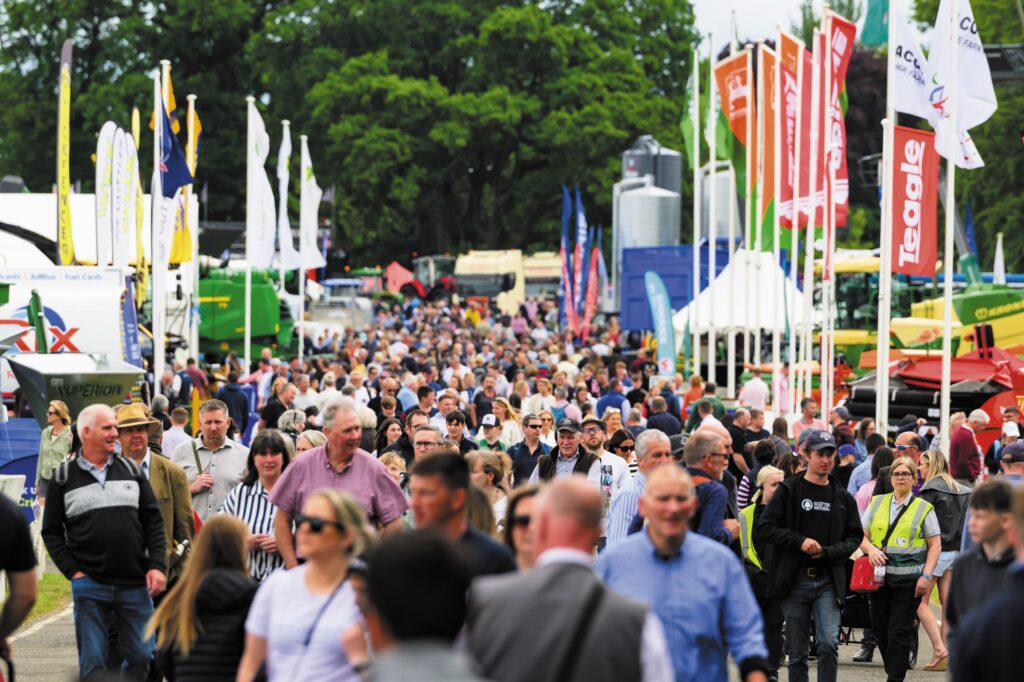
With 200,000 visitors, the show has expanded on an unimaginable scale since its inception in 1822

Many of the 200,000 visitors, though, simply go to be intrigued by a window on to rural life in action, from pole climbers in the forestry arena to horse-shoeing competitions, while for those whose livelihood depends directly on farming the show has appreciable benefits.  

Agri-entrepreneurs and businesses from across the country have entered their innovative products in the 2025 RHASS Innovation Awards while the sustainability agenda is as urgent as in any other business sector.  

The team led by RHASS president George Lyon behind its Strathclyde Presidential Initiative for 2025 is helping to accelerate agriculture’s journey to net zero and has secured support from major sponsors such as Genus, UK Agri-Tech Centre, Diageo, Trouw Nutrition, Harbro, Quality Meat Scotland (QMS), JCB and the Agriculture and Horticulture Development Board (AHDB). 

In April it hosted an event focused on solutions to net zero at the Scottish Parliament at which farmers and agri-business leaders held a round-table discussion with MSPs, followed by an industry conference at the RHASS Pavilion in May. 

At the RHS it has set up the Presidential Solutions Hub allowing farmers to visit the stand and view some of the technologies and innovations helping drive the progress toward net zero in the sector. 

The show is also, says Logan, a useful forum for many business-to-business discussions. “It is, for example, the largest machinery display in Scotland and is phenomenally well supported by our stakeholders. And it’s somewhere for people to come and see the latest contemporary developments.”  

Farmers can also discuss events affecting the industry, including political, economic, environmental and social factors. Recently, for example, the potential consequences of family farm inheritance tax sparked major worry and there are now considerations surrounding the new EU-UK trade agreement announced last month. 

This presents both opportunities and challenges, with the Scottish Fishermen’s Federation describing the 12-year deal which extends existing access for EU boats in exchange for reduced checks and restrictions on food exports as “a disastrous outcome for the Scottish fishing fleet”. 

And while last month’s trade agreement between the UK and US offers Scottish beef producers a tariff-free quota of 13,000 metric tonnes for exports to the US, potentially opening the door there to premium Scottish beef products, it also allows the US to export 13,000 metric tonnes of beef to the UK tariff-free. 

However, for many, attending the RHS is primarily a source of enjoyment. It has, says Logan, crucially retained its heritage as an agricultural show that covers all sectors of rural life. 

The show is famous for showcasing the best of the country’s livestock. “We have 4,000 animals entered in more than 900 competitions throughout the four days of the show and my personal highlight is on Sunday afternoon, with the six-horse heavy horse parade as they compete in the main ring final.” 

The show also attracts the owners of livestock from the south of England, Wales and Ireland. “The draw of the livestock shows and competitions is huge,” says Logan. “Farmers will even time their cutting of silage to get here as it’s such a regular and valued part of their social calendar.”   

With succession planning a major issue in some sparsely populated rural areas, the event is also useful as a source of education about agriculture as a potential career. “Last year 20,000 children under the age of 15 came for free,” he says.  

“Being a family occasion is a great selling point and in days when it’s increasingly expensive for a family to enjoy a day out together, you can come with your kids and just pay for two adults – where else can you experience so much variety?” 

Logan points to attractions such as off-road mini ROVERS and the Kids Zone with live shows, John Deere mini tractors and the Royal Highland Education Trust’s (RHET) Discovery Centre which aims to be gently educational in an interactive way. 
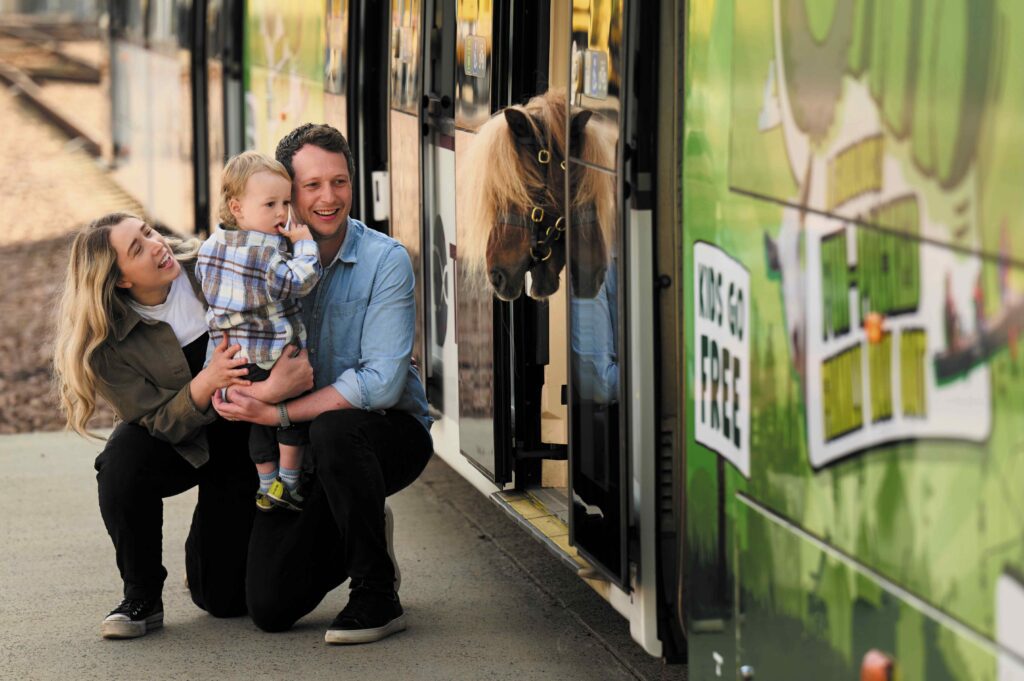
A miniature Shetland pony, accompanied by lambs and a Highland cow and calf duo on an Edinburgh tram. Photo credit: © Malcolm Cochrane Photography

A miniature Shetland pony, accompanied by lambs and a Highland cow and calf duo were among the more unusual passengers who travelled on an Edinburgh tram recently to encourage the use of public transport during the RHS. They were supervised  by Carol Tennant, two-year-old Arthur and David Tennant, head of show for RHASS, who said: ‘With such big crowds anticipated Our ‘RHS OHH’-wrapped Edinburgh Tram is a great reminder of the easy access that’s available to Ingliston.’

The event is a source of education for young people about agriculture as a potential career

RHET also convenes visits for some 8,500 schoolchildren to attend the show. “That involves a whole cross section of young people who get the opportunity to see what goes on in rural life throughout these four days.” 

For the Scottish Association of Young Farmers Clubs (SAYFC), with more than 70 clubs, it’s the largest engagement series of events throughout the year. “They enjoy huge interaction here and the main accolade is to be named Stockman of the Year, says Logan, who understands the value of family continuity in the agricultural sector. 

He himself is third generation, farming at Athelstaneford Mains in East Lothian. The family moved there from Ayrshire in 1931. Like his father Willie, Logan had been a director at RHASS for several years before being appointed chair.  

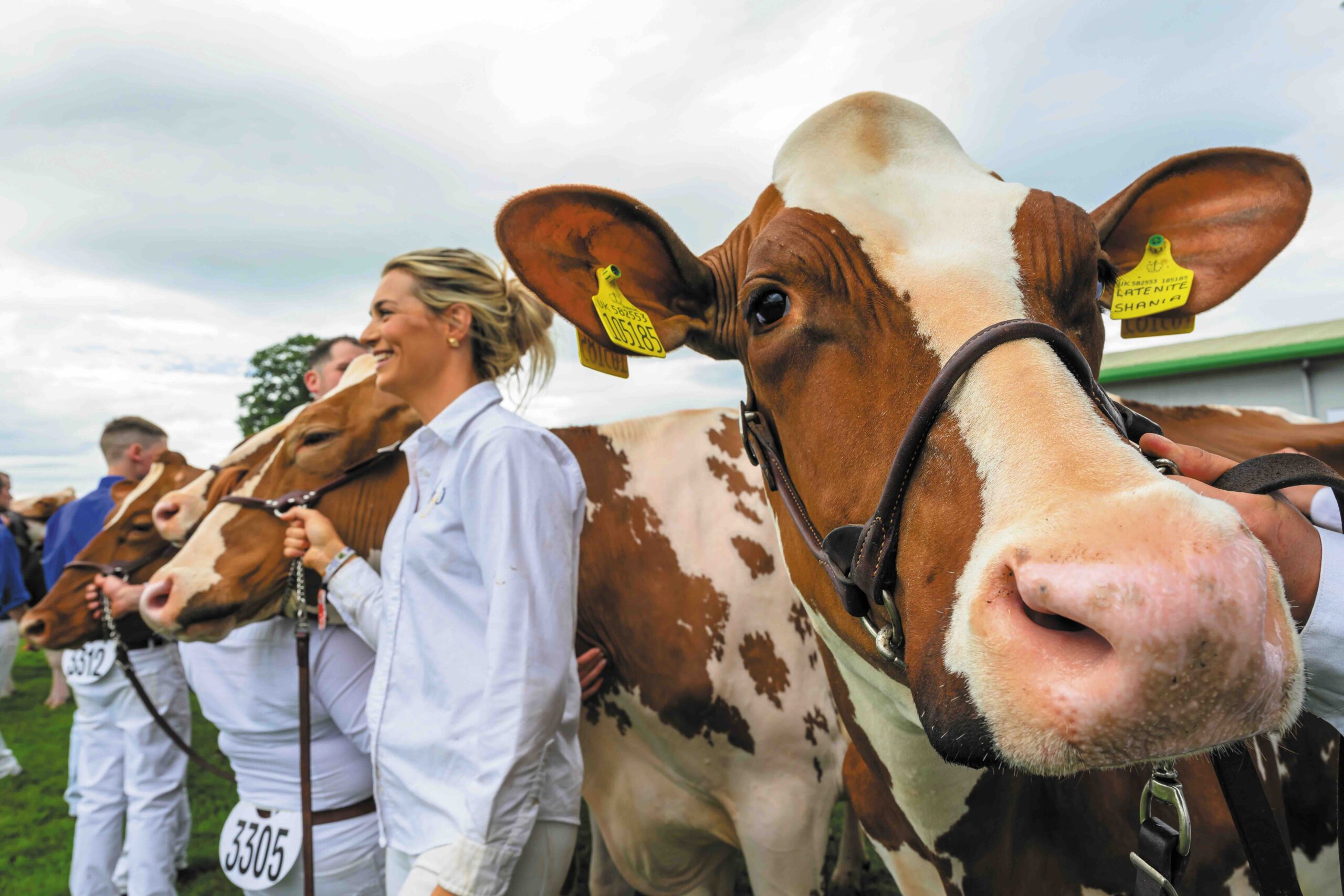
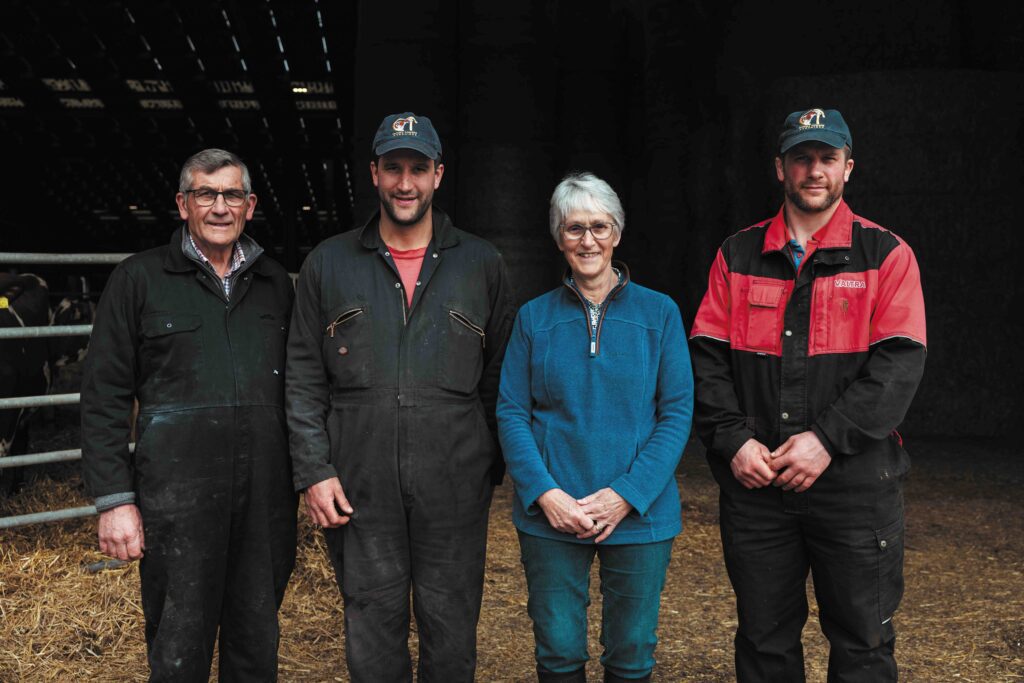
The Lawrie family, Arthur and Susan, and their sons, James and David, are RHS veterans

‘We’re very passionate about showing’

For the more than 800 exhibitors attending the Royal Highland Show (RHS) the annual event is more than just a display of livestock and produce. It’s also an opportunity to connect with industry peers, engage with the public and to display their efforts on a national stage.

And whether they are a farmer, a dealer in farm machinery, an artisan baker or a distiller, attending as an exhibitor requires immense planning and preparation to make best use of the event.

The Lawrie family from Cuthill Towers, Milnathort, in Perth and Kinross, Arthur and Susan Lawrie and their sons James and David milk

270 pedigree Ayrshire Red and White cows. They’re RHS veterans and regular winners at Scottish agricultural shows, including at Ingliston.

“My husband’s family has had a very long association with the show,” says Susan. “We’re all very passionate about showing and it’s always a big part of the calendar year.”

The logistics for a working farm are formidable: “We go over to the showground on the Monday or Tuesday to let the cows settle in until the actual dairy showing class on the Friday.”

One of the main attractions, she adds, is meeting up with people that they only

see once a year. The cattle people tend to socialise but they don’t go too far from their cows until the showing.

Until then, top cows enjoy some special treatment. “They might get to stay in a separate pen and are washed, usually twice. With so many cows still to milk at home this is quite an operation and needs a lot of preparation.”

The RHS is also the opportunity to attend various seminars and stands. “The machinery is a draw for many farmers and a lot of them head for these stands … the event is really a showcase for all things agricultural,” she says.

When RHASS conducted an impact study in 2022 it revealed that the RHS brought some £39m to the Edinburgh economy, and supports around 674 full-time equivalent jobs in the city, while across Scotland it contributes an additional £19.7m in output.

“That is quite flabbergasting but with 200,000 people all using transport to get here and many needing accommodation you can see the multiplier effect,” he says. 

This massive influx poses major logistical challenges: “Behind the scenes the planning is phenomenal,” he says. “Our team liaises with the city council, Police Scotland, the Scottish Ambulance Service and Edinburgh Airport, integrating all these services to make sure that people can arrive, enjoy the event and leave in safety and we’re constantly involved in scenario planning to make sure that we can cope.” 

Clearly, after two centuries, the organisers know what they are doing – and on a scale that would have been unimaginable in 1822 at that first show. 

 
Photography Credit: Ian Georgeson