
The mothballed oil refinery and the town are the first big test of a ‘just transition’
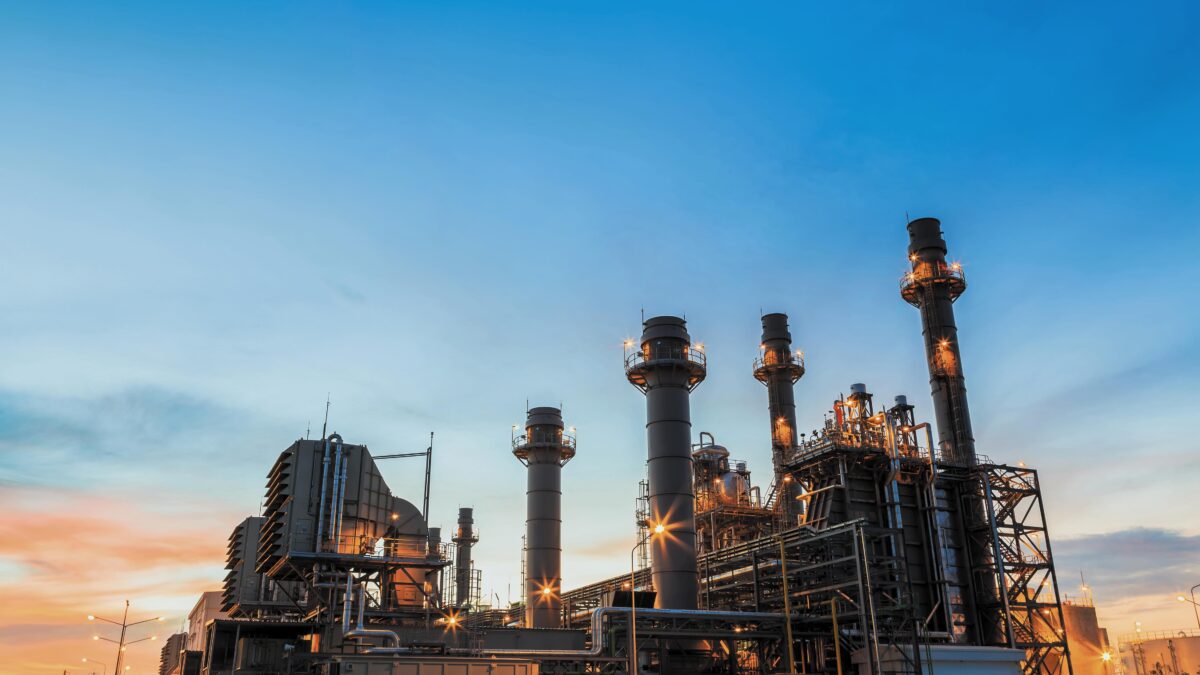
On the banks of the Forth, hidden behind a snarl of motorway exits and wind-lashed scrubland, lies one of the most important and discussed industrial sites in the UK.
For 100 years, the Grangemouth refinery turned crude oil into the fuel that keeps Scotland running. It powered planes out of Prestwick, ferries from Oban and cars from Kelso to Caithness. For many years, it also pumped out more carbon than any other site in Scotland. And in April, it all stopped.
In a decision that triggered fury in some quarters and a sense of opportunity in others, Petroineos, the joint venture between INEOS and PetroChina that owns the refinery, announced in 2023 it would cease refining operations by mid-2025, turning the site into an import terminal for finished fuels.
Approximately 400 skilled jobs have already been lost, along with knock-on effects for contractors, suppliers and the local economy. For a town built on oil, the sense of grief has been palpable.
Unite the Union called it “industrial vandalism”. The Scottish Government branded the decision “premature”. Campaigners marched through the streets of Scotland’s cities behind banners reading ‘Keep Grangemouth Working’.
And yet something unusual is happening: a strange alignment of industry, government and environmental ambition. From the ashes of the refinery, a plan is being born – one that could turn this carbon colossus into a green industrial powerhouse. That’s the hope, at least.
Welcome to the Grangemouth transition: £3.5bn at stake, cutting-edge technologies on the table, and a litmus test for whether government can truly deliver a ‘just transition’.
Hard stop for heavy industry
To understand the scale of what is happening, you have to grasp what Grangemouth is, or was. Built in 1924 by British Petroleum (BP), the refinery had for decades been the beating heart of Scotland’s fossil fuel infrastructure. It processed up to 210,000 barrels of crude a day, and churned out about 65 per cent of all the petrol, diesel and jet fuel used in Scotland. It was, by any definition, critical national infrastructure.
But it was also ageing, expensive, and increasingly out of step with global trends. The rise of mega-refineries in Asia and the Middle East, combined with falling European demand for fossil fuels and stricter emissions rules, chipped away at the site’s viability.
According to Petroineos, the facility was losing half a million dollars a day. Investing to bring it up to modern standards would cost billions, and in a world shifting rapidly to electrification and hydrogen, the business case just didn’t stack up.
Grangemouth as a town has an opportunity to be a world leader in making a transition…
– Councillor Cecil Meiklejohn

Councillor Cecil Meiklejohn for Falkirk North
From a purely commercial perspective, the pivot made sense: wind down refining, import fuel instead, and redeploy resources elsewhere. But shareholder logic doesn’t always align with workers’ interests.
The decision to close landed like a hammer blow in the Forth Valley. Refinery workers are among the best-paid and most skilled in Scotland’s industrial workforce, a fact often cited with pride by the town and its trades unions alike. Losing those jobs isn’t just an economic loss; it’s a dramatic change in a community’s identity.
So, what now?
The answer, or part of it, lies in something called Project Willow, a £1.5m feasibility study jointly backed by the UK Government, Scottish Government, and Petroineos. It’s a sort of industrial mood board for the 21st century, with pins of hydrogen hubs, plastics recycling plants, sustainable aviation fuel refineries, and bioethanol processors. There are nine potential projects in total, each aiming to help Grangemouth reinvent itself as a ‘low-carbon industrial cluster’.
One proposal would see the site produce e-methanol, a clean fuel used in shipping. Another imagines turning Scottish timber into advanced biofuels. Others would reprocess plastic waste or build massive electrolysers to generate green hydrogen from renewable electricity.
On paper, these ideas could create hundreds of new jobs, maybe more than the refinery itself once supported. They would also cut emissions, attract private investment, and help Scotland hit its net-zero targets. But none of it will happen without major government intervention.
These aren’t plug-and-play projects. They require billions in capital, bespoke regulation, and confidence that policy won’t shift with the political winds. Some won’t make financial sense without a price on carbon or subsidies to compete with polluting alternatives. It’s here that the notion of a just transition gets its first real test.
A live-fire exercise in green policymaking
The phrase ‘just transition’ gets thrown around a lot, especially in government press releases, but Grangemouth is where it stops being theory.
The challenge is deceptively simple: how do you shut down a high-carbon industry without hollowing out the community that depended on it? How do you help workers trade in their oil-soaked overalls for hydrogen hard hats – and do so before their skills and livelihoods start slipping through the cracks?
The task extends beyond training courses or job fairs; it’s a complex reshaping of an entire regional economy while keeping local buy-in. Fortunately, there’s a rare sense of alignment across political lines.
Both the UK and Scottish governments have put serious money on the table: £100m from the Falkirk & Grangemouth Growth Deal, £25m in just transition funding from Holyrood, and another £200m promised through the UK Government’s National Wealth Fund. That’s before the Forth Green Freeport incentives or the private capital already circling.
Still, many remain sceptical. Union leaders want to see timelines, not just task forces. Environmental groups are wary of blue hydrogen and other ‘transitional’ technologies that still rely on fossil gas, even with carbon capture technology. And locals want to know if any of these green jobs will materialise before it’s too late.
How do you help workers trade oil-soaked overalls for hydrogen hard hats?
What is clear is this: Grangemouth has inadvertently become the UK’s flagship case study in how to manage industrial decline and climate ambition at the same time. If it works, it could set a template for Teesside, Port Talbot, and dozens of other sites facing the same future.
For some of those on the ground, the verdict so far isn’t exactly glowing.
“The UK and Scottish governments have ultimately failed to protect the refinery jobs at Grangemouth,” says Derek Thomson, Scottish secretary of Unite. “Highly-skilled, well-paid workers are being thrown on an industrial scrapheap.” He describes the refinery’s closure as one of the worst self-inflicted blows to Scottish industry in a generation – a stark verdict, but one echoed by many in the workforce.
It’s not just the immediate job losses that anger Thomson, but the sense of miss-timing. While Project Willow sets out a raft of potential green jobs in biofuels, hydrogen, and synthetic aviation fuel, most of these won’t materialise for years.
“There are projects such as sustainable aviation fuel production which can be accelerated to protect jobs, but most of these would not start for several years after the site has closed and the jobs have been lost,” he says.
The government funding attached to the transition has also come under fire. Despite headline figures in the hundreds of millions, Thomson points out that “not one penny of the £200m National Wealth Fund announced by the prime minister can be unlocked without private investment”. For all the fanfare, he says, “the reality is that this money doesn’t save one job at the refinery”.
It’s a damning assessment, and one that lays bare the fragility of any transition strategy that promises green jobs without a bridge to get workers from one end to the other. If Grangemouth is a test, then the unions are clear: so far, governments are failing.
But step back from the industrial frontline, and another piece of the puzzle emerges: infrastructure. Specifically, the hidden pipes and subsea geology that will determine whether Grangemouth’s future fuels are truly low-carbon or just green-washed.
Enter Acorn, Scotland’s flagship carbon capture and storage project. The idea is elegant in theory: capture CO2 at source in Grangemouth, pipe it north to St Fergus in Aberdeenshire and bury it in depleted oil fields under the North Sea. No need to build everything from scratch either; a key selling point is the ability to reuse existing gas pipelines.
“Acorn, Scotland’s only advanced CO2 transportation and storage system, will create a permanent CO2 storage solution for a range of diverse emitters across Scotland,” explains Nic Braley, general manager of the project. “The Scottish cluster benefits from the re-use of existing pipeline infrastructure, both onshore and offshore, which facilitates earlier delivery and lower costs.”
In other words, this is one transition project that could move faster than most, if it gets the green light. But that clarity hasn’t come yet. “We continue to urge the UK Government to provide clarity on support and timelines for Acorn,” says Braley.
The urgency is borne from the fact that many of the bold ambitions on paper (hydrogen production, fuel switching, low-carbon manufacturing) depend on Acorn working. Without carbon capture, there’s no viable path to producing hydrogen from natural gas without emissions. Without that hydrogen, many of the alternative fuels proposed in Project Willow become difficult to justify or scale.
If the stakes feel high at the national level, they’re just as acute locally. For Falkirk Council, the challenge is one of co-ordination — how to make overlapping funds, slow-moving infrastructure and political promises translate into something real.
“The immediate priority is supporting and enabling those who have been impacted by the closure of both the refinery and petrochemicals sector into alternative employment,” says Councillor Cecil Meiklejohn, Leader of Falkirk Council.
That includes reskilling through Forth Valley College and efforts to attract new investment through Scottish Enterprise. “The biggest challenge is the pace of change required and the need for investment.”
The Falkirk & Grangemouth Growth Deal, jointly funded by the UK and Scottish governments, was signed off before the refinery’s closure. Meiklejohn is keen to point out that this is a long-term strategy, designed to deliver “sustainable benefits for the wider area over the next five to ten years.”
But she’s also clear-eyed about the gaps. “Grangemouth as a town has an opportunity to be a world leader in making a transition from a heavily carbon-based industrial town to one delivering sustainable energy solutions,” she says.
“The success measure… will be having a cleaner, greener environment in which to live and work, and a sustainable pipeline of economic investment that secures the industrial complex for generations to come.”
There’s a realism in Meiklejohn’s words – no grandstanding, but no defeatism either. Falkirk Council, she says, plays a “unique role” in stitching together all the moving parts. The real task now is to make sure that when government money lands, it lands where it can do the most good.
Testing the theory
So, where does that leave Grangemouth?
Caught, like so much of Britain’s post-industrial heartlands, between ambition and reality. On paper, the plans are impressive: hundreds of millions in investment, cutting-edge technologies, national interest. On the ground, there’s pain, job losses, and an urgent need to turn ideas into employment.
This is what a ‘just transition’ looks like when it stops being a slogan and starts being tested.
Track the ‘just transition’ in our Energy & Sustainability section.