Signs of positivity in commercial property sector despite law firms seeing drop in transaction volumes
The Scottish commercial property sector has navigated serial challenges since the Covid pandemic, and this year has been no exception for investors, developers and the lawyers who act for them.
There’s constantly new and pending legislation in the sector. This year it has included the proposed (but now withdrawn) reform of lease-continuation rules; the Land & Buildings Transaction Tax (LBTT) treatment of lease variations – and for the lay person the rather more arcane Moveable Transactions (Scotland) Act 2023 that came into effect in April.
All of which leads to a consensus – confirmed by The Legal 500 – that there is still strong legal-service capability in Scotland for commercial property transactions. And while transaction volumes are subdued compared to previous years, investor appetite is increasingly focused on prime assets and asset quality, sustainability and modern specification plus location in deals north of the Border.
Real estate consultancy Knight Frank talks of “measured optimism” in its Scotland Report – a sentiment generally shared by those in the legal community, agreeing that expectations around quality are stronger than ever and that “the market remains responsive for landlords and vendors holding high quality, well-let assets in established locations”.
Johane Murray is partner and head of real estate at Brodies LLP whose client base includes various UK and US private equity firms and European real estate investment firms, in addition to many prominent UK based developers and investors.
She highlights a common refrain: the fact that that pre-existing quality space is getting ever thinner because of the dearth of speculative development coming through.
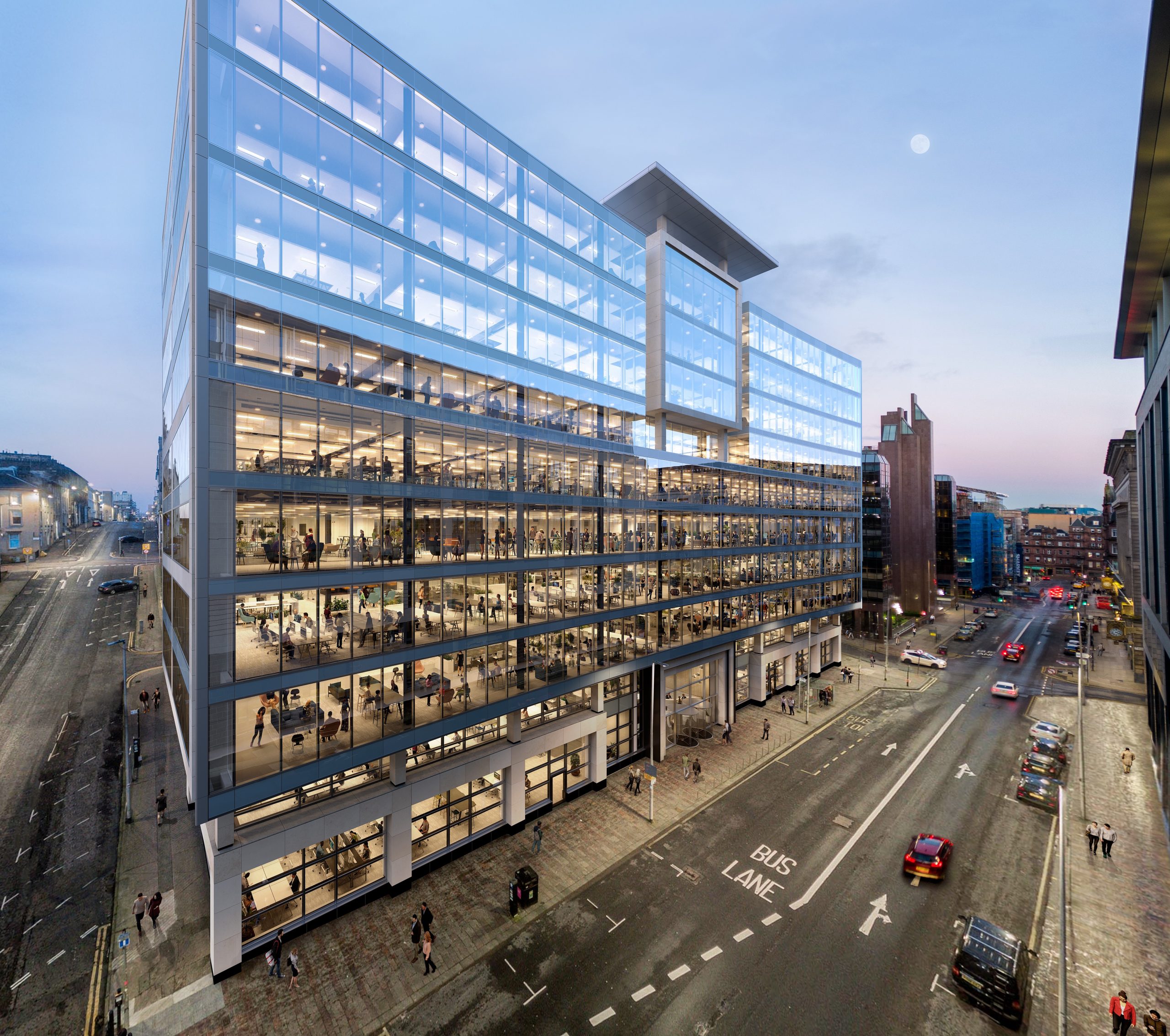
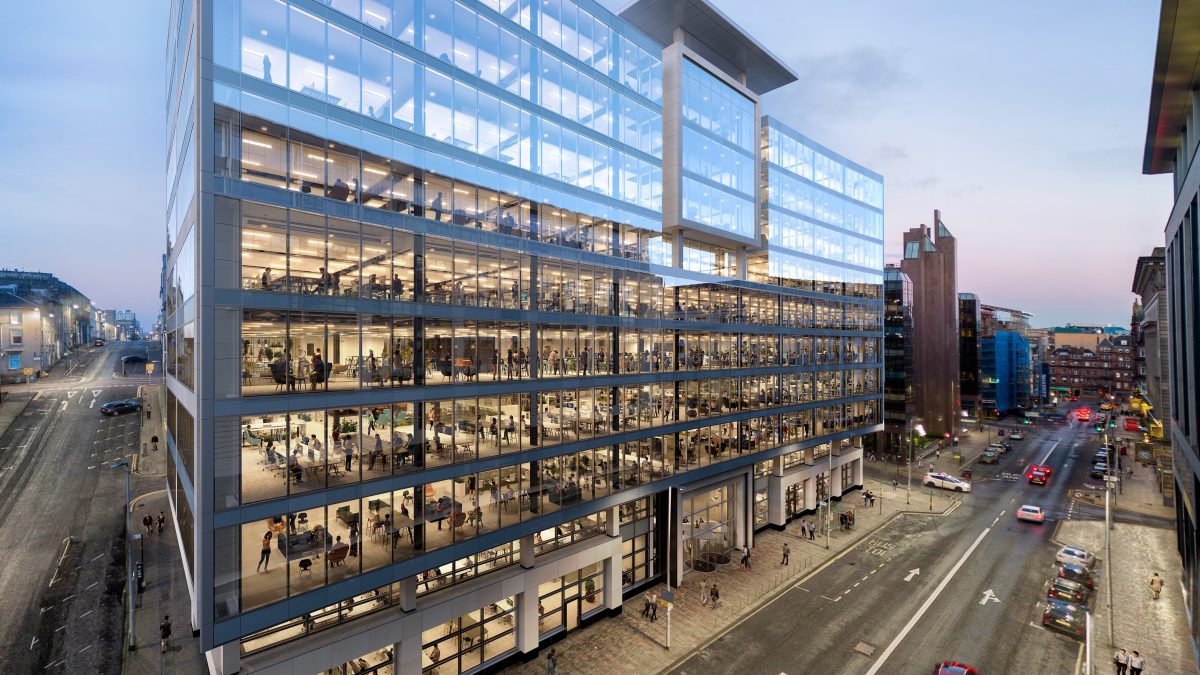
Despite this there is some welcome redevelopment, such as in Glasgow and HFD Property Group’s market-leading refurbishment at 120 Bothwell Street. “Stephen Lewis [managing director] has done a good job there, bringing out some quality, Grade A space that’s completely let and is a good news story for Aurora and the city.”
She also mentions Orion Capital Managers’ Lucent Building at 50 Bothwell Street with its historic listed façade, which was completed in October, providing 101,406 sq ft of much-needed Grade A space despite JLL data from Q2 2025 showing the Grade A vacancy rate to have moved down to 2 per cent for the first time since 2022.
Another sign of positivity in the city is the recovery of the retail sector, with Glasgow Chamber of Commerce reporting that retail sales in the centre rose by 9.4 per cent in August compared to the same month last year, while the food and drink and fashion sub-sectors increased by 10.5 per cent and 18.2 per cent respectively, while in the UK as a whole those were declining.
Many retail agents, Murray adds, would probably agree the micro location of the core of the city’s ‘Golden Z’ is Buchanan Street, which continues to be the main interest in terms of investor and occupier demand.
“I think the opening of Uniqlo (the Japanese fashion retailer) following its opening in Edinburgh will help and on Argyle Street and it will be interesting to watch that area now, with Praxis acquiring the St Enoch Centre.
The sector is, she adds, “seeing quite a bit of activity in the sub £10m space, particularly in Glasgow, from various entities.”
At the other end of the M8, Edinburgh-based partner at Shepherd and Wedderburn, David Mitchell, also notes transaction activity in selective markets and shares the recent concern of Alastair Wood, director, head of planning Scotland at Savills UK, about competing sectors leading to pressure on the very constrained amount of floor space available for offices.
More than 220,000 sq ft in the city has, he noted, been sold for hotel conversion – and cites the impact of the “hotelification” trend. “I can’t claim credit for the phrase, but Nick White of property consultants Cuthbert White talks about ‘briefcases and suitcases’.
“We’re lucky to have such a dynamic tourist industry in Edinburgh but a successful city needs to attract not only tourists but inward investment from occupiers or employers. While the drive toward tourism is great you must look after your office stock if you want to have a vibrant, multi-use city centre,” he says.
Of course, the office sector has also been influenced by downsizing – or rightsizing – post Covid and that affects lawyers as much as other professions. Mitchell says: “Shepherd and Wedderburn started talking about moving to Haymarket pre-pandemic, on the basis that we would be taking a more modern space that could be used a lot more efficiently.
“Then suddenly everyone had to go home and there was the notion that we were never going to need offices again, as everybody could work remotely. We’ve now completed the circle, realising that to some degree we are always going to need offices.”
He believes there’s a cohort of young lawyers at Sheppard and Wedderburn who were disadvantaged during the pandemic through losing a team environment. “You learn a lot just by listening and watching, rather than having knowledge passed on to you via a laptop. But if you want to get staff into the office you also want the best space, with the right amenities, services and location.”
Johane Murray says Brodies is seeing people a return to the office, to the extent that the firm is taking more space at 110 Queen Street in Edinburgh. “We’re pretty populated, especially between Monday and Thursday,” she says.
Mitchell agrees with Murray regarding the role of refurbishment, with developers demanding complete pre-lets before commencing a project because of the high attendant costs of starting to build anything.
“Take some of the historic listed buildings on Charlotte Square which have been refurbished as much smaller but very prime office spaces and people are paying top rents for that.”
And, he adds: “Refurbishment has its place because we should be using the built environment as efficiently as we can. We can’t just abandon a building because it doesn’t meet today’s occupiers’ exact requirements.”
At Macandrew Gillespie LLP, commercial property partner Kenneth Irons says despite continuing challenges that include rising construction costs and cautious investor behaviour there is still capital available for development, though terms may now be less favourable.
He too concurs there’s a trend toward repurposing buildings (what lawyers and developers describe as “shined-up” office space) over demolition and new build, due to both cost and environmental considerations.
“The ‘flight to quality’ continues and while occupiers are perhaps looking for smaller space, there’s still strong demand for better quality space both in Glasgow and Edinburgh,” he says.
Irons agrees that the risk landscape is still more elevated than it was pre-pandemic. “If you commit capital now and have an 18-month timeline to deliver, you can’t be guaranteed that your costs are going to remain in check,” he says.
“The challenge is trying to anticipate what your true project cost is going to be and general concerns about the wider economy weigh heavily on decision makers when it comes to deploying that capital.”
And for lawyers in the commercial property sector, that means delivering a level of service that price-conscious clients expect.
“Deals have become harder to deliver and are taking longer – a deal which might have taken six or eight weeks is now going to take ten, 12 or longer and people have concerns that the deal they’re signing up to is the right one, with nothing that might see it become unstuck.”