The sheer speed and scale of these advances in demand a concomitant impetus to maintain Scotland’s position in the growing technology and data sector – something of which Quintin Cutts, Professor of Computer Science Education at the University of Glasgow, is well aware.
Having spent 20 years working with computing education, he believes there is a need to separate the use of technology from the need to understand and create it.
He says everyone, whatever their career, should be able to identify opportunities for information automation and that if Scotland is truly going to reach its potential as a world leader in technology there is a need for more consistent provision at secondary – and even primary – school level.
“I’m not saying that everyone has to be a software engineer but just as we learn science so we have an understanding of the world around us (including critical areas such as climate change) now we are surrounded by computation, which is a major driver in our economies,” he says.
“This must be understood on a large scale: to innovate, whether on the front line in healthcare research, saving the planet or improving educational performance. To do this you need people who both understand the domain they’re interested in – and the computation involved in moving ahead in that area.”
For many, he adds, it’s all still a bit of a “black box”. The more we can help people understand it the better. While we’re not going to just jump in and explain large language models to them, we can though help them to see how it works and to appreciate when they should trust it and when they shouldn’t.”
Prof Cutts also emphasises the need to improve “spatial reasoning” and says that while our education system can develop our verbal centres in terms of reading, writing and speech, another important aspect is our ability as humans to work with non-verbal data.
The advancing role of information technology is now being addressed in Scotland’s Curriculum Improvement Cycle (CIC) as a necessary measure to help schools enter the 21st century and respond to a fast-changing world.
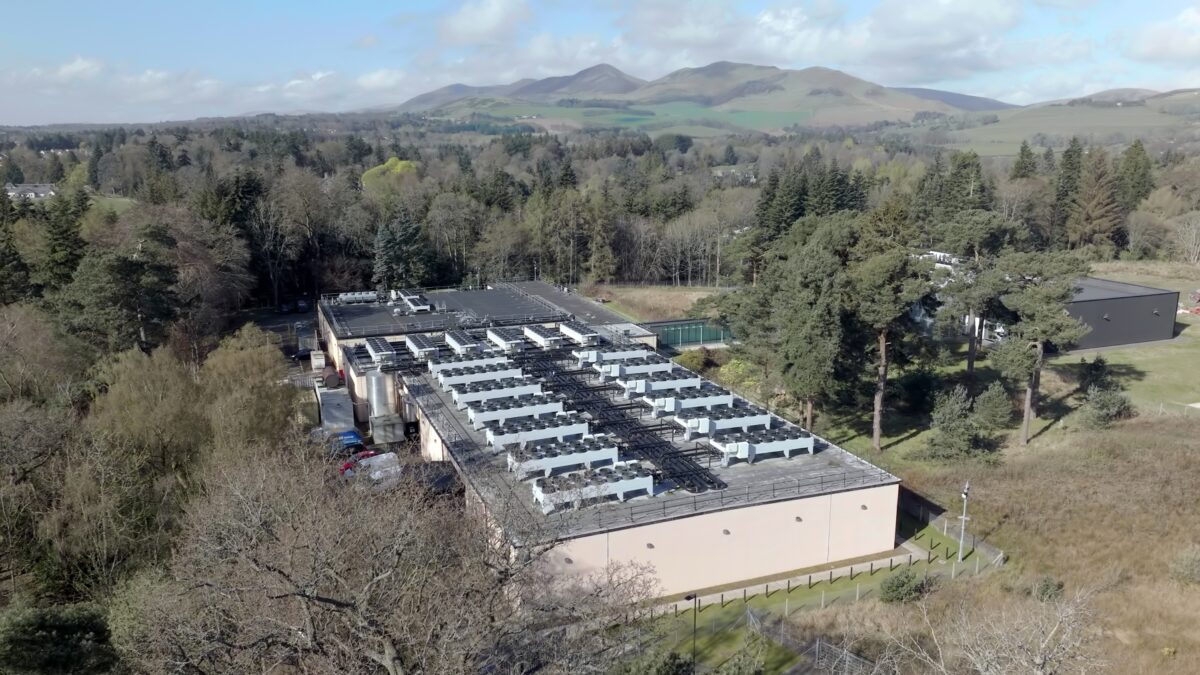
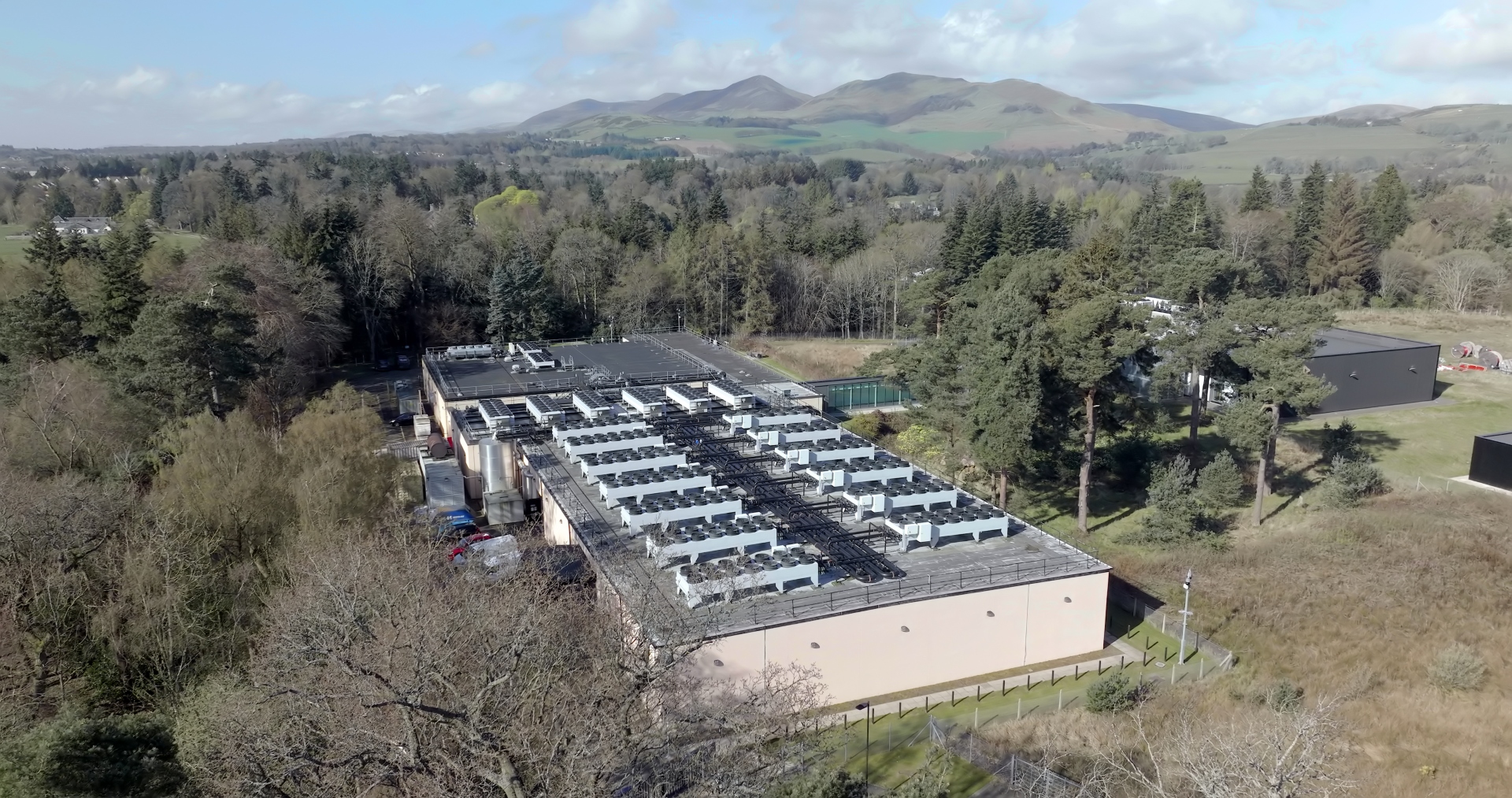
One institution actively advancing the practical opportunities of computing power is the Hutton Institute, established in 2011 through the merger of the Scottish Crop Research Institute (SCRI) and the Macaulay Land Use Research Institute.
The institute hosts the UK’s Crop Diversity HPC (High-Performance Computing) Resource, a platform used by several UK institutions to create better tools and methods for analysing crop genetics which can ultimately help solve global nutritional problems.
Last year, as one of Scotland’s largest supercomputing clusters, it achieved a milestone of 100 million hours of computing time, handling more than 400 terabytes of new data in the last 12 months – equivalent to around 100,000 HD movies.
Professor Rupert Lloyd Hough has been head of the information and computational sciences (ICS) department at the organisation for the past 10 years and in June assumed the role of director of digital transformation,
“We operate a high-performance cluster with an open-source scientific approach that democratises access to computing,” he says.
“To do this we work in in collaboration with seven major institutes in Scotland and the UK and by pooling these resources we can efficiently tackle big challenges, whether in sustainable agriculture or crop improvement, or, say, in biodiversity conservation. That shared infrastructure and expertise has seen various benefits and help to support large policy questions.”
The resource at JHI institute provides computational power on a scale that allows it to achieve, for example, the AI-powered work around mapping Scotland’s environment and biodiversity loss.
The work being done at the JHI is just one compelling example of how AI and machine learning offer tangible advances and economic advantages to real-life challenges – and highlights why Scotland needs to maintain its momentum in a rapidly-changing domain.
Prof Lloyd Hough says: “In a small country we do punch above our weight in terms of the facilities we’ve got. People working in similar sectors know each other well, and I there’s a lot of potential there for stronger working links and having more global impact in these areas”
THE SMART DATA FOUNDRY AND FINANCIAL SERVICES
New technology is having a profound impact on financial services and investment, involving everything from how firms analyse data to how customers interact with financial institutions.
While this may seem a rarefied world that’s concerned with international markets and currency transactions, smart data schemes will also give us all as consumers more control over our data in sectors such as personal finance, energy and telecoms.
Smart Data Foundry (SDF) was set up three years ago to deliver projects that drive social impact, such as one with the Joseph Rowntree Foundation to tackle income volatility – a growing challenge for many households – and the Cost of Living dashboard for East Renfrewshire Council, supporting the council in adapting its services to tackle hidden poverty.
A subsidiary of the University of Edinburgh, it is encouraging UK businesses to do more with their reserve of customer consumer data beyond profit-driven purposes and to use it for the wider good.