


Private equity investment and consolidation is reconfiguring Scotland’s fragmented and dynamic accountancy sector
Only a few years ago, the accountancy profession was viewed as industrious but rather staid. Today, it’s a veritable hotbed of dealmaking opportunity and change.
On 6th February 2025, Glasgow-based Consilium Chartered Accountants was acquired by Dains Group, the first acquisition made by Birmingham-headquartered Dains since securing backing from European private equity (PE) firm IK Partners, which itself bought Dains from UK PE firm Horizon Capital.
The deal marked the latest in a growing trend of PE investment in mid-tier accountancy practices over the last five years as consolidation continues to reconfigure a fragmented and dynamic accountancy sector with a pressing need to recompense a cohort of retiring partners, along with significant investment in artificial intelligence and in the process of redefining its value proposition to SME clients.
Describing the market for accountancy firms as being “red hot” of late, Douglas Lawson, chief executive officer and co-founder at MarktoMarket, remarks that it is now difficult to find a lower to mid-market focused UK PE fund without an accountancy platform.
“They all have slightly different models. Some are ‘take the old sign down and put the new sign up’ on day one, fully absorbed and rebranded into the mothership.
“Others are hands-off with the accountants continuing to run under their own brand and you wouldn’t know they had an ultimate owner.
“But fundamentally PE investors perceive that many accountancy firms have succession issues, they are small and might be under-invested in tech, and they could offer more services to clients as part of a bigger group,” he said.
It’s a massively fragmented market. There are 40,000 registered accountancy firms in the UK, but most of these are one-man-bands
— Douglas Lawson
Lawson notes that the market over recent years has been favourable to the big consolidators, fuelling a spate of secondary private equity transactions, such as AAB (owned first by August Equity which then sold it to Goldman Sachs Alternatives), the aforementioned Dains Group deal and Cooper Parry (sold by Waterland Private Equity to Lee Equity Partners in the US).
“The other top-down dynamic has been the fact that it’s a massively fragmented market.
“There are 40,000 registered accountancy firms in the UK, but most of these are one-man-bands, they’re not buyable assets, and once you get down to the firms that are earning revenue above £1m, that 40,000 number shrinks enormously,” he said.
Accountancy consolidation creates opportunities in the SME market
According to Allan Dowie, partner at Scottish PE firm N4 Partners and CEO at accountancy firm Wbg, which it bought four years ago and has gone on to fund six acquisitions of accountancy practices in Scotland, of the 40,000 accountancy firms in the UK, only circa 300 have fee income above £1m. N4 Partners is chaired by Benny Higgins, the former banker and creator of Tesco Bank.
He says that most accounting firms in the UK employ only a few people with a fee income of up to £800,000, while, at the other extreme, PwC is number one in the UK with £6bn of fee income and RSM, at number seven, has a fee income of £600m – a tenth of that size.
“Over the last few years there has been a consolidation at the top end of the market, so to get into the top 50 independent accountancy firms in the UK four or five years ago would have required a fee income of circa £30-£40m, while today it would be closer to £100m,” said Dowie.

“The consolidators are consolidating while, at the same time, 99 per cent of companies in the UK are SMEs, of which there are five million with 60 per cent earning less than £1m, 30 per cent between £1m and £20m turnover and 10 per cent earn £20m and more, so there’s a challenge in the market at the higher end in terms of who are the clients accountancy firms are going for? What are the margins they want to make?
“PEs make sure they’re driving forward for certain returns and within that there’s clients who no longer fit within that model who are getting pushed down to firms like ourselves – giving us an opportunity to provide clients with the right service at the right price, but there’s also firms who are not sitting within our pricing model who we are finding a soft landing for some smaller accountancy firms.”
How private equity funds technology and advisory growth
David Aikman, chief financial officer and chief operating officer at SME-focused accounting and advisory firm Azets, backed by PE investors Hg and PAI Partners, says that private equity has given it the financial firepower to grow by buying like-minded practices and the deep pockets it needs to invest in technology, particularly artificial intelligence.
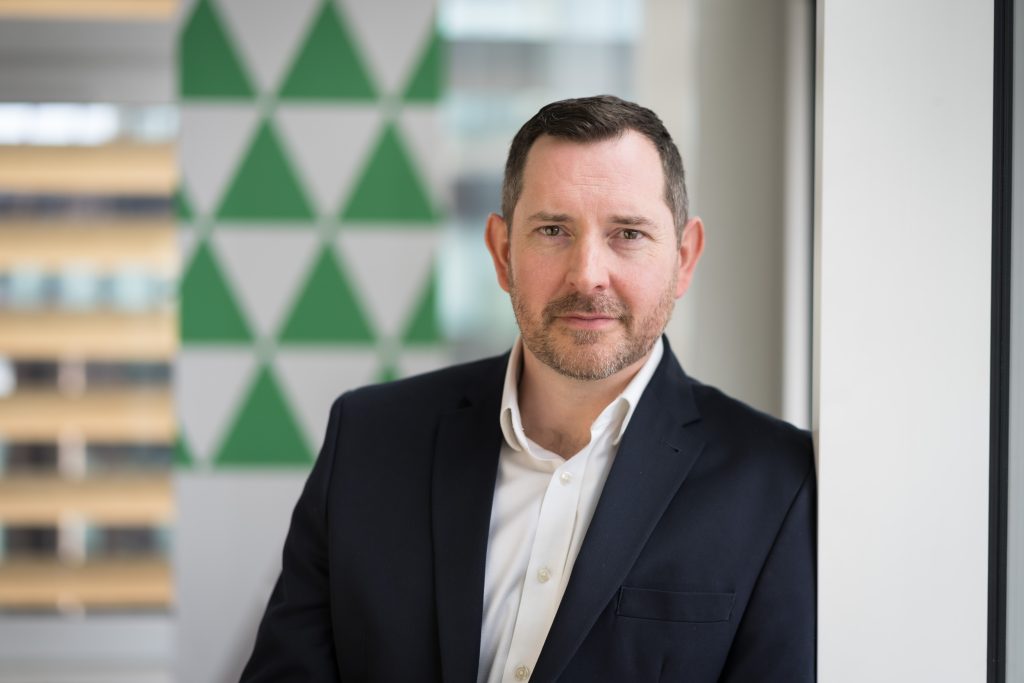
“Our model is to grow both organically and through M&A activity, and our most recent acquisition in Scotland was Milne Craig in Glasgow which joins Campbell Dallas,” he said.
“We continue to look for entrepreneurial businesses that are advisory-led because that’s where we see the real value for our clients. Compliance services are essential but the real value that we see within the businesses is being advisory led.
“We’re always on the look-out for other accountancy practices to come and join us and it would be fantastic to get another one in Scotland soon.”
It was important we found a partner that shared our ambition, bought into our culture, understood the strategic direction we wanted to move in
— Neil McInnes
Neil McInnes, corporate finance partner in Scotland at Grant Thornton UK, the sixth-biggest UK audit firm by revenue, which sold a majority stake to private equity investor Cinven in April 2025, says that the reason for going down the PE route was born out of a recognition that the ability to be the firm it wanted to be in the absence of PE investment was going to be challenging.
“It was important that we found a partner that shared our ambition, bought into our culture, understood the strategic direction we wanted to move in and had the firepower to enable that,” he said.
“We recently announced a £500m investment in digital technology that we just couldn’t have done under the old partnership model where profits are largely distributed every year.
“That investment will deliver a better, faster service to our clients, who will see us being freed up from doing the more administrative tasks and spending more time with them and getting to really understand them to deliver the kind of advice and support they’re looking for in a fast, efficient way and in a digitally enabled format.”
How AI could change accountancy services and fees
Aikman says that Azets is also embracing AI, albeit cautiously.
“We don’t agree with the suggestion that AI will replace the job of accountants. We see AI as an enabler – particularly in the compliance side of the workplace which can be more transactional and repetitive,” he said.
“AI will enable us to do that quicker. It can crunch great volumes of data and present the information to really get some insight out of it. AI can give you the foundational understanding of a client’s data and you then need a human in the loop to interpret that, identify the insight and make that relatable to what the client wants to do.”
Dowie agrees that the trend of PE investment in the mid-tier accountancy sector has led to investments in technology in terms of process improvement, automation and a consideration of how AI can assist with the process.
“We’re looking at deploying AI tools across all our service lines and that’s about saving time and improving margin,” he said. “That will effectively move the whole organisation up a level. It means that things can be done timelier, more efficiently, which will then improve margins.
“It means that as we train our graduates, they will understand that information and be able to have a more meaningful conversation with clients, to be that adviser, to develop that trust, and to have more integrity around the client relationship.
“The introduction of AI technology helps us move towards the value-added proposition.”
For Lawson, the advent of AI raises the question of just how the business model of the accountancy sector will change in years to come.
“If you’re an accountant, which tasks are going to be automated? To what extent is AI going to take over your business in a positive or negative way? Does AI mean you can go home early? Does it mean you can bill clients more?
“Does it mean you’re more efficient? Does it mean that you have to share those efficiencies with your client? Or does it mean that your client can do 90 per cent of the stuff they’re paying you to do at the moment?” he asks.
“There’s a huge question mark for PE buyers of accountancy practices about how the market will look in five years’ time. That then becomes very difficult because it becomes less about ‘What’s the right multiple for this business?’ and more about ‘how can I model, when it’s very difficult to model what my revenues and margins are going to be?’”
Is private equity appetite for accountancy firms cooling?
Lawson goes on to suggest that private equity appetite for the accountancy sector may be at a turning point, pointing to reports of stalled sale processes at Xeinadin and Sumer Group.
In February 2026, the Financial Times reported that Exponent’s proposed sale of Xeinadin had failed to attract bids matching its £1bn-plus valuation.
In May 2026, The Times reported that Sumer’s proposed £1bn auction had been delayed. Its backer, Penta Capital Partners, had appointed advisory boutique Continuum in September 2025 to oversee a review of the business.
“It’s telling now that we’ve had a couple of aborts. We’ve seen a slowdown in M&A activity, and we’ve seen people leaving accountancy businesses that have sold to PE firms because they don’t like the new world that they’re operating in,” suggests Lawson.
“They wanted to be part of something independent, and they wanted that carrot of partnership dangled in front of them – that goes away if you’ve been gobbled up.
“Then you’ve got some accountancy firms coming out publicly and stating their commitment to staying independent and making a real virtue of that.
“It does feel like, over the last six months or so, the sands are shifting. Is the party over? Has the market gone from red hot to lukewarm?”
Why integration matters in accountancy acquisitions
Not according to McInnes, who suggests rather that the market is maturing.
“You see this in lots of sectors where it’s fragmented and private equity hasn’t been involved, then it gets involved and so there’s a race to get scale, with red hot characteristics with players buying up businesses.
“And then secondary deals arise off the back of that because they’ve consolidated, but what you then see is the market becomes more sophisticated and in the next deal the buyer’s looking for real synergies and integration to have happened – and that’s the hard bit,” he said.
“It’s easy to go and spend money and buy things; it’s a lot harder to then make all those connections, get people onto the one system, get people to share clients, cross-sell where you can, get these real synergies whereby one plus one equals three or four.
“I think up till now PE backers have been less concerned about that and to get the real value that people want, they’re having to prove that they’ve done the hard work – not just buying things – but have properly integrated them and they’re getting more than the sum of the parts.
“That’s what will unlock the valuations. I don’t think the market’s cooling; I think it’s becoming more sophisticated and discerning.”
Aikman too stresses the importance of integration when making acquisitions.
Lots of acquisitions that have happened have been thrown over the shoulder with a corporate structure at the top and my view is that a business needs to be run as one process, one product, one client
— Allan Dowie
“Rather than buying a business, changing the sign above the door and carrying on as you were, our focus has been on true integration – bringing the teams together and ensuring that we’ve got that cultural fit,” he said.
“That’s more important for us now than it ever has been. That’s how you build value.”
Dowie agrees with the importance of integration.
“Lots of acquisitions that have happened have been thrown over the shoulder with a corporate structure at the top and my view is that a business needs to be run as one process, one product, one client and so those that are fully integrated will command a higher pricing in the market going forward but, more importantly, they’ll give the right service offering to the client,” he said.

Johnston Carmichael makes the case for independent growth
Of course, not everyone wants to join the race. Johnston Carmichael, one of Scotland’s leading advisory firms outside of the Big Four, remains steadfastly committed to a path of sustainable, organic growth, says Lynne Walker, the chief executive officer.
“If you do the right things with your clients, then generally clients are very sticky to their advisers. And that’s what I suppose PE is.
“They’re attracted to it, but they’ve also disrupted it in a way as well. And that’s why for me, you know, it’s definitely reshaped our market. Disruption isn’t always a bad thing, certainly for a number of firms.
PE has definitely reshaped our market. Disruption isn’t always a bad thing, certainly for a number of firms. PE has enabled them to manage succession
— Lynne Walker
“PE has enabled them to manage succession. It’s brought in capital for investment. For some firms, it’s about scale and growth.
“But I still come back to fundamentally as a profession, we need to put our clients and the relationships that we have and the trust that we build at the front of our strategy.
“Those relationships can also be with our people. So it’s about having strong relationships with our people, keep our people happy, they’ll keep our clients happy as well.
“You know, PE, it’s not necessarily a right or wrong answer, it’s just different and it will work for certain firms.”
“If you do the right things with your clients, then generally clients are very sticky to their advisers. And that’s what I suppose PE is.
“They’re attracted to it, but they’ve also disrupted it in a way as well. And that’s why for me, you know, it’s definitely reshaped our market. Disruption isn’t always a bad thing, certainly for a number of firms.
As Johnston Carmichael celebrates its 90th anniversary, chief executive Lynne Walker reflects on the firm’s heritage, evolution and ambitions for its next decade and beyond in a recent interview by The Business.
FAQs
Why is private equity investing in Scotland’s accountancy sector?
Accountancy firms offer recurring client income and opportunities to grow through acquisitions. Private equity can also fund partner succession, technology investment and wider advisory services.
How is consolidation affecting SME clients?
Larger groups can offer a broader range of services, but changes in pricing and client priorities may encourage some SMEs to move to smaller practices. The article highlights opportunities for firms offering advice at a price suited to those businesses.
How could AI change the work of accountants?
AI can automate repetitive compliance tasks and analyse large volumes of financial data. Contributors argue that accountants will still need to interpret the results, exercise judgement and provide advice grounded in their clients’ circumstances.
Does private equity ownership guarantee growth?
No. Contributors emphasise the importance of integrating systems, teams and services after acquisitions. Johnston Carmichael also highlights an independent approach built around organic growth, staff relationships and client trust.
Read more Accountancy & Advisory and Banking & Finance.