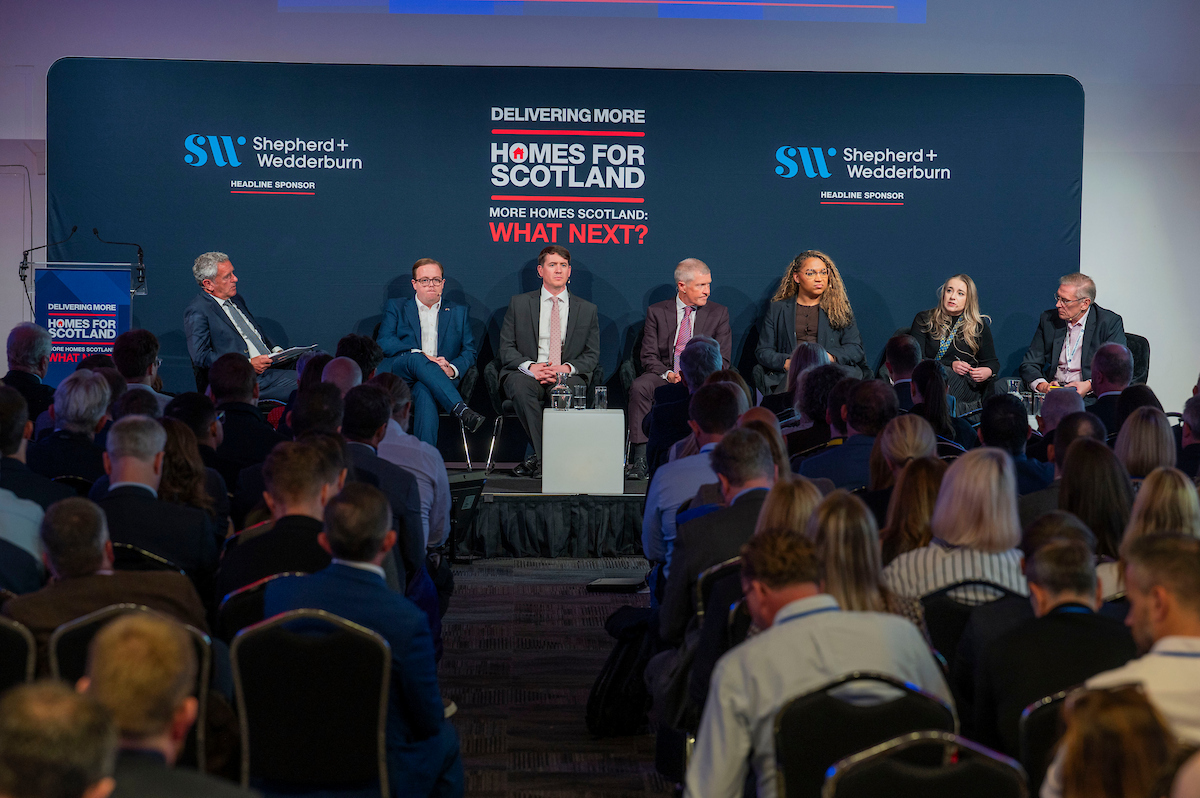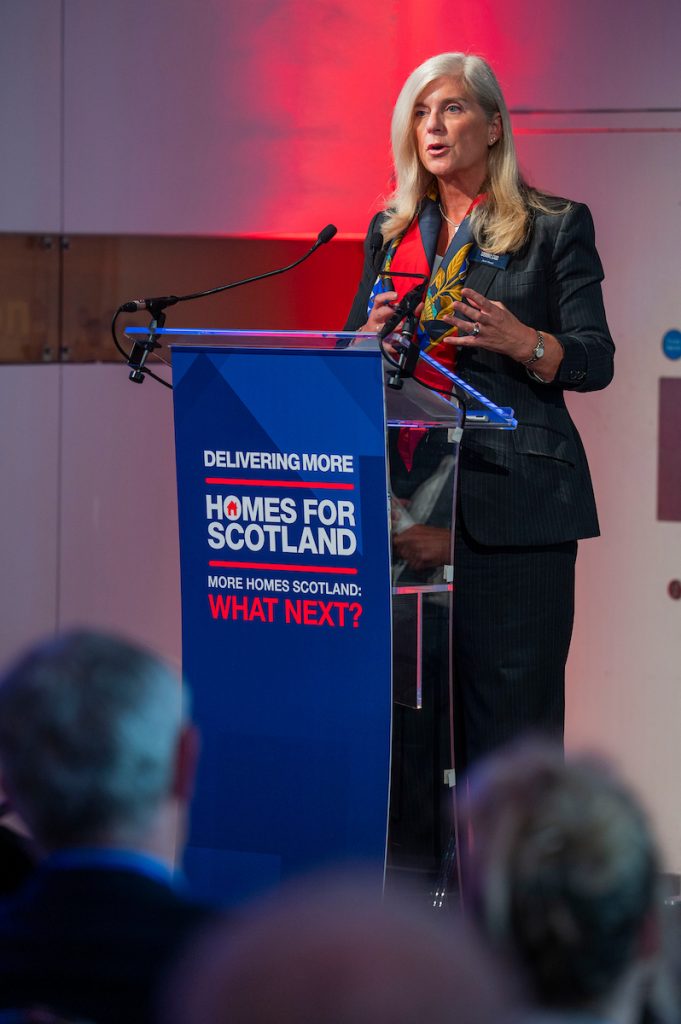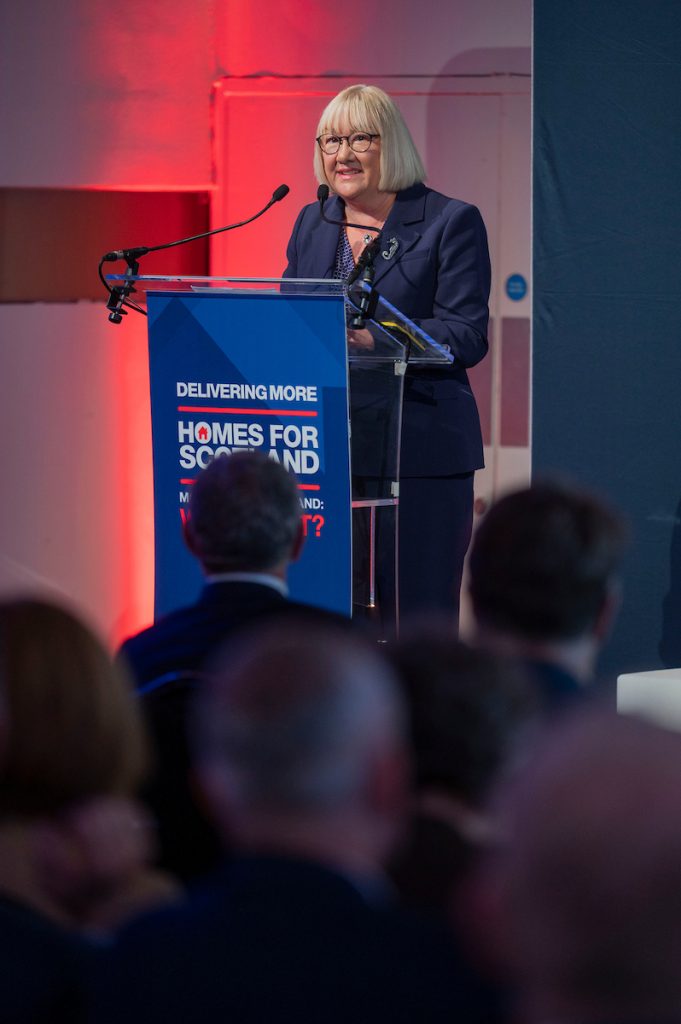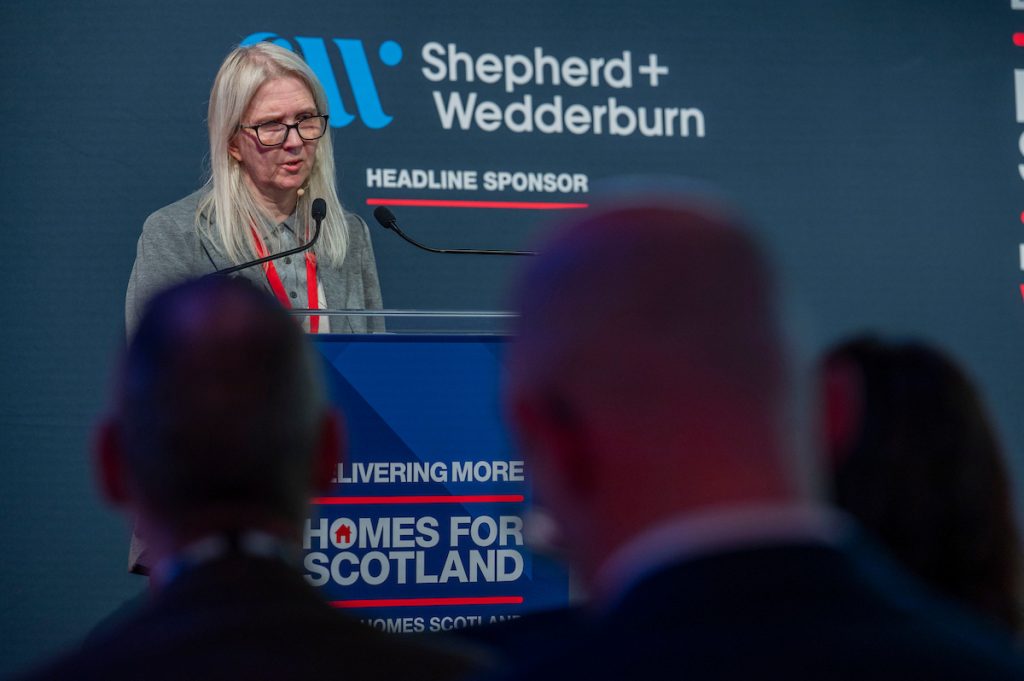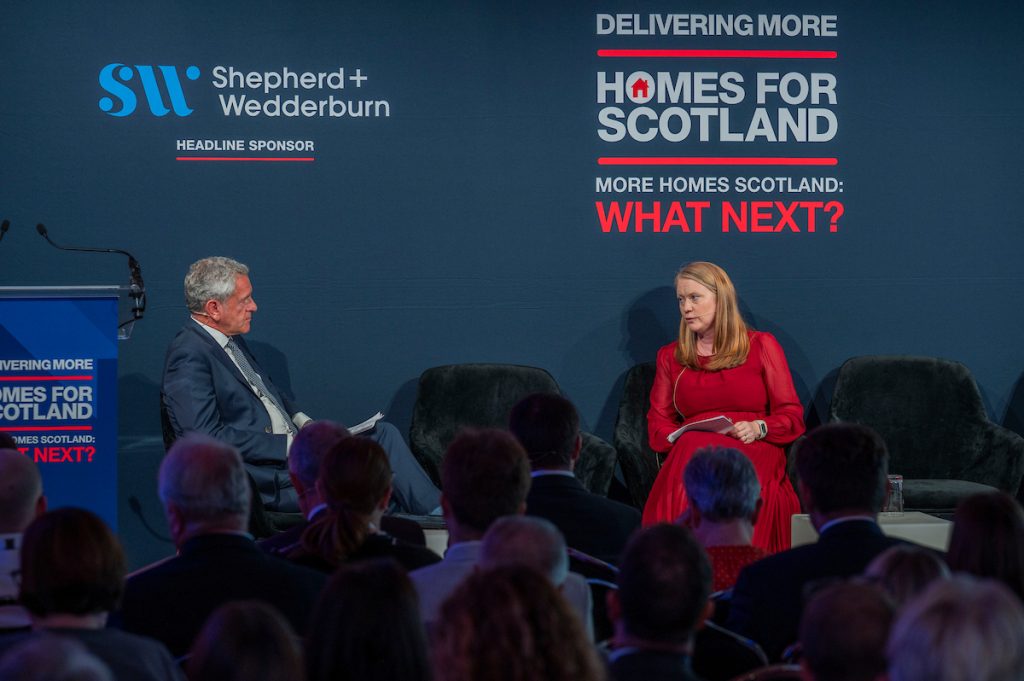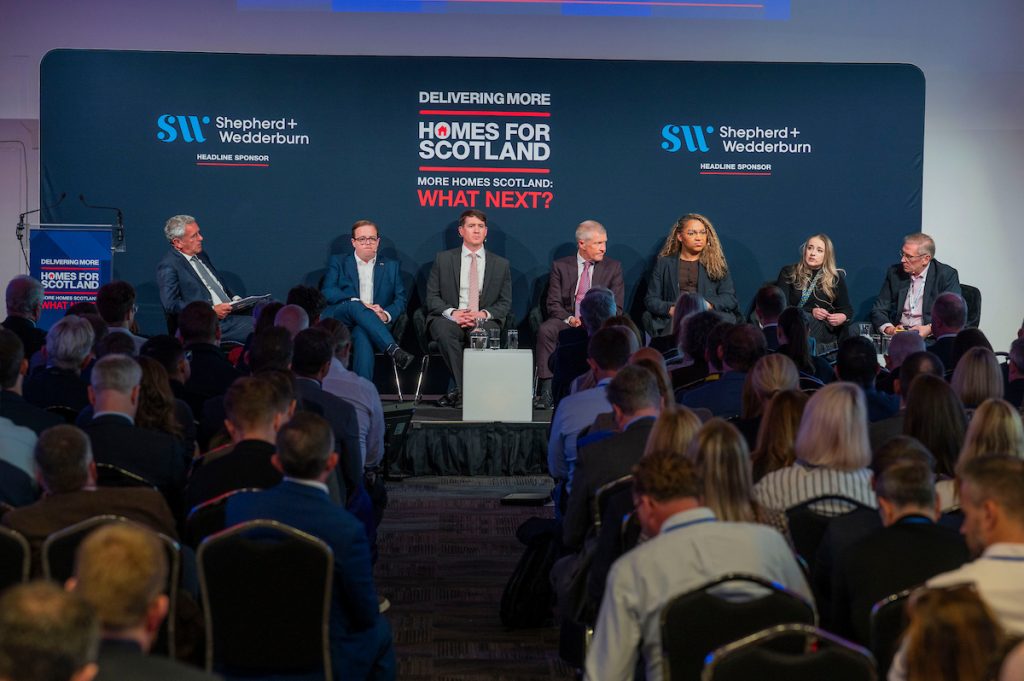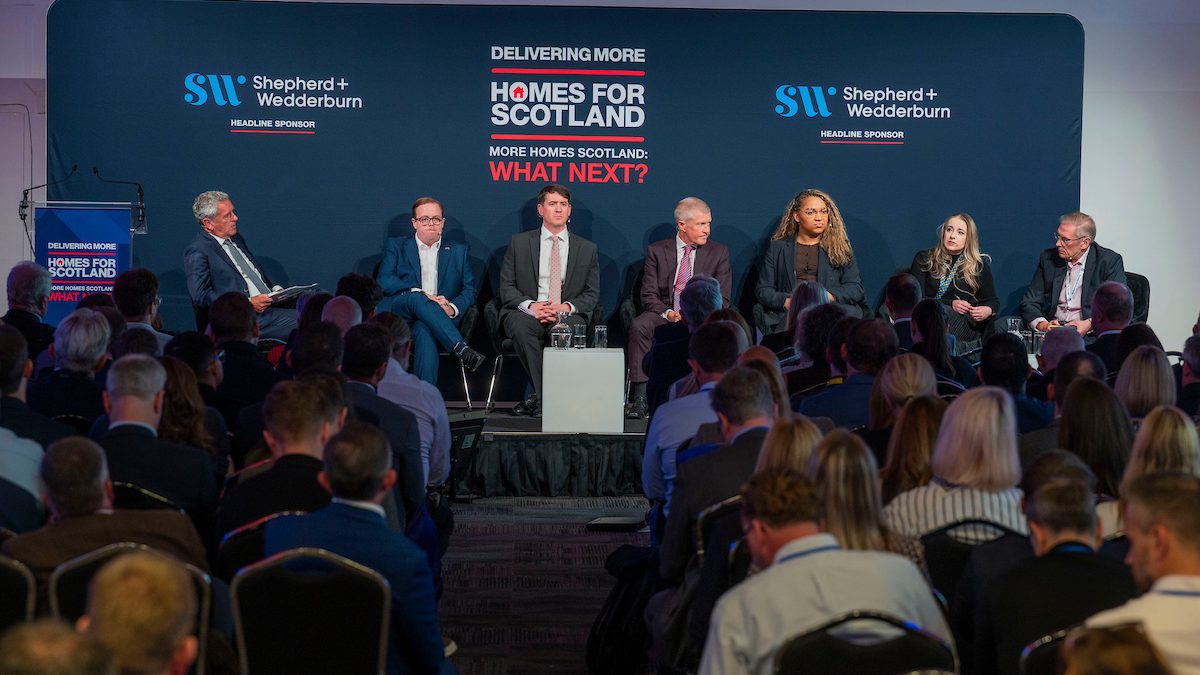
On 16 September – aptly Scottish Housing Day – Homes for Scotland’s annual conference at Dynamic Earth in the capital felt like a stress test for the Scottish Government’s new More Homes Scotland agency. The mood in the conference hall, the networking area and everywhere in between was clear: Scotland needs this new body to succeed – but it will only do so if it has a mission, muscle and a relentless focus on delivery.
A housing emergency that can’t be normalised
Jane Wood, Homes for Scotland’s CEO, opened by warning that the current landscape of declining completions, worsening affordability and a growing backlog of need cannot be allowed to become “the new normal”. Wood finished her remarks with a call for “cautious optimism”, noting that the day should be a forum for genuine discussion and learning opportunities.
The conference’s live poll asked whether More Homes Scotland, as currently proposed, would materially increase the number of homes built; the clear majority of delegates – most with years of experience in the sector – said it was still “too early to tell”. That uncertainty should serve as a wake-up call to government: the industry is hesitant to commit, financially or otherwise, to a system that can’t yet prove it can turn ambition into homes on the ground.
Lessons from England – mission, scale and place
Pat Ritchie, Chair of Homes England, set out what a mature national housing agency can look like: mission-led, accountable, and designed to work with the market rather than around it. Homes England has helped support over 250,000 homes and unlocked land for hundreds of thousands more, backed by a National Housing Bank with £16 billion of capacity and a £46 billion investment programme. Crucially, it goes where the market needs intervention, blends land, infrastructure and finance, and acts as a trusted centre of expertise for investors and local partners – not just as an administrator of short-term grant schemes.
There were other lessons to be taken from across the British Isles. From Wales, Mark Harris of the Home Builders Federation warned how an over‑complex planning system and a heavy tilt towards affordable housing targets can crowd out private delivery – a risk Scotland must avoid as it defines More Homes Scotland’s role. From Ireland, Conor O’Connell of the Irish Home Builders Association stressed that open‑book collaboration and demonstrable value for money have been essential to winning state backing and private capital, underlining that trust between government and builders will be just as critical here.
What More Homes Scotland says it will, and won't, do
Lauren McNamara, the Scottish Government’s programme director for the new agency, was clear that “the housing system works best when partners work together” and that the task is “not simply to establish an organisation quickly, but to establish an organisation well”.
More Homes Scotland will be launched as an executive agency from 1 April 2027, with full delivery at scale only from 2028–29, and is being designed as a “one roof” institution bringing expertise on land, infrastructure, investment and stalled sites together. The promise is to create a single structure that can spot barriers, convene the right players and use public and private capital more flexibly – without adding new complexity to an already complex planning system.
Delivery, not "just another quango"
Cabinet Secretary for Social Justice and Housing Shirley‑Anne Somerville repeatedly anchored housing in Scotland’s wider economic story, describing it as “central to everything else that we do” – from education and health to inclusive growth. She was clear that success “is not measured by the fact that you will have a new agency next year. It’s measured by the outcomes: more homes, more opportunity and more investment”.
The Government’s all‑tenure ambition to grow housing output by 10 per cent year‑on‑year, on top of a 110,000‑home affordable housing target to 2032, will test whether More Homes Scotland can move beyond coordinating meetings to actually unblocking sites.
Planning, trust and the 'teeth' to act
If there was one recurring theme from the political panel, it was that Scotland’s planning system is “too sluggish” and that delayed local development plans and cumulative regulation are choking off supply.
Panel members from across the opposition parties (notably, the Scottish Greens made their first appearance at the annual event) backed the principle of a national agency but questioned whether it will be given real “teeth” – powers, funding and leadership strong enough to challenge fragmented processes and force progress when local systems stall. As Fionna Kell, Director of Policy at Homes for Scotland put it earlier in the day, success “doesn’t need lots of KPIs – the clue is on the label… more homes in Scotland”.
More Homes Scotland now carries the weight of that expectation. For business, investors and communities alike, the test will be simple: in the years ahead, does Scotland build more homes, more consistently, in the places where they are needed most? If the answer is yes, then perhaps this conferences’ cautious poll will look, in hindsight, like the last moment the sector was still prepared to say “too early to tell”.
Registration is open for The Business of Housing 2027. More details here.