

The Business Dealmakers’ ‘Golden Age for the Highlands?’ panel put forward a strategy for the region
The £2.1bn Highland Investment Plan, a programme of capital investment for the next 20 years, is on the table. So too is the Port of Cromarty Green Freeport, an expansion programme worth more than £100m. Alongside this is SSEN’s investment in the upgrade of the national grid to deal with the renewables bonanza. In all, this is an immense opportunity.
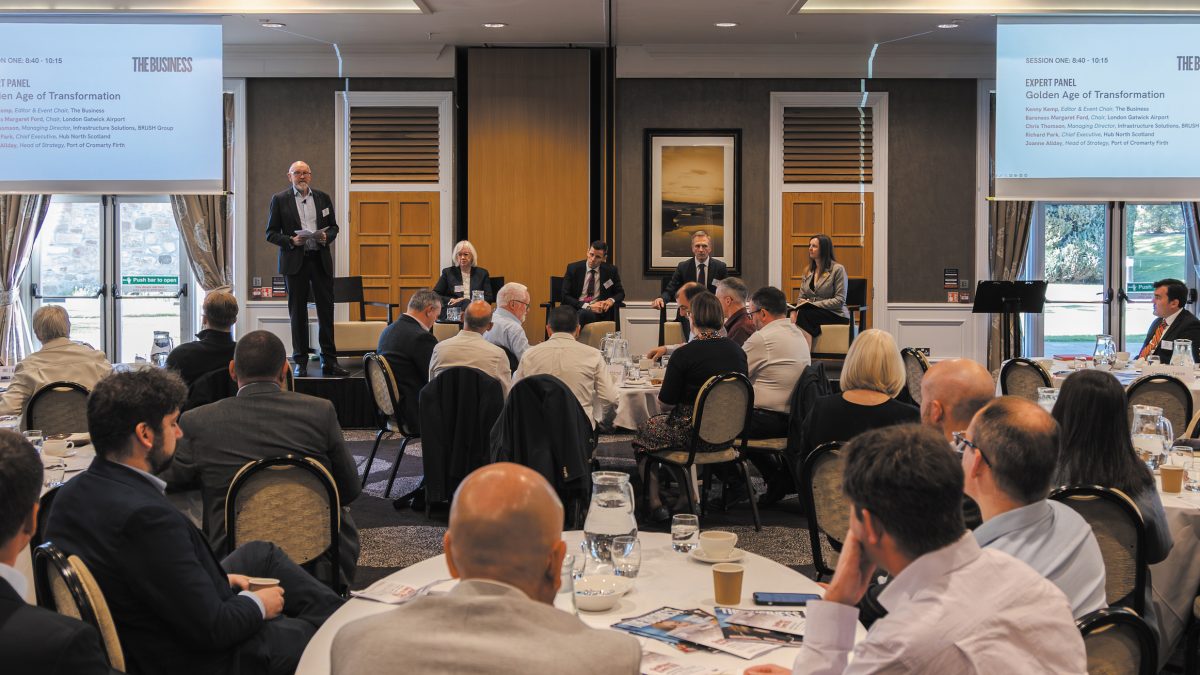
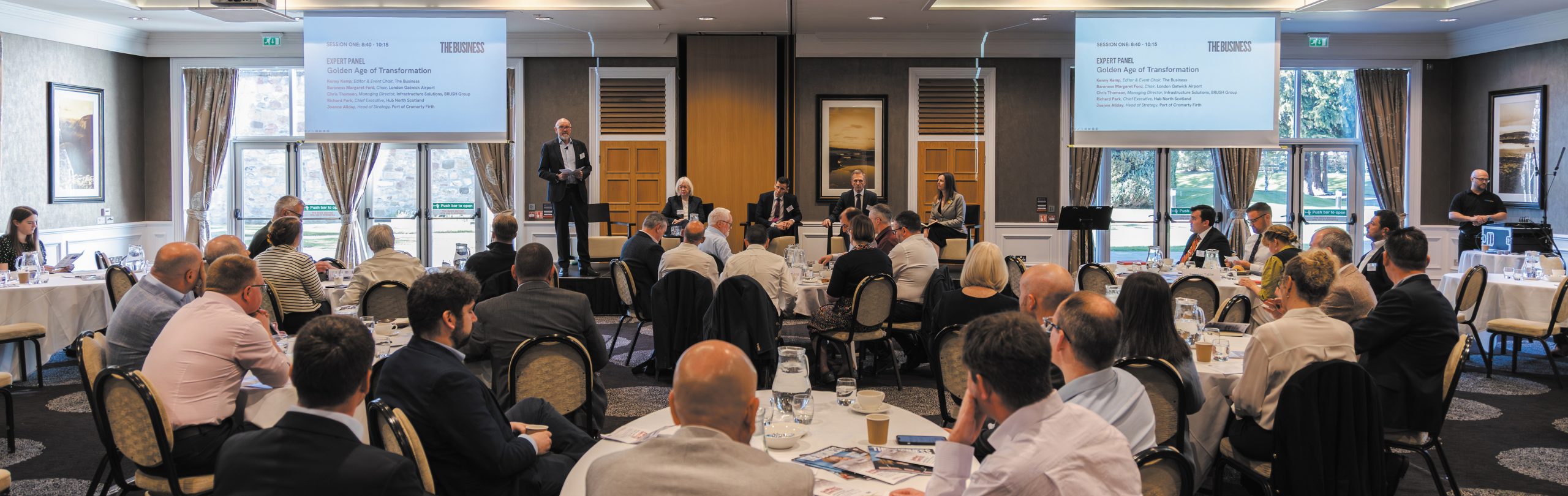
At the Business Dealmakers’ ‘A Golden Age for the Highlands?’ panel in Inverness in April, four senior voices from finance, infrastructure, ports and engineering examined what stands between the Highlands and a transformational decade of investment.
The wider question was whether Scotland can make itself genuinely attractive to the private capital it so badly needs. What emerged was a picture of extraordinary opportunity shadowed by a capacity for delay, regulatory obstruction and political incoherence in both Westminster and Holyrood.
The starting point for the investment case is scale. Margaret Ford, chair of Gatwick Airport and the former chair of the Scottish Government’s Investor Panel, described a landscape in which three simultaneous demands were pressing on public budgets: routine capital investment, the replacement of ageing Victorian infrastructure, and the transformational green transition.
No government, she argued, could fund this from taxation alone, and the opportunity for private capital to fill that gap is immense and essential. Her panel had been established after first minister Nicola Sturgeon attended COP26 in Glasgow and was struck by the volume of international capital actively seeking a home in the low-carbon transition.
The conclusion was that Scotland was simply not placing itself in front of the providers of this global capital.
Yet the appetite is there. Richard Park, chief executive of Hub North Scotland, confirmed that his organisation already has £2.2bn of social infrastructure under operation through its design, build, finance and maintain programme, demonstrating that the public and private sectors can work together at scale in Scotland when the conditions are right.
Park was explicit about what those conditions are, noting that private capital is essential to realising any genuine ‘golden age’ of infrastructure. He challenged the room to think about infrastructure as the mechanism through which wider social and economic outcomes are delivered.
“Private equity, under the right conditions, is going to be needed to achieve that aspiration in terms of the golden age of infrastructure. Infrastructure has got to be the medium through which we actually achieve those outcomes; whether that’s economic outcomes, education outcomes, health outcomes, or societal outcomes. That’s often lost in the conversation around infrastructure.”
Joanne Allday, head of strategy and business development at Port of Cromarty Firth, argued that the investment case is not abstract.
She described the Highlands as sitting at the centre of a global competition for offshore wind investment, with the port expansion of over £100m already securing £55m in UK Government funding. The Green Freeport bid has been won against significant odds, with few politicians at Westminster even knowing where Inverness was located when the process began.
Its success rested on the argument that investing in the Highlands could reverse working-age depopulation and deliver levelling-up in this part of the UK.
We are the centre of the world at the moment with offshore wind; we only have that opportunity for a period of time
- Joanne Allday
Allday expressed urgency and concern about how it would be too easy to let this slip away. “We are literally the centre of the world at the moment with regards to the offshore wind industry; and we only have that opportunity for a period of time.”
Chris Thomson, managing director of infrastructure solutions at Brush Group, focused on the imperatives for the supply chain. His company employs approximately 120 people across Scotland and Ireland, with roughly 30 based in Inverness. He described the transformative impact of the programme which will enable an increase in apprenticeships and an investment in local talent.
“A big part of being able to bring in apprentices is having confidence, pipeline, and visibility around that; to be able to meet the market needs of our business, to take a wee bit of risk in terms of employing people with the hope that work is going to be there.”
Ford pointed to Western Australia, Canada and Ireland as jurisdictions that have demonstrated that public-private models, properly managed, can deliver results. The lesson was not about taxation but about culture: the long-term, consistent cultivation of investor confidence.
“What you have is not a pipeline; you have a wish list. It’s very, very different. You have to package up investable projects in a way the market understands and can immediately take advantage of,” she said.
If the investment case is compelling, the barriers to realising it are equally formidable. Allday explained the port expansion could have been completed by December 2026, if full funding had been secured in 2024. The economic and political environment has deteriorated sharply since the freeport bid was won, and the projects that were supposed to flow are stalling.
“The freeport is treated as if it’s a done deal. It is very much not a done deal.”
Two regulatory obstacles were identified as the most damaging. The UK security ruling over Ming Yang Smart Energy, Chinese makers of wind turbines and solar panels, consumed years of government and industry effort before being reversed in a single day, demonstrating how opaque decision-making can destroy investor confidence in a flash.
Transmission charges, known as TNUoS, or transmission network use of system, impose a persistent and unresolved financial penalty on Scottish generators and investors with no equivalent elsewhere in the UK.
“TNUoS is stopping investment in Scotland. It directly impacts jobs. It’s highly likely that projects will not bid into the allocation round this year because they have no certainty,” said Allday.
Park identified a structural mismatch in the risk appetite. While there is genuine appetite for projects below the £100m threshold, major economic infrastructure has become harder to finance.
The Scottish Government’s draft Infrastructure Plan for 2027, which was at consultation stage, and its Climate Action Plan published the previous year, both omit any reference to the recommendations of the Investor Panel, despite the significant expertise invested in producing them.
Ford returned to the question of consensus, which she argued is the most fundamental precondition for attracting long-term capital. She challenged the political hopefuls taking part in a later Scottish Parliament hustings session, to reach a cross-party agreement on how infrastructure is financed, so that the public and private sectors can operate with greater clarity.
“We basically said to the government: get some political consensus going about how you’re going to fund this, or not; but level with people, be honest with people. If this is all to be done out of taxation, then say that, but make it clear there would have to be significant trade-offs in what you can do and what you can’t do.”
Thomson identified the absence of a coherent UK industrial strategy as a compounding risk. Brush Group is the sole UK supplier of 132kV transformers, with an annual capacity of only 32 units against a backdrop of rapidly growing national demand. Without policy incentives to expand that capacity, a critical national vulnerability is being left unaddressed.
Scotland is a small, agile country. Because we’re small, we don’t have to take forever to do things
- Margaret Ford
Ford called for the Scottish Government to treat the coming years not as another period of strategy and consultation but as a ‘decade of delivery’. Allday demanded that every organisation in the room examine its own decision-making culture and remove the blockers that allow projects to sit unresolved on ministerial desks for years.
Ford said Scotland’s size, for once, has to be used as an advantage. “Scotland is a small, agile country. We’ve got lots going for us. Because we’re small, we don’t have to take forever to do things. For the next decade, maybe it’s a decade of delivery. It’s about drive, and it’s about delivery.”
