Practitioners tell The Business DealMakers’ event that life science sector is battered by lack of funding
Scotland desperately needs a national champion to re-ignite its struggling life science sector – once hailed as critical cluster of our national economy.
Since the ‘glory’ days of Covid-19 discovery, when research science played a central part in the race for a vaccine, Scotland has been missing out on opportunities.
Furthermore, with many Scottish universities facing a funding crisis, a lack of strategic investment and funding will have long-term impact on our international standing for science teaching and research.
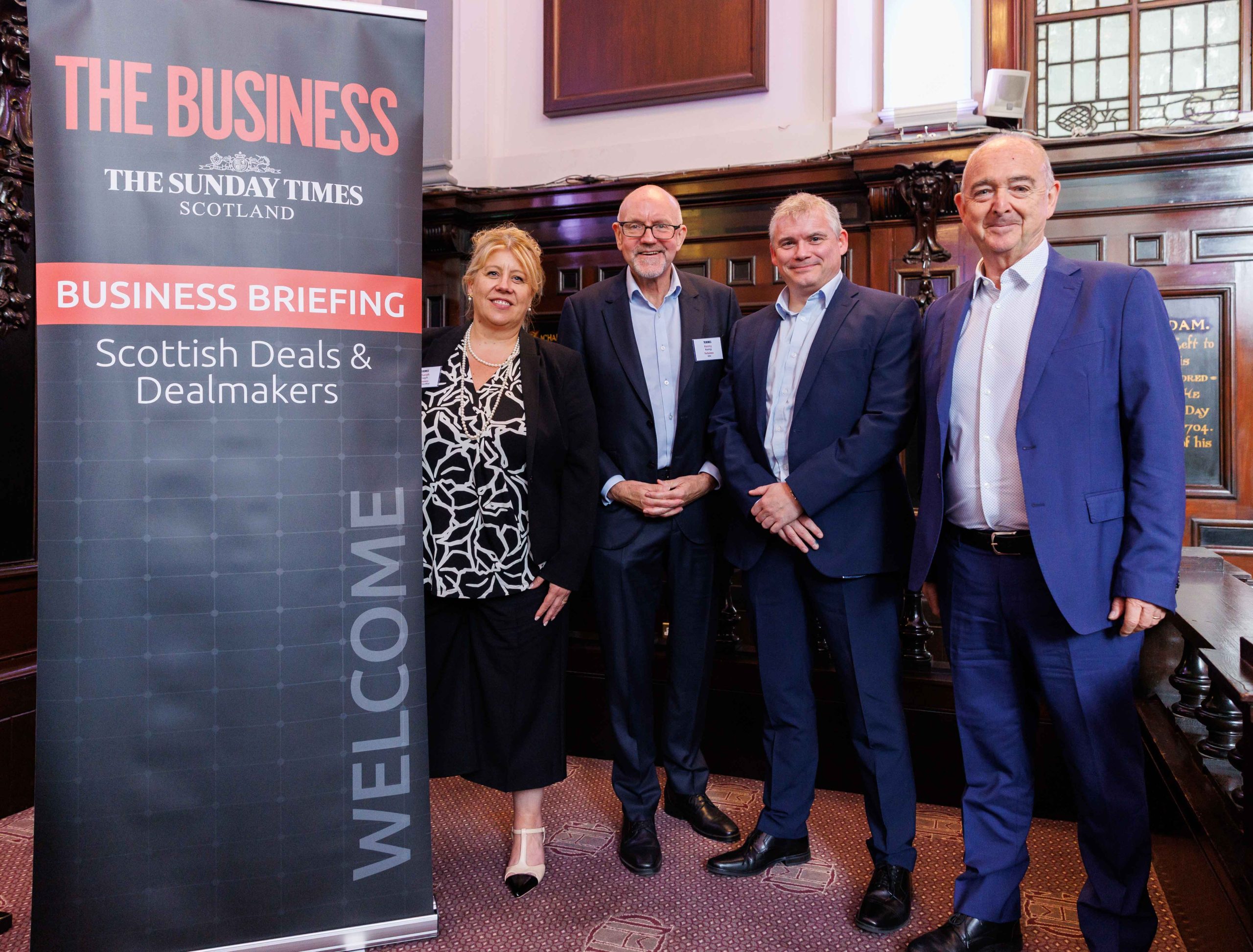
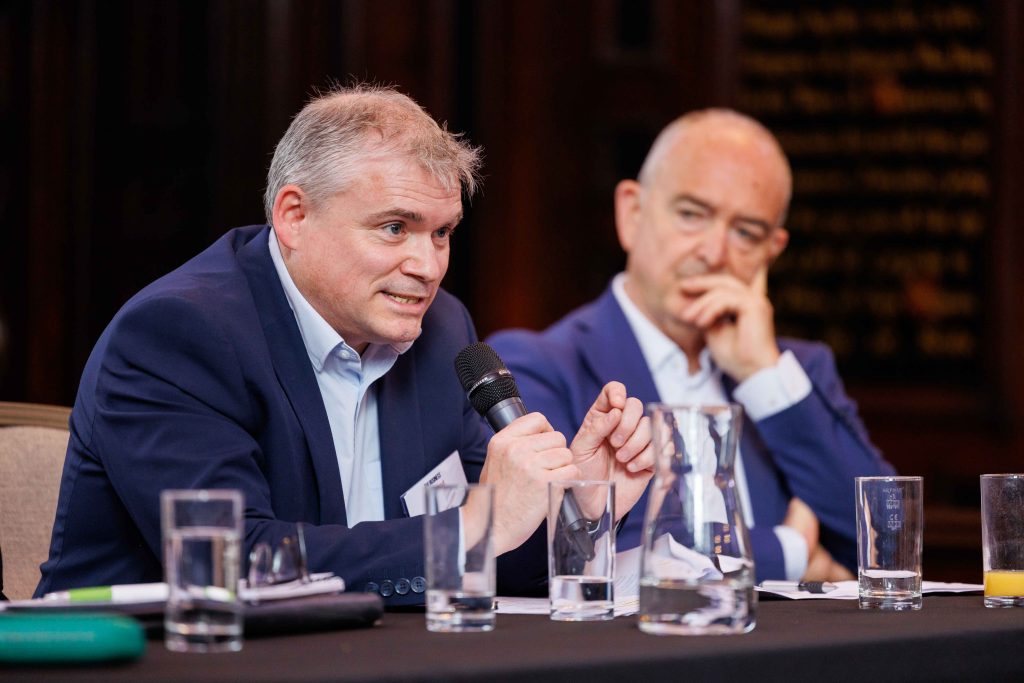
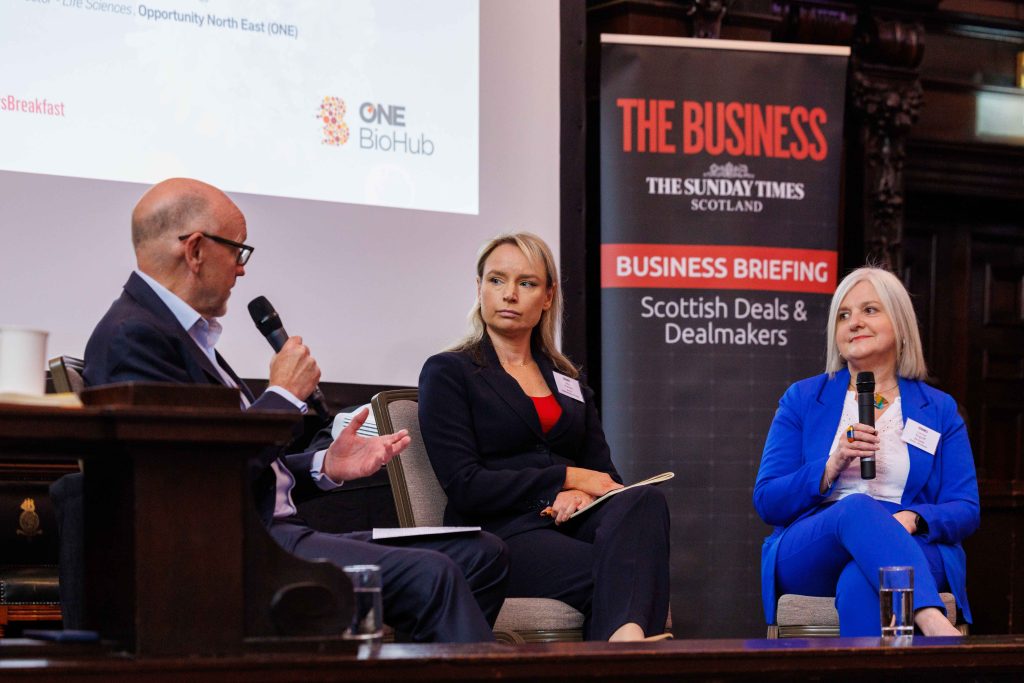
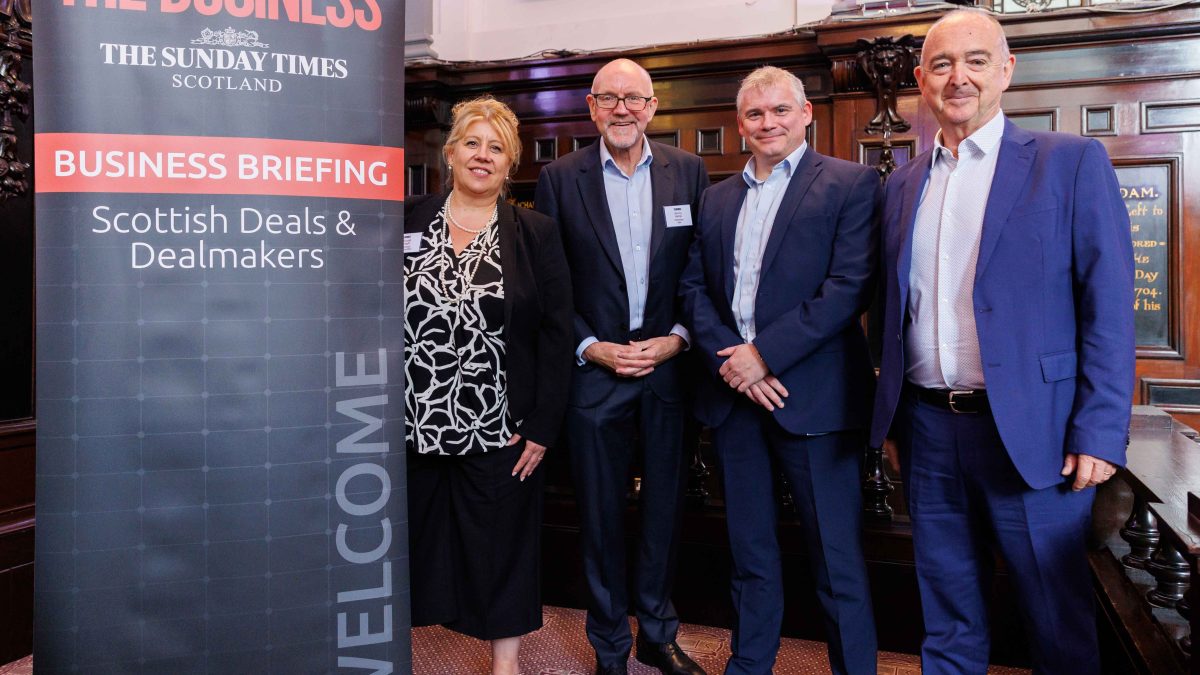
The Business’ DealMakers’ Breakfast in Glasgow heard from practitioners in the life science sector which has been battered by job losses, and a lack of key funding support for vital life science work.
This was exemplified in the recent bid for the UK’s Pre-Clinical Translational Models hub (PCTM) funded by the Medical Research Council (MRC). The project was for an initial £25m.
Despite a strong bid from scientists at the University of Edinburgh, the Scottish bid did not make the short-list. The hub, which must be based at a UK research organisation, is due to open in November. It will be either Oxford, Cambridge or London.
The gathering in Glasgow was asked if it was aware of the significance of this £25m MRC grant for the PCTM hub: few hands went up. Yet it falls into line with outstanding science being undertaken by life scientists in both Edinburgh, Glasgow, Dundee and Aberdeen.
Indeed, Lorna Duguid, life sciences director from ONE BioHub, the £40m flagship facility and entrepreneurial hub in Aberdeen, which already has a body of emerging bioscience start-ups in its premises, told the gathering the organisation had laboratory facilities that would suit a PCTM-style project.
In reply, Adrian Gillespie, the head of Scottish Enterprise, [in interview on page 69] said that his agency was the ‘champion’ of Scotland’s life sciences and remains committed to supporting it with investment funding.
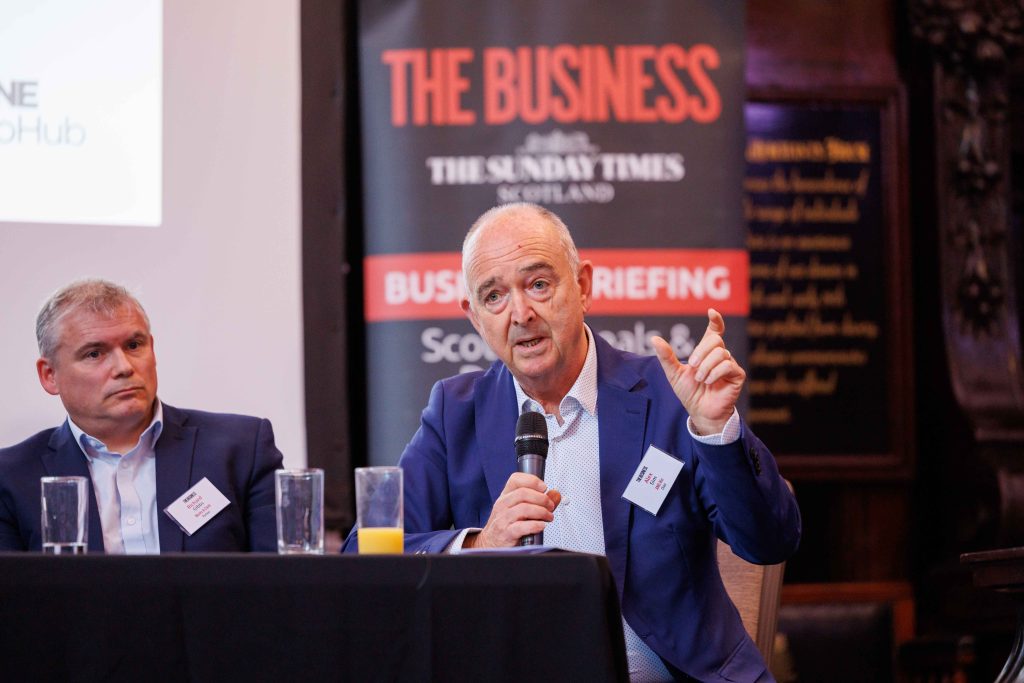
Alex Sim, a microbiology graduate of the University of Strathclyde, has spent his career helping innovative technologies get into international markets, particularly in the United States. He raised his concern and proposed an alternative course of action.
Scotland has an opportunity in the discovery, the development and the testing of drugs
— Alex Sim
“I believe Scotland has a genuine opportunity. It’s an opportunity not only to help discover the next generation of medicines, but importantly, and there is a nuance here, it’s not just discovery, it’s the discovery, the development and the testing of drugs. That’s where the opportunities lie,” he told the audience in the Merchant’s Hall.
Sim says securing the £25m for PCTM hub in Scotland would have opened doors for greater commercial funding, he says. Screenin3D, which Sim chairs and is based in the Technology & Innovation Centre in Glasgow, uses innovative in-vitro technology, devised by Strathclyde professor Michele Zagnoni, to reduce the need for animal testing.
Sim has built successful science businesses over more than 35 years establishing operations both in Europe and the United States, working closely with contract research organisations, pharma companies and biotechs.
He sold his business, Amsbio, to Europa Biosite remaining as chief growth officer and merging seven more businesses. The business was sold to EQT Healthcare, a private equity firm, in 2025.
“One of the privileges I’ve had being in this industry for that length of time is to see the people and the technologies that have shaped each generation of biomedical research. I’m excited as the pharma and biotech industry moves towards human-relevant preclinical models and new approach methodologies.”
The Modernisation Act, now enshrined in US law, has been changing the ethical landscape, removing the mandate requiring animal testing for new drug development. This has allowed life science companies such as Screenin3D to use data obtained from human tissue and microfluidic technologies.
“It’s most important in the drug discovery world today because increasingly regulators, pharmaceutical companies, investors, they’re seeking to predict earlier in that R&D phase whether the drug will be successful. The last thing that a pharma company or investor wants is spending a billion dollars to get into clinical phase one trials only for the drug to fail.”
With Scotland failing to make the cut for PCTM, Sim makes a clarion call to the industry in Scotland. He said a pan-Scottish national resource for in-vitro model development and increased access to state-of-the-art technology, human tissue and patient samples and data, must be set up. This should be developed using AI science agents to transform target discovery.
The Scottish Government, possibly using the Scottish National Investment Bank’s early stage funding, needs to find the money to set up a national hub for pre-clinical translational (human) models.
“Professor Neil Carragher, who is a professor at the University of Edinburgh, used to work for AstraZeneca. He has run drug discovery for all his career. He and his colleagues put a bid in to the UK Government. But they have not been unsuccessful.
“I think we really are in a position where we can do some things. I’m hoping that Screenin3D can lend its hand to Neil Carragher’s opportunity. But at the end of the day, I think we really have a good position in Scotland to try to do so.”
We really need a shot in the arm to this industry, which is dying right now
— Dr Sarah Lynagh
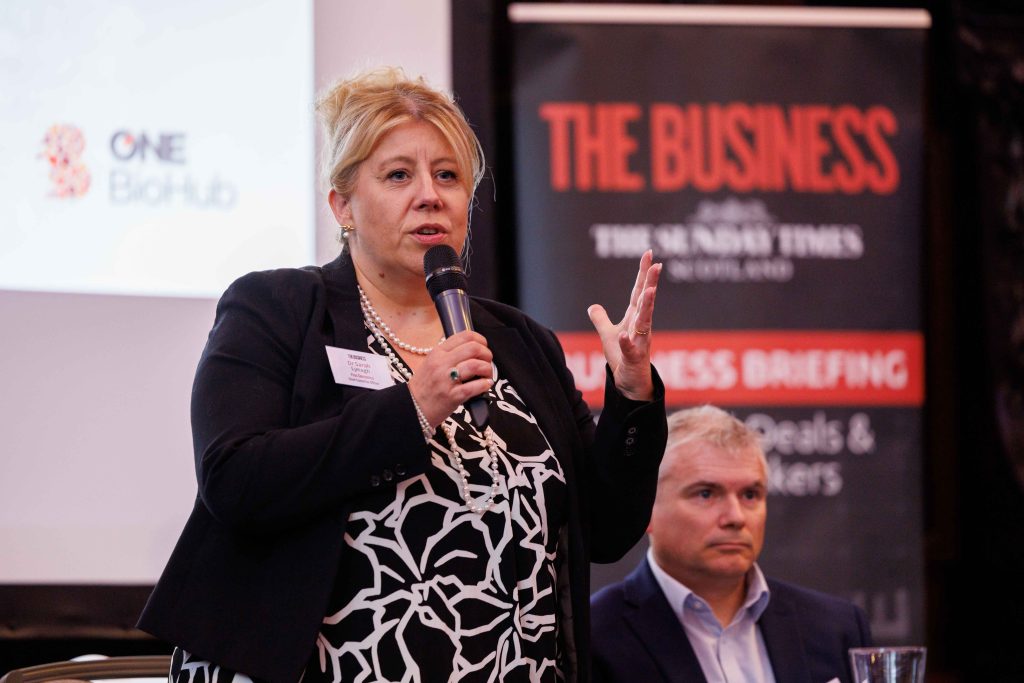
The point was re-enforced by Dr Sarah Lynagh, the chief executive officer and data protection officer, of Fios Genomics, which was a spin-out from the University of Edinburgh and has been supported by Scottish Enterprise and the Archangels syndicate of business angels.
She describes her life sciences organisation as a ‘computational company’.
“Our labs are our servers. Our biggest market is in the United States. We’re about 25 people. We were 50 at one point.
“We really capitalised on the boom after Covid. There was a shedload of money about and life sciences became fashionable again. I think it’s fallen out of fashion in Scotland, unfortunately, and we really need a shot in the arm to this industry, which is dying right now. It really is.”
She said 30 per cent of the those working in the biotech industry in Scotland have lost their jobs over the last two years.
“Clients across the life science industry are having a hard time. A lot of them are unable to raise money. The industry has lost, or the VCs have lost, the appetite for risk,” she says.
She believes there is a need for a new Scottish hub to create more accurate predictive pre-clinical models of human disease which will lower the attrition rate of new therapeutics and accelerate medicines discovery for patient benefit to become a national imperative.
“There are 187 GLP-1 [glucagon-like peptides] agonists in development such as the Mounjaros and the Ozempics. Do we need 187?
— Dr Sarah Lynagh
Lynagh points a finger at the investors who are looking at funding ‘me-too’ molecules.
“There are 187 GLP-1 [glucagon-like peptides] agonists in development such as the Mounjaros and the Ozempics. Do we need 187? I don’t know, but people are throwing money at that. And the same in the cancer field as well, with PD-L1 inhibitors [programmed death protein which attacks cancer cell] coming through.”
She says the industry has lost the ability to take risk in drug development – and it is risky, with 70 per cent of drugs failing in phase two trials.
“That’s an awful statistic. It used to be 60 per cent. So despite all the tools that are available to us, we’re getting worse at drug development.”
“The opportunities today out in India are exceptional. They have the deep pockets to build Big Pharma firms of the future
— Marianne Ismail
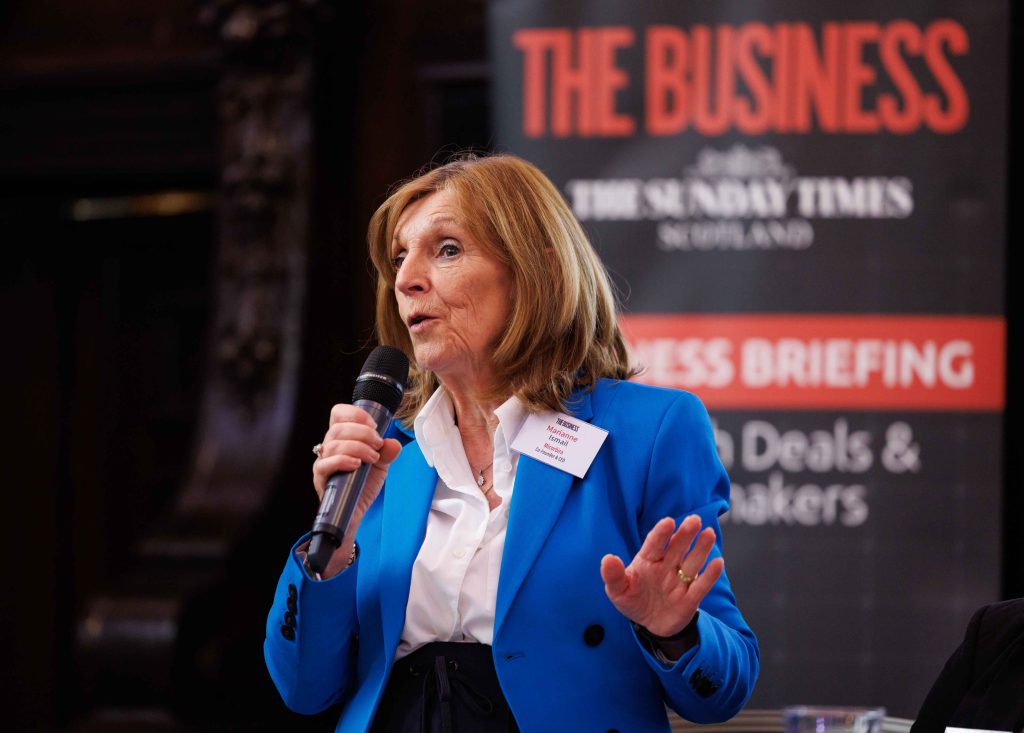
Marianne Ismail, co-founder, director and CEO of Microbira, an in-vitro diagnostic company, based in Edinburgh, spoke about Scotland’s great strengths in life sciences but said that partnerships with the likes of Indian drug companies are vital to unlock future opportunities.
“The opportunities today out in India are exceptional. They have the deep pockets to build Big Pharma firms of the future, but they still need to have the excellence and know-how of the great life science here in Scotland to help them on this journey,” she says.
Richard Gibbs, a partner at Marks & Clerk, one of the UK and Europe’s most well-known patent protection companies, explained about the importance of Scottish firms protecting their novel science, particularly in an international market for science. He has a PhD in immunology and microbiology from the University of Edinburgh.
Alix Mackay, a director of strategic marketing and Lorna Duguid, director of life sciences at ONE BioHub in Aberdeen, rounded off the seminar with a fireside chat explaining the available help for emerging life science firms and the excellent laboratory facilities that would be ready for the arrival of a project such as PCTM.
In partnership with ONE BioHub, the home for life sciences in Aberdeen. who sponsored this event with a fireside chat.
For more information on our upcoming DealMakers' Breakfasts please visit our Events