
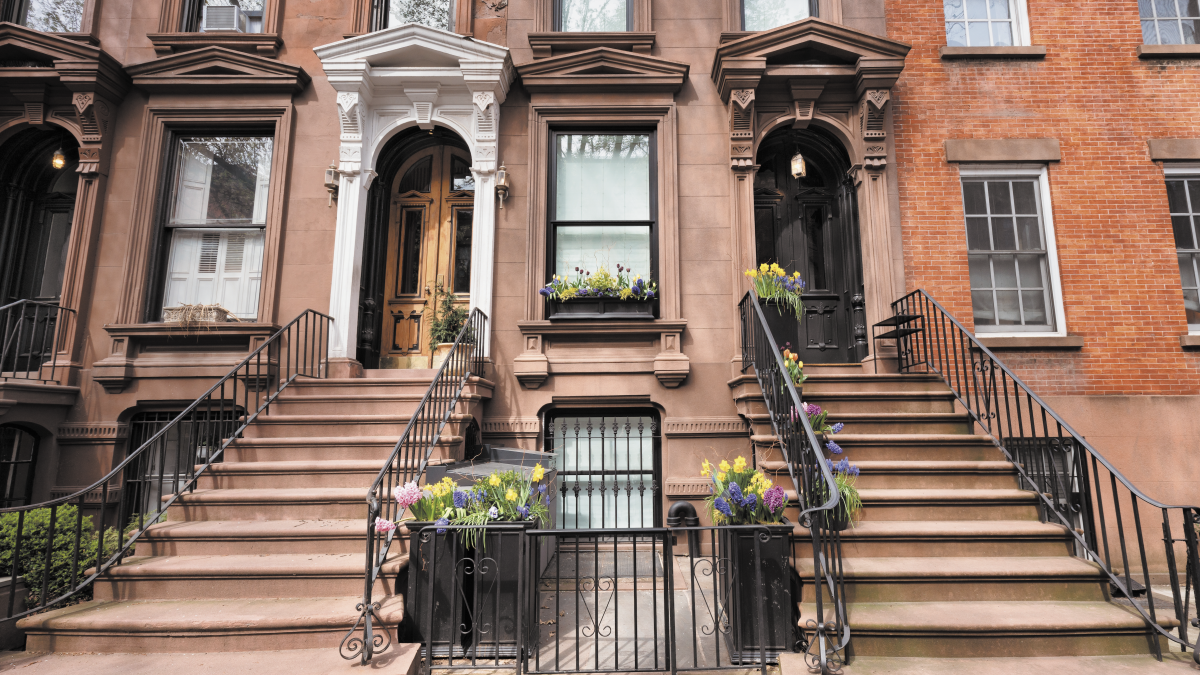

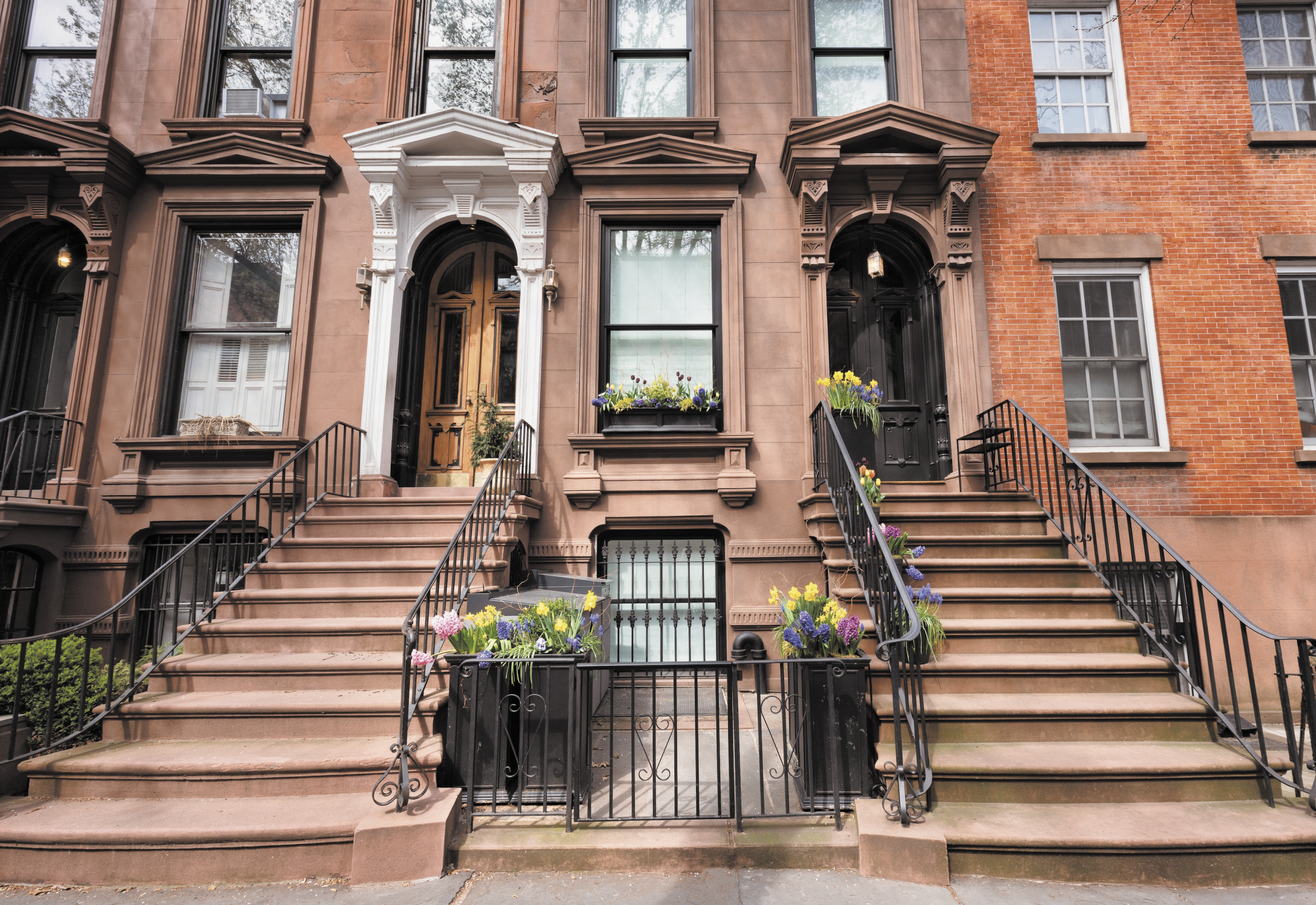
From New York to Edinburgh, Glasgow and Aberdeen, there is just something about a townhouse
In the brownstone ‘canyons’ of Brooklyn, from the Heights to Carroll Gardens, there is the unique American community where WH Auden, Walt Whitman, Carson McCullers, author of Ballad of the Sad Café, and Truman Capote, all discovered their creative juices.
Capote said this New York borough on a clifftop overlooking the towering Manhattan skyline and linked by ferries and the remarkable Brooklyn Bridge has “a certain appeal that brigades of the gifted-artists, and writers began to discover.”
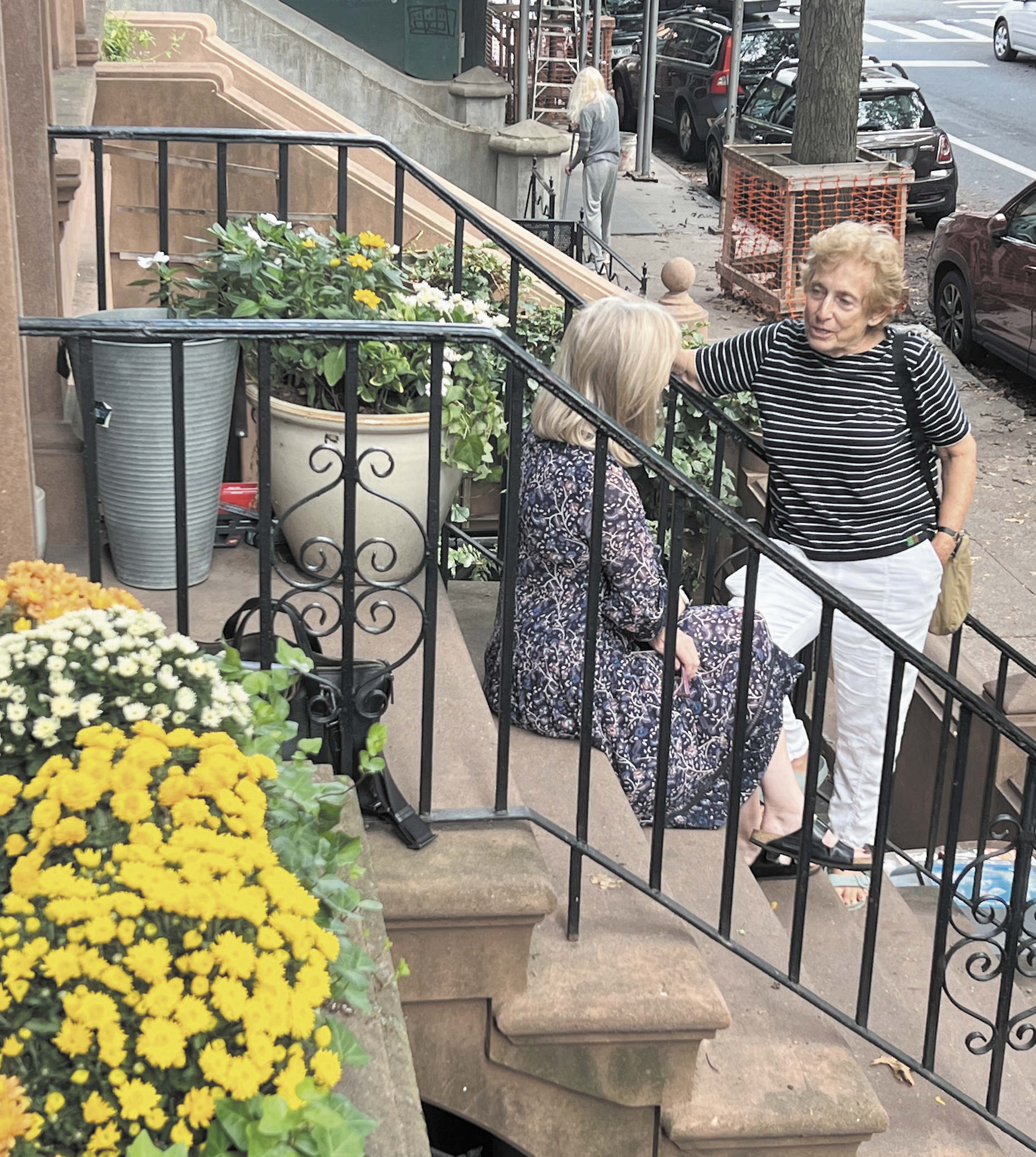
What draws the writers and a horde of other creative types is the vivacity of urban life. In this part of Brooklyn there is a social convention of sitting on ‘the stoop’: a friendly way to wave the children off to school, watch the world go by, share cupcakes with neighbours, or enjoy an early evening martini, wistfully passing the time.
There is unwritten etiquette on how close you sit to the public sidewalks. The stoop brings the city to your doorstep.
On an early autumn day, in Columbia Heights, with helicopters buzzing overhead taking their pampered golfers to the Ryder Cup contest, it’s a vibrant place to watch the neighbourhood. It’s only possible because the stoop – or the stairs – lead up to the elegant front doors of these New York townhouses. These are four-storey homes with wonderful reception rooms and grand staircases to the upper apartments. Today, they are sought-after pieces of urban real estate.
The allure of the townhouse – whether it be in a New York borough, Edinburgh, Glasgow’s south side or off the Great Western Road, Aberdeen’s granite-faced townhouses in Queen Road leading to Rubislaw, or in central St Andrews, around the ancient university – is that it is an attractive place to live for those who hanker for the sight and sounds of the metropolis. But it’s also quick and easy to retreat to your own quiet sanctuary away from the urban noise.
Living in a townhouse is still a preferred way to live in Scotland for many people. Robert Louis Stevenson and Walter Scott were brought up in townhouses in Edinburgh, and generations of creative and professional Scots have made their homes in our wide selection of townhouses. It can be an expensive and aspirational choice.
Max Mills, of Rettie, the estate agency, is an expert in top-end house sales in the east of Scotland.
“In Edinburgh, the townhouse means premium, high-quality, and aspirational. In most cases, it is very impressive Georgian architecture, recognised by UNESCO. The allure of the townhouse and why people are drawn to them is that they are, a bit like the Patek Philippe watch adverts, custodians of a wonderful piece of heritage, that one day will be passed on,” he says.
Those who are fortunate enough to afford a townhouse enjoy the pleasure of living there before someone else comes along and adapts the rooms to their own style and taste.
“It’s a bit of grandeur and, for those with the means, they are able to enjoy the living space, whether it is 2,000sq ft or 4,000sq ft. If you have the money, and can afford it, you have the best of what Edinburgh has to offer on your doorstep,” he says.
Mills points out that today it would be impossible to build a Georgian-style townhouse in Scotland for what they are bought and sold for on the open market.
“The townhouse appeals to people locally, nationally, and internationally. At the moment, the townhouse appeals particularly to those beyond Edinburgh, who want a little slice of the New Town.
“They are drawn to Scotland’s capital. In the last 30 years, the townhouse market has been robust; they are the most valuable houses in the market, and there is a finite number, making them more exclusive.”
Mills, who has been involved with a recent sale in India Street for £5m, says many people who have bought a townhouse end up spending significant sums on upgrading the property, fixing listed stonework, repairing roofs which have been battered by decades of wind and rain, and installing new wiring and technology.
He says there have been at least five Georgian townhouses in the past few years, where international business figures have bought a home for between £2m and £5m and then spent a further £2m to £3m refurbishing them.
“Many have upgraded their Georgian homes with gyms and wine-cellars in the basement, and with home offices in the garret rooms at the top. The costs of refurbishment for a fully-modernised house can often be as much as the exact purchase price.”
The Holy Grail of the New Town is Moray Place. “What we have seen in recent years are very successful Scottish-born business people, who have perhaps had international careers working in Singapore, Hong Kong, Texas, or the Middle East, and now they want to retire back in Edinburgh. They hanker after a quieter life in the centre of a fabulous cosmopolitan city.”
THE MODERN TOWNHOUSE
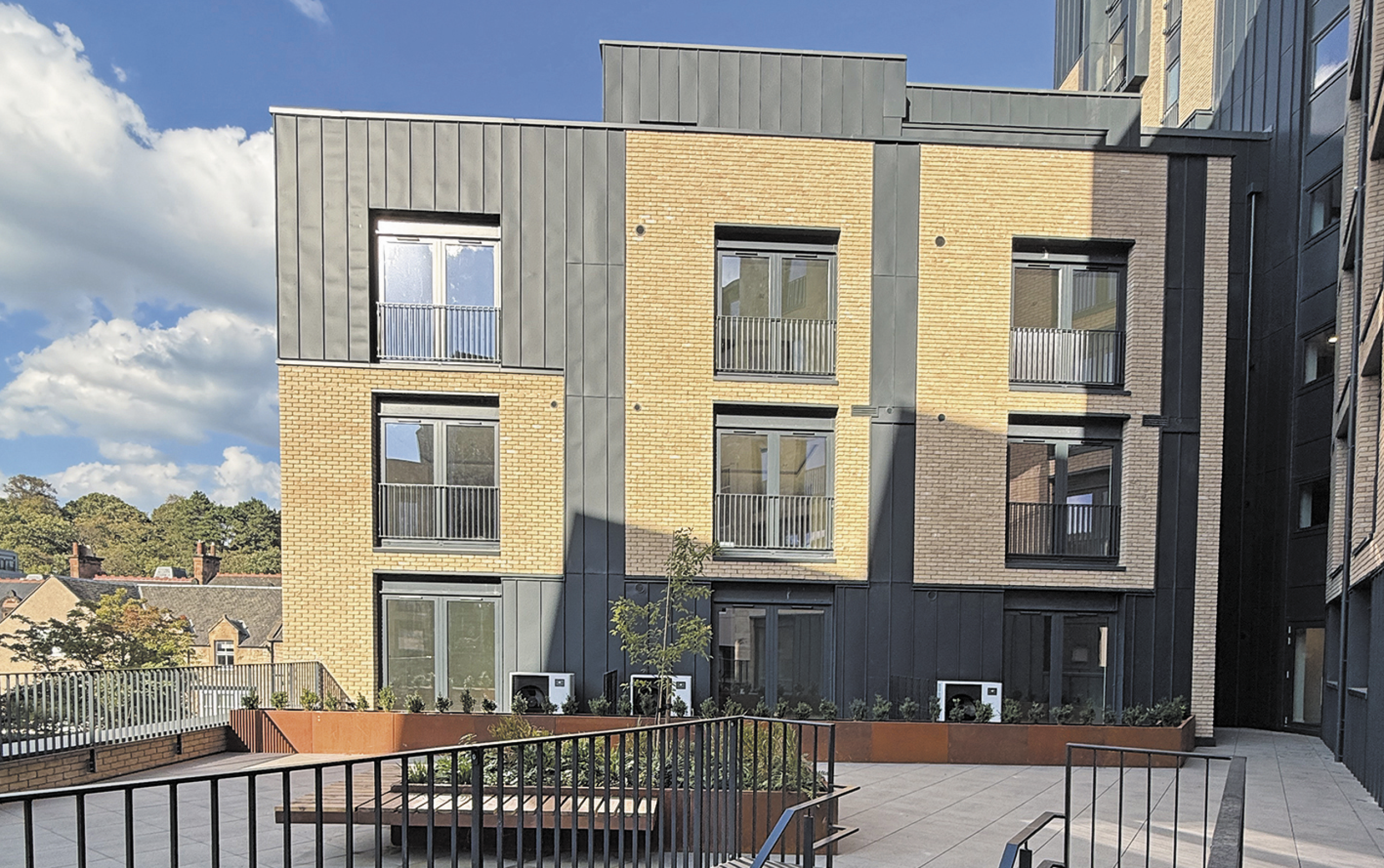
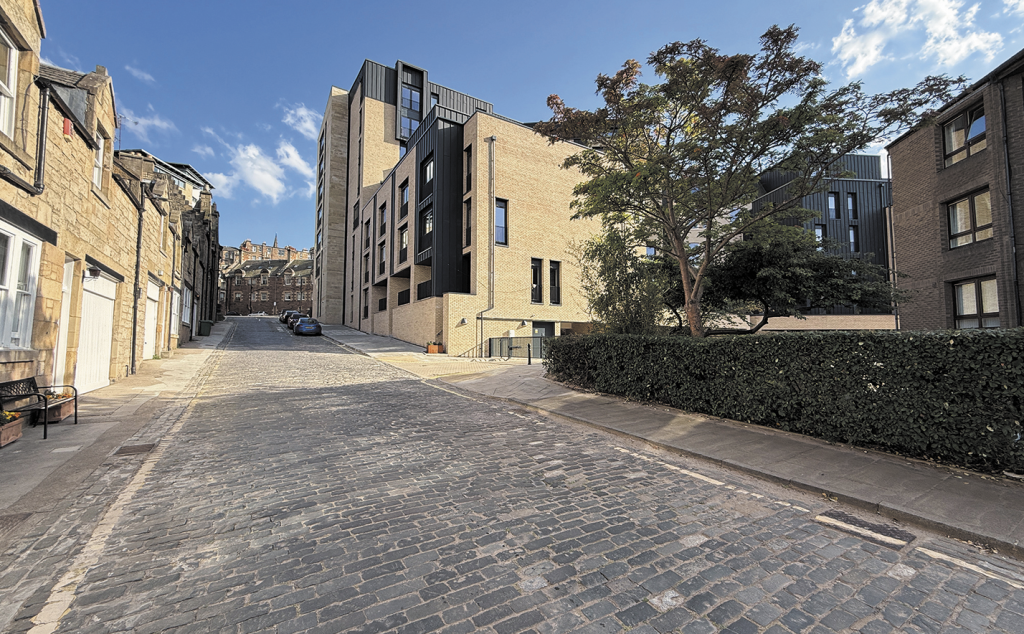
The price of land in Scotland’s most desirable urban places is at a premium – and still on the rise. There are not many slots for modern townhouses to be found.
“The scarcity of the land for the modern townhouse has meant that the likes of CALA, AMA and other premium developers are having to be both patient and very creative in where they find places to build new townhouses, such as CALA’s recent development at the former Royal School for the Blind in Newington. There is a pent-up demand because of a lack of availability,” says Mills.
He says the modern townhouse is a contrast to the long-standing Georgian homes.
“If you value the modern look because of the running costs, the advantages of meeting environmental standards, and accommodation on three levels for a growing family, then you can understand the appeal,” he says.
Behnam Afshar, a director of AMA, says: “The allure of the town house is all about convenience. That’s why the 18th-century New Town in Edinburgh was created and built. The Georgian townhouses meant it was easier for people to live, work and do business in Edinburgh.
“Eventually, many older townhouses were viewed as too big and difficult to heat, and sold to make city centre offices and apartments when families couldn’t manage them any more,” he explains.
Today, the modern townhouse is about using the limited urban spaces left by designing homes with an expansive feel. AMA’s new townhouses on Sunbury Street, on the fringe of Dean Village, a stone’s throw from the Water of Leith, and the capital’s urban green space, manage that conjuring act.
Each townhouse is more than 2,000sq ft on three spacious floors. The developer, known for the quality of its premium spec, built the townhouses alongside its larger new-build complex, and the regeneration of Douglas House, where eight of the 13 flats have been sold.
The townhouses are tucked away on Sunbury Street, once a mews for New Town horses and ponies and early motor engineers; today many garages have been converted into compact living spaces.
The remaining AMA townhouse is £1.375m, and ready for moving in by early 2026.
There are four bedrooms, all with en-suite or adjacent bathrooms. The high-ceiling entrance and stairs leads up to the main combined living and dining space with marble-topped fully-fitted island kitchen.
The views are of Sunbury Street towards the Dean Bridge, with the sandstone vista of Dean Village part of the scene. The main bedrooms are large for a new build, with fitted wardrobes, and the fit-out of doors and bathrooms is five-star quality. While space is at a premium, there are plenty of fitted bedroom cupboards plus extra storage under the stairs.
The townhouse has a small seating space at the rear, and there is an underground car parking place. The City of Edinburgh Council’s anti-motor restrictions on city centre parking for new build means car parking is at a premium.
“If you’re 50 and in good health and you still want to have a house rather than a flat or if you’re upsizing from a flat to a house and you still want to live in a quieter part of the city centre, then this is designed with you in mind,” says Afshar.
The AMA project has taken an eye-watering 19 years from initial concept to completion.
“We’re happy with the homes and the development. Of course, it could have been quicker, but we’ve had to deal with planning constraints, then Brexit and the Covid pandemic.
“We’ve faced a steep rise in costs for the materials and for tradespeople. But I’m very satisfied that this will be a beautiful place to live,” he says.
“The building is very efficient, meeting the latest environmental standards, all with underfloor heating, and air-source heat pumps.”
What are the downsides of the townhouse? It’s back to the stoop. It’s those steps and the stairs from each floor, which might not appeal to those who are less able.
The solution, perhaps, will be that more modern townhouses will end up with internal lifts, something that you can already find in flats and apartments.
