

Highland Show chief Alex Paterson has done a remarkable job in a very short time stabilising the cherished institution
It can spoil a magic trick if you know what goes on behind the curtain. For most of the 220,000 visitors who are enjoying and savouring this year’s Royal Highland Show, the difficult post-Covid recovery years are now a blip in the past.
But the Royal Highland & Agricultural Show Society (RHASS), an organisation with 16,000 members, is in healthy recovery with a new governance structure after a short spell in intensive care.
When Alex Paterson, the chief executive, joined RHASS just over a year ago, the organisation was carrying the weight of financial difficulties, structural uncertainty and Paterson’s own personal nervousness at arriving just days before Scotland’s most important agricultural and rural event.
Paterson, originally from Ayrshire, was relying on more than 15 years of chief executive experience with Historic Scotland, and also as the former chief executive of Highlands and Islands Enterprise (HIE).
“I joined just over a year ago before last year’s show. The way I’ve described the last year in different places, particularly at the annual meeting, was firstly it has clearly been a year of change, and the organisation got itself into a bit of financial difficulty.
“A lot of things had to change and big decisions, important decisions, difficult decisions were made to bring out that change,” he concedes.
“However, the other characteristic is that there has been a year of achievement. Sometimes when you’re instigating change, you can take your eye off the ball, but it has still been a year of achievement and delivery. The most obvious evidence of that is in our financial performance.”
The numbers tell the story. A £550,000 surplus compared to a £1.8m deficit in the previous two years.
“We’re aiming to build on this going forward. We don’t want that to be a one-off. It needs
to set the pattern for the future.”
The financial turnaround is striking, but Paterson is equally proud of what was achieved with last year’s Royal Highland Show.
“Not being from a farming background and not having been at the show for a few years, I told a journalist last year, ’Well, I don’t know what my benchmark is, but this feels like a really good show’. And all the post-show evaluation has demonstrated that last year’s show was a really good event from every perspective.”
In no sense have we arrived at where we want to be, but we’re in a much better position than we were a year, 18 months ago
There has been a clear direction of travel for the commercial activities through the Royal Highland Centre, the Highland Centre Limited, which is the trading subsidiary of RHASS.
“All we’ve done is build a better platform for summer events to move forward. In no sense have we arrived at where we want to be, but we’re in a much better position than we were a year, 18 months ago.”
The society now operates with clearly defined structures and delegated authorities which have been approved by the RHASS members.
“What we’ve got now resembles a governance structure that a normal business would have. Before this, it was distinct and unique to the society and the members. But now our governance structures and the glue that binds governance together is straight-forward.”
It means everyone associated with the show is clear about their roles and responsibilities, ensuring expertise in the right areas.
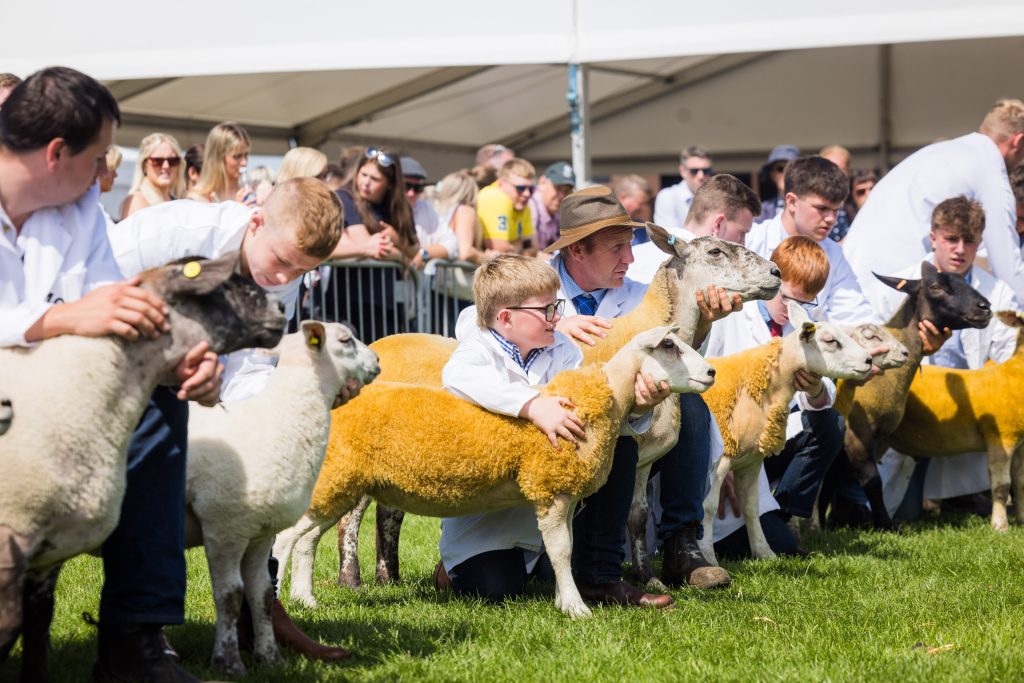
Paterson’s background with Historic Scotland and HIE has given him a familiarity and passion for the rural economy and the role of agriculture.
“Part of the attraction for this role was that the rural economy and matters have been part of my life for many years. There’s a thread that goes back through economic development agencies, working in food and drink, working in rural areas.
“I appreciate from my HIE days that if we invest in a business in the Western Isles or in Shetland that creates four or five jobs, that’s gold dust compared to in the Central Belt.”
Paterson sees the potential for doing much more as the society returns to full strength.
Turning to the show, there are strong fundamentals and fresh ambition. Livestock entries are oversubscribed. Sponsorship is at a record level. Trade stands have almost sold out. And there are new elements woven in alongside the traditional pillars.
“There are elements of the show that have been there for a long time, the core of the show, and we want to continue to do those things to the absolute best of our ability. But every year there’s a reflection on what could be better. Every year you want to improve.”
The question being asked is: what should the Royal Highland Show look like in ten years’ time? How can it continue to excite the next generation of young people who are working and living in rural communities across Scotland?
“We are always trying to move on and improve, while not losing what makes the show so special.”
This year’s evening entertainment on the Saturday is The Reeling, with a full Scottish line-up of traditional and folk music including Skipinnish, Dougie MacLean and the Elephant Sessions. This replaced the Hoolie, which had been going for the last three years.
The Presidential Initiative, where a Scottish region takes responsibility for a year, will showcase a range of different activities and the provenance of the food and drink of that area. This year, the Aberdeenshire Presidential Initiative has been active and highly visible promoting the best of the North-east of Scotland throughout the four days.
The renewal of the Royal Bank of Scotland sponsorship on a three-year deal was an early win of Paterson’s tenure. This year approximately 30 new sponsors have joined an already strong base of returners, which he sees as validation that the show continues to deliver genuine commercial value.
“When I arrived this time last year, we were in discussions with the Royal Bank about extending their sponsorship, so it was really good to get that three-year deal signed and over the line.”
The society has also commissioned an economic and social impact study. “That’s important because we’ve got plans for the site and we need to be able to demonstrate the impact we’re making at an Edinburgh level, at a Scottish level.”
The full 280 acres at the Ingliston Showground and its adjoining space is central to Paterson’s vision.
“We’re on the edge of the capital city. We’re across the fence from the fastest-growing airport in the UK. We need to leverage our connections to Edinburgh and to the airport.”
The Royal Highland Centre is a popular space for events, exhibitions, and concerts, with the likes of Biffy Cyro aiming for sell-out crowds this summer.
“We’ve got the benefit of having indoor and outdoor spaces with good car parking, so it’s an attractive site. We want to invest. The site is a bit tired in places, so it is something we are actively investing in. It is not just a venue for a few busy days a year, but as a top-class all-year round international venue.”
First, they need to raise capital with a development framework posing key questions.
“What do we need? What land do we need? What do we want to invest in? What land may not be part of our plans going forward? Can we realise some value from that to reinvest in the bits we think are important? This is all under discussion,” Paterson says.
Furthermore, the society’s social purpose must be restored as the finances allow. During the difficult years, investment in education, rural community development and learning initiatives was scaled back. He wants that to change. There is no sugar-coating the challenges facing agriculture; they are significant.
“A rural focus is at the heart of who we are. I want to get back to us being able to do more and invest more in those types of activities. I know the difference and the impact that relatively small sums can make in rural areas, disproportionately so compared to a similar amount spent in urban areas.”
The Royal Highland Show is an annual event, showcasing the best of food, farming and rural life at Ingliston in Edinburgh. Thursday 18 – Sunday 21 June, 2026. Read more from our Royal Highland Show 2026 section here.