

Facing a high degree of economic uncertainty as well as global turbulence, Scotland’s next government must prioritise a clear plan for growth Scotland’s next government must prioritise a clear plan for growth
Times are about to change at Holyrood. A record number of MSPs have confirmed they will not seek re-election on 7 May so a new wave of politicians will soon be sweeping through the Scottish Parliament after the country goes to the polls.
In a world where an economy is shaped as much by global forces as by decisions made at home, there are limits to what our representatives – new and old – will be able to do. But the election will soon be upon us and, no matter who emerges as the victor, the next Scottish Government’s task must be to focus on actions that genuinely move the dial on economic growth.
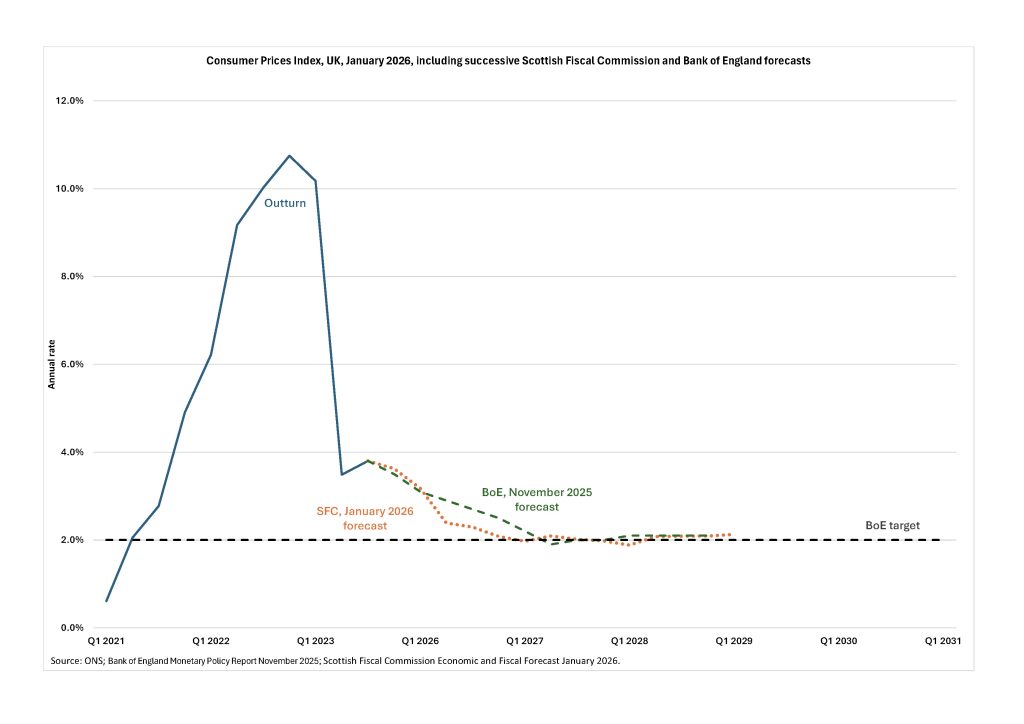
Restoring a sense of stability and easing the pressures facing businesses should be the golden thread running through all economic interventions. Compared to five years ago, it is now much more expensive to live or run a business in Scotland. For consumers, the average basket of goods measured on the consumer price index (CPI) was 28 per cent higher at the start of this year compared to when MSPs were last up for election in May 2021.
Supply chain bottlenecks following lockdown, the Russian invasion of Ukraine and, if sustained, the recent outbreak of hostilities in the Middle East, taxes and inflation have all pushed up costs. But policy measures by the Scottish and UK governments have also put pressure on consumers and firms, driving up prices at both supermarket checkouts and factory gates.
Deploying all of Scotland’s energy resources is the answer to meeting our climate goals, ensuring security of supply and powering the economy. High international oil and gas prices following the wars in Ukraine and the Gulf show the interdependencies between geopolitics, national security and economic performance.
North Sea oil and gas
However, North Sea oil and gas production is in decline, with the renewables sectors not yet at a sufficient scale to fill the void. Thousands of jobs are being lost each month, and the UK is now more vulnerable to overseas imports of hydrocarbons.
Accelerating towards the clean power mission to decarbonise the electricity grid by 2030 is clearly the right approach. However, renewable energy should not be pitted against oil and gas, which will be an essential part of our economy for decades to come.
No new exploratory wells were drilled in the UK continental shelf in 2025 – the first time this has happened since 1964 – while the Norwegians drilled 49, resulting in 11 new discoveries. But while we didn’t drill, the expansion of clean power is constrained by the electricity grid.
A recent case has seen a 500MW offshore wind farm development in the north of Scotland (enough to power 500,000 homes) face annual grid connection charges rise from £13m in 2025 to £27m by the end of the decade. Not only does this put investors off: ultimately consumers pay the price through higher energy bills.
Energy policy
Relative to energy policy, which is split between Holyrood and Westminster, the Scottish Government has more autonomy around housing. Major rent increases – up a third from average of £765 a month in May 2021 compared to £1,021 – alongside rising homelessness and falling rates of new housebuilding, prompted the Scottish Parliament to declare a housing emergency in May 2024.
The SNP manifesto in 2021 pledged to deliver 100,000 new affordable homes by 2032, a target which was later increased to 110,000. Between the summer of 2021 and the summer of last year, 38,000 affordable homes had been built in Scotland, suggesting the target is approximately on schedule.
However, these targets are insufficient: Scotland needs to be more ambitious on housebuilding. Our research has shown that since the financial crisis, Scotland has built 100,000 fewer homes than was needed. A target of building 25,000 new homes a year across all sectors, including affordable rent and ownership, is required.
Unfortunately, recent data is not encouraging. Until the end of September 2025, just over 13,000 newbuilds had been completed in 2025, which was down by nearly 1,500 units compared to the same point the year before.
Encouragingly, there is some evidence which points towards politicians at Holyrood rising to the challenge. The appointment of a dedicated cabinet secretary for housing, Màiri McAllan, in June 2025 has led to stronger grip at the highest levels of government.
Adjustments to rent controls, by excluding mid-market rent and build-to-rent, helped to rebuild investor confidence, as had been called for by Prosper in our report Housing Supply for a Growing Economy. The next Scottish Government needs to back up warm words with tangible progress.
However, even where legal powers are devolved to Holyrood, there is a limit to what MSPs can do. When up to half of the cost of building a house is in labour wages, the macroeconomic environment also has an impact.
Five years ago, a full-time employee on the national living wage cost around £18,500, taking into account employer’s national insurance. Today, the equivalent cost to firms is £27,750.
But the labour market has struggled since the pandemic, for reasons of both demand and supply. The rise in national insurance for employers has pushed down employment, with a reduction of 14,000 payrolled employees in Scotland in the 12 months following the announcement of the increase.
However, economic inactivity has risen since the pandemic. By mid-2024, more than 800,000 Scots did not have a job nor were looking for work, including 282,500 on long-term sick.


Jobs market for young people and part-time workers
Young and part-time workers have borne the brunt of the weakening jobs market. Colleges are an obvious source of training and support for jobseekers. While the 10 per cent uplift in funding for the further education sector in January’s pre-election budget was welcome, it did not restore the 20 per cent real terms reduction in budgets since 2021.
The next Scottish Government needs to help colleges shift towards part-time, flexible and informal training provision, focusing on sectors such as renewable energy, defence and construction.
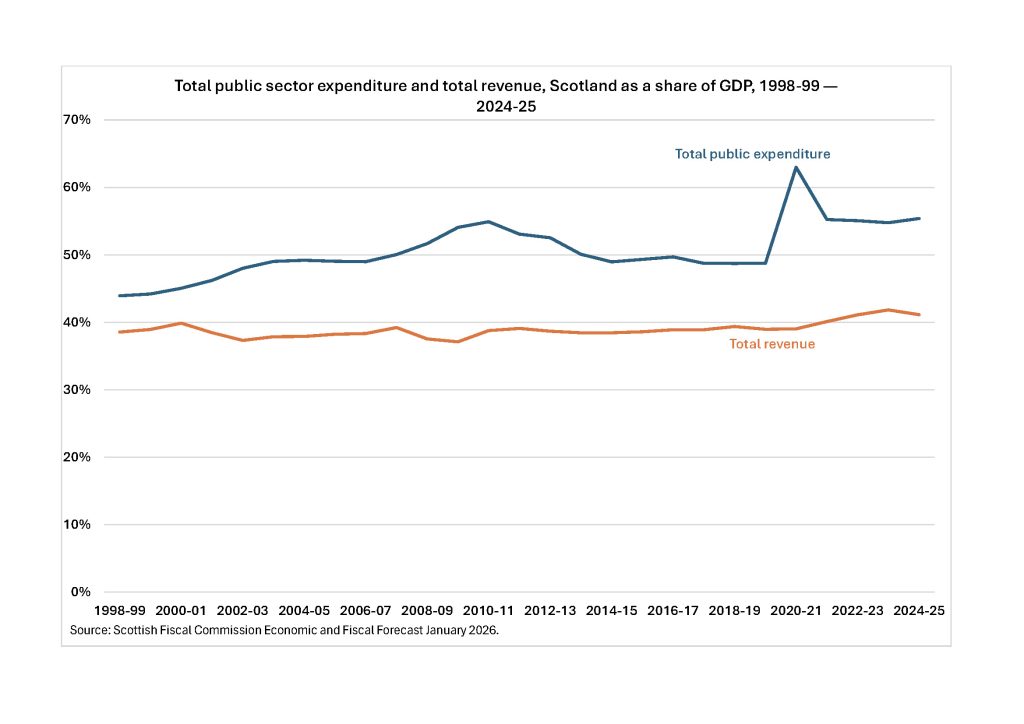
If inflation has been the dominant economic theme in this Scottish Parliament, then the sharpest break from historic trends in fiscal policy has been the shift from private to public consumption. In Scotland, government spending now accounts for 55 per cent of national output (excluding the North Sea).
Compared to the rest of the UK, a larger share of the workforce employed in the public sector, higher public sector pay and more generous benefits have all contributed to significant spending pressures in Scotland. The most likely crisis facing the next Scottish Government is one of fiscal sustainability, with the respected Fraser of Allander Institute warning that the numbers look “grim”.

Scottish Government responds to spending pressures
The Scottish Government’s response to spending pressures, thus far, has been through substantial divergence to UK income tax rates and bands. Income tax thresholds have not kept pace with inflation, the higher and top rates were increased in 2023, and a new advanced rate was introduced in 2024. Scottish taxpayers earning over median income, around £33,000, pay more than those in England.
But there is a limit to how far spending pressures can be addressed by changes to income tax, especially at the top end. First, the next Scottish Government needs to focus on growing tax revenues in a sustainable and stable manner by widening the tax base. That requires more Scots working for more hours at higher pay, rather than further tax divergence.
Second, Holyrood needs to grasp the mantle of meaningful public sector reform. Scotland needs to have more regional collaboration between public bodies and local authorities to drive growth in our cities and rural economies and improve service delivery. The next finance secretary should set multi-year budgets for departments to better manage spending.
Five-year outlook for the Scottish economy
The outlook for the economy for the next five years is highly uncertain. The next occupant of Bute House must use all his or her influence and power to grow the Scottish economy. There are obvious limits to what any single politician can do, especially in a small open economy where global turbulence is quickly felt at home.
A protracted conflict in the Middle East could lead to another inflationary spike through elevated oil and gas prices and higher shipping costs from Asia to Europe.
But the Scottish Parliament has significant responsibilities in taxation, regulation, planning, housing and infrastructure that can make a significant difference. In a world where late night social media posts can move the markets, the Scottish Government needs to stay resolutely focused to the task of growing the economy.
Prosper is a cross-sector economic alliance that aims to strengthen Scotland’s economy
Partner content in association with Prosper