
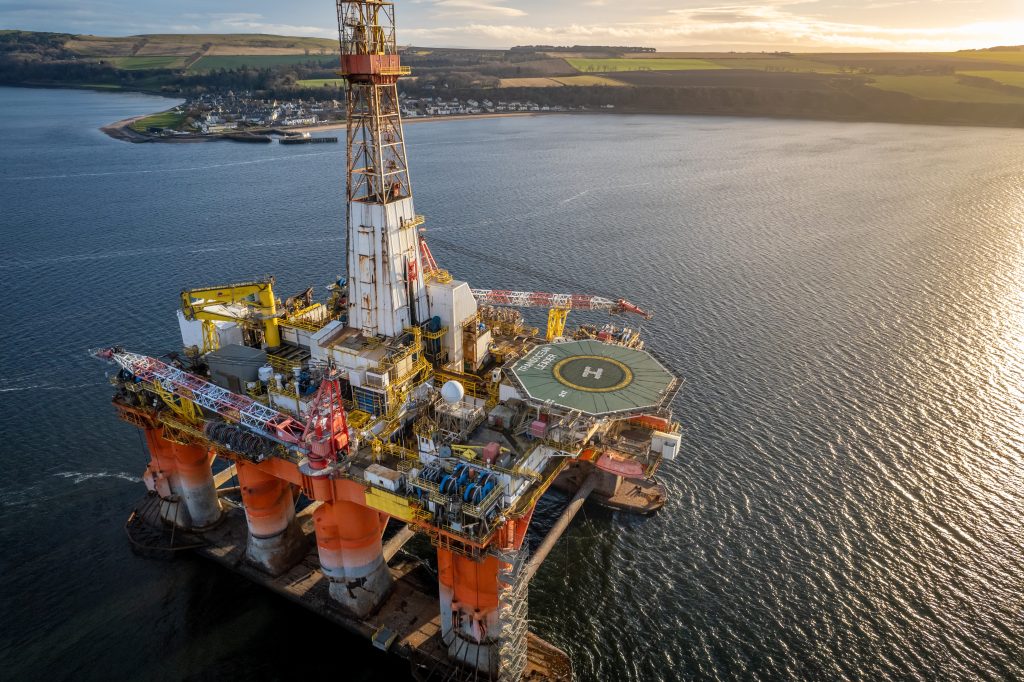
A powerful cross-industry group led by North Sea energy producers has delivered a letter to the new Prime Minister Andy Burnham, warning that policymakers must back homegrown oil and gas ahead of imports, alongside greater support for UK manufacturing and industry.
Their message is clear: “Back North Sea oil and gas. Not imports.”
The letter is signed by industry executives, trade unionists, and trade bodies from chemicals to engineering, aggregates and building materials to the offshore energy sector and the shipping industry. The backdrop is a return to serious conflict in the Strait of Hormuz, with President Trump saying that US forces will protect tanker traffic but that there will be a 20 per cent surcharge to ensure the safety of vessels. Overnight Iran and the United States continued their hostilities in the Gulf, causing the price of oil to rise to $84 a barrel.
The letter is being sent to all 403 Labour MPs and makes clear that the UK economy is at a turning point. Decisions made now will be key to the economic success or failure of the UK in the coming decades. Even Ed Miliband, the architect of much of the UK’s recent climate change action, has said he would be willing to drill in the North Sea to improve his chances of becoming the new Chancellor of Exchequer in Burnham’s new Cabinet.
THE LETTER IN FULL:
“Where things are made and who makes them matters. Recent geopolitical events have reminded us that energy security and industrial resilience are inseparable.
Countries that produce, build and manufacture retain greater control over their economic destiny. Those that become increasingly reliant on imports leave themselves exposed to decisions made elsewhere. That is why the future of our offshore energy sector matters far beyond energy alone.
Let’s be clear. We support the government’s ambition to build a secure, lower-carbon energy system. The growth of offshore wind, carbon capture and storage, hydrogen and other low-carbon technologies present economic and industrial opportunities for the UK and should be embraced.
However, the energy transition will be stronger and fairer if it is built on an all-energy approach; one that builds on our industrial strengths rather than overlooks them.
The truth is our country will continue to need oil and gas for decades to come. The question is not whether we use these resources, but whether we produce as much of them as possible ourselves or become increasingly dependent on imports from overseas.
Imports will continue to play an important role in our evolving energy system, but they should be a complement to domestic production, not a substitute.
That question has been answered unambiguously by our North Sea partners in Norway, where the Labour Prime Minister and his government are backed by a cross parliamentary consensus supporting the continued development, not the phase-out, of North Sea oil and gas alongside the build out of renewable energy.
Yet today, our policies leave us importing more than 40 per cent of our energy, including oil and gas and derivative fuel products from volatile regions, while refusing to prioritise our domestic production.
That sends the wrong signal to workers, businesses and communities. Producing our own energy supports jobs, sustains communities, strengthens supply chains and creates value that is redistributed across our nations and regions, and the comparatively lower emissions from domestic production versus shipped imports means it is also a more responsible choice for the climate.
But support for the North Sea is about more than oil and gas. It is a signal that the country remains committed to producing, building and manufacturing. It is a signal that government backs the people and places that have powered this country for generations.
A credible energy transition cannot be delivered by replacing one source of domestic energy with a growing dependence on imports. Instead, it must strengthen our capacity to produce the energy, fuels, chemicals and products on which our future depends – and North Sea oil and gas is the tip of the spear to realise this ambition.
Together, this is how we can bring to life the vision of reindustrialisation across our nations and regions. That is why – for our jobs and communities, economy and security, and for our climate obligations – we are asking you to back North Sea oil and gas. Not imports.
The signatories are: David Whitehouse, chief executive of Offshore Energies UK; Gary Smith, general secretary, GMB; Steve Elliott, chief executive officer, Chemical Industries Association; Elizabeth de Jong, chief executive officer, Fuels Industry UK; Ann Joss, RMT Organiser Scotland; Rhett Hatcher, chief executive officer, UK Chamber of Shipping; Martin Casey, senior director, Cement and Lime Mineral Products Association; Russell Borthwick, chief executive, Aberdeen & Grampian Chamber of Commerce; Kevin Keable, chair, East of England Energy Group; Stuart Clow, regional director, UK International Association of Drilling Contractors (IADC); Joanne Leng, chief executive, NOF; Neil Gordon, chief executive, Global Underwater Hub; Peter Aylott, director, British Rig Owners Association; and Stuart Broadley, CEO, Energy Industries Council.
The letter was being presented to Labour MPs from the growing number sympathetic to the argument that supporting North Sea production is not just a commitment to homegrown energy but also a commitment to UK manufacturing, industrial capability and the skilled workforce that has powered the nation for generations.
Also present will be apprentices from around the country making clear that future jobs and livelihoods depend on UK productivity, not imports.
Presentation of the letter will follow an all-industry summit and discussion include presentations from the GMB union and the Chemical Industries Association, spelling out the importance of a secure supply of reliable and affordable home-produced oil and gas to reduce dependence on imports, protect UK jobs and achieve industrial growth.
David Whitehouse chief executive of Offshore Energies UK said: “Our colleagues in other industries are joining us to show their support for this basic message. Energy security, economic resilience and reindustrialisation depend on maintaining domestic energy production as well as greater investment in renewable and low-carbon technologies.
“We fully support the government’s ambition to build a secure, lower-carbon energy system, but energy transition must follow an “all-energy approach” that builds on existing industrial strengths and strengthens rather than weakens national industrial capability.”
Steve Elliott, Chief Executive Chemical Industries Association, said: “As a key foundation industry which is core to jobs and the wider economy the UK chemical sector must attract investment. Fundamental to that is our ability to access competitive and secure energy to run our factories and to produce the critical materials that underpin the country’s critical infrastructure, our growth sectors and the clean energy future.
“If the new administration is serious about re-industrialisation and good growth across the country, then it must do all it can to make that energy competitive and secure. Backing North Sea oil and gas alongside renewables is not about slowing progress. On the contrary, it is about strengthening industrial competitiveness, protecting jobs and reducing reliance on imports in an increasingly volatile world.
Gary Smith, GMB Union General Secretary, said: “In an increasingly uncertain world, it is more important than ever that we can get the energy we need to power our homes, businesses, and essential public services.
“We will need oil and gas for decades to come. Increasing our reliance on imported energy from overseas for the essential elements that power our economy and keep the country going, leaves us worryingly exposed.
“GMB is looking to the Government to show it understands the significance of this moment – jobs, communities, and our national security are at stake.”
Elizabeth de Jong, chief executive officer, Fuels Industry UK said: “The UK continues to need fuels; it makes sense to maximise the value created here at home by supporting both refineries and North Sea production. Domestic manufacturing sustains high-skilled jobs, strengthens energy security and underpins our industrial future.”