

Scotland’s housing emergency demands more than a response to immediate need. Improving access to secure, affordable homes must sit alongside the longer-term task of creating a housing system that supports people, communities and economic growth.
These challenges will shape discussions at The Business of Housing 2027, returning to the EICC on February 9, following our well-received inaugural event in 2026.
With the Scottish Government plans to phase in its agency More Homes Scotland from April 1, bringing it says: “funding, expertise and delivery tools under one roof,” the conference is an opportunity to influence its formation.
With government and delivery organisations in the same room, The Business of Housing offers a valuable chance to contribute to the much-mooted ‘listening’ process.
The latest figures underline the urgency. As of March 31, 19,004 households were living in temporary accommodation, including 10,715 children, both record levels.
Meanwhile, Scotland completed 17,057 new-build homes in the year to June, down 11 per cent. For homelessness cases closed in 2025/26, the average stay in temporary accommodation was 237 days.
These figures reinforce what has been clear for some time: improving housing outcomes requires sustained investment of time and resources, alongside systemic change. The stakes extend beyond individual households to the health of local and national economies.
Clearly, the measure of success should be outcomes, not new organisational architecture. Can the agency unblock difficult sites, overcome infrastructure barriers and give those financing and building our homes the confidence to proceed?
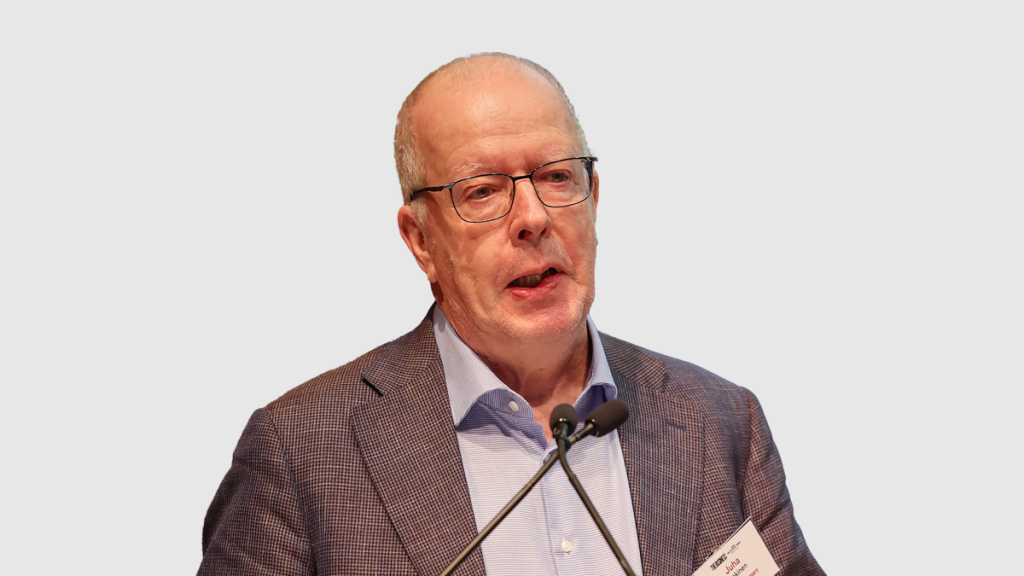
We should also be willing to learn from systems beyond Scotland. Our 2026 conference heard from Professor Juha Kaakinen from Finland, the architect of the Housing First approach to homelessness.
We must be asking whether planning departments have sufficient resource
— Professor Juha Kaakinen

Next year, our opening keynotes will draw on the knowledge of experienced housing professionals, including Jonathan Andrews, the founder and principal of JJA Real Estate Consulting (JJA REC), on the US Low-Income Housing Tax Credit (LIHTC) programme.
LIHTC attracts upfront investment in affordable rental housing through tax credits. Supported developments saw 3.9 million affordable homes brought into use between 1987 and 2024, through both new construction and rehabilitation.
The question is not whether Scotland can copy an American scheme, but what we can learn about aligning public support, private capital and long-term affordability.
Finance cannot be separated from delivery. Government work on stalled sites identifies infrastructure, development viability and planning resources among the barriers. Discussion of National Planning Framework 4 (Scotland’s national spatial strategy) must go beyond the policy itself.
We must be asking whether planning departments have sufficient resources, how essential infrastructure will be funded, and how councils, developers and infrastructure providers can work together to unblock stalled developments.
Getting developments moving also depends on having the skilled workforce to deliver them. The Construction Industry Training Board has identified recruitment difficulties and the need to align training with a credible pipeline of work.
The emergency response and ongoing work must also reflect place. Rural and island housing requires approaches shaped by local supply, affordability and community needs. Community-led housing also deserves consideration in its own right, in urban as well as rural settings.
Our discussions will give equal weight to these perspectives and urban pressures. Neither new building nor better use of existing stock should be treated as the whole answer.
The breadth and scale is clear and we believe that a sector-wide approach is essential.
Our programme, partnerships and delegate community are designed to bring government, councils, developers, investors, housing providers and community organisations into the same conversation, alongside the third sector, academics and professional advisers.
The Cabinet Secretary’s keynote and question-and-answer session alongside opposition spokespeople will give delegates an opportunity to test political commitments against delivery realities.
A panel of council housing leads will offer the chance to engage directly with those responding locally.
This article is featured in the Winter Edition of The Business magazine published on 29 November 2026 in association with The Sunday Times Scotland.