
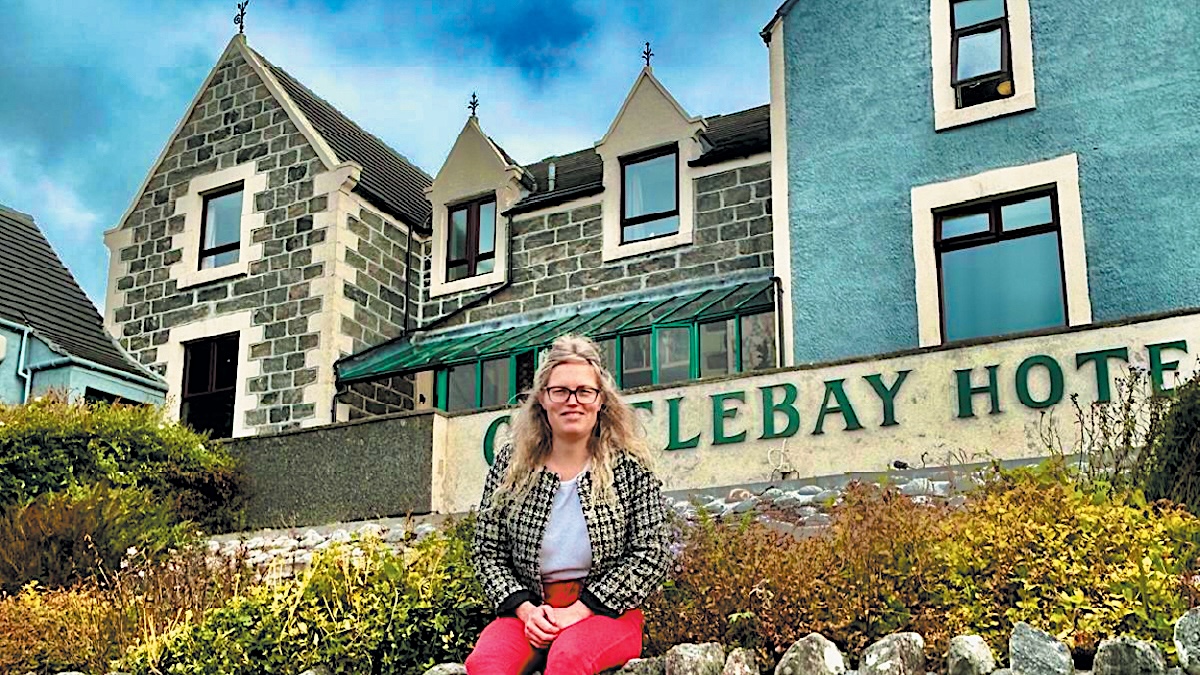

Selling up to buy a remote Scottish hotel is a fantasy for many. What is the reality?
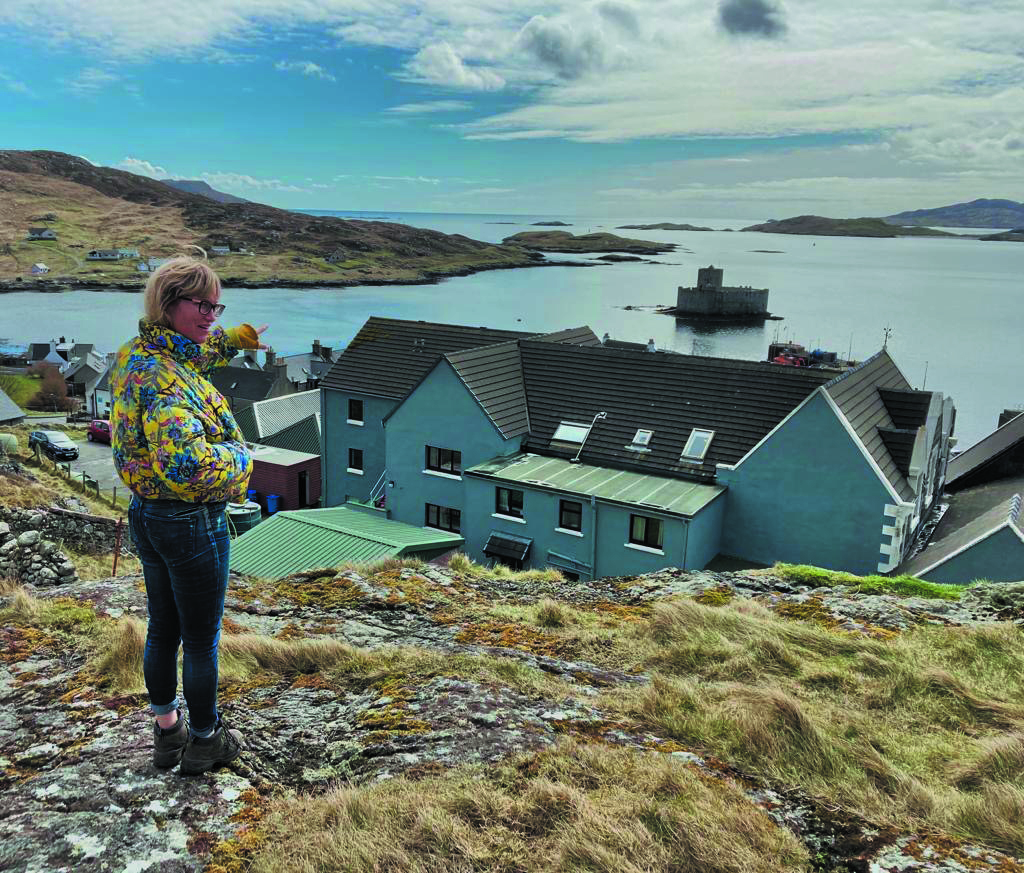
The stunning sea-view of Kisimul Castle – the clan stronghold of the Macneils of Barra – and Vattersay beyond would be an inspiring location for anyone. But for Nicola Souter this is what her hotel dream has given her.
“The light is amazing as you watch the ferry come into port,” she says, standing beside a panoramic window at the front of Castlebay Hotel on the Hebridean island of Barra.
How many of us have had the conversation which starts “Let’s ditch the daily drudgery of urban life and run a hotel in the Highlands or Islands of Scotland”?
Many will have contemplated such a lifestyle change but how possible is it to turn that dream into reality?
Although Souter grew up in a guesthouse, she admits owning a hotel wasn’t on her wish list. A decade ago, she was in Edinburgh working as a social worker and the idea that perhaps it was not what she wanted to do for the rest of her life was niggling away.
When AirBnB took off, she let out a room for £30 a night during the Edinburgh festivals and having enjoyed that experience, she went on to buy other properties to rent. She also went on a Business Gateway start-your-own-business course.
The idea grew that a hotel might provide the different lifestyle she was looking for. But what are the chances of turning such a dream into reality?
There are plenty of hotels on the market – a snapshot of online listings found about 90 hotels on offer in the Highlands and Islands. They ranged from a hotel with four bedrooms in Perthshire, listed at £375,000, to a £4m 100-bed establishment in Perth. More than 60 were listed under the million-pound mark.
The Scottish hotels market is buoyant. Knight Frank’s analysis of Real Capital Analytics (RCA) commercial property data for the first half of this year shows hotels as the top-performing asset class, with £213m of investment.
“Hotels are emerging as the standout property type, supported by seemingly insatiable appetite, for Edinburgh in particular,” said Alasdair Steele, head of Scotland commercial at Knight Frank.


Robert Smithson, director of hotels agency at Colliers, also notes the market is holding up well: “While we have seen revenue pressure for hotels across Scotland, we have seen strong international tourism and major events provide robust trading.
“While there does appear to have been a slowdown in recent months, there has been a positive 12-month RevPAR (revenue per available room) change of 4 per cent in the year to June.”
He adds: “There remains a steady flow of buyers seeking opportunities in the hotel market, and deals continue to take place, with around 40 reported across the country, largely driven by smaller or mid-market asset sizes.”
Smithson believes Scotland’s success in attracting international visitors is likely to support hotel performance. “However, a weaker US dollar could negatively affect hoteliers’ pricing power, especially for those more reliant on business from the US.”
Since Covid, Scotland’s tourism sector has certainly bounced back. In 2024, international visitors made 4.4 million trips to Scotland and spent £3.9bn, according to VisitScotland. Overseas and domestic visitors spent a total of £10.8bn in Scotland, accounting for approximately 6 per cent of the value of Scotland’s entire economy.
Reading the descriptions of the businesses for sale you see plenty of family-run hotels and people who are retiring after “20 fulfilling years”. But where do you start?
It’s definitely a challenge. And I think, for anybody wanting to do it, you’ve not got to expect an easy life, because it’s not easy
- Nicola Souter
Alistair Letham, who has been selling hotels for 40 years, has a word of caution for what could be termed ‘lifestyle’ buyers.
“In the 1980s and 1990s we had a steady flow of people who had been on holiday in Scotland and thought, ‘this is marvellous; we’re going to buy a hotel’.
“However, they didn’t realise that it got dark at three o’clock in the winter. We also saw a steady flow of people heading south again,” says Letham, who is a hotels consultant at Graham + Sibbald.
With your research underway, you might identify a likely property online and decide to visit.
“It’s my job, as the agent, to make sure I don’t waste people’s time – both buyers and sellers. So, one of the first things I ask is, ‘have you got your money?’ and that can lead to interesting discussions,” says Letham.
“There are those who are very well organised and have x-thousand pounds and have sold their house. But there are those who still think you can chap on a banker’s door and get 80 per cent loans for buying a business and that doesn’t happen.”
None of that happens quickly. “A house might take three months to sell. And if they’re borrowing money, which most people are, you have to allow three months for that process as well.
“However, an owner-operated business is still a great way for hard-working private owners to make an excellent living,” says Letham.
Nicola Souter on Barra was already well prepared. “I had an AirBnB guest while I was on the business course and he showed me a business plan of a guest house in Malta that wanted to be a hotel. I used that as a template.”
And when Covid came Souter had time to work on her plan to make the change from social worker to hotelier. Her first attempt to buy a hotel fell through, but it all meant she had more in place when Alistair Letham told her about Castlebay Hotel.
In April 2022, she walked into a tired Victorian hotel with 15 bedrooms. The past three years have seen it undergo a major transformation by Souter and her partner Grant Smith. “It’s not just upgrading the building, we didn’t even have an online booking system. But there is still work to do,” she adds.
For some, an early question is how to go about borrowing the money. As Souter embarked on her journey from social worker to island hotelier, there was a lightbulb moment when she learnt about finance brokers.
“It started with me knowing nothing, then you start learning and get a bit of help from people. I had approached banks, but then someone suggested I get in touch with a finance broker and that opened things up.”
Smithson says that having a clear plan for financing a purchase is crucial. “Hotel acquisitions are a specialist area, and delays in securing funding can result in missed opportunities.”
He adds: “Beyond the purchase price, it’s equally important to consider working capital, the cash needed to operate the business smoothly. Building in financial leeway ensures both parties can proceed without unnecessary frustration.”
Expert help is something the selling agents I spoke to all underlined. Henry Jackson, head of hotel agency at Knight Frank, says good legal and accountancy support should be a priority.
“In our experience, buyers are being forensic in their approach in the current market, given the amount of uncertainty over the past few years – and that requires the right team around you,” he says.
“Success in hotel acquisition often depends on having a strong professional team, solicitor, accountant, and valuer included, supporting you throughout the process,” agrees Smithson.
“To avoid surprises, it’s essential to thoroughly understand the business you are acquiring. Examine past trading performance, key performance indicators such as occupancy and room rates, potential areas for improvement, compliance matters, property condition, and available services and equipment,” he says.
He adds: “Analyse each line of the accounts and make sure everything aligns to put yourself in the best possible position to take the property to that next stage. And, while you cannot predict what lies ahead, try to future-proof as much as possible.”
Hotelier Beth Rehman, the managing director of Perle Hotels which has five boutique hotels in iconic locations including Skye and Glencoe, believes knowing your market is paramount.
“That is the driver of everything you do, from the point of purchase to selling the first room.
“Understanding what your product is, is so important. Everything will be driven around that, then you can work back to figure out what your capital expenditure and operating budget will be.”
If I go into the kitchen and bring out a dish and I know it’s really good food, that is just such a nice feeling
- Nicola Souter
Perle started with three properties in 2013 but now includes Glencoe House and the Perle Oban and Spa, and work is underway on an Edinburgh project.
“We’ve tried to stick to what we think are good locations with properties that fit with the Perle brand, which is the leisure market,” says Rehman.
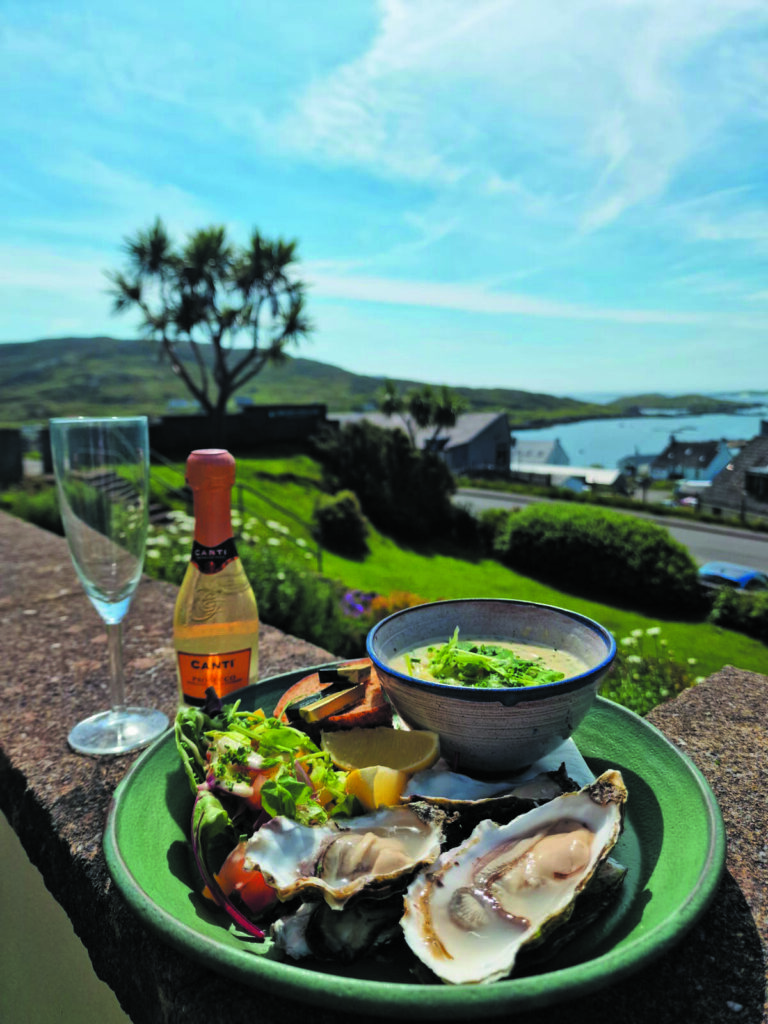
Souter’s hotel vision was always offering guests excellent local food. “If I go into the kitchen and bring out a dish and I know it’s really good food, that, for me, is just such a nice feeling. It’s all about welcoming people and food is so much part of that.”
The key to that has been finding an excellent chef. This year she bought a house to help attract the calibre of chef she wanted. And now Will Daly is serving what Souter says is “not complicated or fancy, but really delicious food”.
With scallops hand-dived by an island fisherman and langoustines and fish from the processor Barratlantic, seasonal Scottish dishes are served on plates made by Souter in the pottery she has also found time to set up on site.
This kind of preparation is a vital ingredient for Smithson. “Research extensively, understand the location, seasonality (especially in the Highlands and Islands), hotel style, market segment, financials, lending considerations, agents’ comments, operational matters, and your own capabilities,” he suggests.
“Specialist agents are often happy to discuss insights that can support informed decision-making, but it really helps if you have a good understanding of as much as you can before you take the plunge.”
He adds: “Flexibility is important, but having a roadmap for how the business will operate and where it will grow in the coming years is essential to long-term success. Define your plan and goals – it is key to have a business plan.”
Souter’s dream is still very much work in progress. “It’s definitely a challenge. And I think, for anybody wanting to do it, you’ve not got to expect an easy life, because it’s not easy.”
Scotland’s Finest in Brief
UNIQUE COMMUNITY
Cromarty is known to sailors and BBC Radio Four listeners as one of the Met Office’s 31 shipping forecast regions. However, the historic harbour town of Cromarty at the north-eastern tip of the Black Isle is one of Scotland’s most vibrant rural communities.
“While the Western Highlands and the Hebrides gets a lot of coverag since the arrival of NorthCoast 500, more visitors have discovered our unique community in the East of Scotland, and once they’ve been here they simply want to come back,” says Phoebe Fox, who is part of the inspiring local community.
The A832 leads through fertile Black Isle countryside to Cromarty and the Nigg ferry allows visitors to stop and discover this hidden Scottish gem. Cromarty Community Development Trust, a not-for-profit company, has been the driving force behind the revival.
The town boasts the Cromarty Bakery, a local cinema, and an events calendar which larger towns would envy. There are several fine hotels and restaurants, including Sutor Creek, a Michelin-noted eaterie.
“Sutor Creek is a wonderful restaurant with brilliant local seafood, wood-fired pizza and locally-brewed beers,” says Fox.
Sutor Creek, Bank Street, Cromarty
JOIN THE CLUB
Tucked away in Edinburgh’s leafy Rutland Square at No24, you’ll find the Scottish Arts Club.
For more than 150 years it has been a sanctuary for artists, actors, theatre types and art gallery patrons. While the club is fiercely proud of its heritage, it wants to ensure it remains relevant and able to keep up with the times.
A recent refurbishment – and a revival in club membership among Gen Zs – has brought back the buzz. Barbara Kerr, who is general manager, says there is room for a few more members to savour what is a unique creative oasis in the west end of Edinburgh.
Kerr says 30 per cent of members are actual artists or performers, while 70 per cent are those who love and support Scottish arts. There’s a library, an artist studio and a club room where you can enjoy a fine meal or a glass of wine over a leisurely lunch.
“It’s not a golf club. It’s a place were those interested in creative art and culture can meet, share conversation and spend unhurried time together,” she assures.
A fundraiser has helped the owners of the listed building refurbish the roof.
The committee members are responsible for presiding over the prestigious Scottish Theatre Awards, which cover more than 140 shows a year.
Inquiries to: administrator@scottishartsclub.com
GETTING IN THE SPIRIT
Fabulous Gosford House at Longniddry was the glamorous setting for the launch of One Cask At A Time, a whisky event offering connoisseurs and collectors a selection of rare single malts from the cask.
Highlights included the 27-year-old Highland Park (£699), in the grandfather collection. It is partnered with the Pendulum, a 26-year-old Auchentoshan (£375), and an 11-year-old Ben Nevis (£89), the Chronograph Collection.
ON VIEW
The Portland Gallery in London’s St James is known for its admiration of the Scottish Colourists and our landscape artists.
Iona Beach Views from Mull by Frances Macdonald, the owner of the Crinan Hotel in Argyll, (which boasts its own rooftop gallery) is the latest offering on display in the Bennet Street gallery. Price tag: £17,500.
