
The Highlands has never been short of visionaries.
More than two centuries ago, Thomas Telford looked at our mountains, glens and waterways and saw remarkable possibilities. The Caledonian Canal remains a working monument to that ambition.
That pioneering spirit is alive today in our community leaders, social entrepreneurs, tourism and food and drink businesses, renewable energy developers and those working tirelessly to sustain our cultural heritage and social care system. These are the modern Highland visionaries, and they could help make our region a world leader in sustainable development.
We are entering one of the greatest periods of transformation in Highland history. Yet alongside that opportunity lies what we call the Highland paradox.
We are rich in renewable energy, yet around one in three households experiences fuel poverty. We are attracting unprecedented investment, yet almost 10,000 Highland children live in poverty. We have globally significant landscapes, yet an estimated 70–80% of our peatlands are degraded. And while tourism numbers have grown dramatically, the economic value generated has failed to keep pace.
How can a region so extraordinarily rich in resources and opportunity continue to experience such profound inequalities?
For five years, Highland CIC has been bringing together people who believe we can create a different future. Supported by £1.2 million in private resources, more than 200 ambassadors, around 50 Highland Renewables Network partner businesses and engagement with over 1,500 people across the Highlands, we are demonstrating what community and business leadership can achieve.
Our renewable energy developers deserve particular recognition. Many are looking beyond individual projects to the wider legacy of the energy transition, investing time, expertise and resources in helping shape a more prosperous Highland future.
Through our Who Benefits? manifesto and mapping of community benefit funds, we are building a clearer picture of how Highland wealth could deliver lasting benefits. But that work is also exposing the limitations of a system that is simply not designed to deliver transformation at this scale.
Consider our My Highlands youth initiative. Schools, employers and developers are eager to connect young people with opportunities on their doorstep. Yet securing funding remains a struggle, despite substantial community benefit resources flowing into the region.
Funding is fragmented, responsibilities are dispersed and there is too little connection to a shared regional vision. Ambitious communities and businesses can spend more time navigating systems than delivering change. Surely, we can do better.
There is considerable expertise and commitment across our public agencies, and outstanding work taking place in communities throughout the Highlands. But the challenge is to connect these efforts, not leave them operating within separate strategies, funding arrangements and organisational boundaries.
We are also working with charities and social enterprises to develop new approaches to tackling poverty, building on the work of the Highland Poverty and Equality Commission and exploring how additional investment and innovation could transform people’s lives.
But we must lift our eyes and imagine the Highlands twenty or thirty years from now.
Imagine a region internationally recognised for combining renewable energy leadership with thriving communities, higher-value sustainable tourism, flourishing cultural heritage and restored natural landscapes.
Imagine the Flow Country’s UNESCO World Heritage status helping attract international investment for peatland restoration, while our renewable energy industry strengthens Highland Adapts and helps make the region a global example of climate resilience.
Imagine innovative approaches to social care making a tangible difference to people’s everyday lives, and young people choosing to build their futures here because they can see the opportunities, afford to live in their communities and have a genuine voice in shaping their future.
These ambitions are within our reach. And how refreshing and encouraging it is to discover that internationally respected sustainability leaders, including those with extensive United Nations experience, recognise the potential we see in the Highlands.
Through our relationships with the Global Alliance for a Sustainable Planet, GIST Impact and leaders including Dr Pavan Sukhdev and Andrew Mitchell, we are connecting global expertise with Highland knowledge.
The challenges we face are not unique. Regions across the world are grappling with how to balance economic growth, environmental restoration and social prosperity. The Highlands has an extraordinary opportunity to demonstrate how these ambitions can be achieved together.
So, what is holding us back? It is certainly not a lack of vision, ambition, expertise or determination.
What we need now is a system capable of matching the scale of opportunity. One that enables public agencies, businesses and communities to work together around a shared Highland Sustainable Development Plan, connecting investment with the needs and aspirations of the people who live here.
With the extraordinary scale of the energy transition and a forecast of £300-£500 million pounds in community benefit funds in the coming decades, this is not simply desirable. It is essential.
The success of that transition cannot be measured solely by the electricity generated or the investment secured. It’s true legacy must be measured by the prosperity it creates for Highland communities, our economy and our environment.
That is the challenge we are bringing to the Highland Sustainable Development Summit in Inverness on 18 and 19 November, bringing together community and business leaders, renewable developers, young people, public agencies and international experts.
We have the natural resources, the investment, the entrepreneurial spirit and the community leadership. We have people who care passionately about this place and are already giving their time and expertise to build a better future.
Now we need the collective ambition and structures to make it happen.
The Highlands helped change the world once. Why shouldn’t we do it again?
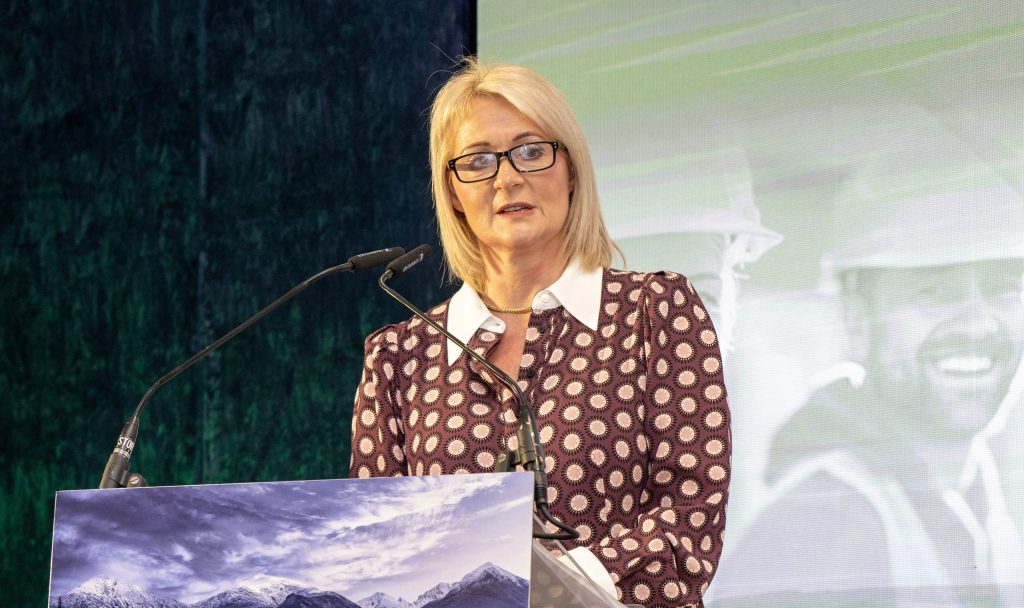
Yvonne Crook is Chair of Highland CIC, which is hosting the Highland Sustainable Development Summit at the Kingsmills Hotel, Inverness, on 18–19 November 2026. Book tickets here.