

Scotland scores strongly in the number of women in work – but there are longer term implications about the health and wellbeing of young Scots who are not in education, employment and training.
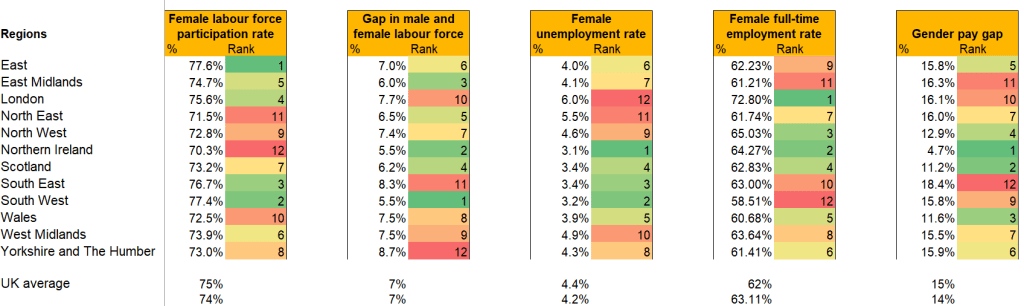
Our country ranks second in PwC’s 2026 UK Regional Women in Work Index, remaining among the UK’s strongest performers for women’s workplace outcomes, despite slipping one place this year.
However, Scotland also shows the UK’s clearest warning sign on young people becoming disconnected from education and work, with an estimated youth NEET rate around 16.2% in 2024, linked to rising ill‑health inactivity and a steep rise in reported mental health conditions.
These worrying findings are likely to come under the spotlight at The Business’ dealmakers’ breakfast on 22nd April at The Hoxton in Edinburgh, when our all-women panel of deal-makers and business figures, led by Colette Grant, discuss the ‘Fine Art of Negotiation’, followed by a political hustings discussing women in the workplace.

Across the UK, the PwC report found that 946,000 16 to 24 year-olds – almost one in eight – are now NEET, up from 11.9 per cent during Covid to 13.6 per cent.
Low attainment significantly increases NEET risk for young women, and the impact is more pronounced than it is for young men (24.5 per cent vs 19.4 per cent).
The report say: “This reflects deep-rooted gendered patterns in the labour market: boys with low qualifications are more likely to move into better paid, male dominated sectors, such as construction that have accessible routes into work, while girls often face far fewer comparable opportunities.”
Health conditions remain a key driver affecting 20 per cent of young women, compared with 23.6 per cent of young men, with mental health pressures rising across both groups.
When low attainment coincides with a health condition, young women become almost four times more likely to be NEET than the average young woman, (48 per cent compared with 12 per cent). Taken together, these findings highlight both the scale of the challenge and the size of the opportunity.
“Intervening earlier, addressing education, health and the career pathways girls are encouraged to consider, will be critical to improving outcomes for young women and unlocking economic gains for the UK.”
Mairi McInnes, Director, PwC UK, said: “Scotland continues to stand out as one of the strongest parts of the UK for women in work, ranking among the top regions. That performance reflects the stability and flexibility many women find in Scotland’s labour market, particularly through its strong public sector footprint.
“But the findings also point to a clear warning sign for the future. Scotland has seen the participation gap between men and women widen this year, at a time when most areas of the UK are moving in the opposite direction.
“Sustaining our strong position for women in work over the long term will depend on tackling the barriers that keep women from fully participating in the labour market – including access to flexible, secure roles and the support that enables people to stay in work and progress.”
Scotland is ranked second in PwC’s 2026 UK Regional Women in Work Index (based on 2024 data), continuing to perform strongly on the indicators used to measure women’s economic empowerment across the UK. The PwC Women in Work Index began in 2011 and tracks the progress of women in the workplace across the 33 OECD countries using a combination of indicators. The five indicators that make up the Women in Work Index are: the gender pay gap, the female labour force participation rate, the gap between male and female labour force participation rates, the female unemployment rate, and the female full-time employment rate.