
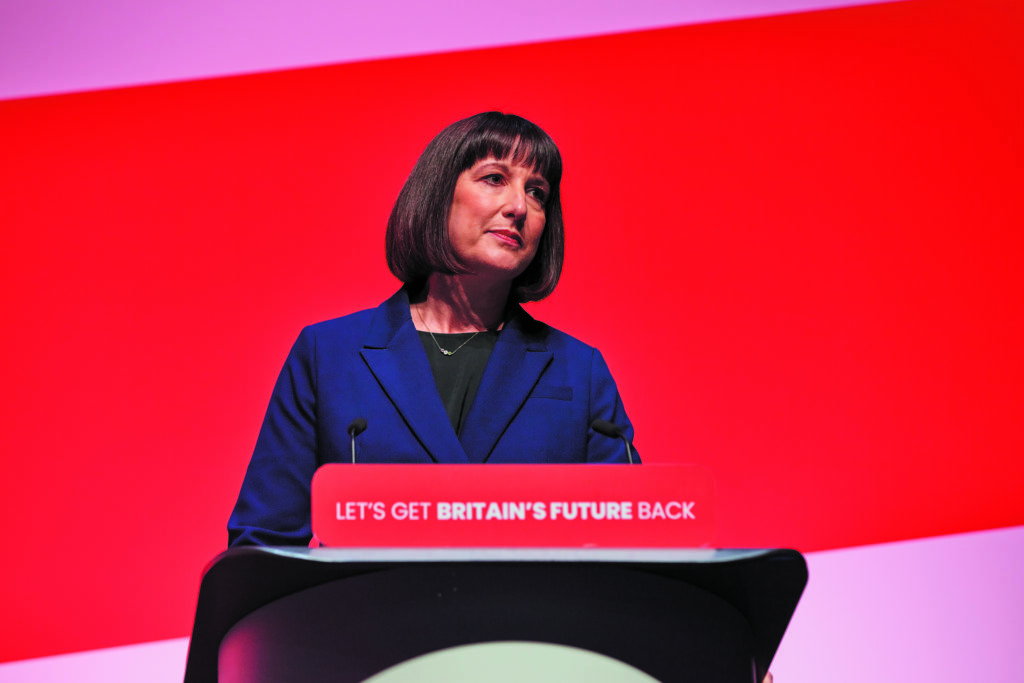
Concern widespread over Chancellor’s warnings of ‘tough choices’
If ‘soak the rich’ is now a serious statement of intent from the Labour Govern ment, then an increasing number of moderately well-off Scots are about to get drenched.
By stealth, many earners have been pulled into higher tax bands as income tax thresholds are frozen, and incomes have risen to meet inflation. Most people understand the social compact that they should pay a fair and proportionate level of tax if they are better off.
But many nervous income taxpayers sense a political sea-change where the Chancellor Rachel Reeves and her acolytes are viewed as punishing people on higher incomes or with personal savings. Labour pledged during the UK election campaign that it would not increase taxes on working people, but this has become an unstuck promise.
The Chancellor said in an interview with Iain Dale in Edinburgh during the Festival that she “has to make a lot of tough choices to kick-start the UK economy”.
For higher-bracket Scots, now paying proportionately more taxation than the rest of the UK, kick-start will mean higher tax bills and nasty surprises.
The Scottish Fiscal Commission’s data shows that Scottish income tax revenues have grown much faster than the rest of the UK, due in part to tax reconciliation from the UK.
But while pay and taxation are linked, the Scottish Government’s pay settlements for the public sector are more generous than those in the private sector. On the first day of the new Scottish Parliament session, First Minister John Swinney was quizzed about the growing size of the devolved public sector workforce which has ballooned since the creation of the Scottish Parliament.
“The devolved public sector workforce has grown each year since 2018-19. NHS Scotland is the largest workforce and has been growing steadily since the start of devolution in 1999. There has also been rapid growth in the size of the devolved civil service since 2018-19.
“This is because of the creation of new executive agencies such as Social Security Scotland to deliver the newly devolved social security payments, the Covid-19 pandemic response, and preparations for the UK’s exit from the EU, alongside general growth in the core Scottish Government,” says the Scottish Fiscal Commission.
But this expansion has placed a massive strain on Scotland’s resources, with Swinney blaming Westminster and the fact that Scotland is not an independent nation and therefore in control of all of its fiscal levers.
We can expect plenty of heated rhetoric about record levels of UK and Scottish taxation
Meanwhile Scottish Tory leader Russell Findlay accused the SNP of a culture of “anti-aspiration” against Scottish business, and a failure to focus on what Scottish voters wanted sorted, which was the roads fixed, ferries running and tackling the nation’s drug misuse deaths (more than 1,000 in 2024 and the worst in Europe).
The SNP has a point however in that the block grant for Scotland has seen a proportional reduction as the UK Government has increased its defence spending, an area reserved for Westminster. In June the UK made a commitment to spend 5 per cent of UK GDP by 2035.
Scotland’s finances are increasing in a closing vice. In June the Scottish Government’s medium-term financial strategy said there were substantial gaps – more than £2bn by 2029 – between current spending trajectories and available funding.
“Most of the devolved public sector workforce is now covered by agreed pay deals for 2025-26, and most deals agreed also cover 2026-27. The pay deals agreed have all exceeded the Scottish Government’s public sector pay policy.
“Under this policy, deals that did not cover three years were to be limited to a 3 per cent increase in 2025-26, and the cumulative increase was to be limited to 9 per cent over the three years from 2025-26 to 2027-28,” reports the Scottish Fiscal Commission.
The name Torsten Bell, the MP who has been elevated to Rachel Reeves’ Treasury team in preparation for the Budget, will make many people shiver, as he has boldly campaigned for higher levels of taxation, an end to the triple lock pensions, and a hefty hike in levels of inheritance tax.
The number of people paying tax on their savings has quadrupled in the last four years. HMRC expects to collect more than £6bn from 2.64 million savers in 2025-26. Nearly half of all top-rate taxpayers will incur the tax.
HMRC expects a record 3.67 million investors will have paid dividend tax in 2024-25. That’s nearly twice as many as 2022-23, before the dividend allowance cuts. Now, there are suggestions the allowance could be removed altogether – potentially pulling over five million more investors into paying the levy.
We can expect plenty of heated rhetoric about record levels of UK and Scottish taxation, leading up to the Chancellor’s Autumn Statement on 26 November.
The serious question for all political leaders is will a highly-taxed nation see any visible improvement in public and local services, and much greater accountability on how the tax take is being managed and spent? Or will all this extra taxation go in paying off the nation’s increasing levels of debt?