

They bring £0.5bn into the capital every year. But insiders say we are in danger of killing the golden goose of Edinburgh festivals by continuing to treat them as cash cows
The Edinburgh International Festival was created in the immediate post-war years to reconcile a world shattered by the Second World War. When the Edinburgh Fringe followed, bringing its own type of mirth and joy, it set the stage for what is universally acknowledged to be the biggest and best arts festival in the world.
While August is viewed as festival month, the capital’s success and its expanding festival calendar ensures Scotland benefits long after the last mountain of flyers has been swept from the Royal Mile’s cobbles.
But whether the festivals can be considered a golden goose or a cash cow remains open to debate. On the surface, everything in Princes Street Gardens is rosy. But dig a little deeper and insiders are telling a different tale, with some thorny issues casting a shadow of financial uncertainty over the forthcoming festivities, not least the impact of an increasingly fractured geopolitical world.
Tony Lankester, chief executive of the Edinburgh Festival Fringe Society, acknowledges that the potential consequence of the war in Iran to the festivals is something he is tracking closely.
“Around 12 per cent of our audience comes from the US and, outside the UK, the United States is our single biggest feeder country, and it is not impacted significantly by flight disruptions from the Middle East – indeed American Airlines recently started a new direct route to Edinburgh from Philadelphia, joining its direct route from New York – so it’s relatively easy to get to Edinburgh from the States,” he said.
“I’ve made two trips to the States this year and spent a lot of time talking to artists and audiences, Fringe-goers, supporters and patrons, and while there’s anxiety, there’s also a lot of love for the Fringe.
“It’s a different case for people flying from the east, Australia, South Korea or China, because their flight paths will take them over the Middle East or over Ukraine and there’s more caution from those segments, but whether that will ultimately keep them away from the Fringe we’ll have to wait and see.”
Ticket sales from international visitors during global uncertainty
Francesca Hegyi, chief executive of Edinburgh International Festival, which this year marks the 250th anniversary of American Independence with a programme examining the ideas and impact of the United States, said that she has not seen any impact from geopolitical uncertainty on ticket sales.

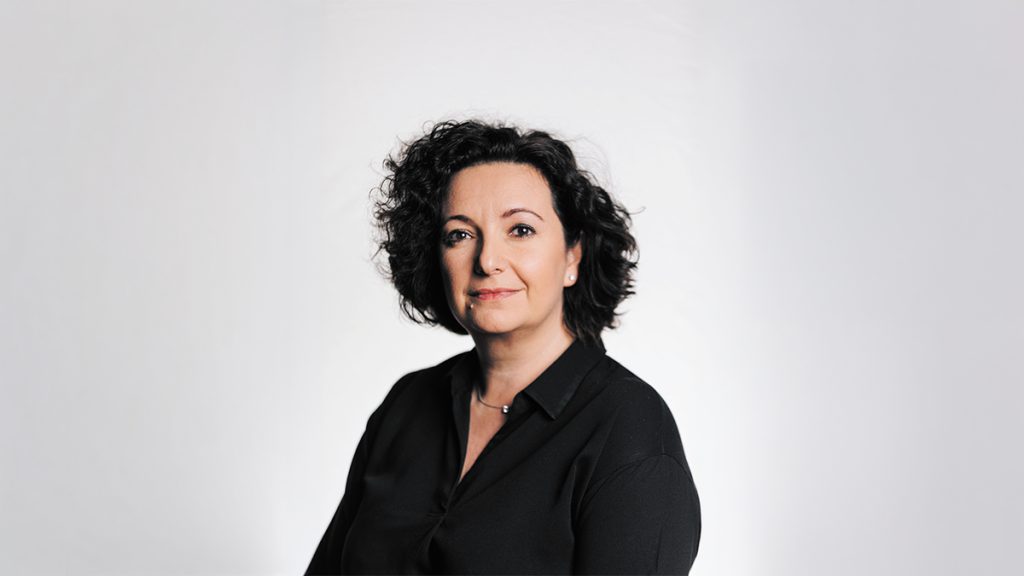
Ultimately, anything that brings £0.5bn of value into a city has to be a good thing. We need to think about how we interact with the city and the city interacts with us
- Francesca Hegyi
“As a festival we do our deals around freight or air travel a long way in advance, so we’re not seeing anything too concerning – people are still buying tickets, and international visitors are still coming,” she said.
William Burdett-Coutts, artistic director of Assembly Festival, the longest-running curated multi-venue operator of the Edinburgh Festival Fringe, suggests that geopolitical uncertainty cuts both ways.
“It could be that more people are likely to staycation this year because of the geopolitical situation, so one hopes that the people staying in the UK versus the people from overseas who decide not to travel because of the international situation balance each other out,” he said.
“Undoubtedly uncertainty is in the air. Conversely, festivals and entertainment in difficult times tend to do better. People want to escape the unhappiness of the time by doing something more fun.”
Why Edinburgh festivals are still recovering from covid
Geopolitical uncertainty is just the latest issue outwith their control which Edinburgh’s festivals have had to contend with over recent years. There was no Fringe in 2020 or 2021 because of Covid, since when, according to Lankester, the trajectory has been toward recovery.
The Fringe Society has a loan that we took during Covid that we have to repay – that’s the Covid hangover we’re dealing with
- Tony Lankester
“Because of its ripple effect economically, Covid is impacting on the cost of living, on the amount of disposable income people have, but it has almost been overtaken now by the war in the Middle East and rising fuel prices – that’s the new pressure,” he said.
“Many of the participants in the Fringe – the Fringe Society itself, the venues, the artists – are still carrying legacy debt because of Covid, and that’s impacting on what they can do and their ambitions.
“As an organisation, the Fringe Society has a loan that we took during Covid that we have to repay to the Scottish Government, and that’s true for many of the venues too – that’s the Covid hangover we’re dealing with.”
Can Edinburgh's festivals survive rising costs?
Burdett-Coutts describes the post-Covid era as a “nightmare” following Assembly’s most successful festival ever in 2019.
“The financial environment within which we operate has got harder every year,” he said. “We thought that once Covid was finished life would settle down, but the inflationary pressures that have come through since then have been astronomical and the cost of running the festival is impossible really.”
Hegyi agrees that inflationary pressures are an issue.
“In the last decade or so inflation has risen significantly and the festivals have worked extraordinarily hard to plug that gap because our public sector support is a subsidy, which allows us to keep ticket prices low, and that hasn’t moved with inflation, so we actually receive less from the city council than we did in 2008,” she said.
“That’s a huge financial gap that’s opened up and we’ve been incredibly hard-working in trying to bring in new sources of income, for example through philanthropy. There are incredibly generous people across the whole of Scotland and the UK and internationally that want to see the festival survive and I think that, were it not for them, we’d be in a sticky position.”
What impact funds generated from Edinburgh’s new visitor levy, beginning at the end of July, will have on the festivals remains to be seen, with Edinburgh City Council currently considering how the funds will be distributed.
Who benefits from the visitor levy?
The levy is forecast to raise £100m in the first three years, then £50m a year. That cash is expected to be used for a wide variety of projects, including street cleaning, improved lighting, the local arts and culture sector and tourism marketing for the city.
Burdett-Coutts suspects that the visitor levy will cost Assembly more than it is likely to recoup from it.
“It’s going to add about £60,000 to the overall costs of what we do, and whether that will be recouped in any form or not I don’t know. It seems that a lot of the funds are being directed towards city improvements and things other than culture,” he said.
Lankester suggests that the visitor levy will impact on some audience members who might have been on the cusp of weighing up whether or not to come to Edinburgh, though points out that there are a large number of cost-effective accommodation options available, such as student accommodation, which artists and people staying for a longer period of time can use.
“I don’t think the visitor levy itself is going to turn people off,” he said. “If handled correctly it represents a massive opportunity for cultural organisations in the city, but what’s paramount for us is making sure that the people contributing to the pot – the artists, the audiences – do see some direct benefit from that contribution, whether it’s making Edinburgh a more welcoming city through more public facilities that they can use.”
Supporting the golden goose and reinvesting in arts & culture
Lankester estimates that around £6m going into the visitor levy pot will come from a direct result of people participating in the Fringe.
“We’re not asking for £6m to come back to the Fringe, but we’re asking for that £6m to be spent sensibly so that, on aggregate, the people attending the Fringe and the people who live in Edinburgh see some benefit for that investment,” he said.
“We’re in constant conversation with the council as to how it considers these visitor levy pots rolling out and the message from all the summer festivals is that the council don’t just use that money to do new and shiny things; there’s a golden goose here and if nurtured, if sustained, if supported, it can continue to drive the economy of the city strongly. So let’s look at the sustainability of the organisations and see how the visitor levy can contribute to that sustainability.”

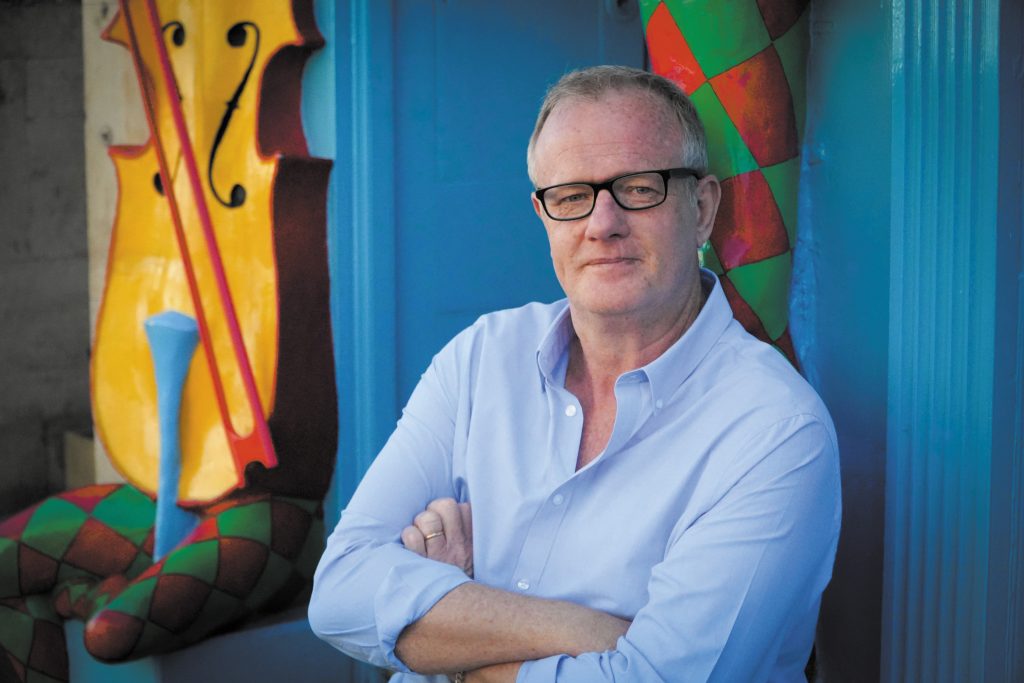
While acknowledging that local authorities have a ‘fiendishly difficult job to do right now’, Hegyi suggests that Edinburgh has not got it quite right in terms of how those monies are distributed.
“It would be great to think that the organisations that attract visitors in the first place might benefit from the levy coming in, but at the moment the International Festival and others are going to be worse off because we pay for all the accommodation for our artists,” she said.
“This year alone we are going to be £46,000 worse off because of the visitor levy. That doesn’t make much sense to me and I’ve yet to hear any logical explanation for that.”
Despite these financial challenges, Burdett-Coutts insists that he remains optimistic. “It’s very challenging – but we wouldn’t be doing this if we weren’t optimists,” he said.
“The nature of the festival is that you create an environment of positivity. This will be my 47th year and I’m still at it because I think it’s the most incredible event.
“It exists in a challenging environment – challenging for us, challenging for the companies that come – but it’s still a wonderful experience when it does happen.
“It is fundamentally a goodwill event. On the commercial side it generates a lot of revenue for Edinburgh and the country, but there needs to be something of a payment back in the other direction. There needs to be more consideration of supporting the event itself.
“Generally, there’s a view that it’s a cash cow to keep milking and that attitude has to stop and people need to recognise that the festival needs back-up and support, otherwise we won’t maintain our position as the major event in the world where people can create an opportunity for themselves.”
Festival figures
Professor Murray Pittock, pro-vice-principal at the University of Glasgow, has been commissioned to carry out research into the economic and social impact of the Edinburgh Festival Fringe, marking the first time in many years that the Fringe will be examined on its own.
This seems surprising given that the largest arts festival in the world issued more than 2.6m tickets in 2025, attracts about 750,000 attendees and supports an estimated 3,000 jobs.
The most recent study of the combined Edinburgh summer festivals, conducted in 2022, confirmed their status as world-leading cultural brands with some 3.2m attendances generated by around 700,000 attendees, keeping it on a par with this year’s other global event, the FIFA World Cup, and acknowledged their economic impact increasing in Edinburgh from £280m (2015) to £407m and in Scotland from £313m (2015) to £367m.