
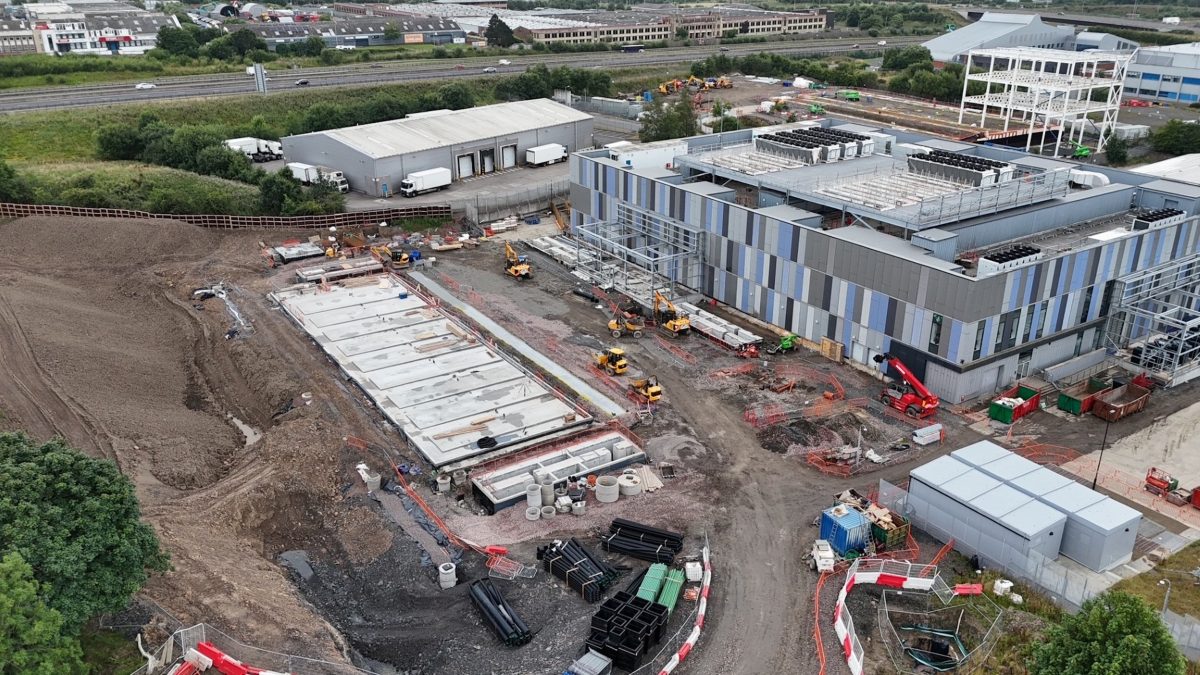

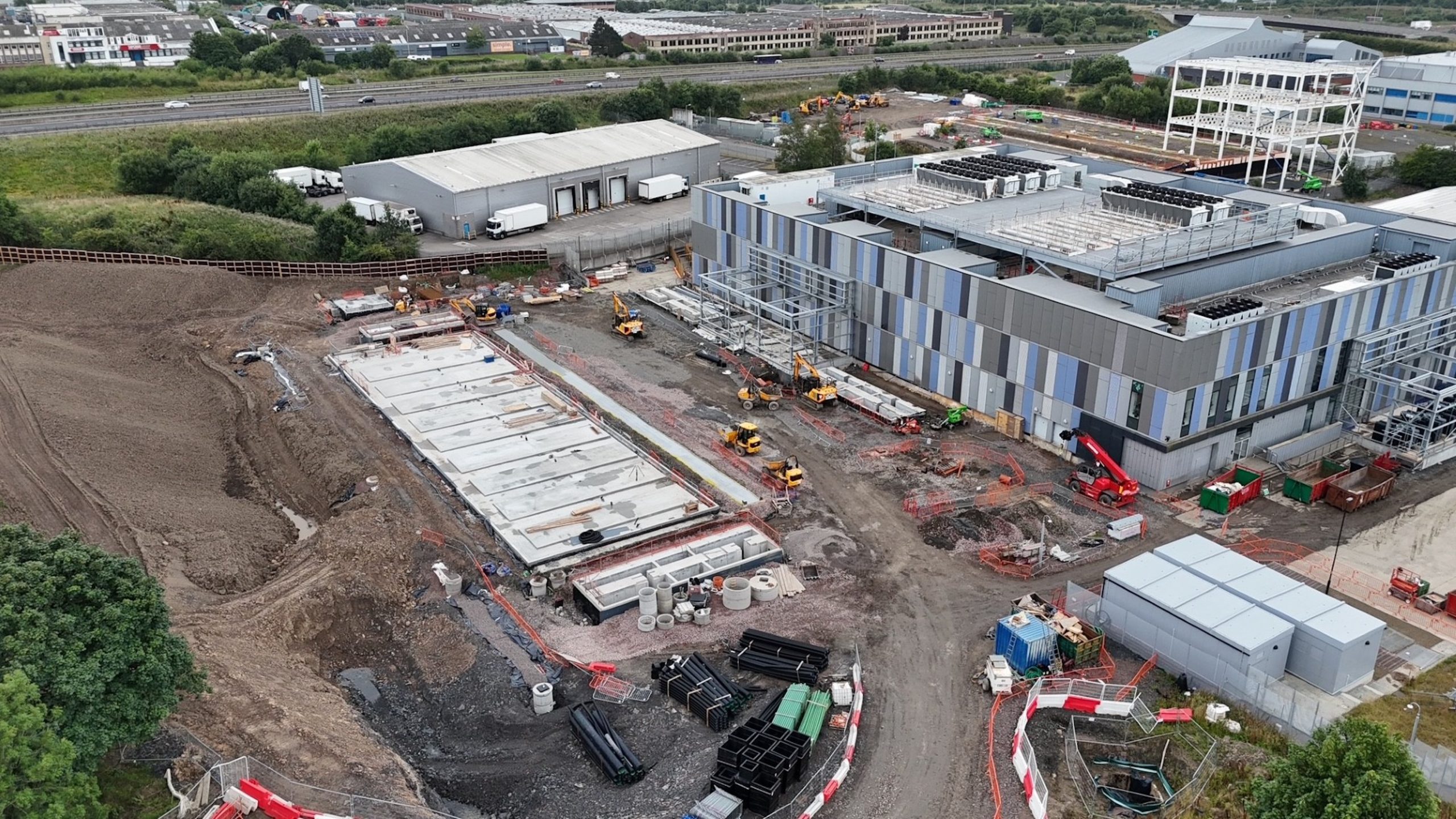
Data centres have evolved from a specialist real estate asset into critical infrastructure underpinning the modern economy. But they are not without their detractors
The data centre has undergone a controversial transformation in a remarkably short period. Two years ago, data centres, with their banks of computers in air-cooled rooms, were a niche segment of commercial real estate. They have now become a critical part of Scotland’s national digital economy, attracting sovereign wealth funds, pension fund managers and infrastructure investors.
With Rockstar’s multi-million Grand Theft Auto VI, due to be launched on 19 November, becoming the biggest ever creative launch from a Scottish-based company, there is little denying that even eager gamers want to have high-speed internet connectivity. Ironically, one of the crime themes of this epic gaming franchise’s new release is the use of data centres.
Latency is the key for online gaming and for the AI engines which require high performance computing able to crunch massive machine learning data at the speed of light. This in turn requires racks of terminals with NVIDIA-style silicon chips which create heat and an exponential demand on energy. This has roused campaigners to fight to prevent such massive buildings in their locales.
Scotland’s data centre boom raises energy and climate concerns
Across Scotland, campaigners such as the Action to Protect Rural Scotland (APRS), are demanding a moratorium on hyperscale AI centres until the Scottish Government examines the impact of them on Scotland’s climate targets, electricity grid and communities. Hyperscale data centres have a capacity of more than 100MW.
“The largest data centre currently operating in the UK is VIRTUS London5 in Slough at 90MW (information from June 2025) but the scale of data centres proposed to be based in Scotland dwarfs that,” says APRS.
“The ones in planning portals are up to 600MW and the Irvine data centre would be 1GW. With Torness power station producing 1.2GW, one data centre could use nearly all the energy from the nuclear power station, which is due to close at the end of this decade,” say the countryside campaigners.
They have a legitimate point about the definitions of ‘green data centres’ and how hyperscale centres will be able to pass environmental impact assessments. It is an issue that Hannah Mary Goodlad, the public finance minister in the Scottish Government, will need to wrestle with and resolve.
Scotland’s NPF4 (National Planning Framework 4) places the climate and nature crises at the centre of decision-making. The national focus is on net zero. NPF4 was adopted in February 2023 and supports ‘green data centres’ as a national priority. Scotland is ahead of recent planning policy changes in England.
The Scottish Government’s first data centre/AI strategy was published in 2021 and guidance to define a ‘green’ data centre is still being considered. In January, the US firm CoreWeave and Scottish firm DataVita announced an £8.2bn data centre complex in Lanarkshire, which will require large amounts of green energy from an energy grid which is already under stress.
Paul Stein, the CEO of Floral Energy, speaking of power constraints, says: “You can’t really use intermittent energy for data centres. You can use solar closely coupled with gas fired. You can’t use wind energy. You’ve got to have wind plus combustion engines for when the wind’s not blowing.”
Developers are looking at the potential of small modular reactors (SMRs) to power data centres.
Power availability shapes the UK data centre market
Nevertheless, smaller data centres are already being rolled out across the UK. The UK’s ambitions to become a global leader in data centres will depend as much on access to power as technological innovation, according to report published by independent UK law firm Burges Salmon.
The report, The UK Data Centre Market in 2026: Navigating demand, power and opportunity, brings together insights from industry leaders including CoreWeave, NTT Data, Future Growth Capital, Floral Energy and Savills alongside analysis from Burges Salmon specialists.
It concludes that while demand for data centre capacity continues to accelerate, driven by AI adoption, cloud computing and data sovereignty requirements, power availability is increasingly the key factor determining which projects proceed and which do not.
The report highlights that the UK is home to more than 550 data centres and has set a target of at least 6GW of AI-capable capacity by 2030, yet developers continue to face significant challenges securing electricity connections for new projects. The average time to secure a grid connection for a new 50MW data centre is seven years. By comparison, similar projects take about four years in Northern Virginia, the world’s largest data centre market.
Pension investors target digital infrastructure
Meanwhile the UK pension market is actively positioning itself to capture this opportunity.
Max Gilbert, infrastructure director at Future Growth Capital, says that Standard Life, an original signatory of the Mansion House Compact, is one of 17 pension providers committing to invest more UK pension default option capital into private markets by 2030, with data centres becoming an increasingly prominent destination for that capital.
Future Growth Capital, a joint venture between Standard Life and Schroders formed in October 2024, represents the new breed of vehicles channelling domestic institutional capital into digital infrastructure.
Power has become the defining constraint, and sustainability considerations are more important
— Ros Harris, partner at Burges Salmon
Ros Harris, partner at Burges Salmon and lead of the firm’s data centres campaign, says: “The UK data centre market is at a pivotal moment. The demand is there. The investment appetite is there. Government policy is increasingly supportive.
“But the industry is now confronting a reality that many sectors are facing simultaneously: power has become the defining constraint, and sustainability considerations are increasingly more important.
“The conversation has moved beyond where demand will come from. The focus now is on deliverability. The organisations that successfully navigate power availability, planning, financing and delivery risk will be best placed to capture one of the most significant infrastructure opportunities of the coming decade.”
Data centres have rapidly evolved from a specialist real estate asset into critical infrastructure underpinning the modern economy. The sector sits at the intersection of energy, planning, real estate, construction, finance, technology and regulation.
“That complexity creates challenges, but it also creates enormous opportunities. The organisations that can bring together the right expertise, secure power effectively and engage positively with stakeholders and communities will help shape the next phase of the UK’s digital economy,” Harris says.
This article will be featured in the Autumn edition of The Business magazine published and distributed in The Sunday Times Scotland. Pick up your copy of the paper on Sunday 27th September and tag us on LinkedIn.
FAQs
Why are data centres attracting investment?
Growing demand for AI and cloud computing is making data centres increasingly important infrastructure assets for pension funds and institutional investors.
What is constraining UK data centre development?
Access to reliable electricity, grid connection delays and planning requirements are key barriers to delivering new capacity.
Why are Scotland’s hyper-scale data centres controversial?
Campaigners question their electricity demand, environmental impact and compatibility with Scotland’s climate targets.
What are CoreWeave and DataVita developing in Lanarkshire?
The companies are partners in the Lanarkshire AI Growth Zone, which the UK Government says will attract £8.2bn of private investment.
Read more Data & AI and Property & Housing
