
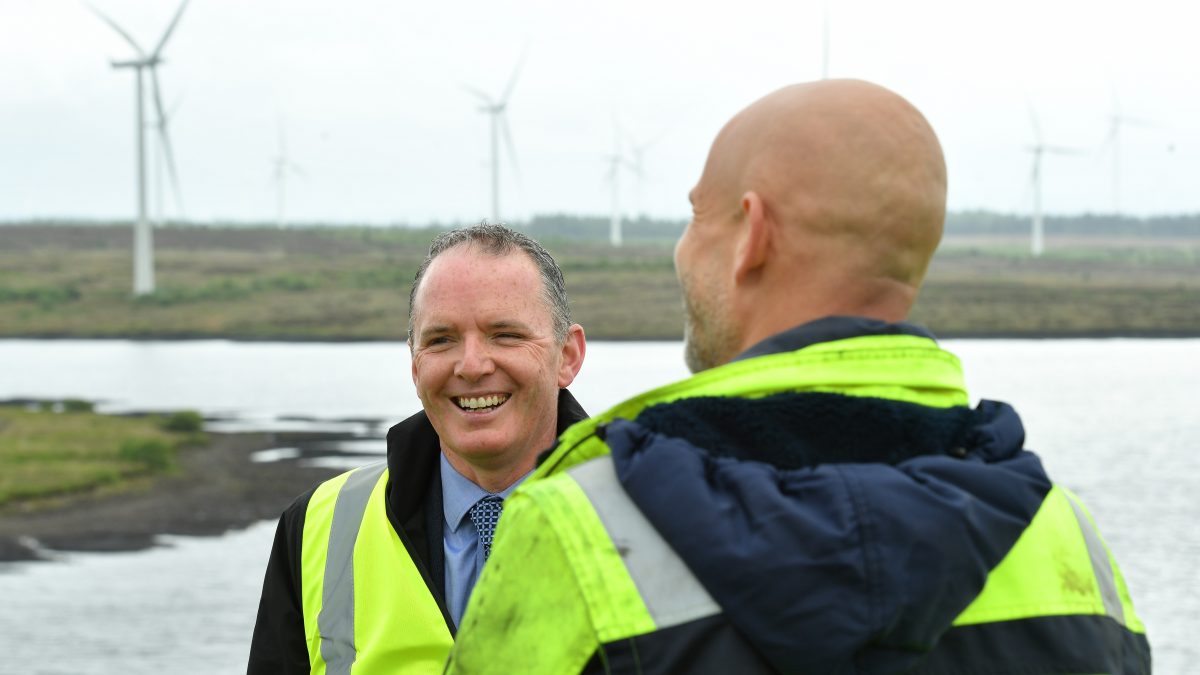
The Big Interview: Eyes on the enterprise and net zero race with SE chief executive Adrian Gillespie

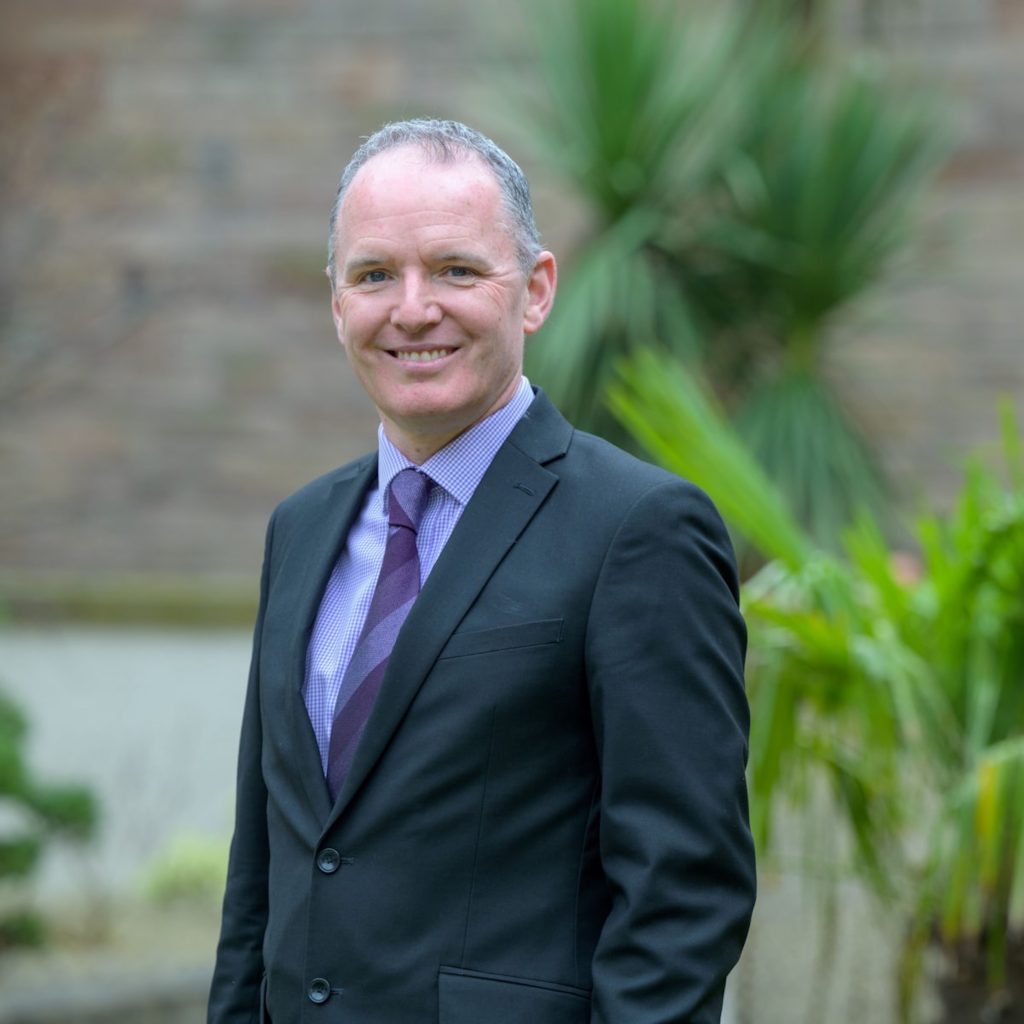
What did Scottish Enterprise ever do for us? Quite a lot, as its highly-focused chief executive Adrian Gillespie outlines
Monty Python’s Life of Brian springs to mind when speaking with Adrian Gillespie, the head of Scottish Enterprise (SE). In the film, a skit raises the question: “What have the Romans ever done for us?
It leads to multiple head-shaking answers about the roads, aqueducts, sanitation, language and other benefits.
The same applies when Gillespie, as chief executive, is questioned about what the national enterprise agency is doing to promote and grow Scotland. There’s a compelling list of cross-industry projects and programmes covering everything from aerospace, advanced engineering, skills development, overseas trade and energy, including floating wind farms.
For a public sector organisation that is now sandwiched between the Scottish National Investment Bank (SNIB) and GB Energy in Aberdeen, it would be simple to ask what the purpose of the Glasgow-based agency is, but Gillespie is bullish about an institution where he has spent much of his professional career.
He has now been at the helm for five years, and is joined by Professor Sir Jim McDonald, former Strathclyde University principal, and SE’s new chair, who worked alongside Gillespie when he was chief commercial officer at the university for a spell. They should make a formidable partnership.
Scottish Enterprise focuses on energy, innovation and productivity
This resulted in SE focusing on three missions, which Gillespie and his board believe can make the biggest economic impact for Scotland.
“They persist. One is accelerating the energy transition. The second is scaling innovation, and that’s addressing one of the big opportunities and challenges in Scotland, which is about taking all this brilliant capability we’ve got, and achieving scale around the world. And the third is a structural issue within the economy, which is addressing the productivity gap.”
Gillespie says our country can substantially improve living standards for citizens by attracting more investment into Scottish companies to improve productivity and driving up wages as well.
“The key areas we can add are around how to help companies innovate more successfully, how to internationalise more successfully, and how to attract more investment to enable both of those two imperatives. That’s what we’re focused on.”
How Scottish Enterprise works with SNIB and Great British Energy
Here he addresses the crowded economic landscape which now includes the national investment bank and GB Energy, based in Aberdeen, but recently criticised in the media for failing to support Scottish-based companies.
“We work with partners, and that’s where SNIB and other partners across the country come in to deliver. We’re increasingly working on a regional basis as well. If we’re looking at how the new Scottish Government and the Programme for Government 2026 – 2031 set out its direction with an increasing focus on regionalisation, I think there’s a big opportunity in doing so.”
Although Gillespie concedes that while his agency has been successful with its international work using its Global Scot network and Scottish Development International trade and investment arm, it is more challenging to deliver on a “hyper-local” level because this is often the domain of local council authorities.
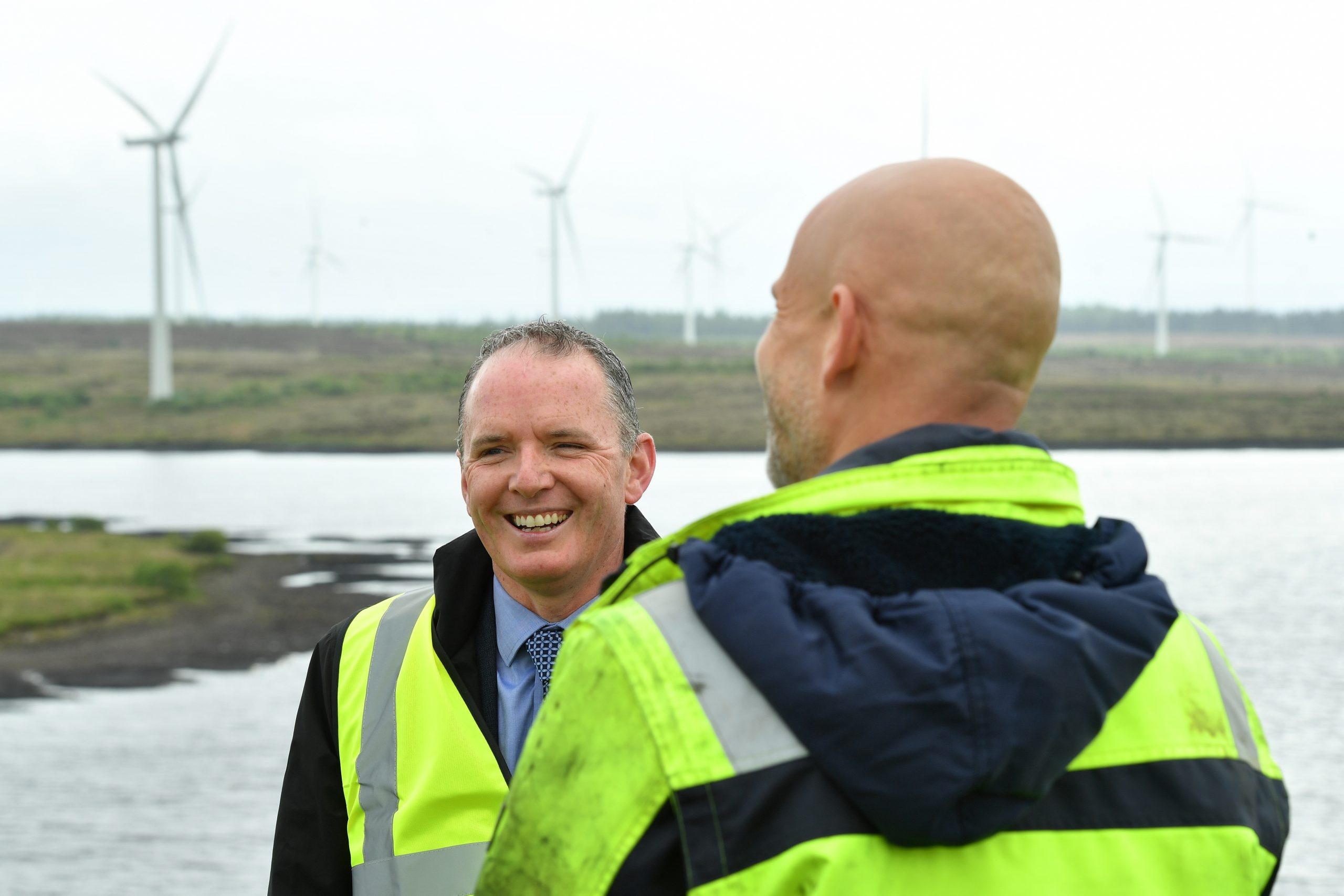
Adrian Gillespie and Scottish Enterprise’s new chair, Professor Sir Jim McDonald, should make a formidable partnership.

Why floating offshore wind is the prize and a major opportunity for Scotland
The biggest prize for Scotland remains on the renewable energy front and the race to net zero, with the deadline of 2030 fast approaching. Gillespie believes there is a narrow window of opportunity to secure the manufacturing and supply chain benefits of floating offshore wind, which is still very much in its development phase.
“Floating offshore wind is a big opportunity because that’s the new frontier, if you like, in terms of the innovation challenge and where we’re going to see a scaling-up of innovation. For example, in areas like anchors, in areas like deployment for these, because the turbines are another order of magnitude bigger than existing fixed turbines.
“All of the technology around how you deploy, how you assemble, how you anchor is a whole area for innovation,” he says.
Scaling innovation is addressing one of the big opportunities, which is about taking all this brilliant capability we’ve got, and achieving scale around the world
But to become an international winner, Scotland needs to find its stride with a serial manufacturing capability where these enormous floating structures are built in the same way as smart shipbuilding: a rinse and repeat formula which improves incrementally but secures long-term employment, skills and investment.
“In terms of how you manufacture, this would give us a competitive edge and develop a capability and expertise that can be taken across the world as floating offshore wind develops.”
Gillespie conceded there are mammoth challenges in taking forward floating offshore wind platform into some of the harshest sea conditions in the world, in the North Sea and north Atlantic Ocean, but the wind energy that will be produced is substantially more reliable and constant than existing on-shore wind farm developments.
“We mentioned in our new report that floating offshore is taking longer than had been anticipated for the projects to come through. That’s something we’re very focused on because we have a unique position in that market in that we are very close to the international investors, very close to the domestic supply chain, close to the floating offshore wind and fixed offshore wind developers.”
He points to the government’s allocation rounds for offshore projects which are increasingly focused on UK energy securities, (“which they absolutely should be”) but Gillespie believes there needs to be a greater focus on the supply chain and economic value in Scotland of these projects as well.
“It’s to ensure that we develop out these projects in a way and a scale that allows investors to see where their purchase orders are coming from and enable them to invest at scale and manufacturing facilities here. They’re not going to invest in one-off projects. They’re going to invest in a pipeline of projects where they have a supply chain.”
Investor confidence is key in investing in Scotland’s energy transition
Investors’ confidence is absolutely critical when deploying new innovations for floating offshore wind. Prime Minister Andy Burnham singled out Britain’s post-war deindustrialisation as one of the reasons for national economic decline.
Scottish Enterprise obviously sees the floating wind opportunity as a chance to redress this imbalance, creating a modern industrial strategy working with GB Energy and both the Scottish and the UK governments.
“If we look back at your fixed and even onshore wind, we need to do something different with floating offshore wind to make sure we capture the full economic opportunity here,” he says.
Asked whether SE was in discussions with sovereign wealth funds and overseas private equity investors to finance the sector, Gillespie is highly confident.
“We have a very strong pipeline of investment for floating offshore wind and that incorporates Japanese investors, obviously all of the developers in the offshore wind farms as well, but from a supply chain perspective, Asian, European investors, now that’s a pipeline.
“It’s the strongest pipeline for inward investment I’ve ever seen. But we have to convert that pipeline into opportunities and that’s where they need a clear line of sight through to where the orders are going to come from, at a project level.”
Building Scotland’s offshore wind manufacturing supply chain
More than £77bn of UK grid investment has been approved for delivery by 2031 with Scotland at the heart of over £40bn of this.
“In any scenario, there’s a multi-billion pounds investment going into the grid in the future. We worked with Hitachi Energy to establish its engineering centre of excellence in Glasgow. [The company has been given a £1.7m grant from SE]. That’s positive. I think there’s much more potential there.”
The closure of Grangemouth provoked a national outcry about the loss of such an important national asset.
“The other really interesting example in the energy space is what we’re doing around Grangemouth and the North-east of Scotland, both in terms of some of their regional priorities, but also how we join up the system across Scotland.”
He singles out Veri Energy, a company focusing on transforming existing energy sites such as the Sullom Voe terminal in Shetland. Gillespie is excited that this company is already refocusing to produce e-fuels, with a biofuels capabilities around Grangemouth.
“If you do the right things with your clients, then generally clients are very sticky to their advisers. And that’s what I suppose PE is.
“They’re attracted to it, but they’ve also disrupted it in a way as well. And that’s why for me, you know, it’s definitely reshaped our market. Disruption isn’t always a bad thing, certainly for a number of firms.
International trade and investment help Scottish companies scale
On the persistent difficulty of scaling Scottish companies internationally, Gillespie points to trade missions and says the agency’s international investment strategy is working well.
“There are lots of really exciting Scottish companies who are successfully internationalising and scaling up across the world. We do need more, but there are many, many companies doing just that. In the seafood area, for example, at Seafood Expo in Barcelona, a big industry event every year, we worked with 26 companies and through that, they’re forecasting they’re going to create another 460 jobs.
“One of the highlights of our results is the international trade performance, £2.1bn of international sales. And that’s a sustained high performance we’re having there over the years.”
In the last 20 years, Scottish Enterprise had also deployed £1bn through its co-investment and venture funds, leveraging almost £3bn of private sector funding.
“That’s fundamentally changed the early-stage investment market in Scotland. I think the opportunity exists now, that’s a well-established model,” he says.
Read Kenny Kemp’s latest feature for the Autumn edition as he visits Shetland and experiences a taste of the sea here.
Scottish Enterprise backs growth in life sciences
On life sciences, following criticism at the DealMakers’ event about Scotland lacking a champion and missing out on a recent MRC funding competition, Gillespie pushes back on suggestions that the agency had stepped back, pointing to investments in lab space and specific companies.
“I would say the life sciences sector has definitely got a champion in Scottish Enterprise, and the sector’s growing, that’s one of the areas that’s growing quickly with 10 per cent growth. We’ve been putting additional funding into increasing lab space because one of the key inhibitors for growth is access to lab space. And we have a property challenge fund to open up opportunities for more lab space.
“We’re supporting companies too. We’ve invested in Mironid, who have a novel approach to hereditary kidney disease. (In August, Mironid, based in Glasgow, raised $46m for Series B funding, with backing from SE). Look at the investment we made in Valneva’s vaccination facility at Livingston. We’ve made a significant investment in sales and employment resulting in hundreds of millions of pounds of international sales.”
It’s the strongest pipeline for inward investment I’ve ever seen. But we have to convert that pipeline into opportunities and that’s where they need a clear line of sight through to where the orders are going to come from, at a project level
AI, robotics and advanced engineering can raise productivity
Turning to advanced engineering and artificial intelligence, the agency has supported the growth and development of the National Manufacturing Institute Scotland (NMIS), which is working, among other projects, on how to recycle wind turbine blades, and The National Robotarium, at the Heriot-Watt University.
“So again, I think Scotland has a big opportunity and some significant competitive advantage, if I think of centres of excellence like the NMIS and the Robotarium, some brilliant companies that we’re working with in that space. The application of AI and robotics, which gives us opportunities that would probably have gone to lower cost economies for the manufacturing element, make it very feasible to manufacture here in Scotland.”
He cites Babcock’s shift to new welding and fabrication techniques, and said he wanted to see similar productivity gains applied to offshore wind manufacturing.
Scotland’s aerospace industry taking off at Prestwick
“We’ve got some great examples of companies who’ve done that over the years. Babcock and Rosyth the way that they’re now serially manufacturing and welding in a very different way to the way they would have been before. What that’s doing to their competitiveness is a great example for Scotland, one that I think we need to apply to offshore wind as well in the future in terms of the fabrication and the scale at which that has to grow.”
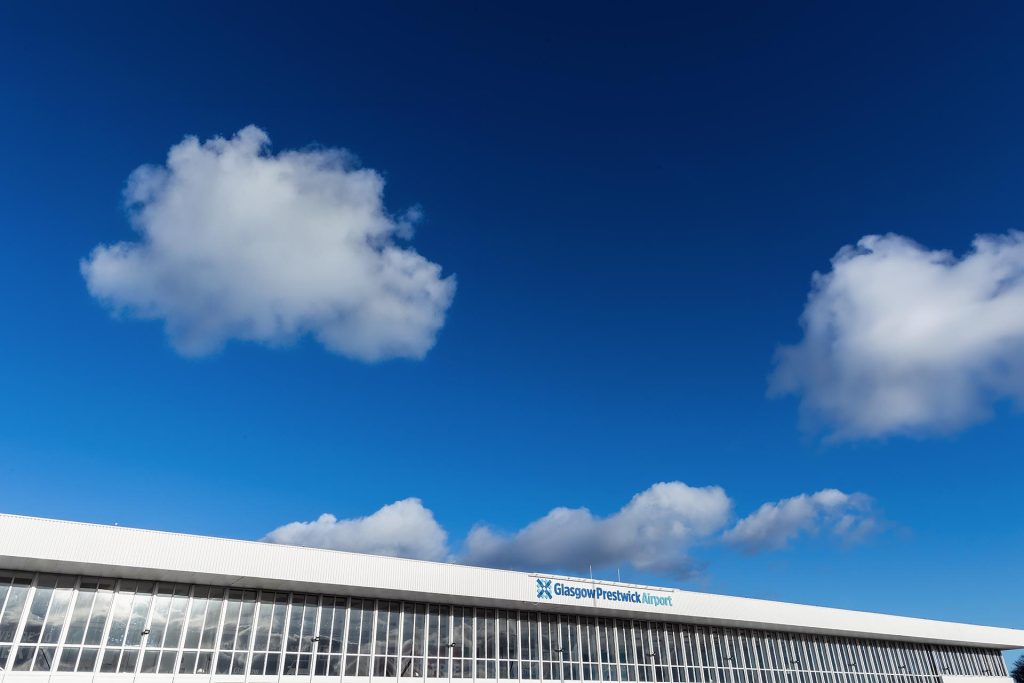
Aerospace emerged as a recurring theme throughout the interview, with Gillespie describing it as one of the fastest growing areas of advanced engineering in Scotland. On Glasgow Prestwick Airport, owned by the Scottish Government, Scottish Enterprise has been working closely with the airport’s leadership, including its former interim chair Willie Mackie.
“Aerospace is a huge area of growth. There’s the investment we’ve made in advanced engineering in terms of repair and overhaul. There’s a huge amount of activity driven by demand. Spirit AeroSystems haven’t moved out. They’re now part of Airbus. And the Aerospace Innovation Centre there is part of Boeing. So we have now Boeing and Airbus as part of that cluster as well.”
Gillespie points to the spring announcement of Ryanair’s £40m expansion with its maintenance hangar and workshops as an example of the jobs the site was generating. Ryanair is Europe’s leading carrier.
“We’ve got a very close working relationship with Ryanair. These are brilliant jobs: 450 in total with 170 classed as assisted workers. This is where our funding can be utilised. The funding allowed Ryanair to recruit 170 from disadvantaged backgrounds.”
Data centres form part of Scotland’s growing AI economy
On data centres, and the increasingly controversial issue of planning for hyper-scale data centres which use a lot of energy, he says Scottish Enterprise’s role was to coordinate development responsibly rather than to subsidise it, pointing to the country’s clean energy and skills base as its main draw.
“We are working with data centre developers across the country and with potential customers as well. We do see data centres as being an important part of developing. We’ve got some brilliant companies that are growing up in Scotland that are based on data and AI, so we have to have that capability in the country.”
Read the recent article on data centres here, also featured in the Autumn edition of The Business magazine.
Scotland’s continued ranking in the EY Attractiveness Survey as the second-best UK location for inward investment outside London gives Gillespie a sense of hope and that the agency is winning investment in a difficult global climate, while helping early-stage companies to scale and compete internationally from the outset. See the EY UK Attractiveness Survey 2026 here.
So, what did Scottish Enterprise ever do for Scotland?
FAQs
1. What are Scottish Enterprise’s three principal economic missions?
Scottish Enterprise is concentrating on accelerating the energy transition, scaling innovation and addressing Scotland’s productivity gap through investment, internationalisation and business support.
2. Why does Adrian Gillespie consider floating offshore wind important for Scotland?
Gillespie believes Scotland can secure manufacturing, supply-chain and export opportunities by developing expertise in constructing, assembling, deploying and anchoring floating offshore wind platforms.
3. How does Scottish Enterprise help Scottish companies grow internationally?
It supports exporting and overseas expansion through Scottish Development International, its GlobalScot network, trade missions, investment programmes and connections with international customers and investors.
4. Which Scottish growth sectors does Scottish Enterprise support?
Its work spans renewable energy, life sciences, advanced engineering, artificial intelligence, robotics, aerospace, data centres and internationally focused food and drink businesses.
5. How is Scottish Enterprise supporting Scotland’s aerospace sector?
Scottish Enterprise is supporting aerospace growth at Glasgow Prestwick Airport through investment in advanced engineering, maintenance, repair and overhaul facilities, alongside developments involving Ryanair, Airbus and Boeing.
Read more of The Big Interviews here.
