
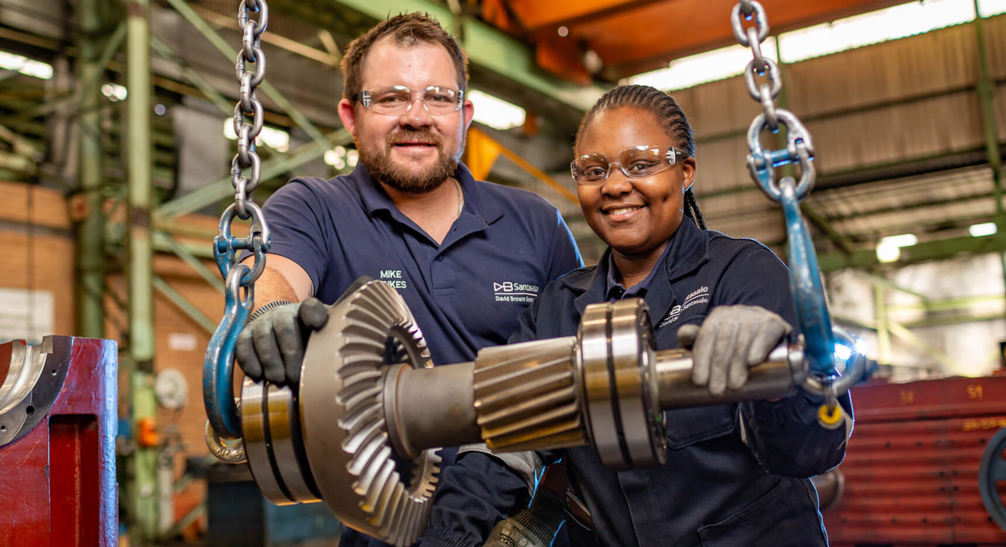
Scotland has the sovereign capability to become one of the world’s leading advanced manufacturing nations, particularly in green precision engineering and industrial manufacturing across defence, automotive, agriculture, space tech, and energy transition. However, achieving this will require attracting investors and the private equity sector to access capital and secure investment.
The defence arm of the iconic British engineering marque David Brown – rescued by East Kilbride-based Clyde Blowers in 2008 as part of its £1bn Textron deal– has been bought by a major German defence company.
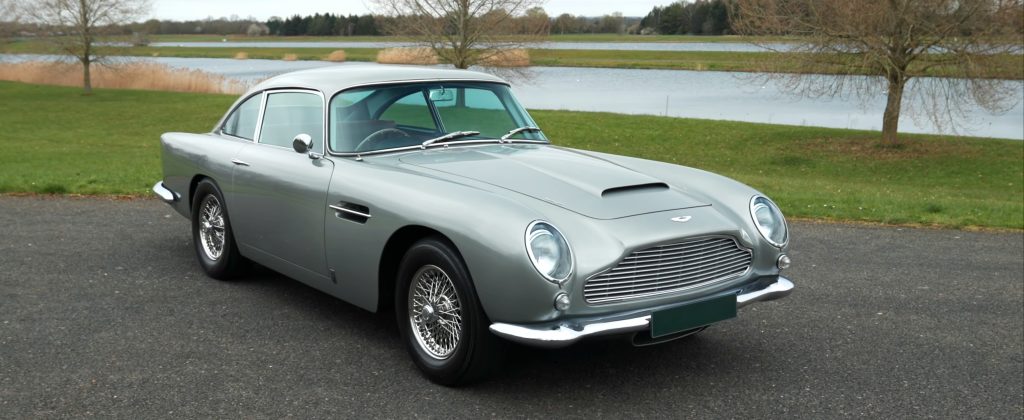
The David Brown Group, based in Huddersfield, has been an established leader as the maker of an extraordinary array of gear boxes for a range of industries. The venerable British name, built up by Sir David Brown, one of Huddersfield’s most famous sons, once owned Aston Martin, with motor aficionados recognising the initials ‘DB’ from James Bond’s iconic DB5.
Its story, and time as a Scottish-owned brand, remains largely untold, and the sale this week of David Brown Defence to German company RENK for an estimated €200m gives an insight into the world of private equity dealmaking.
Its owner, private equity firm US-based Stellex Capital Management, bought David Brown Santasalo from Glasgow-based N4 Group in 2023. The group including Allan Dowie, Shauna Powell, Keith Gibson, and Keith Mitchell, spun-out from Clyde Blowers Capital, and managed a range of private equity assets, including David Brown.
Years before, a rather unusual defence test was revealed to Alex Stewart, then the finance director of Clyde Blowers, when sitting next to Nick Fry, the former managing director of Honda’s Formula 1, and then Mercedes, at a charity dinner. The pair were talking with studied veneration about gearboxes on F1 racing cars, the crown jewels of motoring, and David Brown’s historical involvement in motorsport, when a leading Ministry of Defence guest and a former tank commander sitting opposite, piped up.
“I used to break your gearboxes,’’ he said, interrupting the conversation.
“Ooh! Why was that?’’ inquired Stewart, looking rather non-plussed.
“I was a tank commander and we would wreck the gears.’’
Stewart knew the DB engineers in Huddersfield regularly received cracked and smashed gear boxes, often in several bits, returned by the Ministry of Defence.
“How do you manage that?’’ he inquired, anxious to see if there was a technical solution.
“If you give a young soldier a piece of cool military equipment, he’s going to push it to the limit and beyond. That’s what we do with the tanks,’’ he said.
In the gearing tests for battle tanks, a 60-tonne test vehicle would be driven up and over the top of a sloping bank on full throttle at 40mph. It was literally in the air before the full machine landed on the ground on the other side. The gearboxes and the transmission in British Army Challenger tanks were banged on the ground again under tremendous duress.
This recent deal with RENK, founded in Augsburg in 1873, is poignant because the Germans made the gearboxes for the German Leopard 2 tank. The two engineering companies which once served deadly adversaries during World War Two are being joined together.
David Brown Defence is involved in other capabilities: the drive-train components used in Oberon class diesel electric submarines for the Royal Navy, Australian and Chilean navies which reduce the revolutions of the engine output shaft allowing a ship’s propeller to turn at lower rpm. This military work culminated in the silently-smooth precision of gearboxes for the Royal Navy’s nuclear submarines and the Ministry of Defence’s new generation Type 26 destroyers, produced at BAE’s Scotstoun yard on the Clyde.
“Once it goes into a submarine, you can’t take it out again. It is fitted in as you build the hull, so it has to work. It has to be designed so you can maintain various parts of the gearbox,’’ explained McColl, the founder and CEO of Clyde Blowers Capital.

RENK is gaining access to high-value naval programmes of the next few years, including the Global Combat Ships with up to 34 ships including Type 26 frigates, Hunter Class frigates and River Class destroyers. David Brown Defence’s involvement in these programmes is reflected by its significant order backlog and strong pipeline worth over £700m for the period from 2026 to 2030.
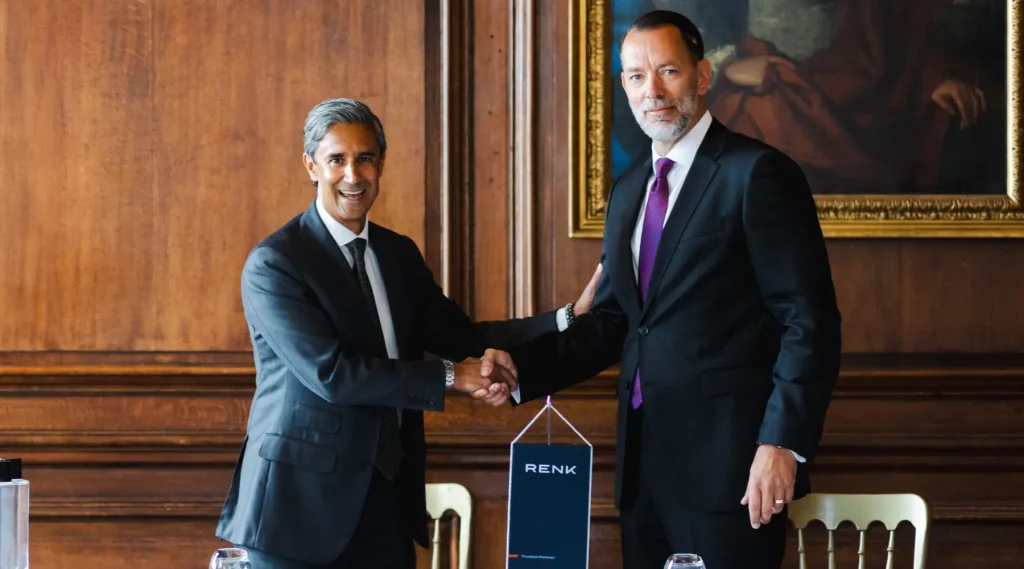
Earlier this week, Dr Alexander Sagel, CEO of RENK Group, and Karthik Achar, a partner at Stellex Capital Management, signed the agreement for the acquisition at the Admiral’s House at the Old Royal Naval College in London.
However, the original David Brown Gears business was much more than military and defence systems.
“The company has a great history but it also provides gears for the mining industry, conveyor drives and mill drives to crush ores down in size also high-speed gearboxes where a motor or engine drives a compressor or a pump and you have a gearbox transmission in between,’’ recalls McColl.
In 1936, David Brown moved into farm machinery, collaborating with Harry Ferguson in the making of the legendary Ferguson-Brown tractor, the world’s first tractor to be equipped with a hydraulic lift. It was a revolutionary idea that changed the face and productivity of farming. According to the David Brown Tractor Club, 1,350 Ferguson-Brown tractors were built, before the two parted company. The first David Brown, the VAK1, was exhibited at the Royal Show in 1939, but it was not until after the Second World War that the factory at Meltham switched back from war-time gear manufacture to tractors.
Days after VE Day in 1945, David Brown, the eponymous managing director, raised a crystal glass to toast His Majesty’s Armed Forces, customers, suppliers and sub-contractors and called for a speedy return to the security of peace and happiness ‘which are the birth-right of all mankind.’
The peace-time in Europe led to a boom in British motorsports and David Brown bought a bankrupt marque called Aston Martin.
“When they bought Aston Martin in 1947, the company was bust. Sir David bought the business for £20,500 and one of the first two cars that they designed and built were the DBR-1 and DBR-2. This was the start of the success story,’’ said McColl.
David Brown went on to buy the Lagonda prestige motor marque and the coachbuilder Tickford. The result was the technically superior, Aston Martin DB1, which won the Spa 24 Hours race in Belgium in 1948. Development continued apace. An Aston Martin DB3 in racing green, driven by Peter Collins and Pat Griffith, won the Nine Hour Sports Car Race at Goodwood in 1952, 1953 and again in 1955. While the Tickford works in Newport Pagnall built the chassis, the Huddersfield workers built the winning gearboxes and rear axle gears.
“Arriving at David Brown with its heritage and being able to rebuild its name and reputation is almost as good as going back into to run Weir Pumps,’’ said McColl.
Throughout the Fifties and Sixties, David Brown was much more than racing cars. It was famed firstly for the DB Implematic and then the DB Selectamatic, in a range of tractors including the 770, 780, 850, 880, 885, 900, 990 and heavier 1200 tractors which became the workhorses for many farmers across the world. From England, Scotland and Ireland, over to Canada, Australia and America, the familiar cab-less David Brown tractor, with its massive rear tyres, six forward and two reverse gears, and a red exhaust chimney, was synonymous with sturdy performance. There were even tractors with caterpillar tracks. The DB 990 Implematic had a 52bhp four cylinder, four stroke direct injection diesel engine. The hydraulic cylinder power lift, with the patented David Brown Traction Control Unit, allowed farmers to perform the essential agricultural activities from pulling a plough, to lifting bales of hay and silage. The company was the third largest tractor maker in the UK with plants at Meltham and Leigh, with four out of every five tractors exported.
DB BOUGHT BY TEXAS CONGLOMERATE
In 1972, the company was taken over by Tenneco, a Houston-based conglomerate who also owned JI Case International, based in Racine, Wisconsin, yet the David Brown hydraulic systems remained an integral part of the larger design. Eventually, this quintessential British name became subsumed into a larger American multinational.
The revival of David Brown Gear Systems in Huddersfield under Clyde Blowers Capital’s management was a careful and sustained project.
“Some would have said that David Brown was clapped out, but for me it’s manna from heaven. It takes years to build a true brand like David Brown, and you can use this brand heritage to re-establish and grow the business globally. This is what we have done with this fine engineering company,” said McColl.
However, returning David Brown to rude financial health required extra effort and an appropriate strategy for change. The opportune arrival of key managers played its part after the sale of ClydeUnion Pumps, formerly Weir Pumps. Many senior people in Cathcart in Glasgow found it hard working within the SPX’s corporate culture and there was an exodus of key managers. Several approached Clyde Blowers about returning to the fold.
“The banking crisis had a detrimental impact on David Brown’s finances. Whereas with the pump business we were able to ride the storm, it was harder in Huddersfield. The business went through a tough few years as demand slumped. Again, we needed a bit of additional money in the company as working capital and to upgrade our machine tool equipment.’’
McColl was convinced that this additional investment with Thomas Burley, joint Chief Executive Officer at ClydeUnion Pumps, and later CEO of David Brown Santasalo, was a sure-fire bet.
David Brown Gears required an injection of between £5 and £8m from CBC’s Fund II. However, two of the largest secondary investors, HarbourVest and Pantheon, with around 70 per cent of the fund, were not keen to invest and concluded David Brown’s potential value was less than Clyde Blowers Capital’s more optimistic assessment. A lower valuation price was agreed and set but both major investors still declined the opportunity to follow their money.
“So we then used their more pessimistic view of value to put our own money in alongside some of the other smaller investors in Fund II. The people who rolled forward with their investment in Fund II will make a good return on their money,’’ said McColl.
As the global economic cycle recovered, the market for transmission systems and gearboxes picked up. McColl and the supportive backers, M&G and Europe PE, were able to secure a good return on their investment. On the marginal extra investment of £4.5 million, the return was as high as 17 times investment, while the secondary fund investors who did not wish to roll forward had their investment diluted. Such are the vagaries and choices of the institutional investment market.
A natural strategic step was to pull together the Yorkshire business with the Finnish windfarm gear-makers, Santasalo. Company profits were rising from £3m to £16.6m a year prior to merger with Santasalo in 2016.
“It worked out to the benefit of the investors who followed their money in a big way. It has grown very nicely and David Brown Santasalo became very well managed,’’ said McColl.
It was then that David Brown Santasalo and David Brown Defence were set up as separate divisions.
CLYDE BLOWERS WIN TEXTRON PRIZE
How did the Scots come to own David Brown? One of McColl’s biggest deals was securing Union Pump which was owned by a large outfit called Textron Inc, a Fortune 500 company. This was a quintessential US conglomerate from the 1960s, voraciously picking up companies in the defence and aviation industry, machine-tool manufacturing, consumer finance and even a greetings card business. It owned Bell Helicopters, Cessna Aircraft and Beechcraft. In the 1990s, it began to focus more tightly on businesses that delivered a higher return. While Textron were staunchly American it made shrewd investments in the UK, including buying Ransomes plc, for $284 million in 1998, the famous lawnmower and turf-care company that sold to the golf course industry.
Textron’s most revered dealmaker was Jack Curran, who had been given the task of looking after Textron’s mergers and acquisitions. He had snapped up David Brown Group plc for $431 million.
“When we were acquiring David Brown I made a number of trips to England and Huddersfield and then after we bought it. I made more trips during the transition, although after this it was left to those in Textron who operated the business,’’ recalled Curran, in a chapter from an unpublished book by this writer.
Textron’s Union Pump was the market leader in centrifugal pumps for the oil, gas and power generation business. It had a workforce of 730 people in four factory locations, in the UK, USA, Canada and France.
Curran became the prime target of McColl’s attention. In 2007, he made a special trip over to the United States, and arranged to see Curran at Textron’s head office in Providence, Rhode Island. Curran who kept himself abreast of the changing landscape in industrial manufacturing was interested in meeting the Scot following news of the Weir Group deal.
A New Yorker, Curran was a lawyer by training but had also studied economics and government at Cornell University. He started work in Textron’s tax department and spent 31 years with the business. [He retired at the end of 2014]. He spent 20 years in business development and M&A working on numerous deals as Textron shifted from being a conglomerate holding company to an operating business, pushing the synergies among the operating businesses.
After an introductory chat, the duo strolled from the downtown Providence office for lunch at XO Café on North Main Street. This was a cosy dining room housed in the historic 1799 John Updike House. McColl gleaned a lot about Textron’s in-house rationale for its M&A deal. It was easy-going company and both got along well.
Armed with this information, McColl benchmarked his own thinking. Textron carried out a regular M&A Status Report, its bible of deals. The firm targeted companies with double-digit revenue and earnings-per-share growth, looking for a return on equity above 17 per cent, and a return on invested capital of over 15 per cent per annum. Potential businesses had to have a debt-to-capital ratio no greater than mid 30 per cent. Curran was not interested in expensive hostile take-over battles. McColl posed a question about Union Pump?
“Look, Jim. Union Pump is not for sale,” insisted Jack.
The discussions remained very civil and they parted after lunch. It was the flowering of a special business relationship that would ultimately have a pivotal impact on Clyde Blowers.
McColl was not put off. Clyde Blowers’ dogged determination was at play. Not long after, he found a reason to go back and see Jack Curran.
“I’m in your neighbourhood again this week. Can I return the favour and buy you dinner?’’
BUSINESS IS NOT FOR SALE!
McColl offered to pick up the tab and they went to one of New England’s finest eateries at Castle Hill Inn, 25 miles from Providence and a few minutes outside Newport. The dining room in the historic white-washed mansion on Ocean Drive overlooks the impressive spans of Newport Bridge and sits on a promontory where Narragansett Bay meets the open sea. It was a seafront haunt for New England’s rich and influential. McColl told Curran about Clyde Pumps’ latest development working with CNPEC (China Nuclear Power Engineering) to supply critical safety pumps to the Hongyanhe and Ningde 1000MW nuclear power stations under construction, worth £19.5 million. Curran was duly impressed. When McColl politely prodded again about Textron’s position, he hit a stone-wall response.
“Sorry Jim, the pump business is not for sale.’’
A few months elapsed and McColl was back in New York pitching to potential fund investors, when he called again, offering to meet during a busy day.
“I’m back over in New York City. Can we meet up for coffee?”
Curran liked the Scot’s tenacity and wanted to share some inside news that the pumps division was no longer viewed as a strategic operating business. Perhaps the Textron directors, including chief financial officer Ted French, had sensed the growing interest and McColl’s rationale about building market share. However, if they were going to sell, they needed to ensure they were getting the best possible price for the assets of a public listed company.
“Look, Jim, you’re wasting your time speaking to me about us selling the single pumps business …” Then he uttered the magic words. “because the only way we would sell this is if we sold the whole Fluid and Power division of Textron.”
“What?’’ gulped a temporarily-stuck-for-words McColl.
An opportunity was suddenly in play although Textron, much to McColl’s annoyance, was instigating a proper sales process rather than a private deal. Undaunted, McColl was keen to respond with an offer. His mind flashed quickly across the assets and brands. He knew them all well. While the Fluid & Power division housed the target company, Union Pump, it also included David Brown Gear Systems, based in Huddersfield and employing over 1,000 people in 11 countries; the David Brown Hydraulics business, which had been split from the transmission division and was based in Poole, where another 119 employees worked; and Maag Pumps, based in the village of Oberglatt, 17 minutes north of Zurich’s mainline station in Switzerland. The firm employed 275 people in seven countries.
However, it was the ‘DB’ initials that fired McColl’s interest. As a motorsport aficionado, he knew all about the mystique of the Aston Martin DB marque. The DB5 was the original James Bond car which first appeared in Goldfinger. Potentially, this was a supreme deal with four terrific businesses. Appropriately, this was dubbed Project Bond.

The Textron companies had a bewildering range of 47 subsidiaries across 20 countries, including an intriguing business called Cone Drive, that would play a part in the future. The immediate prospects were simply too good to miss. Simultaneously, Clyde Blowers had been progressing with negotiations about raising the money for the second fund. Jim McColl and his colleagues Bill Thomson, Alex Stewart and xxx Lees had defined the exact criteria for the businesses in which they planned to invest.
SCOTTISH PRIVATE EQUITY FUND SECURES PRIZE
Instead of Clyde Blowers raising a blind ‘primary’ fund, built by buying one business at a time, here was a complete set of businesses that would become a ‘secondary’ fund.
“We already owned Weir Pumps, which we were warehousing to put into the fund, now, in one fell swoop, I could land four others,’’ said McColl.
The key difference with a secondary fund is Limited Partners (LP) investors undertake their own diligence of the targeted acquisition to ascertain if they wish to be involved. Here the story goes into over-drive, with Keith Gibson firmly in the driving seat in pulling together the investment finance.
“I went back to David Atterbury at HarbourVest. Now we had six potential assets and it was a very different proposition and his ears picked up. David introduced us to a couple of other people, including Pantheon.’’
In parallel, Clyde Blowers required bank funding and Gibson was dispatched to meet with RBS, Bank of Scotland and HSBC.
“This became a circus. You now have a whole bunch of equity providers looking at a secondary deal, and we were trying to feed that machine with information and a bunch of banks who needed to be fed with financial data and figures. Simultaneously, we are still trying to run a deal to buy the six companies, and create a fund structure,’’ said Gibson.
Arching over this, the fund required the approval of the UK regulator, then the Financial Services Authority. Each key Clyde Blowers individual had to be approved by the FSA.
“It was seat of the pants stuff. We were raising a fund and putting together the regulatory frameworks and structures for the FSA. Then we are arranging all the debt and the equity. We were also undertaking the diligence on each business,’’ said Gibson.
This was a fundamental switch of direction for Clyde Blowers Capital with the fund aiming for a cap of £250 million. The cornerstone investors along with HarbourVest Partners were Pantheon Ventures, a London-based private equity fund-of-funds manager, Swiss-based LGT Capital Partners, AlpInvest, based in Amsterdam, one of the largest private equity firms in Europe, and the Bank of Scotland.
“I wanted to merge Union Pump and Weir Pumps. Now with Project Bond we had the chance of gaining three unexpected firms that fitted our fund criterion. We still had Clyde Bergemann, but we had a much smaller share of this, although we were running it and getting management fees. So we started negotiating with Textron,’’ said McColl.
Clyde Blowers noted interest, but Curran was unimpressed by the original indicative offer. “His first non-binding indication of interest was not competitive. I told him that. I certainly appreciated the time he had put in but, unfortunately, he was not competitive,’’ said Curran.
THE PRICE HAD TO BE RIGHT
From this point, Curran began to appreciate the McColl mettle and that he was a man who stuck to his word. McColl asked for 48 hours to re-think his financial position. Curran responded by saying if McColl could revise his thinking, then they could happily continue discussions.
“He came back within 48 hours with a more realistic offer and we moved from there,’’ said Curran.
While Jack was taken with the Scotsman’s professional demeanour, he warmed to his friendly personality. He was easy to get along with, although the focus was always on business.
“My view of Jim is that he gets along well with people. He has a very good personality. Everyone that I know thinks very highly of him. He was always well prepared too,’’ added Curran.
While Curran was extremely helpful he was a wily player guarding Textron’s interests. He worked closely with Ted French and the teams in legal, finance, human resources, meeting on a regular basis to review the status of the deal.
“One of the strengths of the Textron process was we really worked as a close-knit team,’’ said Curran.
This was competitive and it remained like this until the ink was on the contracts. Clyde Blowers were not the only potential buyer and, at the start, the group were virtually unknown in the United States.
“We had to do a little research on this and determine who it was and who Jim McColl is. We could only find out certain information and a lot of the comfort came from my discussions with Jim, Shauna and the other key people at Clyde Blowers,’’ said Curran.
Curran and his Textron guys learned McColl was highly efficient. “When Jim sits across the table he doesn’t want to play a lot of games. He wants to figure out the major issues and what needs to get done. It was complex and we all wanted to focus on this and resolve issues as quickly as possible,’’ he added.
Minor matters were delegated to the rest of the Textron-Clyde Blowers teams who we expected to co-operate and fix things amicably.
“We went through a whole process looking at the business, doing early due diligence. We were back and forth to Textron,’’ said McColl. “Textron were selling the whole fluid and power division and much of it was sharing resources because they’d put it into a single division and they had divisional services there that went across all the businesses. If you just wanted one division, it was difficult to peel it out. You had to separate them out first. So we had to work hard at getting in pole position.’’
ON THE EVE OF BANKING CRISIS
In early 2008, the Newcastle-based lender Northern Rock bank, which had collapsed in September the previous year, was rescued and nationalised by the UK government. It was a measure of things to come. The UK’s financial press had been mesmerised by Edinburgh-based Royal Bank of Scotland’s audacious battle with Barclays to win the Dutch-bank ABN AMRO. However, the RBS consortium, including Santander and Fortis, led by Sir Fred Goodwin, delivered a Pyrrhic victory that would have monumental consequences for the UK economy.
From January 2008, the international markets begin wavering and, in March, the New-York investment house Bear Stearns, saddled with billions of toxic assets on its balance sheet, was in serious trouble. It was not just RBS that had over-stretched its ambition and was in danger, its Scottish rival, HBoS, chaired by Lord Dennis Stevenson, was on the ropes. Alarmingly, this was Clyde Blowers’ main banker.
A deepening issue was banking liquidity and a freeze on lending which continued over the summer. The falling asset values and share prices meant continual renegotiations. Textron viewed this as a private equity sale in a softening financing market and insisted on it remaining a competitive process. However, as the sale price dipped Clyde Blowers’ became the preferred bidder.
“Whenever we had tough discussions, I insisted on doing it face to face in Rhode Island rather than by conference call. You have to be sitting with people to sell an idea. In all, I went there about ten times,’’ said McColl, in a post-deal interview.[1]
The SCF Partners stake in Union Pump was also giving Clyde Blowers some extra financial headroom. But the credit crunch was worsening. Fortuitously for both sides, Curran insisted on a funding provision that would eventually secure the deal for the Scots.
For a decade, the Scots nurtured the David Brown businesses, and now David Brown Defence, has been acquired by RENK Group AG. David Brown Defence employs around 530 people and is positioned as a key supplier to some of the most important armaments programmes for the UK and allied armed forces. The transaction is subject to the standard official approvals and is scheduled for completion later this year. Both parties have agreed not to disclose any information regarding the purchase price.
“We are very pleased to announce the acquisition of David Brown Defence by the RENK Group AG. RENK brings significant experience in the defence engineering sector and recognises the strong growth potential of the business. We are confident that the combined technological know-how and operational synergies will enhance the service we are able to offer our customers. We look forward to this exciting new chapter at David Brown Defence,” said Mike Helme, CEO at David Brown Defence.
[1] Sunday Herald, 2008.