
With Scotland’s maritime story mired in the mess over the building and operations of Hebridean and Clyde ferries, it is welcome to hear of a more positive initiative concerning commercial ship design.
A coalition of maritime industry leaders is urging the Scottish Government to seize Scotland’s share of the trillion-dollar clean shipping market.
The group, which includes Strategic Direction Maritime, Smart Green Shipping, ZEM Fuel Systems and Shetland based G-NRGY, says the nation’s funding ecosystem needs to capitalise on existing opportunities and ensure high-potential Scottish companies in the sector aren’t lost abroad.
In its report, Shipping Scotland’s Expertise to the World, the group has set out a series of recommendations for streamlining Scotland’s funding pathway to accelerate growth for firms with proven technologies for cutting international maritime emissions.
Underpinning its recommendations is a revised funding framework for Scotland’s public investors. Named for the 58 stars that maritime navigators historically used to set course at sea, the ‘Selected Stars Programme’ would identify SMEs with demonstrated commercial viability – particularly in capital-intensive sectors like climate deep tech – and provide them with a joined-up investment pathway across stages as they prepare to commercialise.
Key recommendations include:
- Providing working capital and development expenditure to close deep tech commercial contracts and build private investors confidence.
- Positioning the Scottish Government as a cornerstone investor, unlocking growth capital from other private investors who cannot lead.
- Establishing clear funding continuity through a joined-up, end-to-end investment pathway which avoids the cycle of repeated fundraising that’s inhibiting some of Scotland’s most innovative companies.
- Building sector-specific maritime expertise to improve investment decision-making through education within government and financial institutions.
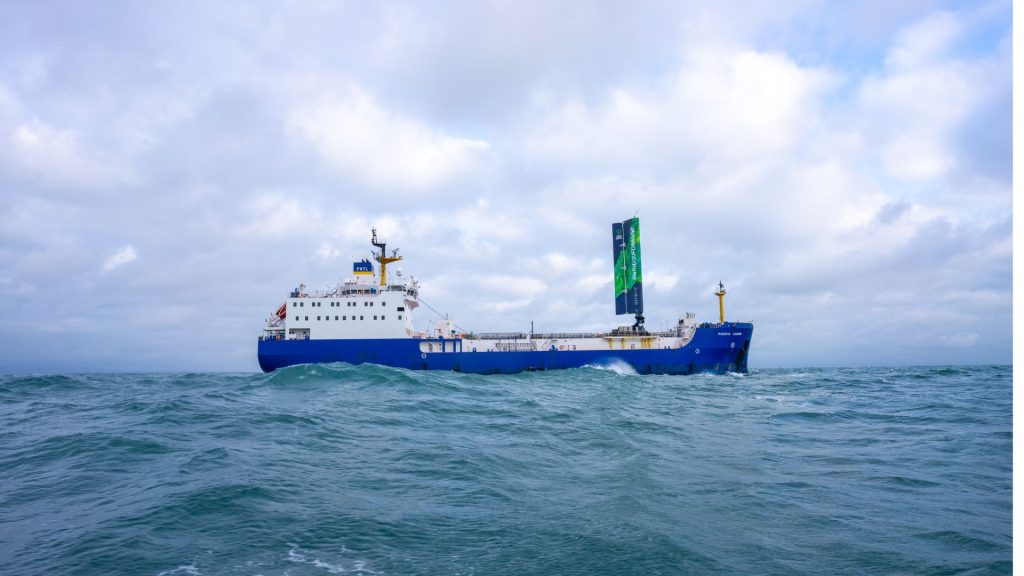
International shipping urgently needs clean energy alternatives to address its 3 per cent share of global greenhouse gas emissions. Industry leaders point to a significant market opportunity, estimated by the Global Maritime Forum to be $1 to $2 trillion, across a global fleet of more than 109,000 ships. Wind propulsion alone is projected to represent a $40bn market by 2034, making it a significant area of opportunity for Scotland to lead on reducing global emissions while growing its economy.
The report was published following a roundtable discussion – convened by Glasgow-based Smart Green Shipping and hosted by marine services company Malin at its headquarters on the banks of the Clyde.
The coalition will convene in July for a second roundtable, hosted by Scottish Enterprise, to discuss further ideas for collaboration and outline the next steps with public funding bodies and government.
Patrick Carnie, Consultant at Strategic Direction Maritime and Roundtable Chairman, said: “Scotland’s maritime innovation is world-class, but without patient, risk-tolerant capital, promising start-ups will stall at the quayside – never reaching the scale the world’s maritime sector demands.”
Di Gilpin, founder and CEO of Smart Green Shipping, said: “There is enormous growth potential in firms working to solve the most urgent challenges in global shipping – whether climate-related or linked to the current energy market volatility that’s arisen from the Middle East conflict.
“Scotland already has the ingredients to capitalise on this with proven technologies like wind propulsion and biofuels, along with established cross-sector skills and capabilities in renewable energy, oil and gas, and high-value manufacturing. But without the right funding conditions in place, promising maritime companies are forced to commercialise overseas or go bust.
“This means the Scottish taxpayer doesn’t see return on early-stage investment. We need an ambitious and joined-up funding ecosystem that enables more early-stage R&D investment to grow and thrive here in Scotland.”
George Karsten Irvine, CEO of G-Nrgy, said: “While there is widespread recognition of the challenges that growing firms in our sector face, there is less recognition about how to solve them. These proposals are informed by real-world models in countries like Norway and Finland that have successfully grown their maritime industries. They offer both government and public investment bodies a solid foundation from which we hope to build with them collaboratively.”
Damiano Bonaccorso, Senior Technology and Commercial Officers at ZEM Fuel Systems, said: “Selected Stars matters because it focuses on companies that are close to market, technically proven and capable of delivering near-term impact – rather than asking climate deep tech to align with outdated venture capital models.
“Crucially, we’re not asking for government to take on more risk or provide new capital. These practical adjustments instead offer a clearer pathway with better support for promising companies at the stages where they need it most.”