

How co-operation powers Shetland’s Island’s mussel industry: Every one of the Shetland boats is family-owned and worked by the family.
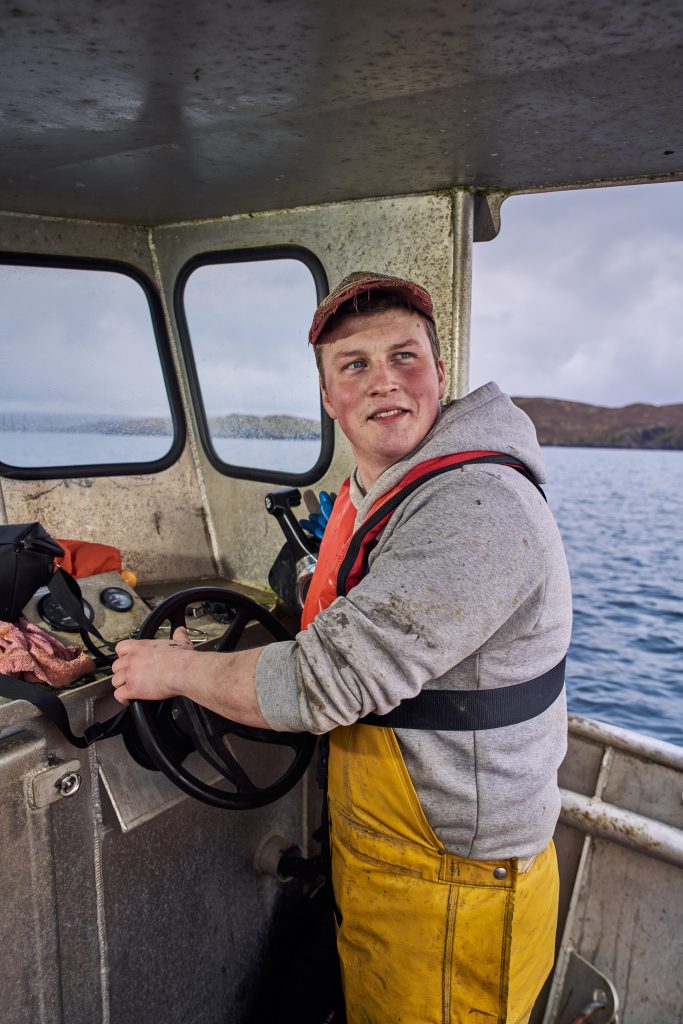
On a brisk and breezy summer morning, Kenny Pottinger steers his locally-built aluminium Voeboat out of Scalloway harbour in Shetland. He’s heading out to check the attachment of spat [very young shellfish] on the long strands of rope dipped into the sound. He tucks in for shelter under the craft’s open canopy and pulls on the throttle as the boat zips through the spray towards the island of Trondra.
Pottinger, a former trawlerman, has been the owner of East Voe Shellfish for more than 20 years, working with his brother on growing these delicious mussels. As much as 85 per cent of the mussels consumed in the UK, including the moules mariniere and moules frites in urban eateries, come from these pristine Class A waters around Shetland.
The inshore waters are refreshed by constant exposure to the Atlantic and the North Sea, so the level of micro-hygiene is extremely high. This is important because a growing mussel can filter 40 litres of water each day as it feeds on natural plankton.
“It takes between two and three years to grow from the spat [the seed] to a full-grown mussel that we can harvest. We’re out most days checking the sizes and the stages of growing.
“Every year is different; we put ropes down and we used to get spat every year in May and early June. Now it’s less predictable. Last year we had the best spat, the year before the worst,” says Pottinger.

East Voe Shellfish is a member of the Scottish Shellfish co-operative, based in Bellshill, in Lanarkshire, and the Pottingers’ marine bounty is brought ashore, cleaned and shipped to Billingsgate in London.
Mussels differ from other bivalve molluscs such as oysters, which filter 150 litres of water each day. An active single mussel throws out a spider’s web of byssal thread or filament which anchors them onto each other, rocks and other solid objects.
These threads are extraordinarily strong and stretchy, allowing the mussel to survive in tidal zones and move around freely.
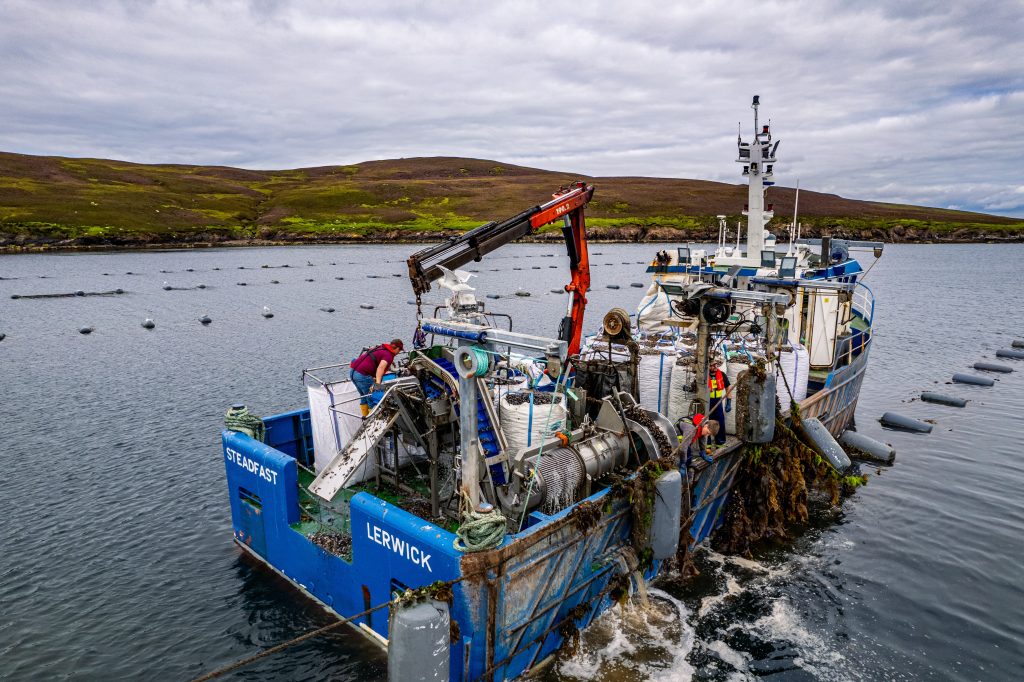
In Shetland, millions of mussels attach themselves to hundreds of lines of ‘dropper’ rope in up to 10 metres of water between an array of floating buoys. The mussels feed on the phytoplankton. In all, there are around three million metres of rope holding growing mussels in Shetland’s waters.
Blueshell Mussels takes Shetland seafood to UK markets
Further north at Brae, Blueshell Mussels, another co-operative member, is now the UK’s largest producer of rope-grown mussels, harvesting a large percentage of the 12,300 tonnes of Scottish mussels farmed each year. The value of Scottish mussels and oysters is around £15m a year and increasing.
Blueshell is next door to Scottish Shellfish Brae, a processing facility where thousands of mussels are cleaned, graded and packed into net containers.
A refrigerated lorry and trailer wait for up to 27 pallets of mussels, ready to make the Aberdeen ferry before reaching Billingsgate the following day.
It’s an extremely tight schedule with the deft workers in the packing shed working at full pelt to fill their tubs. This week, the plant is sending 44 tonnes of Shetland mussels to market.

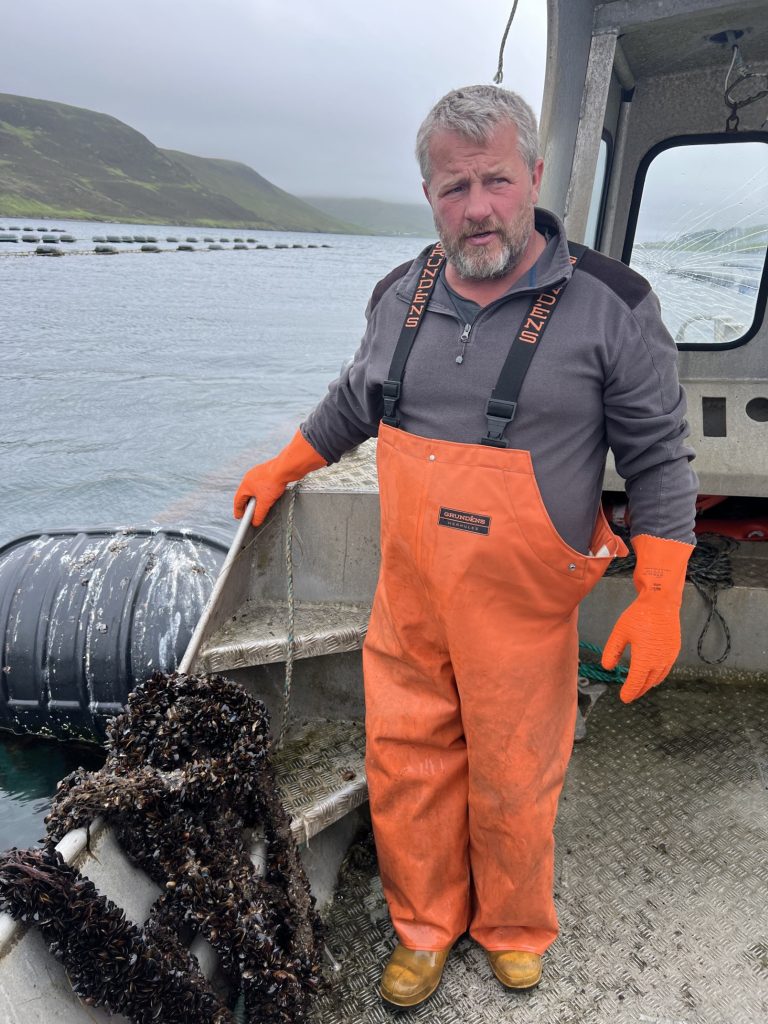
Sam Laurenson, born in Muckle Roe, is a young Shetlander who has grown up with the mussel industry. Initially he went off to study architecture, but returned in 2013 and joined the Blueshell Mussels business, working alongside his father, Michael Laurenson, and his uncles who pioneered this industry in the 1990s.
“The more I work here, the less I seem to know. Every day is a school day learning about mussels and how we sustain this local seafood and prepare it for national and international markets,” he says.
We’re out most days checking the sizes and the stages of growing. Every year is different
— Kenny Pottinger

How the Scottish Shellfish co-operative gives farmers scale
Approximately 75 per cent of mussels harvested in Scotland are organised through the farmer-owned co-operative, marketed collectively as Scottish Shellfish, an organisation set up 35 years ago and owned and run by members.
“In the late 1990s, early 2000s, a lot of mussel farms on Shetland were independent and were pushing for the same markets. There was so much competition and poorly-used resources that it wasn’t working.
“So they combined forces and were then able to handle the distribution from a central point. This allowed the co-op, now with 14 members, to deal directly with big buyers such as supermarkets,” says Laurenson.
A locally grown source of protein and essential nutrients
Edinburgh-based Kelly Wright is the Scottish Shellfish ambassador who works on behalf of the industry to raise awareness of the “wonderful farmed protein that we have in Scotland”.
She points out that mussels and oysters are delicious, natural superfoods and that the farmers are preserving a vital source of nutrient for consumers.
“Global geopolitics are risking our food imports. Scottish shellfish are grown locally, harvested around the year, independent of imported grain or soy, and are a fine source of protein. With many people in the UK facing a deficiency in iodine, iron and vitamin B12, mussels and oysters are ideal. They provide 13 micronutrients and Omega 3s, which make then a low-impact food for us,” she explains.
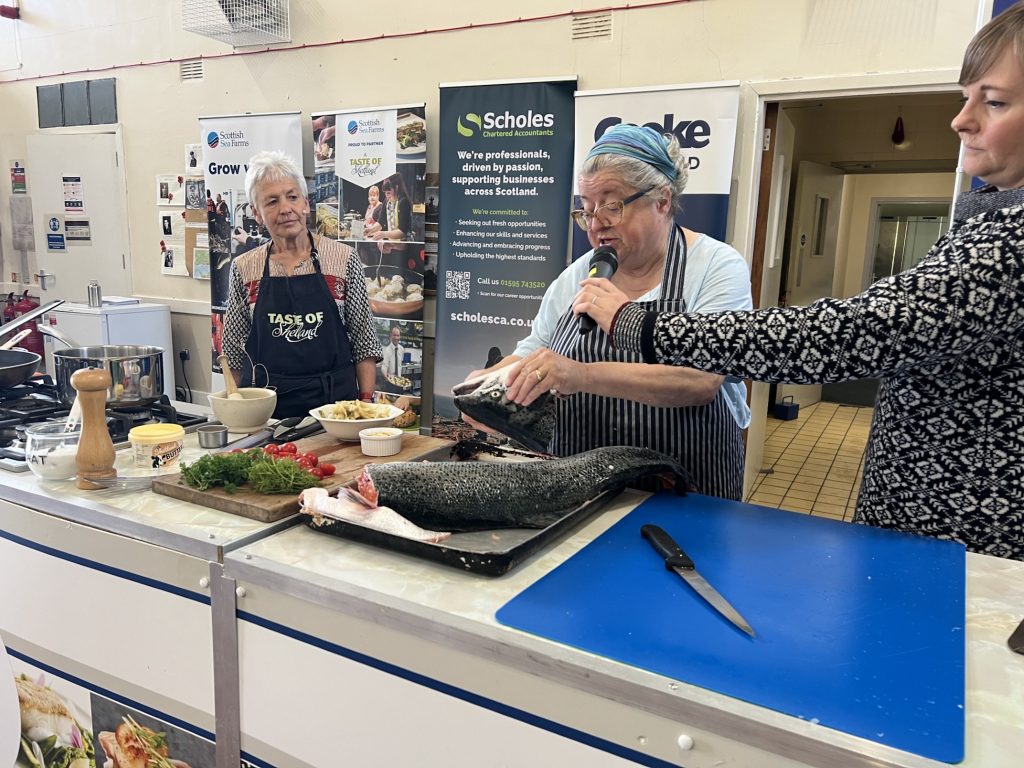
Laurenson is also an excellent chef and steps up to the hobs at the Taste of Shetland Seafood Festival, in the drill hall of Fort Charlotte in Lerwick, to give a cooking demonstration of how to make mussels with a white-wine sauce.
He is featured alongside CJ Jackson, the ebullient fish chef and food writer, and head of the Billingsgate Seafood School, and Marian Armitage, local chef and the chair of Taste of Shetland. They have come to encourage more Shetlanders to embrace shellfish recipes.
“I really enjoy taking our fresh seafood and turning it into something delicious for people to enjoy,” explains Laurenson, after serving up a chilli-inflected mussel.

Stewardship of Shetland’s seas
The co-operative model works in this remote location. It co-ordinates a year-round supply and quality assurance recognised and certified by the Marine Stewardship Council (MSC). Purity is paramount, with every batch tested in-house for marine and bio-toxins to ensure consumer safety.
Gaining a lease and a licence for a mussel farm in Scotland is a complicated process, partly due to planning and environmental legislation.
Mussel farmers face the same kind of legislation as a salmon farm, even although the mussels grow in a natural environment nutriment rather than being fed by humans.
The MSC works internationally to award certification for the provenance of the shellfish, including oysters and scallops as well as mussels.
George Clark, MSC UK and Ireland programme director, explains the three tenets of the organisation: to ensure healthy fish stocks are maintained at a sustainable level; to ensure that the wider marine environment including the sea-bed and other fish and mammals are protected; and to manage stock depletion by ensuring reducing catches.
Such a reduction was recently advised when mackerel stocks around the shores of the UK were dwindling. Supermarkets were required to curb sales until fish stocks improved again.
“It is imperative that we have healthy fish stocks for future generations. Our certification covers around 25 per cent of the total fish landing in the UK. We want more fish, both wild and farmed shellfish, to be landed sustainably,” he says.
The MSC certification covers wild fish and ‘enhanced state’ fish, which is from mussel and scallop farms. Enhanced means that the mussels are grown naturally in sea water without the feeding or medication required for farmed salmon, which is covered by the Aquaculture Stewardship Council (ASC).
Alongside the brilliant produce, there is a wealth of knowledge about sustainable fishing
— Eleanor Adamson
Dr Eleanor Adamson, programme manager for The Fishmongers’ Company, one of the livery companies of the City of London, works in its Fisheries Charitable Trust and attended the Seafood event in Lerwick.
The trust develops projects and relationships across the wild fisheries and aquaculture sectors, supporting education and science initiatives that promote an understanding and appreciation for healthy freshwater and marine ecosystems.
She is also chair of the expert advisory panel of the Westminster all-party parliamentary group on fisheries, sits on an external advisory board at Plymouth University, and is involved internationally in fisheries and aquaculture science and trade related issues.
“Coming up to Shetland is something special for those of us in the fisheries industry. Alongside the brilliant produce, there is a wealth of knowledge about sustainable fishing across shellfish, farmed salmon and wild fishing. We really need to get the message out to more people in the UK about the choice and variety of the seafood around our shores,” she says.
Adamson is a judge of both the Marine Stewardship Council’s UK awards and the Association of Scottish Shellfish Growers’ best farmed Scottish shellfish awards. Shetland Shellfish Management Organisation (SSMO), which manages and regulates fisheries within the six-mile limit, is working with MSC Accreditation for the sustainability of crab and king scallops.
“I’m hoping I’ll get support from Fishmongers’ Hall in London for the new regulating order,” she says.
Why Lerwick is the UK’s fishing hub
Fishing is still viewed as the golden thread of Shetland’s economy. While the oil industry brought massive levels of prosperity and rural infrastructure, the waters around the islands are still rich with both fish and shellfish.
On any given day, boats at Lerwick fish market, owned by the Lerwick Port Authority, land up to 32 different species of wild-caught fish, including haddock, whiting, cod and saithe. Lerwick and Scalloway are massively important for feeding the UK.
“We land more fish here in Shetland than the rest of England, Wales and Northern Ireland combined. More than 50 per cent of all fish caught in the UK is caught within 50 miles of the Shetland islands,” says Sheila Keith, executive officer at the Shetland Fishermen’s Association, and a vice president of the Scottish Fishermen’s Federation.
Look at the Faroes and Iceland, they are proud of their fishermen. We need our government to stand up and give us some credit. That’s all we want.
— Sheila Keith
Each delivery to the chilled bays at Mair’s Quay is sold via an electronic auction system, with fish buyers as far off as Dubai and Hong Kong online. When a white fish boat goes out, the crew will catch between 10 and 12 species.
When a bigger pelagic boat goes out to sea it will mainly be fishing for herring and mackerel. It’s a gamble every time they go out. The skippers have to ensure they have caught just enough of their quota and are not overfishing.
In Scotland, the fish and chip shops sell more haddock than cod, which is popular in the south in England.
“We only catch 50 per cent of our haddock quota in the waters around Shetland,” says Keith.
There are 450 fishermen in Shetland and the industry is still able to attract young people willing to work in the hardest sea conditions, because the pay is still good. The average age is 38, bucking the trend in the rest of the UK, where the average age of a fisherman is over 50.
However, the local fishing organisation believes that the Scottish Government has been more supportive of foreign-owned salmon farms exploiting the sea lochs of Scotland than on helping the indigenous trawling industry.
“Every one of our boats is still family-owned and worked by the family. There are boats such as the Copious and the Prolific, who head to sea, out for three to four days, and typically our fish prices are higher than in Peterhead. While the men do the catching, the women do a lot of the paper and regulatory work on shore. There are women working on the in-shore boats though,” says Keith.
Shetland islands’ foresight in setting up a sovereign wealth fund from the oil industry resulted in reinvestment in the fishing industry. Every barrel of oil which came ashore at the Sullom Voe terminal ensured money for Shetland Council.
Keith started her career in economic development just as this was taking off. “My job was to invest that oil money in Shetland businesses. I learned a great deal and know a lot of people in the fishing industry. We need to ensure that the fishing industry remains sustainable.”
The investment challenge facing Shetland’s fishing fleet
However, she says it has become harder to find investment for the fishing fleet and many of boats are now ageing, requiring money for replacement which is difficult to come by.
“We need a Scottish Government to stand up for our fishing fleet. If you are wealth building in Scotland, fishing is the way to do it here in Shetland. Most of the wages go right back into our local economy.”
In 1989, 15 new boats, supported by oil funds, were built for the Lerwick fleet, costing around £1m, within a four-year period. Today, a new fishing trawler costs between £5m to £8m, and there are few places in the UK to build these specialist vessels. The last investment was in a boat built in Croatia.
Shetland has a unique regulatory order for the protection of the shellfish industry, out to six miles around its shore. “It means we can manage that more sustainably for the future and protect it from any nomadic fleet,” says Keith.
Competition for Shetland’s inshore waters
There are concerns, however, about congestion in the inshore waters with various operators vying for clear waters where scallops and crabs are still growing.
Keith believes Scotland’s aquaculture industry is better funded and more organised at a national political level, and this gives it more political clout. It’s an unfair contest, she says, with large international companies up against self-employed fishermen in coastal harbours.
“It’s not really right and I’m not sure in the Scottish planning system the voice for the self-employed fisherman is being properly heard.”
She points out that the Norwegian aquaculture minister has already stated they do not want farmed salmon farms to be expanded in Norwegian waters because there are growing concerns with husbandry and the sustainability of salmon farming. Keith is also very concerned about the effect of offshore windfarms on spawning stock.
She points out local fishermen, who have been a trawlermen for 40 years, need the Scottish and UK Government to properly support the wild-caught fishermen.
“Stand up for us. Look at the Faroes and Iceland, they are proud of their fishermen. We need our government to stand up and give us some credit. That’s all we want. We are not asking for money, we only get paid when we go off and bring the fish in. We’re not asking for handouts. We want recognition as an industry that can stand up for itself.”
Back at Brae, the truck is loaded with mussels before setting off to catch the overnight ferry to Aberdeen, taking premium shellfish to the top tables of London and the south-east of England the following day.
FAQs
Why is Shetland well suited to mussel farming?
Shetland’s inshore waters are continually refreshed by the Atlantic Ocean and North Sea. Mussels grow naturally on submerged ropes, feeding on phytoplankton in clean, nutrient-rich water without requiring imported feed or medication.
How important is Shetland to Scotland’s mussel industry?
Shetland is a major centre for Scottish mussel production. Blueshell Mussels is described as the UK’s largest producer of rope-grown mussels, while around 12,300 tonnes of Scottish mussels are farmed annually.
What does the Scottish Shellfish co-operative do?
Scottish Shellfish is a farmer-owned co-operative that brings together producers, co-ordinates supply, maintains quality assurance and markets their shellfish collectively. Its scale allows members to deal directly with supermarkets and other major buyers.
Are Shetland mussels sustainably produced?
The mussels grow naturally in seawater and feed on phytoplankton. The co-operative’s production is certified by the Marine Stewardship Council, with batches tested for marine biotoxins to protect consumers and maintain quality.
Why is fishing important to Shetland’s economy?
Fishing supports employment, family-owned businesses and spending throughout the islands. Lerwick and Scalloway land substantial volumes of wild-caught fish, while mussel farming and seafood processing connect Shetland with markets across the UK.
Read more of Business articles here.