
Scotland pays wind farms to switch off. In 2025, around 8.8 TWh of generation in Northern Scotland was curtailed, almost 40% of what those turbines could have produced. Across Britain, the cost of managing these grid bottlenecks rose to £1.7 billion in 2024/25, paid through everyone’s bills. Behind that bill is a pattern: the power we waste is typically replaced by gas generation in the south, so we pay to throw clean energy away and then pay to burn gas instead. The question worth asking is what we do about it.
I believe the issue is less the wind than where the demand sits. For two decades Scotland has generated power and sent it south, and much of the value that power creates, the jobs, the investment and the tax base, has gone with it.
New transmission will help, but lines can take the best part of a decade to plan and build. There is a faster option alongside them, which is to place large, steady demand next to the generation. Data centres are the clearest candidate. The cloud services and AI tools that businesses rely on need electricity around the clock and at scale, and Scotland has an abundance of it.
Fintan Slye, chief executive of the National Energy System Operator, has argued that data centres in Scotland could ease pressure on the network, lower costs for consumers and make better use of renewable energy.
Using that electricity closer to where it is generated means less spent on constraints, less clean power wasted and a stronger investment case for the next generation of renewable projects.
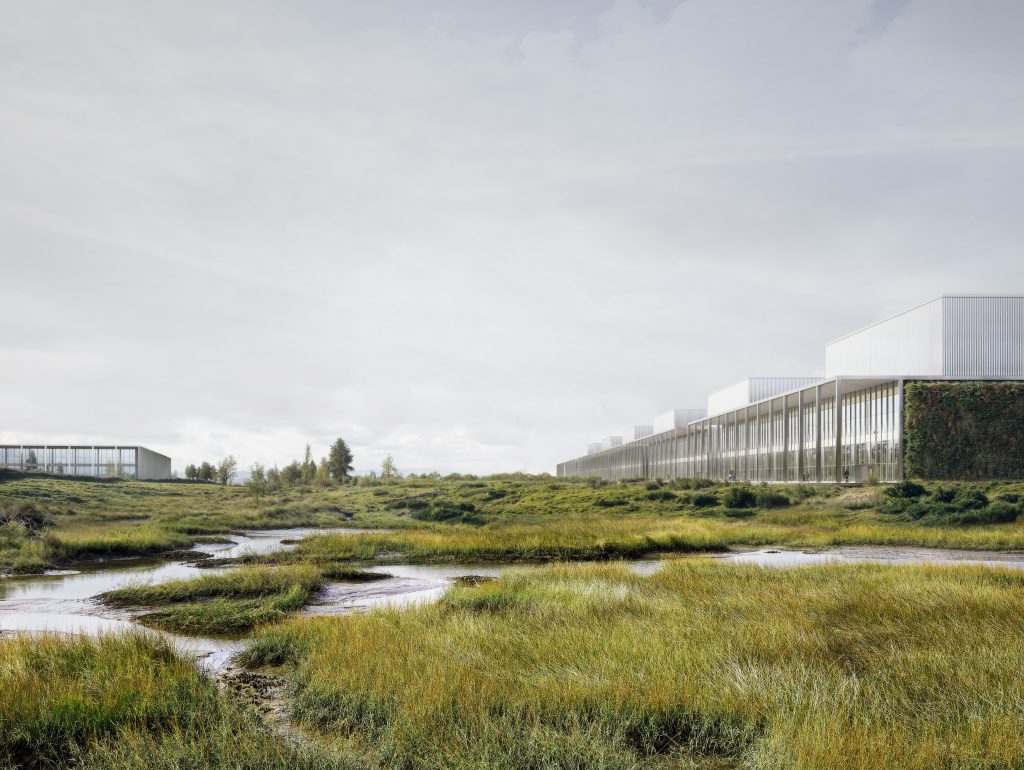
ILI Group has spent more than two decades developing clean energy projects in Scotland, and we are now bringing forward The Stoics, three proposed green hyperscale data centres in Fife, Ayrshire and North Lanarkshire, all with arrangements in place for early power.
The economic opportunity is significant. Independent analysis by BiGGAR Economics of our three Stoics projects estimates £1.8 billion of gross value added for Scotland during construction, with an estimated £2.55 billion of contracts that could be captured by Scottish businesses. Once operational, the projects are forecast to support around 1,330 jobs, including more than 300 on-site roles with average salaries above £50,000, more than 50% higher than the Scottish average, and around £80 million a year in non-domestic rates. We are also putting £20 million from each site, £60 million in total, into the ILI Foundation. Once the projects go ahead, it will support 3,000 apprenticeships in any industry, not just data centres. We want local people to share in this opportunity, whatever career they choose.
Delivering that depends on planning certainty. The Scottish Government is working on guidance that will assist the planning process and, I hope, give developers, communities and planning authorities the clarity they need.
Projects of this scale draw scrutiny. Communities are entitled to ask hard questions about water, noise, landscape and nature, and I believe our industry should welcome rigorous environmental assessment as the way to answer them. Confidence is earned by showing the evidence, and we intend to.
Operators choose where to build on the price of power, the speed of connection and the certainty of consent, and they have options across Europe. Scotland’s renewable energy gives us a genuine advantage on the first. Winning this investment depends on matching it on the other two.
Scotland can keep paying to switch its turbines off, or it can build the industries that put that power to work. Data centres do not compete with the energy transition. Done properly, I believe they are what it needs next.