
Scotland’s law firms are taking innovative steps to deal with the pitfalls of AI.
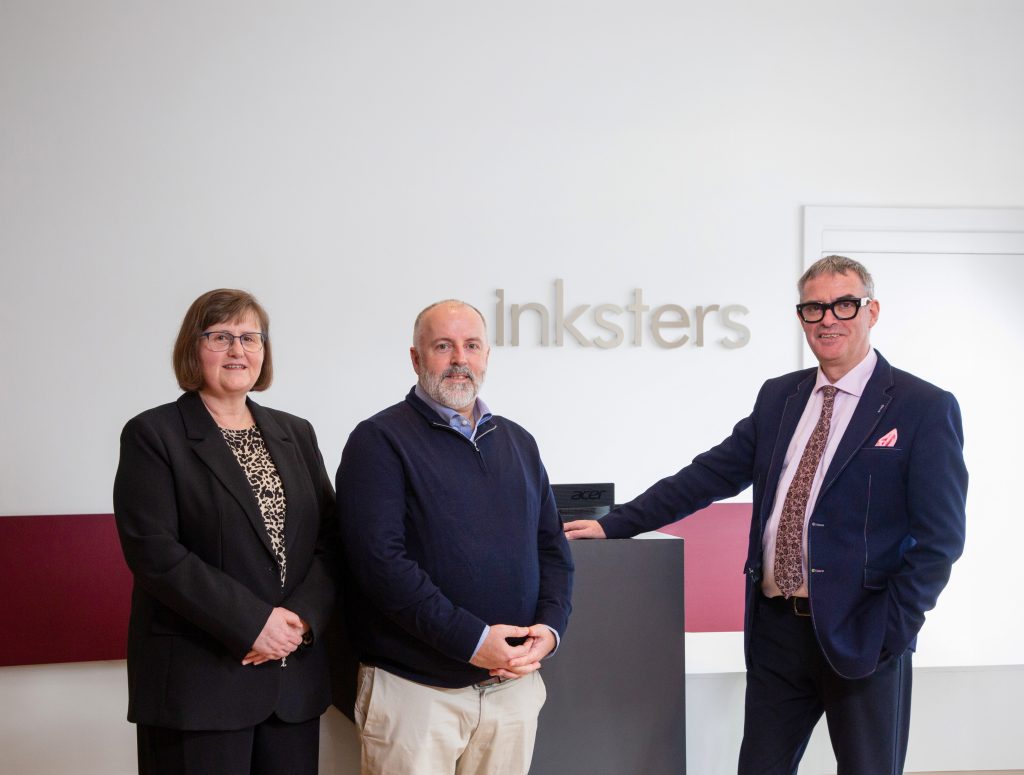
For example, Inksters, which now has coverage across much of Scotland, has established Translation Law, a specialist service examining how translation errors affect legal rights and responsibilities.
It will help legal professionals challenge unreliable documents, establish potential liabilities and assess whether mistakes have created grounds for legal action or compensation.
The initiative was developed by legal translation specialists John O’Shea and Deborah do Carmo, who join Inksters following years of research into the legal consequences of translation.
The launch comes as the growing use of AI allows lawyers to translate large volumes of foreign-language material in seconds, without necessarily knowing whether the resulting documents accurately reflect their original legal meaning.
Translation Law will primarily support other law firms handling international commercial contracts, litigation and cross-border matters, as well as cases involving people who do not speak the language in which legal documents have been prepared.
Brian Inkster, founder and chief executive of Inksters, said, “I am very excited to have John and Deborah on board with our new Translation Law service and developing that internationally.”
Legal departments are being flooded with AI-generated correspondence, according to a report by Dentons, a global law firm with offices in Edinburgh and Glasgow.
Employee grievances, customer complaints and GDPR requests are now routinely drafted using AI tools, which has placed a significant burden on in-house legal teams.
The report, From AI Adoption to AI Advantage, is based on in-depth interviews with senior in-house lawyers at a mix of Irish and international companies. The research was conducted by Dentons’ technology, media and telecommunications partners Carlo Salizzo and David Kirton.
Most of the companies interviewed said that the issue is not reading this AI-generated correspondence, but rather working out which parts of it matter. Some in-house teams have turned to AI to deal with the sheer volume of AI-generated submissions.
Almost every interviewee said AI was being used for narrow, well-scoped repetitive tasks, rather than being given free rein to take on legal work. Many companies emphasised the importance of centralising legal data. A number use a wide variety of AI tools to work with that data.
Salizzo said: “This research shows that in-house legal departments are not replacing employees with AI, but they are finding ways to use AI to help staff be more productive, including using AI tools to help cope with a raft of AI-generated submissions.”
Kirton added: “The days when governance was the exclusive territory of legal departments are over. This research shows that most companies have found that the advent of AI has meant that good governance requires the expertise of multi-disciplinary teams.”
The report also identified significant changes in the relationship between external counsel and in-house lawyers, with the latter exploring alternatives to the billable hour.
Some argue that it may die out, while others see alternative models as a way of passing efficiency gains back to clients.
More broadly, the nature of the client-lawyer relationship is also changing as a result of AI. On the one hand this results in a more thoughtful and engaging conversation between the client and the lawyer. But on the other hand it is increasing the volume of correspondence that needs to be managed.